
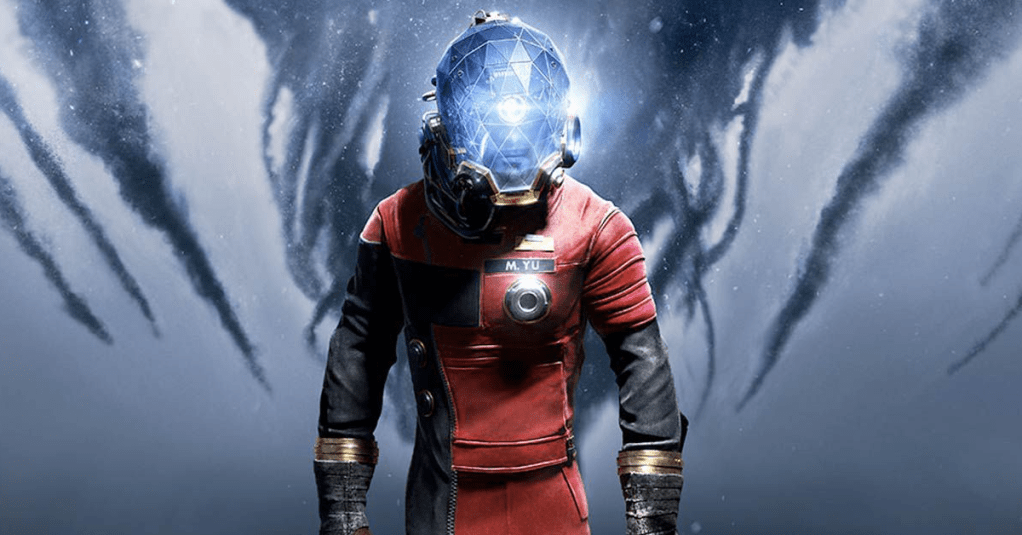
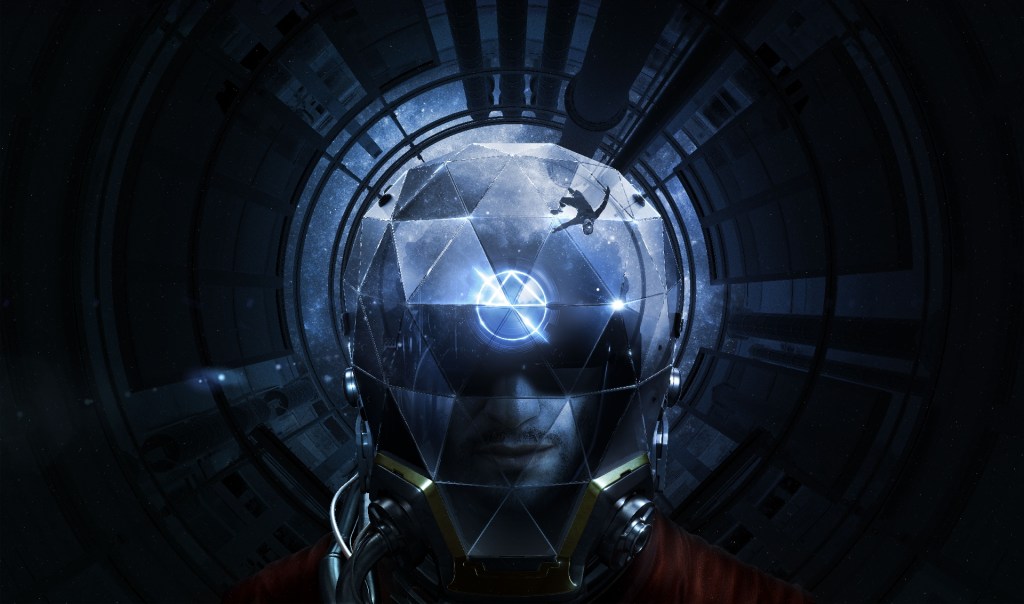
Playstation 4 | 2017 | Arkane Studios
As far as criminally overlooked games go, 2017’s Prey by Arkane Studios really takes the cake. Despite it being one of the first games to be completely created by the studio itself, following the success of Dishonored, the development process was riddled with hurdles to overcome. The misconception that this is the sequel to Human Head’s Prey from 2006, as well as the odd and poor marketing surrounding the game, left it in an odd position where most people either overlooked it or had drastically different expectations as to what they could expect. What they got, however, was one of the most compelling immersive simulators to have ever existed. So what makes Prey so special?
Prey is one of those games that manages to sink it’s typhon claws straight into the back of your brainstem in the same manner that a game like Vampire: The Masquerade Bloodlines does. It is one of those games that finds its way onto the replay block once every other year. In Prey you play as Morgan Yu, the vice president and Director of Research for a company called TranStar, working aboard the orbital space station Talos-I to research a new groundbreaking device that allows users to gain different skills by injecting themselves in the eye. This device is known as a Neuromod, and it forms the foundation and leading line for the main story. They’ll form the means to write your narrative, your state of existence and reality. So what’s the catch? Well, once a Neuromod is installed into the user, it allows them any skill that is made available by TranStar. However, should you decide you don’t want to be a skilled electrician or a piano virtuoso anymore and you remove the installed Neuromods, then your memory reverts to the moment prior to the installation. Meaning that, for example, if you’ve had a Neuromod for 5 years and remove it, those 5 years will be erased from your memory. A simple, but powerful concept that lends itself perfectly for the slightly high brow sci-fi setting of Prey.
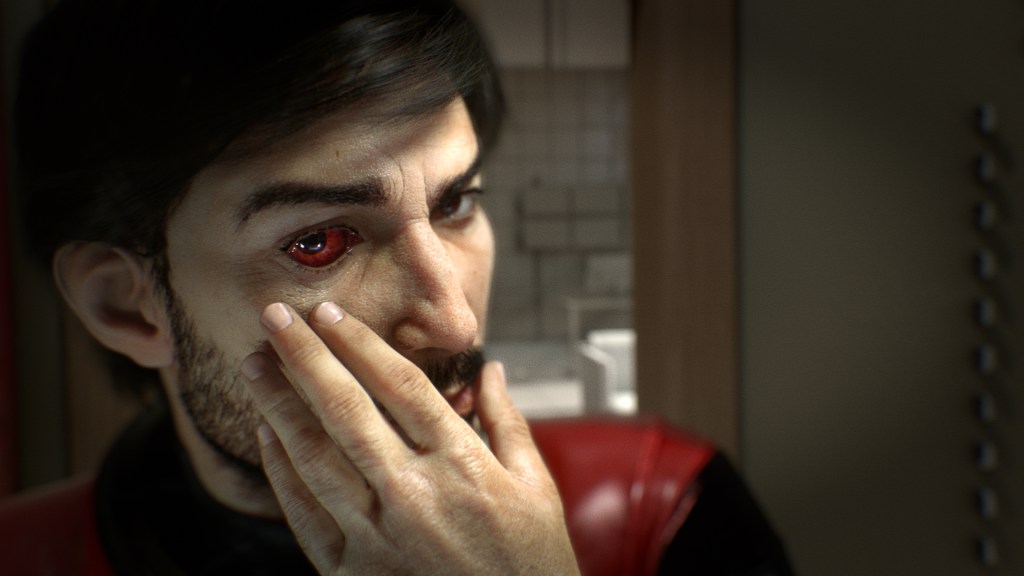
“Good morning, Morgan. Today is Monday, March 15th, 2032. You have a 9am appointment with Alex in his office. There is no duration set for this meeting.”
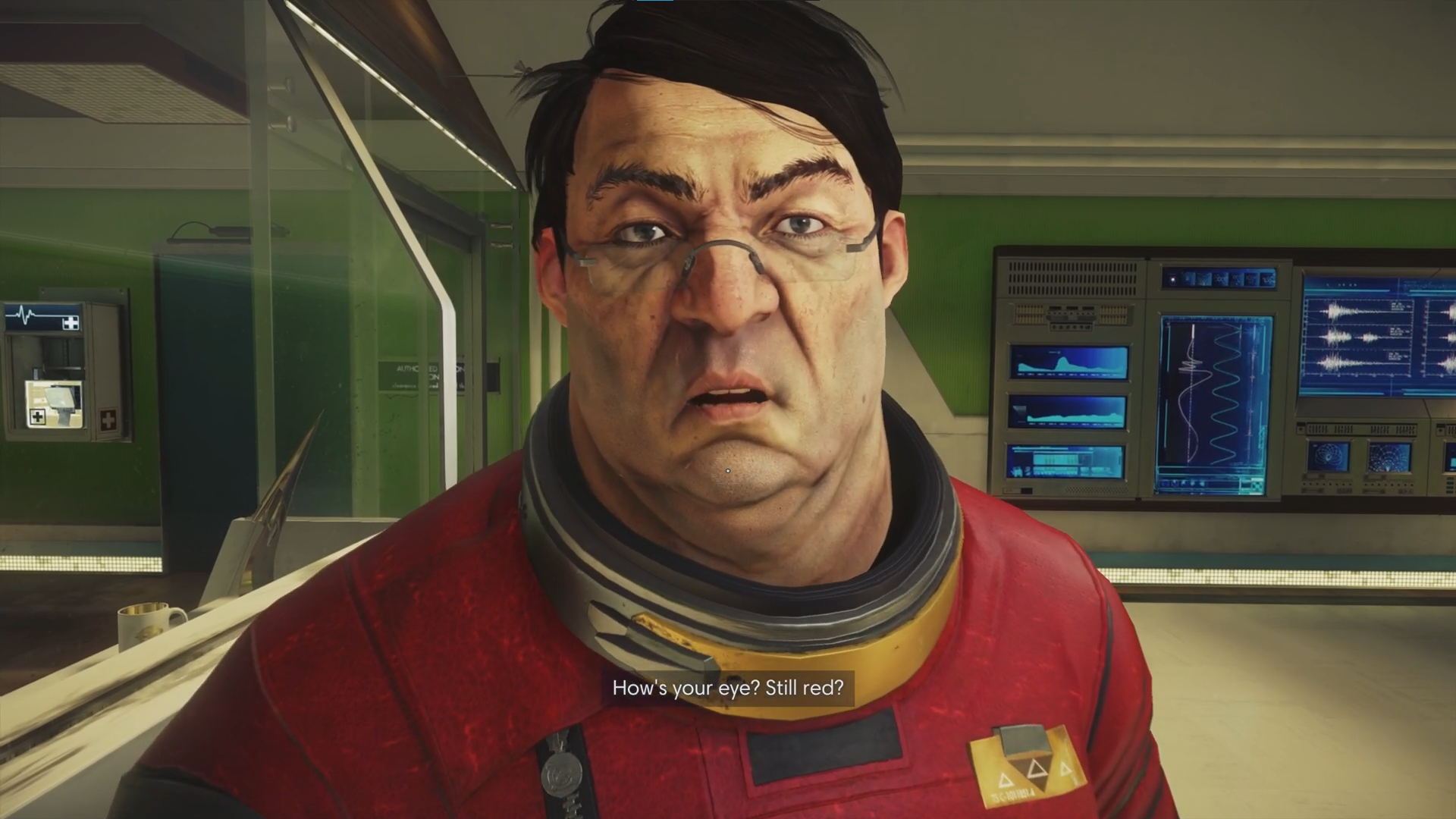
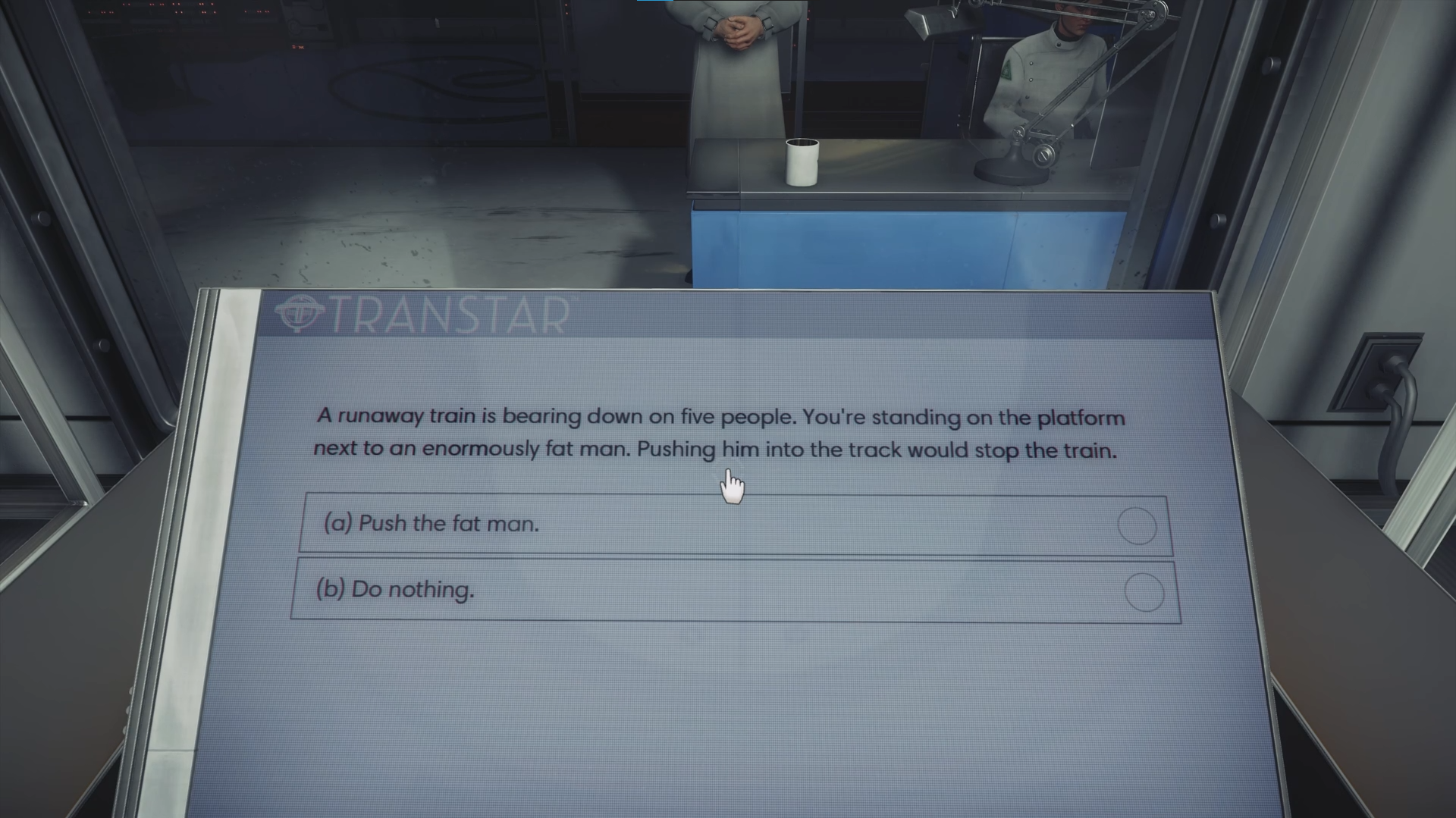
With the alarm waking you up in your executive suite, you go about a new day, preparing for your trip to Talos-I. First order of business; a few tests overseen by your brother Alex. You’re a volunteer to test TranStar’s latest product after all. So you suit up for the job ahead and take your private helicopter to the testing location, which also serves as a clever and magnificent intro sequence. Upon arrival you’re greeted by an automaton, a small floating robot called an operator, which guides you to the elevator. Taking the elevator, you’re greeted by your brother, Alex, at the check-in desk. A few pleasant exchanges and a hint of excitement at the prospect of your travels to Talos-I, and the work ahead later, and you’re off to the testing area. Here you get to move a bunch of boxes from the circle, hide in an open room and answer a few questions (always push the fat man). Your performance during these tests absolutely baffle the scientists, mostly because they seem to be expecting more from you. You are left to ponder their odd responses inside the last testing chamber as one of the scientists takes a sip of coffee… except the coffee takes a sip of the scientist as it morphs back into the inky, insectoid, four tendrilled shape. Your chamber gets filled with gas and you start to fade out as you see the scientist fall to the ground with you.
“Good morning, Morgan. Today is Monday, March 15th, 2032. You have a 9am appointment with Alex in his office. There is no duration set for this meeting.”
As you, the player, awaken once more in the same executive suite there is a distinctly off-putting feeling permeating through the room. It’s that little voice in the back of your head that tells you the hairs on your neck should be raised. It quickly becomes clear as you suit up and open the door, only to find the mechanic that kindly greeted you earlier, is now dead on the ground; a shriveled and dehydrated husk reaching out for help. As sad as the fate of the mechanic is, it does give an opportunity to provide you with the best friend of every immersive simulator since System Shock, a big ol’ wrench! So naturally the first instinct is; let’s hit some stuff with it! However, despite now having a means to protect yourself from whatever gave the mechanic her skin treatment, there still doesn’t seem to be a way out…. except outside. And with that the curtain drops and Prey starts to show its true colors. After you try the locked door and frustratingly smack the frame, the entire outside world shatters in a slow motion revelation that your apartment is nothing more than a set aboard Talos-I. It’s a brilliant drop of the curtain that enhances the constant state of paranoia that the game strives to accomplish.
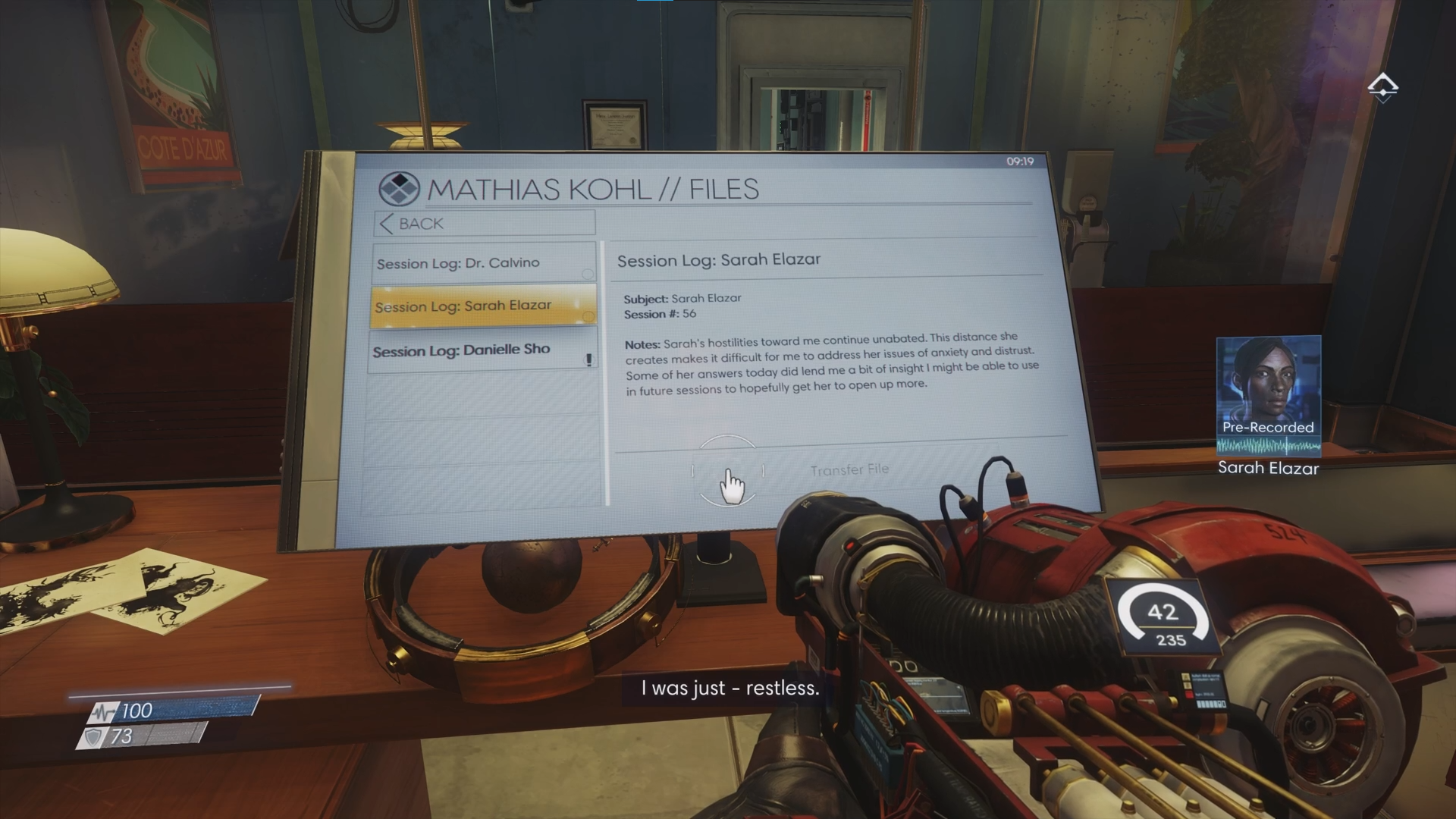
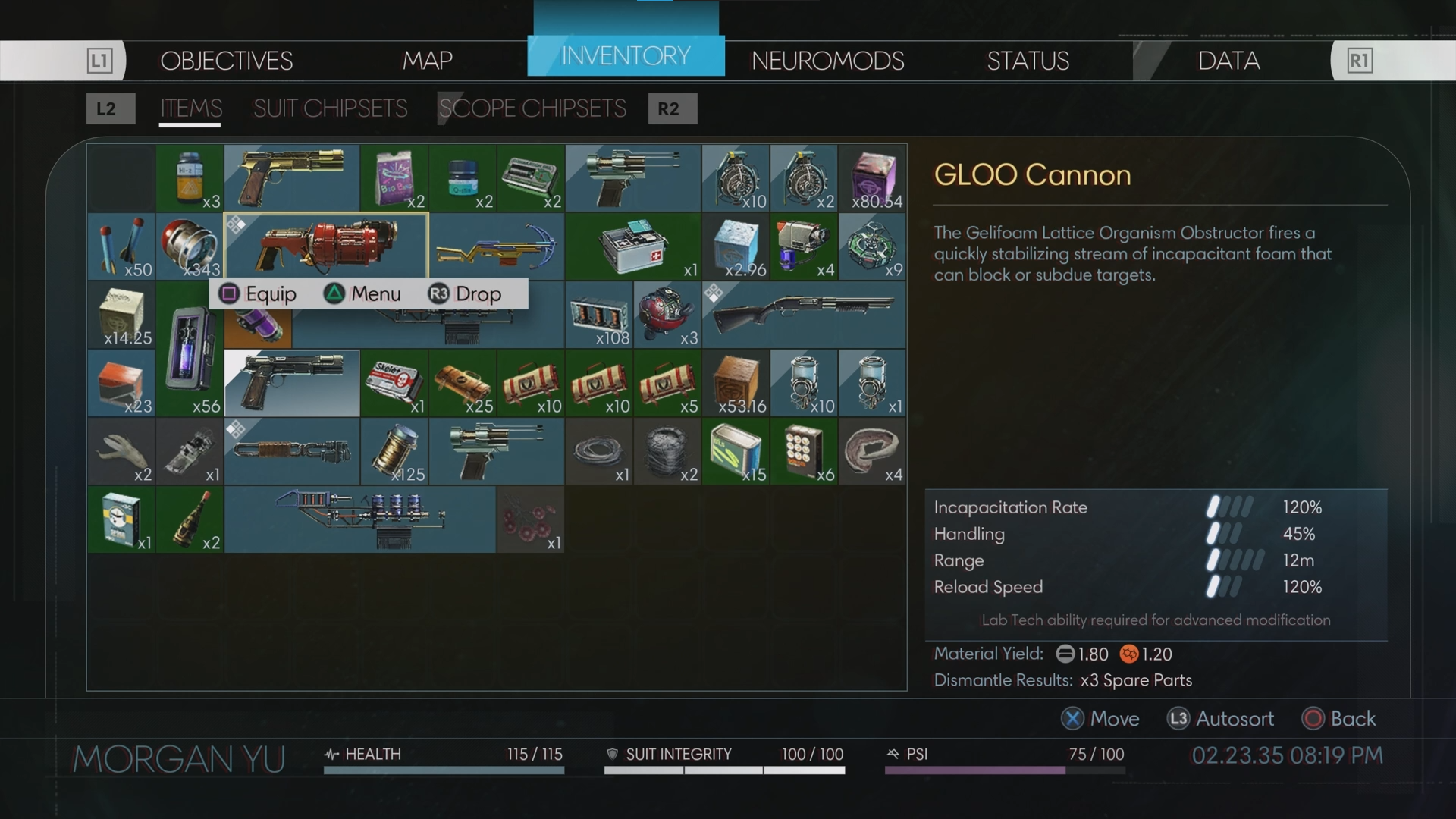
From here the interior of Talos-I and the dangers it will soon reveal are open to explore. One of the more brilliant moves that Arkane made when making Prey was using the aforementioned Neuromod removal as a vessel to deliver a blank slate of a character to the player. Considering that you shortly afterwards learn that the experiments have been going on for quite some time, Morgan’s memory is compromised. Most of the information about the happenings in the station, both current and past, are second hand accounts. While exploring the simulation area you can interact with various screens to read emails on the ongoings and find several audio logs scattered about (as well as have a bunch of buttons to press to witness the elaborate simulation). These are the main body of the narrative that you can interact with to get a deeper understanding of what happened. The catch is that it’s all told from the perspective of others, and as such it’s up to you to decide what to believe and what to disregard. On your journey to the lobby of the station you’ll also get introduced to your first enemy threat; the Mimic. A small typhon form that has the ability to change into any small object up to a certain complexity. While this is relatively paranoia inducing on lower difficulties, it becomes a delirious fever dream of hyper aware exploration whilst jumping at the tiniest change in sound or sight on Nightmare. One Mimic becomes a problem, two is a death certificate signed by TranStar. It creates this wonderful dynamic of curiosity and paranoia that never quite leaves you, even as your arsenal expands later in the game. The first of which is the game’s signature gun, the GLOO-cannon, which shoots blobs of a foam-like adhesive that you can walk on or temporarily freeze enemies with. With it, you can also access a lot of places you normally shouldn’t be able to.
In the hall of the Neuromod Division you get contacted by an unknown voice, introducing him- or herself as January. The voice tells you to grab the display Neuromod that they swapped out for a real one and then to meet them in your office. These are your primary means of upgrading the various tools of the trade, and later on the key to unlocking the various Typhon powers. It may start out as a simple “You can hack this panel now“, but it’s a proper sandbox of opportunity that awaits at the other side of the game. From here we take the big door to the lobby and arrive at my only major complaint with this game; the loading screens on console vary from anywhere upward of 40 seconds up to a full minute and 50 seconds on a PS4 Pro. A great time to go stretch and take a bathroom break or make some tea, but not a great time for the overall flow of the game. Especially considering you have to transition multiple areas in a row in later parts of the game. On the other end of the loading screen, however, awaits one of the most technically impressive areas of the game. The central lobby of Talos-I functions as a hub connecting area for the bulk of the game, providing access to several facilities to get yourself acquainted with some of the core functions you’ll have access to. The central elevator will connect to other levels of the facility after it’s restored, but for now you’ll have access to the trauma center, the central security station, human resources and among other things, your office on the top floor. It’s also one of the areas where the amount of love and passion that was put into Prey by Arkane Studios really comes to shine. The lobby itself is beautifully detailed, yet has a functional and accessible layout. Little things like putting the reception desk in front of the main door to the shuttle bay, or a security checkpoint leading to one of the more volatile areas of the station add a lot of life and logic to the way it’s designed. One of my personal favorites is the way that the stations rotation becomes apparent through the changing view outside the massive windows. It’s beautiful and despite the destructive aftermath of the Typhon outbreak, it still has an odd sense of liveliness to it. And no, this absolute masterclass of environmental storytelling isn’t limited to just the lobby.
In the office we get introduced to January, an operator designed by you using your voice based on the gender you picked at the start of the game, and one of the major characters in the story. The other being your brother Alex, portrayed by the incredible Benedict Wong (whom you might know as Wong in the MCU). Without delving too deep into spoiler territory; these two characters will represent two opposing choices that are eventually determined by you. Throughout the story you will encounter different characters that you can choose to either help or leave to their fate (or kill if you do so desire). Which brings me one of the strongest aspects of Prey. The game will, without fail or inconsistency, remind you that actions have consequences. Choosing to help one character might be detrimental to the fate of another, the station of Talos-I included. While the station serves as a setting, it is as much a character in the story of Prey as you are. It’s constantly changing and evolving throughout the game alongside the many different forms of Typhon that you’ll encounter. You’ll have to constantly adapt to these changes to survive the outbreak. Eventually the GLOO-cannon will get accompanied by the customary hand- and shotgun, as well as a variety of other tools like the Q-Beam, which shoots a laser, or my personal favorite; the recycler charge. During your exploration you’ll be able to scavenge materials, blueprints and other tools to expand your arsenal. The materials and items you find can then be broken down by the Recycler, and the material yield can then be used to fabricate some of the blueprints you’ve found with the Fabricator. It’s an everchanging balancing act of figuring out what weapons to use in what situations or when avoiding confrontation is the better solution, and part of finding the better solution is familiarizing yourself with the many hiding places on the station. There are a great deal of maintenance tunnels, backrooms and ventilations tunnels woven throughout each area of the game, barring the station exterior (which has a ton of space to cover).
Prey is fantastically immersive thanks to the phenomenal sound design. There is an insane amount of love and care put into the way the station sounds as well as the immense amounts of different sounds the Typhon can make. This gets to the point that by the end of my Nightmare playthrough I could identify what kind of Phantoms, Weavers or Nightmares I’d find in the area by simply listening. The Mimics array of sounds are fantastically incorporated as well, when you enter any part of the game where there is one present you can hear them scuttle around in the background, or use this sort of crickity chirping sound whenever its hiding in a different form. It gives the effect that you’re constantly attentively listening while moving about. The many sounds of the station and enemies also contribute to the way that the station feels alive and in constant motion. The sound design might’ve been my favorite aspect of the game, if it wasn’t for the fact that every once in a while the sound that plays when a Mimic attacks (this sort of loud boom jumpscare) goes off pre-emptively. Unfortunate misfires aside, the sounddesign is brilliant and the songs provided by Mick Gordon beautifully shine in the important moments of the game.

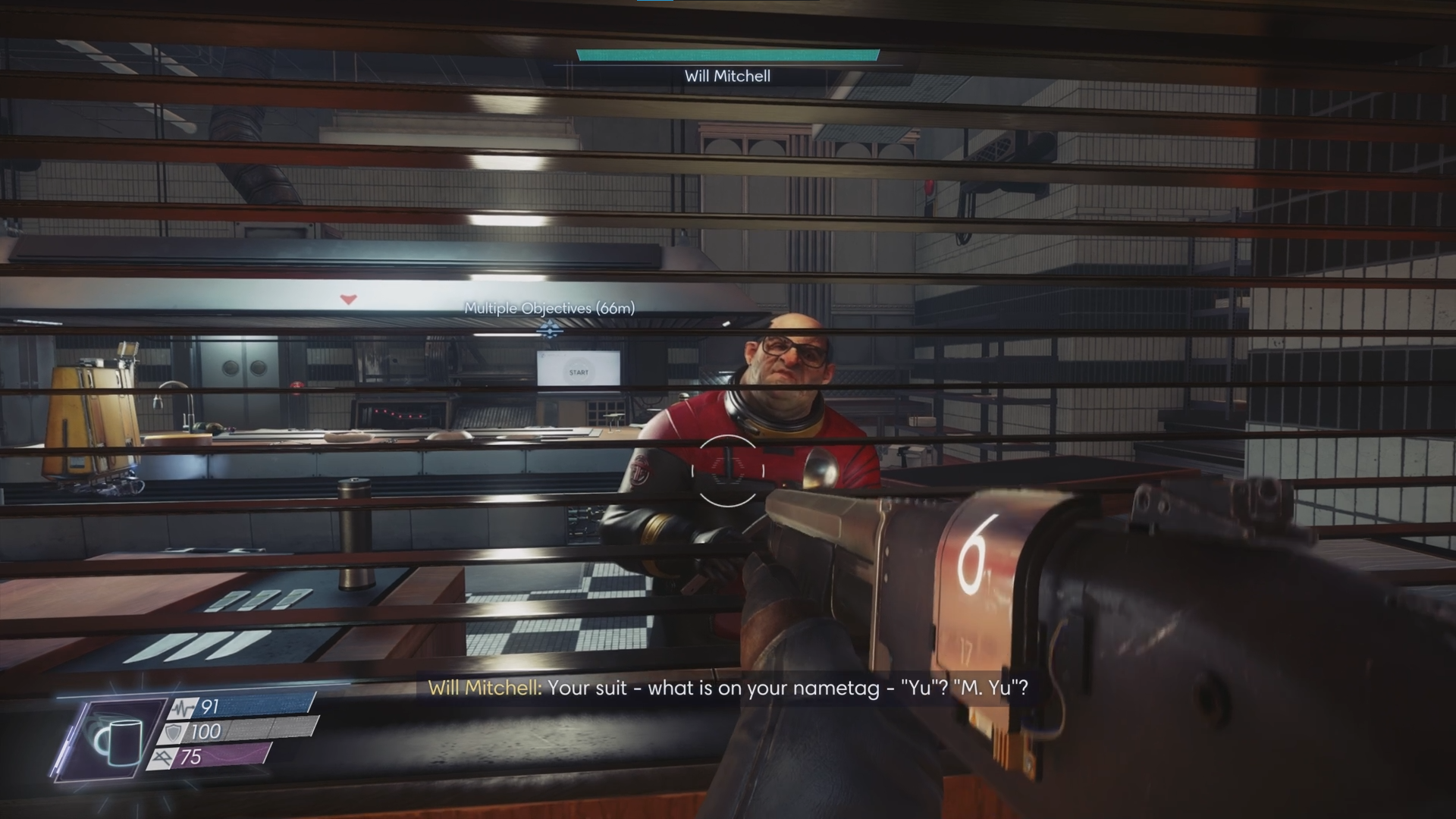

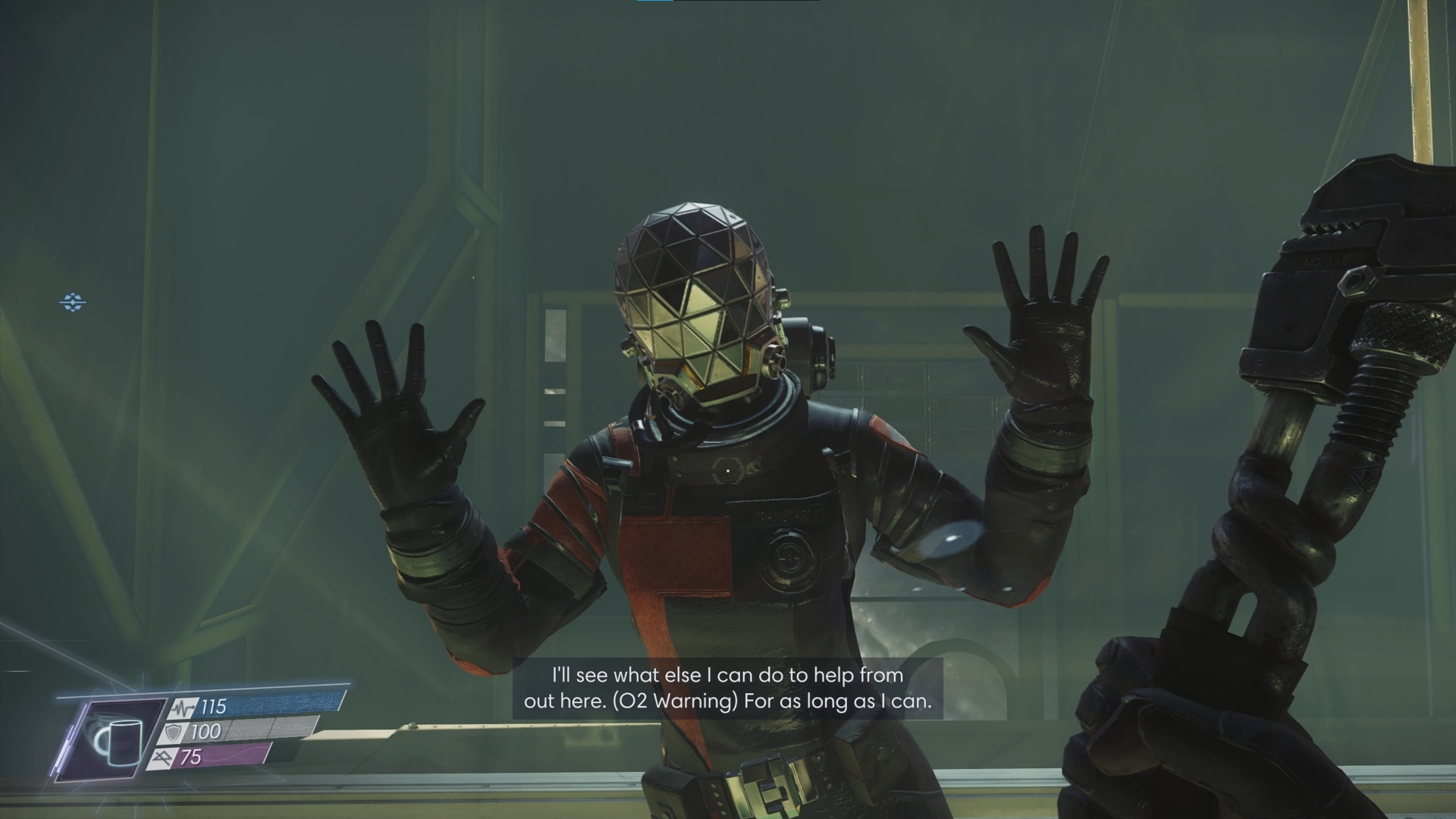
Arkane Studios went above and beyond to make the station feel alive and in true immersive simulator fashion, you can approach any situation with any means at your disposal. This leads to some fantastically creative moments, like dropping hordes of turrets in front of an entrance right before luring Phantoms into the crossfire, or bypassing intended routs by recycling a door or using the GLOO-cannon to create make-shift stairs. The amount of ways you can approach things with are impressively complimented by fantastic area design, with all kinds of little ways you can discover them. The game feels incredibly free in its design and the way you interact with others never intrudes upon that sense of freedom. There are no dialogue branches. You make the choices to act upon simply by actually doing it. Want to save someone in need? No need to wait for dialogue branches to finish, you just go for the objective, or not if you so desire. This immense sense of freedom and natural progression feels exceptionally satisfying and it’s one of the core reasons I fell in love with the game. As mentioned earlier, the way I feel about this game reminds me a lot about how people around me always talk about Vampire: The Masquerade – Bloodlines. There is always a hint of deep rooted fondness whenever they talk about that game and in a sense Prey is like that for me. My first time through I managed to start the game in its lowest difficulty, which is fine, but it also makes the shotgun the be all end all solution to all your problems. My deep appreciation for Prey elevated to new levels when I started the Nightmare run. Suddenly every bit of scrap you pick up is important and every object might turn into a Mimic which in turn turns you into a game over screen. It enhanced the atmosphere and made the tension feel palpable and constant, even when I equipped myself with a fully decked out laser cannon and a pile of medkits.
I’m not really going too deep into the story to avoid spoiling some fantastic twists and turns. Prey is a great example of the “nothing is what it seems like” trope, which in turn reminded me a lot of the SHODAN reveal in the classic System Shock 2. Which in my younger years sent me crawling into the nearest corner and made me fear the end of my trivial existence. There is a constant feeling of wrongness that seeps through every bolt and hull plate, as characters you meet, reading emails and listening to the audio logs will tell an incredibly contradicting story. Ultimately it’s up to you to decide who to believe and how to act on that and the way this is presented makes the entire experience of playing Prey feel seamless and natural. The entire package is an incredible love letter to the imsim genre and my only hope is that Arkane Studios will get the opportunity to shine like this more often. Prey is cemented as an incredibly special game to me and I love it to death.
PLAY PREY/10

 TanookiChickenAttack