

2022 | Rose-Engine | Playstation 4/Switch

“Great holes secretly are digged where the earth’s pores ought to suffice, and things have learnt to walk that ought to crawl.” – HP Lovecraft’s ‘The Festival’
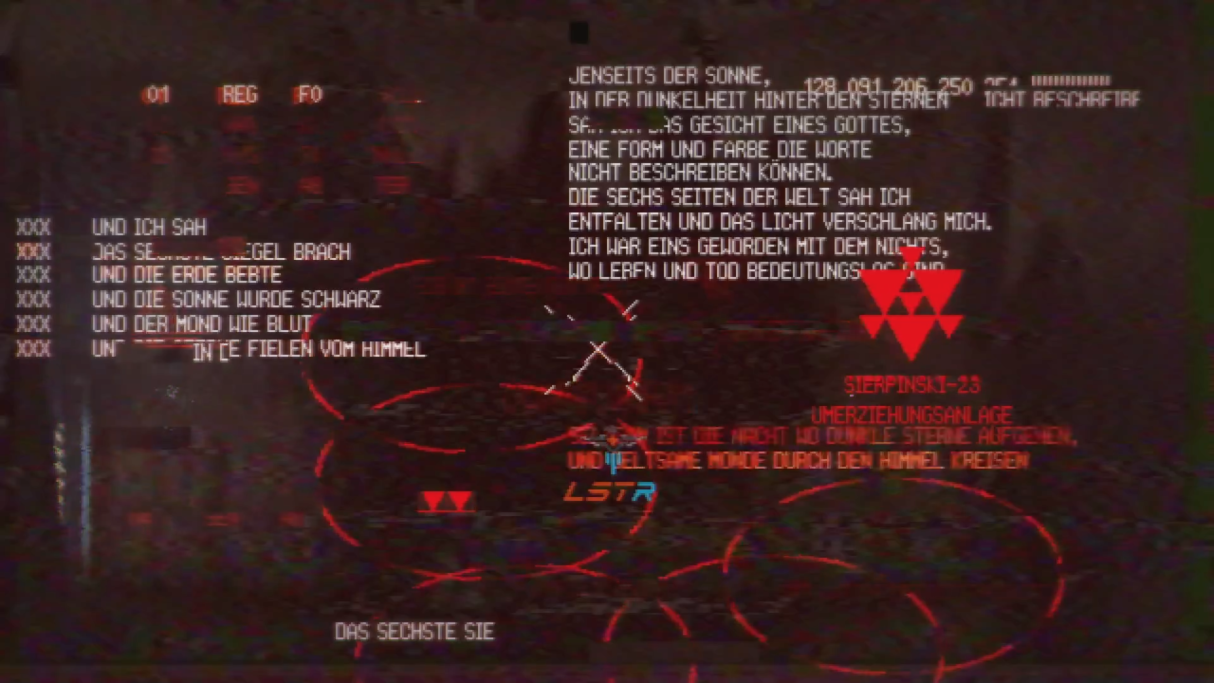
Sometimes listening to a community suggestion turns a worthwile and intriguing video game into a spiral of the finest boutique of exquisite existential horror. Signalis is one of those titles. I initially set the game aside as a title that I wanted to get to “at some point” (read; void that is the backlog) until a lot of people suddenly started recommending it to me. After looking at the trailer, I figured it would make an interesting experience to delve into a tribute of ye 90’s survival horror. However, after booting up the game for the first time and hearing the ominously distorted number station call out a sequence in German, and the text at the bottom of the screen starts flickering, twisted by the effect of decaying magnetic ribbons, quoting HP Lovecraft, I knew this was a game that’s exactly for me. I am a sucker for this stuff. The main menu already got me delving into every nook to find out what secrets it had lingering in musky corners, and boy did it not disappoint. From the very moment you boot up the game, Signalis manages to snap your attention and fuel your brain juices with juicy details that took me back to the symbolic cryptography that was permeating through the original Silent Hill. And we’re still on the main menu!
So it goes without saying that Signalis is a tribute to survival horror at its core, drawing inspiration from horror literature with the likes of Robert W. Chambers‘ ‘The King in Yellow‘ and the themes of HP Lovecraft’s ‘The Festival‘ taking center stage. The former makes a literal appearance in the opening sequence of the game. Silent Hill 2 also makes an early appearance in the form of reflecting the mirror scene; as you start, you descend through S23-Sierpinski’s flesh infested hallways in a broken down bathroom briefly reflecting on your own image. While Signalis carries its references out in the open with a fanfare of fireworks and booze, it doesn’t distract and detract from the game doing its own thing. And it does so beautifully, effectively and brutally; using the backdrop of a distopian post-humanity expanding into space to tell a gut wrenching story of futility, loss and love.
Signalis is one of those games that I’ll have to go into detail about when talking about it. So consider this a spoiler warning for the remainder of this review.
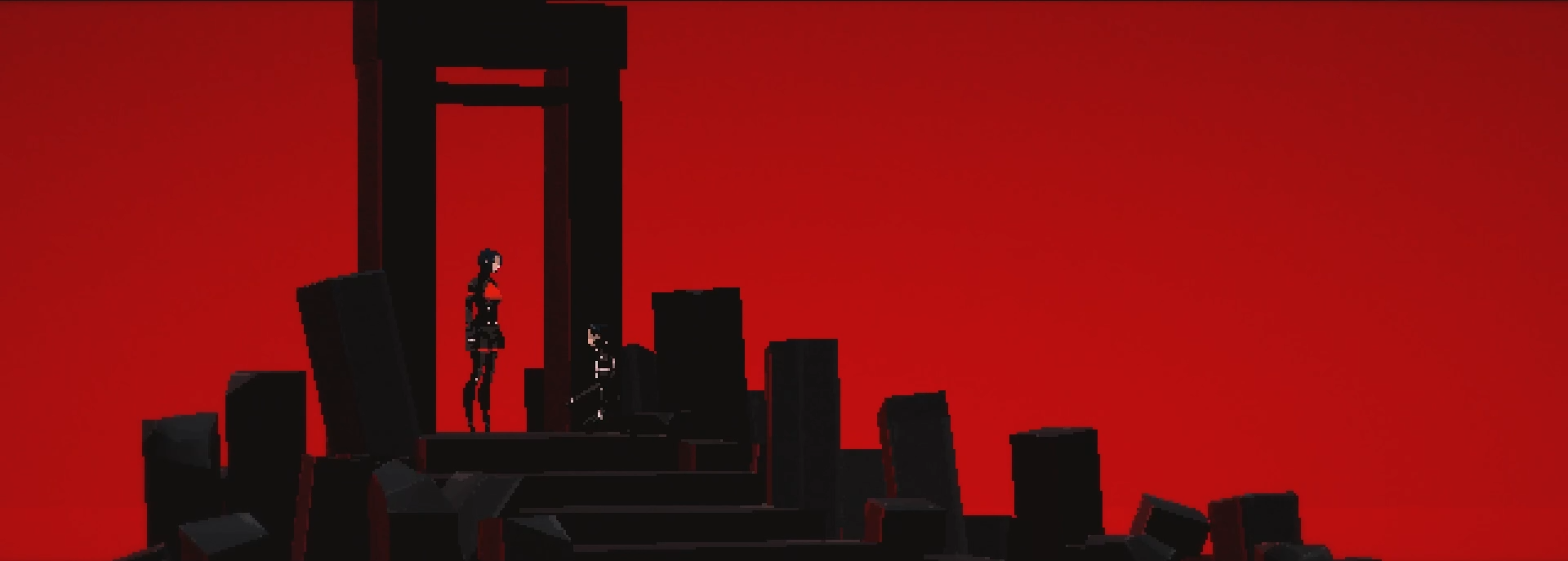
We wake up after an unknown amount of time from a cryogenic sleep aboard the Penrose-512. Taking your first steps in exploring the vessel we find out that we’re a Replika, a human/machine hybrid, tasked with maintaining the vessel during its transit to its destination. Specifically an LSTER unit, or Elster. Things start to feel amiss rather quickly as there is no sign of any other passengers and exploring the cockpit of the vessel reveals that we’ve crashed nose first into the snow covered surface of an unknown planet. The passenger manifest shows us that one other life form is on board, a Gestalt, in the cryogenic compartment. Finding the cryogenic pod, however, reveals it to be empty. During our investigation, we get to scour through multiple manuals and find ourselves in possession of a cryptically decayed photograph. After taping a broken key back together in a fantastic tribute to Resident Evil’s combine mechanic, we’re freed from the rusted remnants of our ship and liberated unto the icy planes of an unknown planet. Black monoliths are scattered throughout the landscape as we approach an archway.

Then, a hole.
An extremely out of place, artificial looking, hole breaks the monotonous shades of white into an ominous void. The strange discovery is only further enhanced by the well maintained spiral staircase, inviting you deeper into its belly. The snow that obscured your sight earlier is now but a small trickle of the occasional flake breaking the red floor.
At the bottom, another hole.
There’s a faint light glowing in the deep…
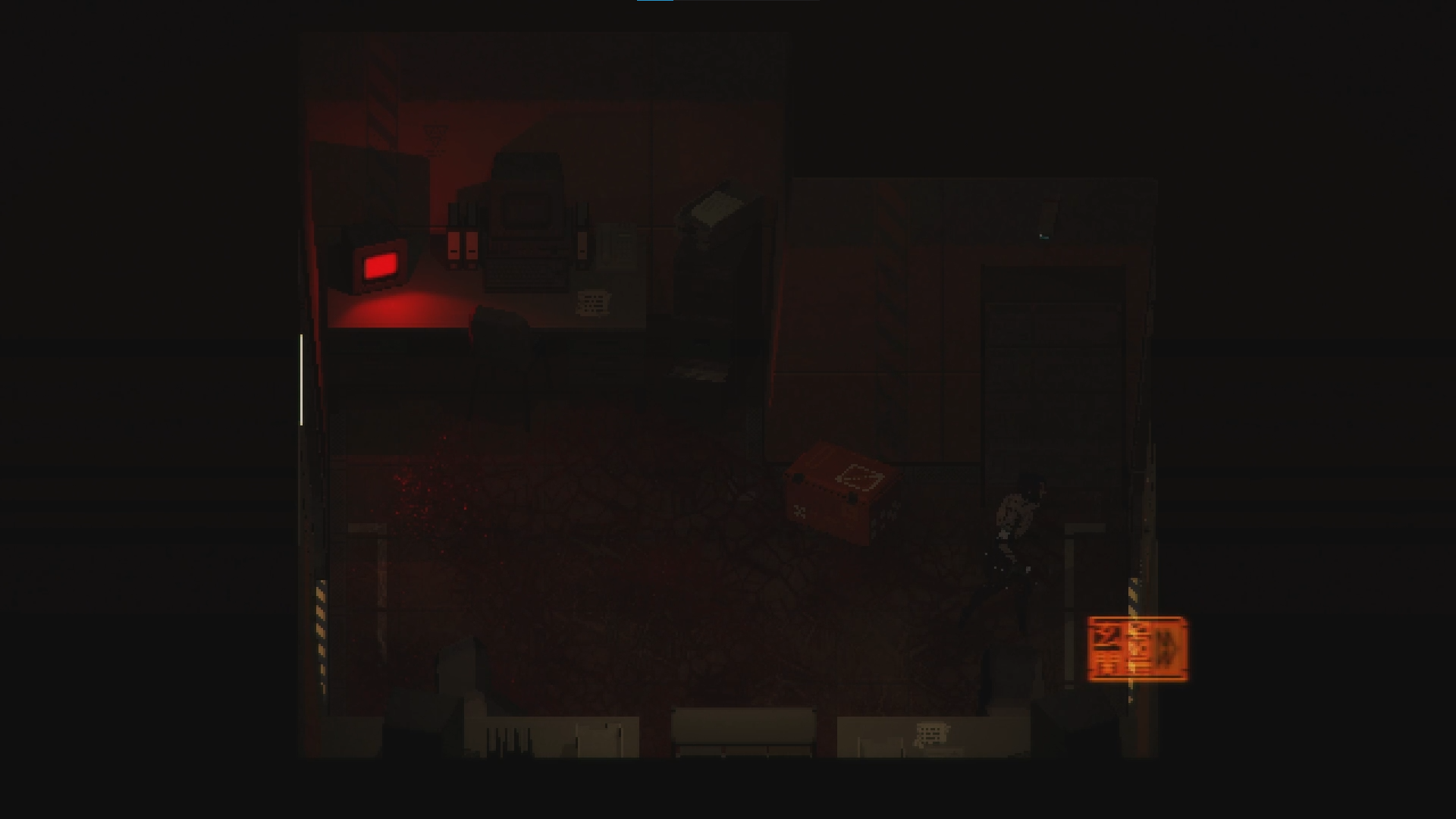
Seeing as this is the only way out, we climb into the hole, into a long distance radio station from a bygone age. A mysterious vault is tugged haphazardly into a corner with 3 locks, the walls are adorned with strange paintings, and on the desk; various types of old radio equipment, frequency lists and manuals, and a copy of ‘The King in Yellow‘. Picking up the book pans the camera to the screen with an ominous message saying “Preparing to send message” after which a number station begins to crackle through, and the screen gets interrupted by flashes of an island. Elster is shown in brief flashes as the flesh slowly peels away with each passing moment as the screen continues to flash with the words “Remember our Promise” and “Wake up”, accompanied by a mysterious girl with white hair.
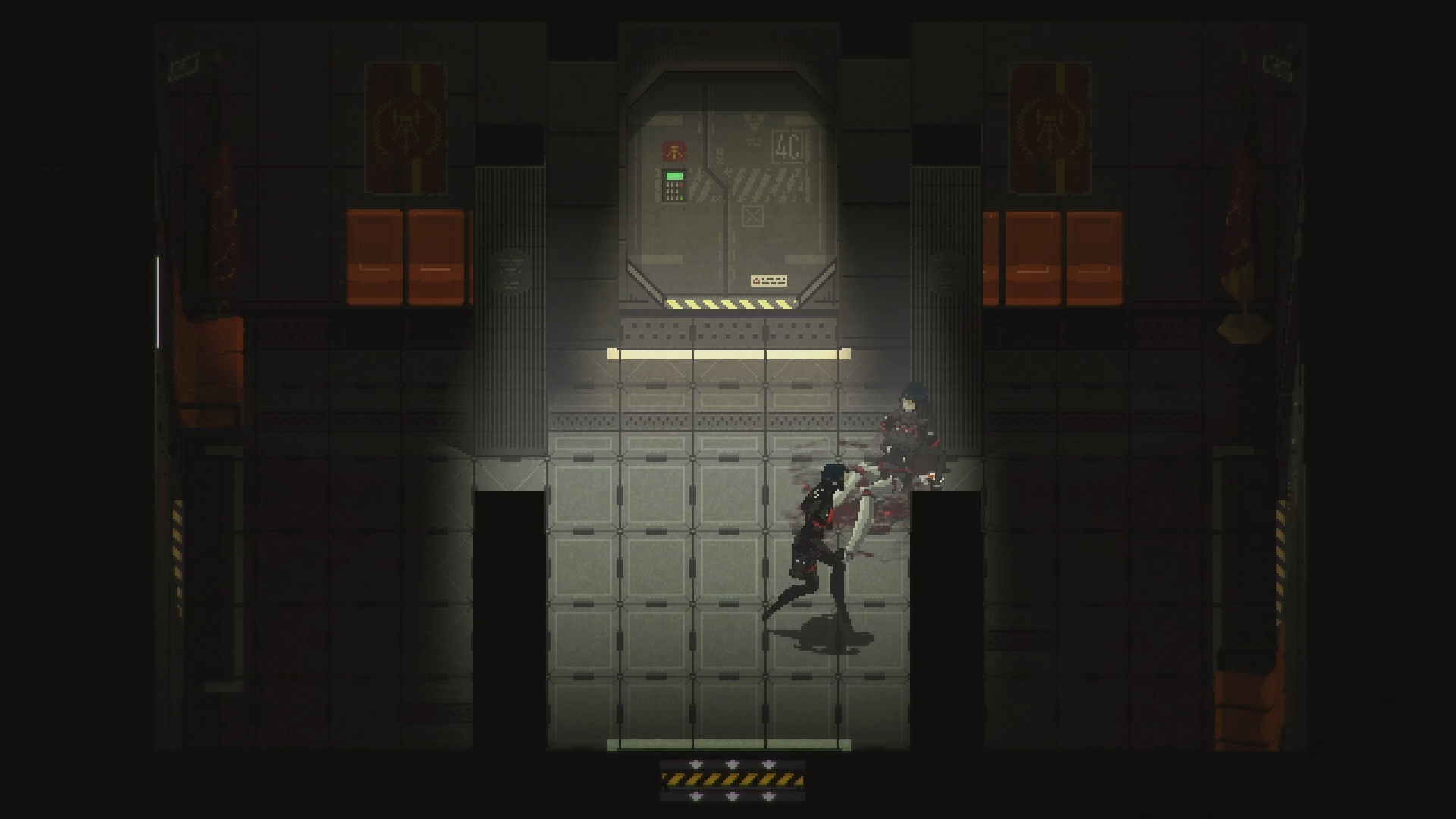
This onslaught of some of the finest analogue horror is the opening to Signalis. A densely packed menagerie of details that wets the palette of any enthusiastic player, as the screen fades back into view, revealing Elster staring at her own reflection in a run down bathroom. It is a somewhat on the nose reference to James from Silent Hill 2. At this point I was positively salivating at the deliciously bleak tasting opening and was anxious to find out how deep the rabbit hole would go. Upon exiting the bathroom we get introduced to S23-Sierpinski, an AEON facility that seems to be largely abandoned, except for cameras tracking your every move. Even with just a few steps the waves of nostalgia towards the 90’s and early 00’s era of survival horror start washing over the game. You get to explore the facility as you find ways to unlock rooms and find items to unlock more stuff. It feels incredibly familiar, yet has a modern twist to it. The clunky tank controls that were prevalent throughout that era are replaced with smooth and responsive movement. The usual sense of dread that comes from the hindered mobility is replaced by claustrophobic hallways with increasing levels of debris blocking your path. As mentioned before, Signalis does its best to show you what it’s paying tribute to, but not without improving on the formula. So naturally our first step is to familiarize ourselves with the new surroundings, and after a quick look around, things are feeling wrong. The hallways and rooms are silent, save for the mechanical humming and the ever watchful eyes of the various security cameras following your every move. It doesn’t take long for the game to verify your feelings towards the liminal nature of the facility, as you stumble across a fatally wounded unit telling you to go deeper into the mines.
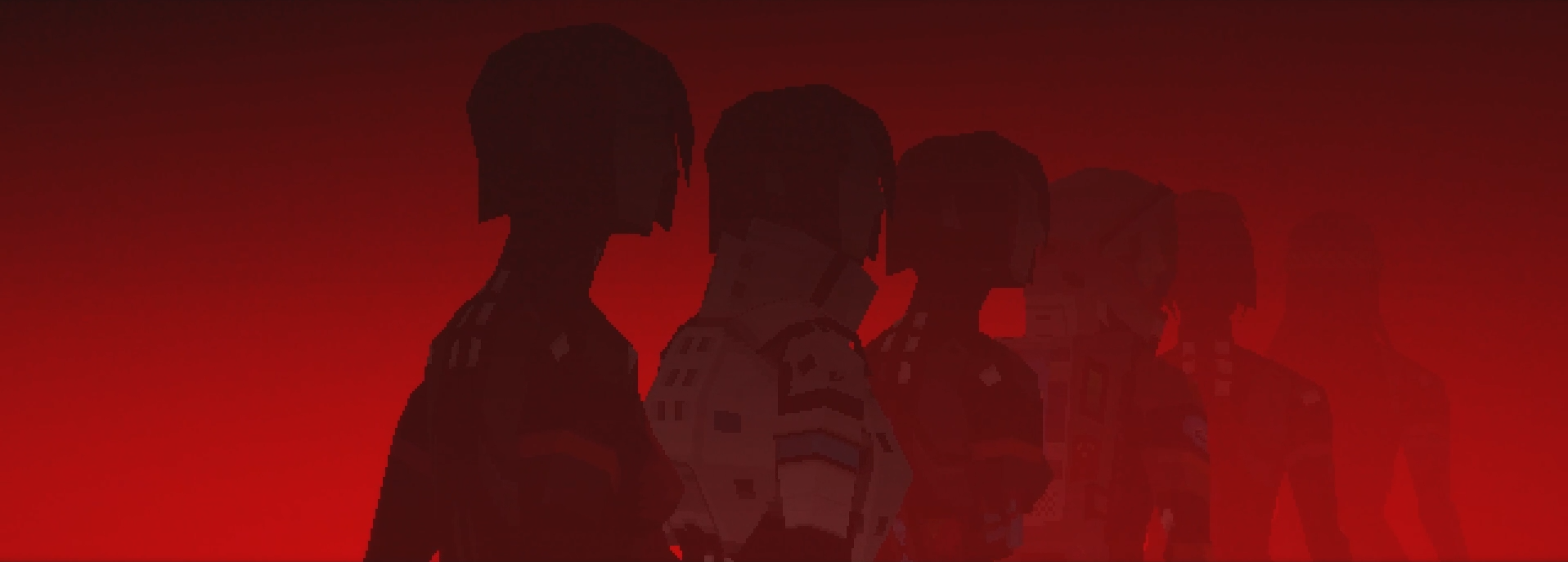
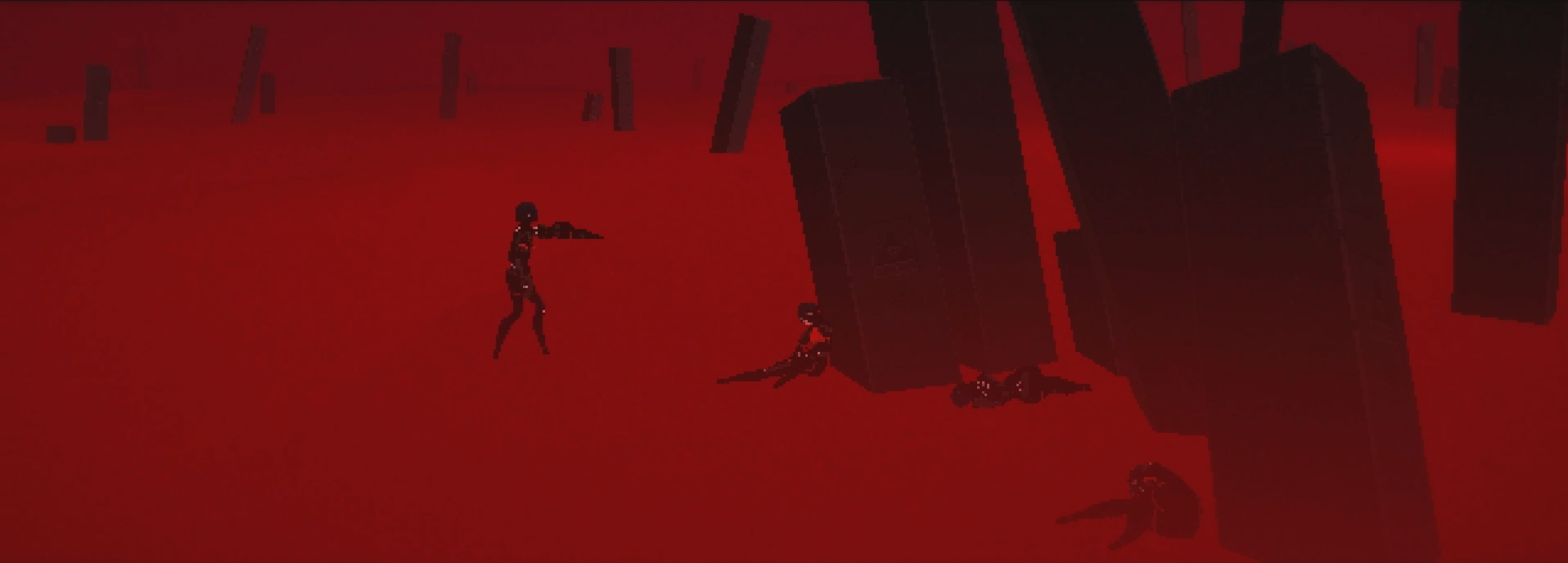
After finding ourselves wake up in the mining facility of S23-Sierpinski, the photo of the white haired girl we picked up in the shuttle has changed to a brown haired woman resembling Ariane, the girl in the cryogenic chamber, named Alina Seo. This being the only clue and driving force behind Elster, she starts investigating the facility to find out what happened and who the girl in the photograph is. It doesn’t take much to find out that all the Gestalt forms are dead and the remaining Replika’s are succumbing to an unknown infection that turns them into mindless, corrupted drones and heaps of flesh. Through the various papers and diary entries we can piece together that there is more amiss than initially thought. This is confirmed after we encounter the logistical overseer, Adler, who pushes Elster down an elevator shaft with the warning “You shouldn’t have returned”. Elster barely survives the fall, which is broken by a heap of dead LSTER units littering the bottom of the shaft. This gives the impression that it isn’t the first time Elster has been pushed down the elevator shaft. We later learn through Adler’s various journal entries that he believes that he’s experiencing memories that he never experienced, thinking they might be from other realities. Delving deeper into the mines of the facility, the world around Elster seems to corrupt into a mechanical heap of flesh, contorting the reality around her in a monstrous way, reminiscent of Silent Hill. Maybe this is hell? At the arch we also learn that Falke, the commanding unit of the facility, went to investigate a mysterious discovery made at the bottom of the mine. She wasn’t the same when she went beyond the arch and never explained what she saw. Crossing the threshold, Elster finds the Penrose in a field of crimson with black monoliths, and the corpses of LSTER units decorating the macabre vista. We see some more flashes of an island before Elster makes her way to the ship, shattering her arm when opening the hatch. As the light fades from her eyes the screen fades to black and the end credits start rolling.
Have no fear come closer who are you? Why are you here I’ve been waiting WAKE UP

It is a baffling way to end a game as cryptic as Signalis with a bleak and vague visual like the final scene. Lucky for us this is a three course or three chapter meal in this little book of misery and the first ending is just a fake-out. The dessert is about to be served and, boy, is it the icing on this delicious cake. We find ourselves aboard the Penrose once again, this time depicting Elster alongside Ariane, and the two of them are allowed a brief moment of happiness before Elster is torn back to the nightmarish reality of the facility. She finds herself inside a delapidated version of the Penrose, where ominous messages are scattered about warning about the expected lifespan of Replikas and Gestalts. In the cryochamber Elster finds a different LSTER unit, whom she relieves of an arm and armor, after which the game transports her to a similar looking facility on Rotfront. There is a subtle difference, it being that doorways are now covered with heaps of flesh. The ever delving rabbit hole continues to go deeper into the mines, as reality continues to distort to the point where it barely manages to maintain cohesion. The corruption of the flesh seems to rend the very fabric of this reality to shreds. At the end of the fleshy layers of hell, Elster stumbles across a room very similar to the cryochamber on the Penrose, where we finally encounter Falke. When the mining team uncovered a mysterious gateway, Falke looked through it and saw the indescribable nature of eternity unravel before her. While there, she was exposed to the bioresonant abilities of Ariane and subsequently received the memories of her dead lover, Elster-512. These memories started to overlap her own and began to partially overwrite Falke’s personality, leaving her comatose. The scattered bits of her diary that you can find throughout the game are parts of her psyche, somehow reaching out and describing the process. The memories themselves started to infect the Replika and Gestalt units in the facility, slowly reducing them to sentient heaps of flesh; the resulting cycles causing the reality to fracture as time seems to constantly repeat itself, yet is also constantly changing.
From here we can get one of the four endings in the game, which I will leave for you to discover, as I feel like I’ve already gone into way too much detail. Needless to say, Signalis is a game that deeply (bio)resonates with me. I am an absolute fool for cosmic horror as a genre and the bleak and indifferent hellscape that the game depicts is a thing of absolute beauty. The developers have carefully crafted everything to make sense within the world, yet kept the things that needed to feel alien, exceptionally alien. Every interaction I’ve had with the game seems to peel back another layer, revealing some juicy foreshadowing or details that I’ve missed. So, we talked a bunch about the story, but what about the gameplay?
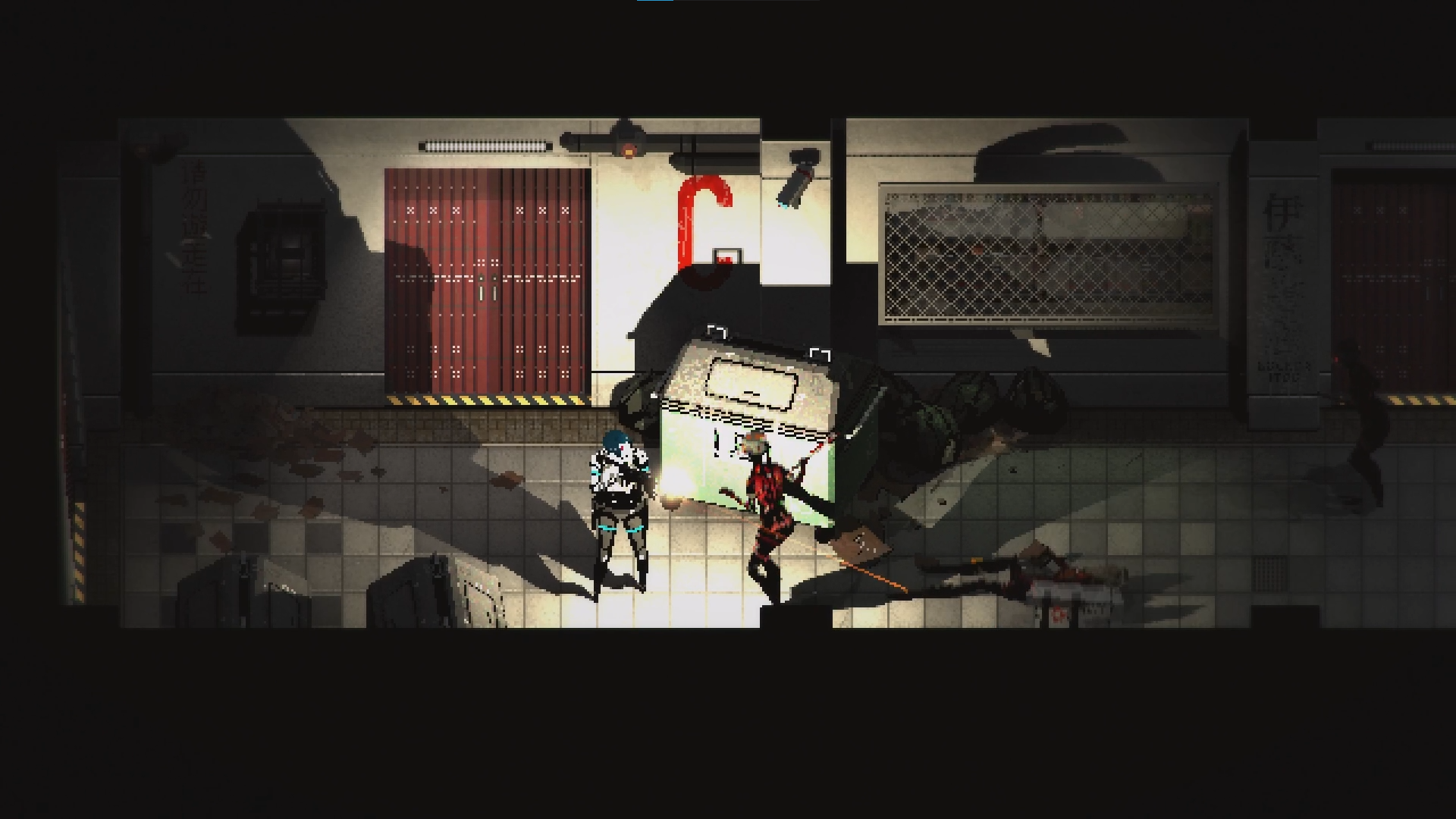
For starters, Signalis is a tried and true hommage to the early days of survival horror. The core to your survival being the management of your very limited inventory, which has only 6 slots available. It becomes a fascinating juggle of risk management and preparing for situations. I often found myself stashing healing items and the single use stun rods for the moments that I’d run out of ammunition, or had to rapidly make my way through hallways. As is tradition, you can find an ever increasing arsenal of weaponry throughout your journey, ranging from pistols and shotguns to machine guns and flares. You can use the rare flare and thermite charge to permanently kill the enemies and prevent them from getting back up after a while, but these items are incredibly limited and valuable. Throughout most of the game, key items won’t take up much room in your inventory, as most puzzles that you need to solve usually require a single key or item. There are a few exceptions, but the game does a great job of keeping save rooms at throwing distance to make sure that you don’t have to backtrack too much. Combat is incredibly satisfying as most of the guns really sound like they’re packing a proper punch. Once you’ve equipped and drawn your weapon, you can auto-lock onto any enemy near the targeting line; a square indicating the target you’re locked onto. This square also functions as a precision tool, with the shape becoming smaller to indicate a more accurate aim. It allows you to set up a shot before the enemies become aware of your existence, and can deal a great amount of damage in a pinch. However, the console version of Signalis has a bit of a wobbly feel to aiming itself. When you’re targeting enemies the aim will frequently fly all over the place, or get incredibly confused with multiple targets within snapping range. It’s not a gamebreaking thing, but it does feel incredibly sour to fire a bullet you’ve been holding onto for the majority of the game, into a wall as the lock-on whips in the exact opposite direction of the intended target. It also caused me to avoid rooms with multiple enemies like the plague, often trying to make a break for the item that I wanted, and hoping for the best that I could grab it before getting hit. I’ve heard that this is substantially less on the PC, so I hope this can get patched in the future for a smoother feeling experience.
One of Signalis’ core mechanics is the radio. Once you’ve picked up the radio module you can tune in to various frequencies that will interact differently with the game. For instance, there is a puzzle in the game that requires you to set up a broadcast. So you find a specific tape that you need to insert at the broadcasting room, after which you go to a different room and tune to the frequency of the broadcast to unlock something. It’s also used to break the bioresonant frequencies by one of the game’s most intriguing enemies, the Kolibri, or Hummingbirds. When you encounter one of these, the screen will flash with all kinds of randomly seeming text, mostly in German. However, this is also one of those layers that I talked about earlier, with the Kolibri reciting the pending damnation of the world by quoting Revelation 8, or citing passages from The King in Yellow. This mechanic and these enemies give the game such a wonderfully tangible sensation, and it’s hard to not want to pause the screen every time something new shows up to explore the meaning of. It creates a deeply fascinating and meaningful bridge between the gameplay and story.
Included in the never ending spiral deeper down the rabbit hole, are a select number of boss fights, which are more narrative beats and puzzles than fights themselves. Figuring out how to deal with the bossfights is a treat. Unlike games like Resident Evil or Silent Hill, the amount of ammunition you donate to the involuntary recipient is often secondary to the mechanics surrounding fights. Like for example, surviving specific amounts of time to exploit a window of opportunity, to using your radio to distort the brainwaves of the monsters into temporary paralysis. It’s one of those things that initially comes across as a tad frustrating, but quickly evolves into a challenge to overcome with wit and firepower.
All of it culminates into a mesmerizing melange of wonderful storytelling, satisfying gameplay and some beautiful sound design. Signalis is a sensational tribute to old school survival that still manages to stand proudly on its own two feet. The tragic narrative that it tells is beautifully interwoven with references to Neon Genesis Evangelion, Resident Evil, Silent Hill, HP Lovecraft and, obviously, The King in Yellow. Signalis could’ve easily come across as an overindulgence, but it uses these references as a vessel for its own story to tell. While the aesthetic of analogue horror isn’t something new to the people that experienced the VHS era, it is a subgenre of horror that has gained a lot of traction over the last few years, with brilliant projects like The Backrooms and Headware Games’ Chasing Static. It creates this extra layer of distance between you and the game, as if you’re watching it unfold through a cloud of static. The sounddesign wonderfully adds to this flavorful distorted view, with monsters wailing with ear piercing screeches, creatures twisting the game with radio static and a melancholic, yet serene soundtrack, delivering a complete package of goodness.
I’m mesmerized by everything that Signalis has to offer, barring a few minor frustrations such as the aiming, and one or two specific room designs. The limited inventory invokes a sense of urgency and importance to each item that you pick up. It keeps you on your toes and aware of your dwindling supplies at all times. As an added bonus, the game feels incredibly smooth, allowing for a satisfying interaction with a satisfying game. On top of all this, we’re given an incredible narrative that got me to dive back into The King in Yellow and HP Lovecraft‘s work in between writing paragraphs for this review. Signalis will sit comfortably in the back of my brain for a good while and it’s very welcome to stay there rent free.
If you’re an enjoyer of the horror game genre with a particular fondness for the earlier days of Silent Hill and Resident Evil, Signalis is a game that should be very high on the list of games to play. I can see myself jumping back into it as one of my “games to revisit every year”, to explore its rich and bleak world over and over again, peeling back its many layers one playthrough at a time.
39486 60170 24326 01064/10
Enjoying the review? Consider supporting TanookiChickenAttack with a coffee at;
https://ko-fi.com/tanookichickenattack

 TanookiChickenAttack