

2006 | Nihon Falcom | PC, Playstation 4
As part of a celebration of 10 whole years of streaming, I decided to revisit the very first game I’ve ever broadcast with Ys Origin. Not just that, but also one of the first games I owned and played on Steam. It is an almost serendipitous prequel to one of the longest lasting action RPG series and what would define the path I’d take in my approach to creating content for the next decade. It’s a special game to me, both in that I really like it, but also the things it represents to me. So, now with a decade worth of streaming RPG’s and other non-sensical, quirky games, how does it still feel to play and revisit this powerhouse of an action RPG?
Nihon Falcom is one of those companies who feels like it has been around since the dawn of time. Which, if judged by the history of commercially available games as a timeline, adds up. With an impressive resume of various adventure titles for the PC-88 and Sharp since it’s founding in 1981, it was in 1984 that they started pioneering and absolutely dominating the action RPG genre with the release of Dragon Slayer. In 1987 they’d lay the foundation of the Ys series with Ancient Ys Vanished, which was one of the first Falcom games we got to enjoy in the west on the Sega Master System and, for folks in the US, on the Apple II. This first foray into the world of Ys put you into the shoes of long-time series protagonist Adol Christin. This game would feature a rather unorthodox combat system for the time, fondly referred to as bump-combat. You could damage enemies by running into them at a slightly off-center angle. This system would be prevalent with a few of Falcom games, until Ys III. This game opted for a more traditional, albeit relentlessly difficult, side-scrolling combat, where you had to press a button to swing Adol’s sword. This entry into the franchise would later be remade in 2005 for the PC and PSP under the new name Ys: The Oath in Felghana, and would feature gameplay mechanics more similar to Ys V and Ys VI: The Ark of Nepashtim. This game gave players more control over Adol’s movement and allowed him to jump and slash away at enemies at the press of a button. Both Ys VI and Oath in Felghana form the foundations that would be the prequel game, Ys Origin. Originally releasing in 2006 for the PC, Ys Origin would later be released for Steam in 2012 by Xseed Games and would mark the beginning of a slew of other Falcom games making their way over to the platform.

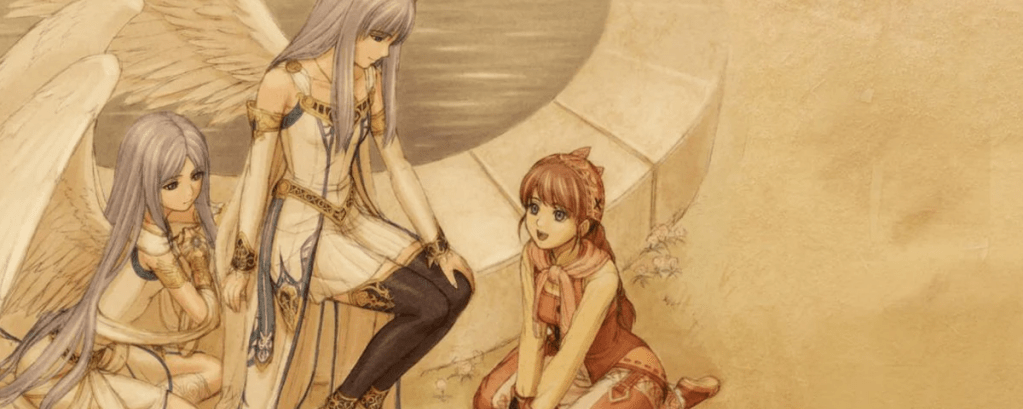
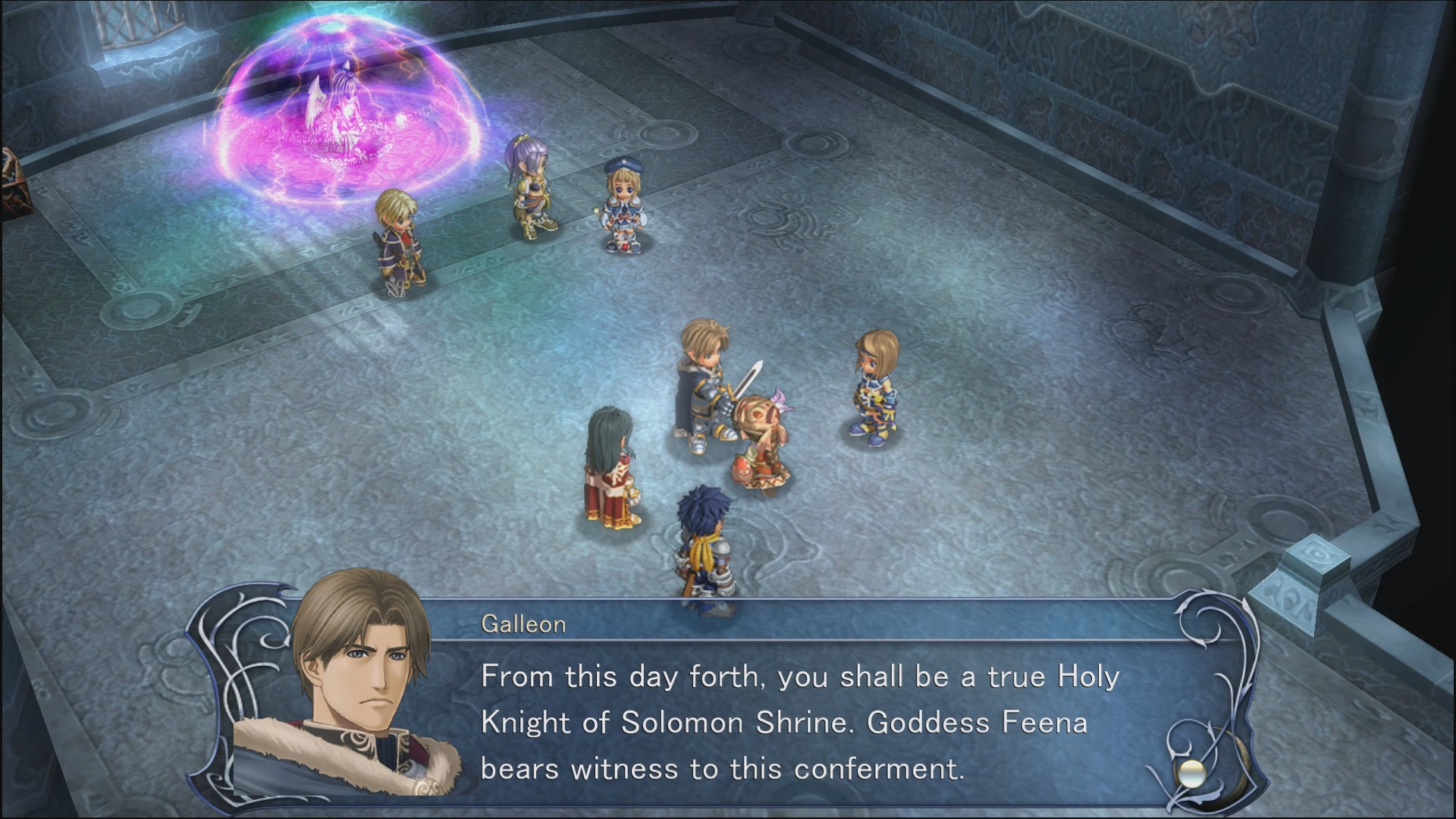
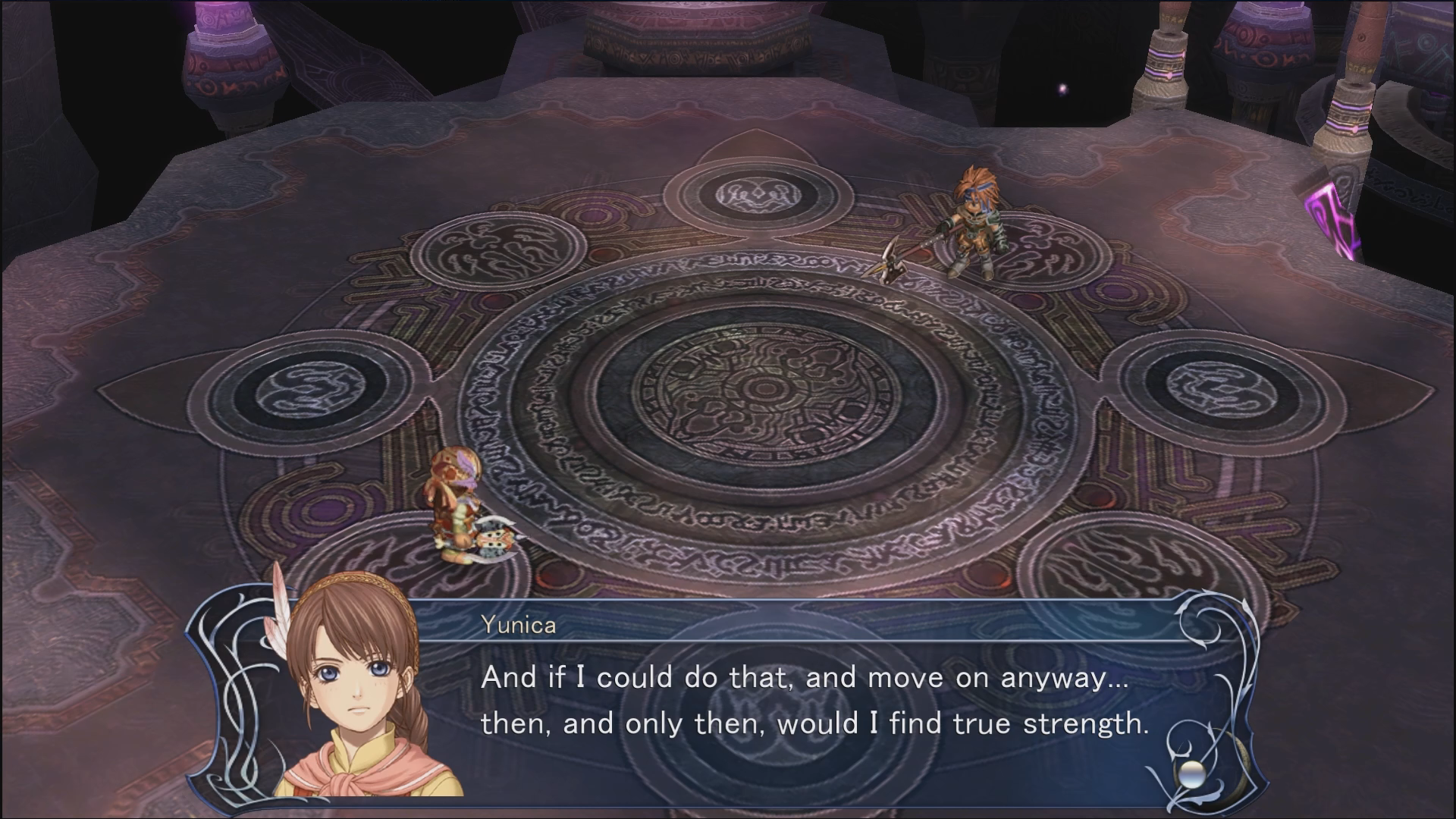
Ys Origin takes us back 700 years prior to the events of Ys: Vanishing of Ancient Ys, as we follow the journey of one of three protagonists up an accursed tower. The floating holy land of Ys is governed by the two goddesses; Reah and Feena, who have disappeared to the demon infested surface without a word. A taskforce consisting of a detache of Holy Knights, priests and sorcerers have been dispatched to find out where they went and why they left. Their trek to the surface is quickly thwarted by a mysterious energy blast originating from a dark tower, scattering the group across the land. One of our protagonists, Yunica, falls close to an ancient tree, who guides her towards the tower where the goddesses seemingly disappeared into. With the tree falling silent after the conversation, Yunica becomes increasingly worried and races off to the base of the tower. It is here we meet part of the expedition that made it there before her. Unable to wait due to her ever growing restlessness, Yunica begs the high priest to let her scout ahead into the tower, and with her trusty hand-axe in hand she ventures onto the first floor and the start of the game.
Like many other installments in the series, Ys Origin delivers on some incredibly satisfying action from the get-go, as you mow your way through the demons infesting the tower. However, in contrast to the more worldly exploration in the other games, this one is contained to the tower itself and the many floors to the top. This gives the game an arcade sensation similar to the Tower of Druaga games, where each floor represents a stage rather than a part of the world. We understand that there is a tower, the threat is at the top of said tower and therefore we go up. This allows the game to focus more on the individual stories rather than requiring extended world-building. Ys Origin manages to do both at the same time, developing its three playable characters upon the foundation of the world-building. Each character expands on a facet of the story; Yunica’s is a much more intimate tale about a magic-less girl looking to prove herself to protect the ones she loves, Hugo’s tells a story of a man torn between duty and family, and the final character, Toal, tells a story of friendship, power and the duality of man and demons. Playing through all three of the stories gives you the full scope of the overarching narrative as well as three drastically different feeling playthroughs.
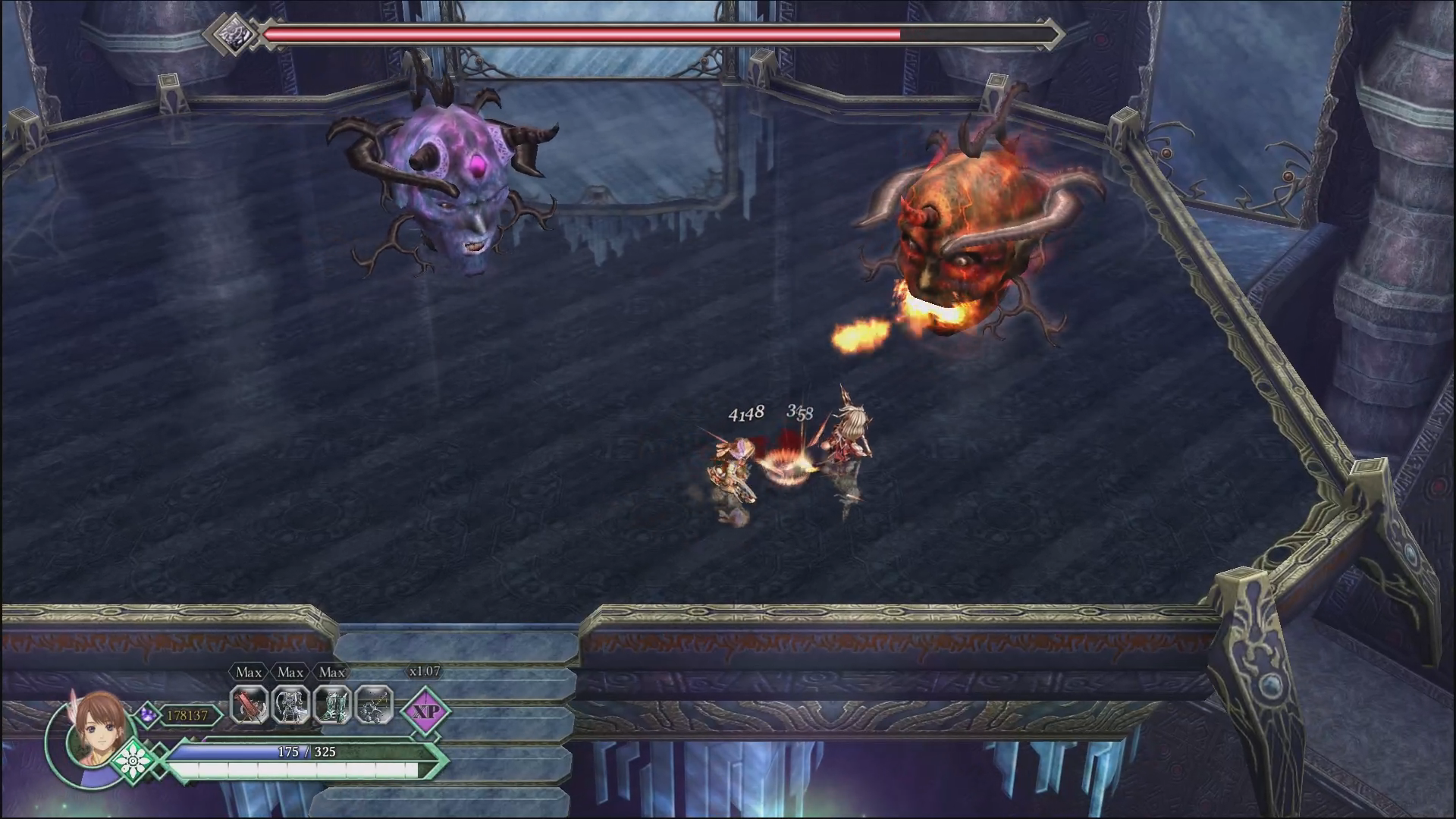
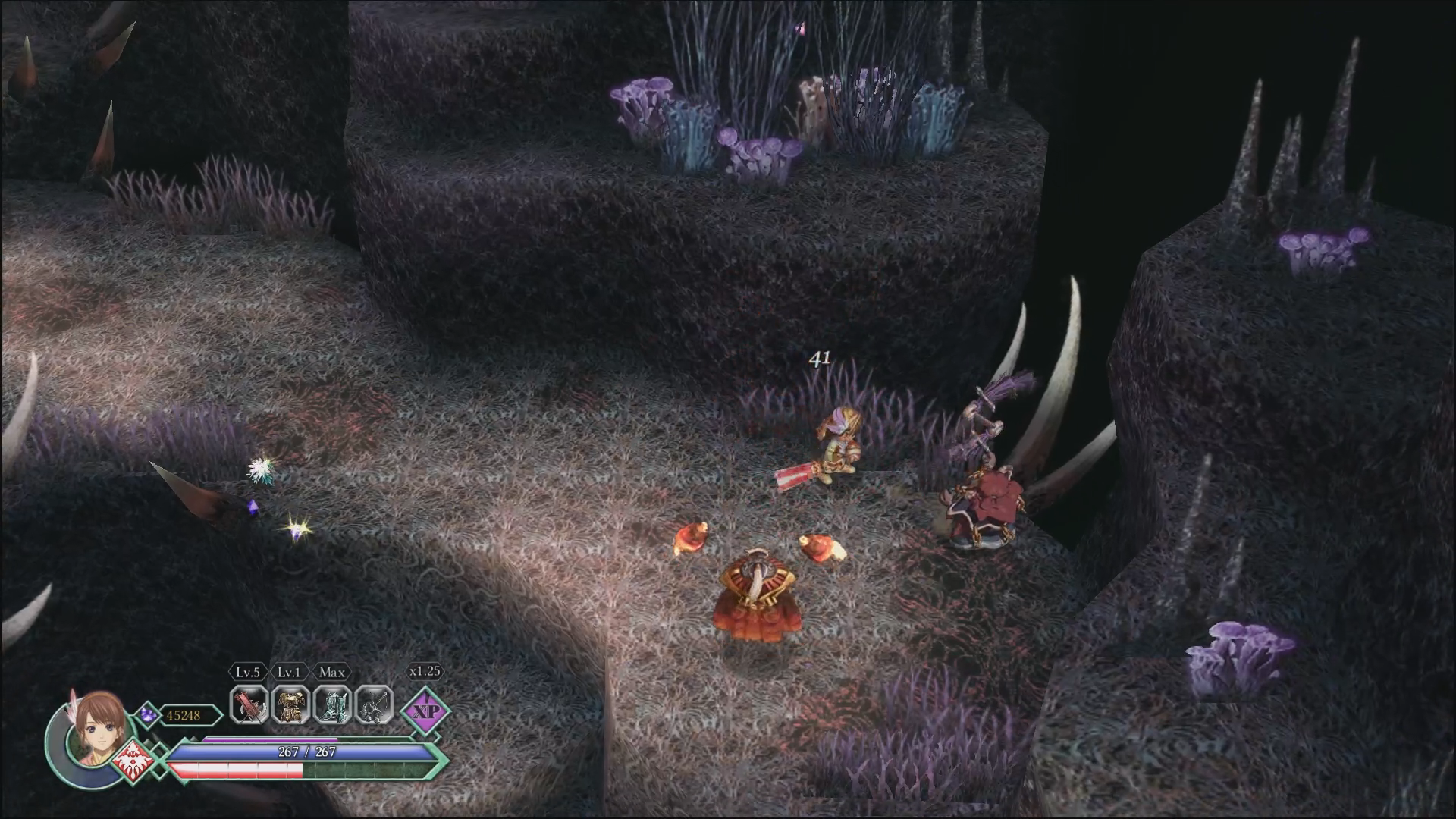
Each character brings unique gameplay mechanics to tackle the challenges of the tower with. Yunica, lacking any talent for magic, brute forces her way through hordes of demons with her trusty hand axe and her father’s sword, while Hugo tackles foes from a distance using powerful magic. Toal uses his demonic powers to enhance his speed, delivering deadly and precise blows to deal with each foe. Since progression through the tower is fairly linear, it feels incredibly rewarding to ascend to the next floor as a more powerful character. Along the way you’ll face bosses that will require you to use parts of the new things you’ve learned in order to defeat them. Despite the action being extremely fast paced most of the time, it’s delivered in a way that feels natural to the player. It is never too overwhelming and as such feels really rewarding, to the point where charging spells or attacks whilst running around and slashing through monsters becomes second nature.
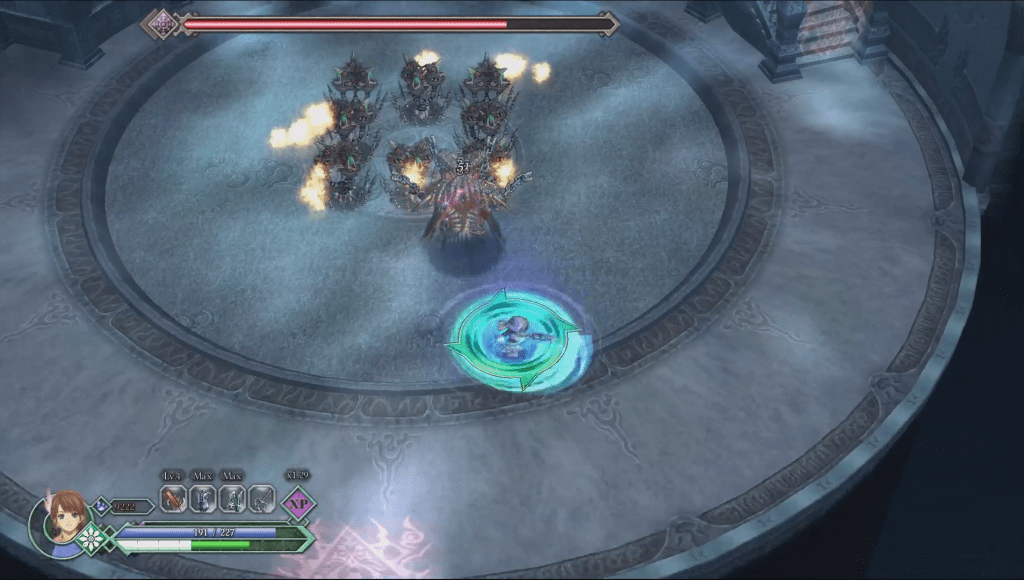
Ys Origin strikes a rare balance between player comfort, pacing and challenge that I’ve rarely seen matched, even within the same series. This is in part due to the condensed level design and rapid progression. The game uses player level to gauge a threshold, if you’re too low level the damage you’re doing will substantially diminish. So, if you run into enemies you can’t beat, it’s usually a matter of grinding out a level or two to bridge that gap. It marks the difference between being pushed into a corner and becoming an unstoppable force of nature that obliterates a floor. Despite being quite grind heavy as a result of this, it never really feels tedious. It usually means an extra three to five minutes of revisiting a floor or tackling a group of enemies a few times to get the experience you need. This isn’t too unfamiliar to fans of the Ys series, however, what sets Ys Origin apart is how it expedites the process. The game runs a constant loop of either being too strong or not strong enough yet, and that is the key that makes Ys Origin so immensely satisfying. Top that with unique themes for sets of floors and some puzzles for you to solve and you get a nice cherry on top of an already quite tasty cake.
Ys Origin is a rather special game to me. It’s been the catalyst to make me enjoy content creation for over a decade now and replaying it revitalized a lot of that childlike enjoyment of sharing video games online. It’s a neatly compacted experience that, despite its rather limited setting, makes for an incredibly satisfying experience. The difficulty levels range from being able to enjoy the story, to every room means death, and this boss fight means more death. This leaves you able to set the game to your desired level of bite as you explore the many floors of the tower. The soundtrack is undeniably Falcom in the rather bombastic songs that play throughout the game. I find myself more so remembering the themes and floor types based on the song that plays, rather than the point in the story where it occurs. This is especially true for the final stretch to the top being accompanied by Beyond the Beginning, a powerful song that combines explosive synths with bellowing choirs to make the last steps of the staircase feel so incredibly bombastic and energizing. Ys Origin is a razor-focused experienced that maintains the feel of the other entries in its series, whilst simultaneously providing a rich arcade-like experience that’s incredibly fun to play. If you’re looking to try out the Ys series, this might be the best entry to look into.
Farmers Axe/10


Enjoying the review? Consider supporting TanookiChickenAttack with a coffee at;
https://ko-fi.com/tanookichickenattack

 TanookiChickenAttack