

2019, 2022 | WayForward | Playstation 5
Alongside last week’s Shantae and the Pirate’s Curse, I also managed to snag a copy of Shantae and the Seven Sirens to go along with it. While I initially was a bit hesitant on this entry, into what is quickly becoming one of my favorite series after hearing some of my peers talk about it, any lingering doubts I had went straight out of the window and got slam dunked into the nearest bin. What I expected was more of the same, with maybe a change of mechanics, but what I ended up getting was a fresh world to explore and a brand new approach to a familiar formula that feels ludicrously satisfying to play. It was an incredible experience to see a game series still being able to evolve the existing formula, while keeping the core and charm of the franchise intact.
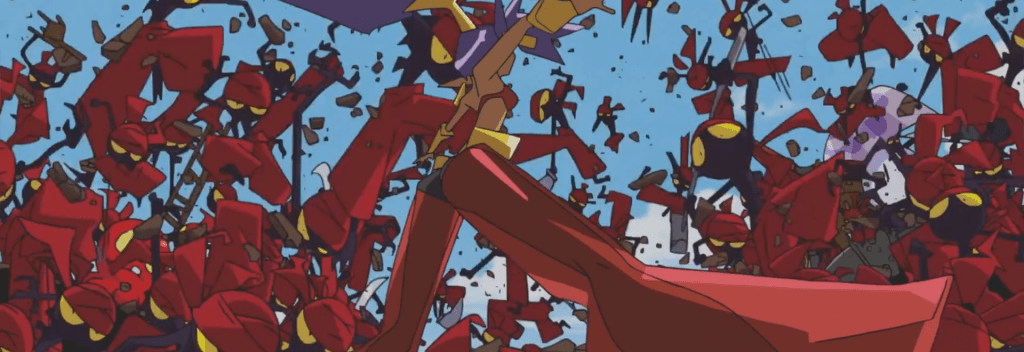
Shantae and the Seven Sirens is the fifth installment in WayForward’s Shantae series with the first part of its originally episodic format releasing through Apple Arcade in 2019, with the second part releasing a few months later after a minor delay. The game would later be released on Nintendo Switch, Playstation 4, Xbox One and PC, with some noticeable changes. The two parts would be merged into one full experience with new modes added that allowed you to explore the game with all of the newly introduced ability cards unlocked, a mode that allowed you to equip all said cards at once, and a beginner mode for those simply looking for a leisurely stroll through the story. While the game borrows its visual style from Half-Genie Hero, it dives back into the metroidvania roots of the series and gives us a huge map to explore. With Seven Sirens, the series also took a huge leap in its presentation with fully animated cutscenes and an opening cinematic by the legendary Studio Trigger (Kill la Kill, Delicious in Dungeon, Promare, to name a few) and an original song performed by Shantae’s voice actress, Christina Vee. The energetic vibe of the game is immediately palpable through its opening and continues to carry this through the entire game’s presentation.
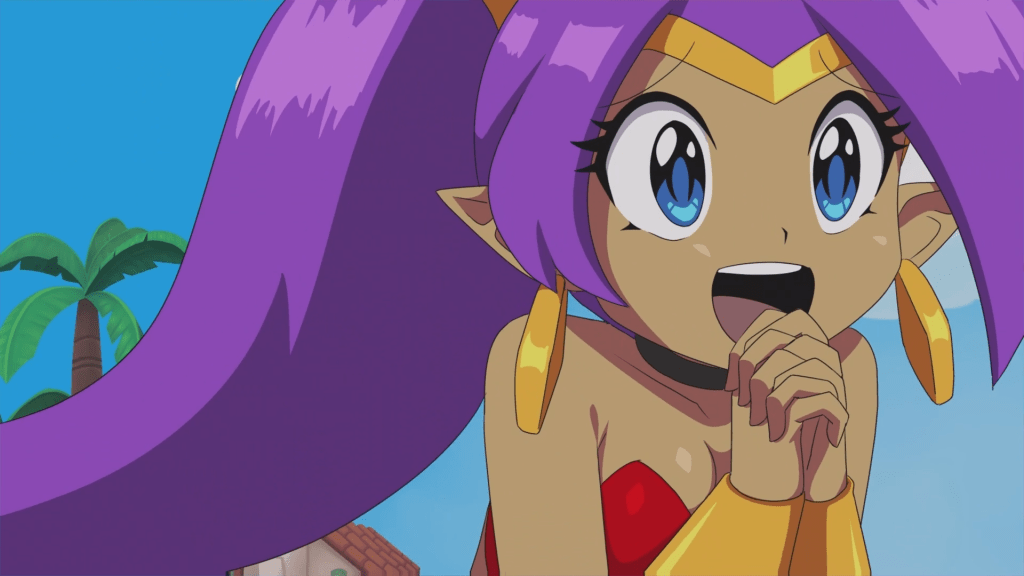
In Shantae and the Seven Sirens, the eponymous Shantae and the gang get invited to Paradise Island, where the Half-Genie Festival is being held. After the last encounter with Risky and her gang of goons, the gang decides that it’s time for a vacation, and they gladly accept. Upon arrival we meet the mayor of Arena Town, as well as a few new friends in the form of the other invited Half-Genies. During the opening ceremony dance, the other Half-Genies mysteriously vanish in a flash of light, leaving only Shantae to find and rescue them from whatever fate they met. The journey takes you below the town to an ancient ruin upon which the island was built, and straight into the arms of the familiar face of Risky Boots. For the majority of the story you’ll be spending time exploring the Sunken City, unraveling its mysteries, and saving the other Half-Genies from the clutches of the Sirens. As you rescue your fellow Half-Genies, they give you part of their magic that allows you to use their abilities. The first, Plink, allows you to spot things hidden from sight, Vera gives you the power to heal yourself and things around you, Zapple adds a shocking arsenal of electrics to your kit, and Harmony shakes things up with earthquakes.
In true metroidvania fashion, Shantae and the Seven Sirens introduces us to a massive ruin to explore underneath the city, with areas being barred from progression until you find the skills needed to get past those barriers. At the start of the game, your tools are limited to being able to jump and whip enemies with your ponytail. Your attack strength and speed can be upgraded by buying items at the shop, alongside healing potions and small magic items. One of the new mechanics introduced in Seven Sirens is the card system. Similarly to Castlevania’s Dawn of Sorrow and Aria of Sorrow, enemies will drop cards that you can collect to unlock a large variety of abilities for you to utilize. These range from increased run speed and higher damage output, to shop discounts and increased mobility on specific transformations. There’s about 50 of these to collect and each provide you with a unique way to tweak the playthrough to your specific needs. After beating one of the Sirens, certain NPC’s will offer Shantae a unique card based on said boss, giving you a strong and unique ability, in exchange for Ore Chunks. These chunks, and Heart Squids for more health, can be found scattered across the overworld and inside of the dungeons where the Sirens reside. The game is generally divided into exploring the town and ruins, and going through the game’s dungeons. These provide you with a smaller area to explore and a nice challenge, as well as a Siren waiting for you near the end. In each dungeon you’ll also find one of the kidnapped Half-Genies waiting for you in a cage. By freeing them and completing the dungeon (and doing a little side quest for them), they impart their magic on you giving you access to new abilities. These allow you to access hidden platforms, electrify everything on screen, heal and purify the area and move stone by going into the dance mode. The magic that you receive helps you with further traversing the ruins, but Shantae also gets access a few transformations of her own. Unlike the Fusion Dances, these newly introduced Fusion Forms allow Shantae to transform into various creatures at the press of a button. The Newt Form lets you stick to walls and dash away from them in similar fashion to the monkey in prior games, the Tortoise Form allows her to turn into a Beyblade and let it rip through stone barriers to replace the elephant of the prior games, and so on. There are five different Forms to acquire and each adds a new dimension to the gameplay. It makes the game feel impressively smooth and satisfying.

Shantae and the Seven Sirens feels like it takes the best qualities of both Pirate’s Curse and Half-Genie Hero to create an immensely satisfying palette of new mechanics to sample from. It’s a fascinating iterative process that you really start to notice once you play multiple games in a row. In Half-Genie Hero, the dancing had a bit of a habit of disrupting the action on screen as you cycled through the menu in order to select the transformation needed to traverse obstacles. In Seven Sirens, WayForward took note of this and made the transformations a single button press that is similar to the pirate tools from Shantae and the Pirate’s Curse. Each installment of the Shantae series cumulatively iterates upon mechanics introduced in previous games and weave it into something that fits the current game with great results. Sure, there’s still dancing involved to use the Genie abilities, but the transformations now feel like a natural part of Shantae herself, instead of having to rely upon a barrier. While the dancing has always had a certain thematic weight, the choice to ultimately make the other forms accessible through a single button speaks volumes towards Shantae’s growth as a character over the course of the series, while also making movement feel immensely satisfying. Now, instead of pausing to set yourself up for an obstacle, the smooth momentum carriers itself as a constant instead.
It’s really impressive how the Shantae games have continued to build brand new, more elaborate structures upon the familiar foundation with each new installment. The core formula of the series always remains within throwing distance of the same, giving the games their identity, but always strives towards some level of innovation. One of my favorite things that I noticed when playing through most of the series (as I’m writing this I’ve also completed Risky’s Revenge and most of the original), is that each installment iteratively expands upon the previously introduced designs with new mechanics. This makes every game in the series stand proudly on its own legs, while still feeling extremely familiar. It even works the other way around! In a weird sort of way you can almost excavate where certain design choices came from by going from Seven Sirens all the way back to the original. An example of what I mean is the way the pirate tools got translated to on-press transformations to streamline exploration, but it’s also noticeable in the way that exploration itself is approached with re-introducing the warp fast travel from Shantae and Risky’s Revenge to accommodate for the large, open map.

Of all the Shantae games I had the pleasure of playing so far, Shantae and the Seven Sirens feels like it caters to my tastes the most. It combines my favorite features of both Half-Genie Hero and Pirate’s Curse together to make for an incredibly fun and satisfying feeling game, whilst also expanding more on the map size. Even though the Half-Genie’s were meant to put up a show, it’s once again the Squid Baron that steals it with his goofiest arc yet (in mint condition, of course). The newly introduced characters are great as well, with each providing the game with so much personality. The map is a nice change of pace from the more stage oriented installments we had before this, however, due to the sheer scale of it and the sparsely placed warp rooms, traversal can feel a bit tedious and discourage players from exploring. It might’ve helped to have a dance, or item, that allows players to instantly go back to the last visited room. Regardless of this minor complaint, it’s thoroughly satisfying to go around the map due to the new implementations of the transformations. The series is once again graced with Jake Kaufman’s music and this still elevates that Shantae energy that the games are so well known for. The visual presentation is phenomenal with stellar art and the dialogue portraits feeling more dynamic than ever, really giving all the characters a larger range of expressions to work with. Alongside all of this is a slew of great boss designs and fights for you to overcome. Shantae and the Seven Sirens feels like a cool coastal breeze on a hot summer’s day with its open design, fun story and great presentation. While it may be a departure from the status quo, I think the newly introduced mechanics and world design are doing miracles for keeping the series fresh and exciting to play. I might even go as far as calling this my favorite in the series!
Collector’s Item/10



Enjoying the review? Consider supporting TanookiChickenAttack with a coffee at;
https://ko-fi.com/tanookichickenattack

 TanookiChickenAttack