

2002, 2015 | WayForward | Game Boy Color, Playstation 4

And so we finally arrive at the end of our journey through the Shantae series, for now at least. Throughout the last few weeks I’ve been exploring the Shantae games on stream as well as doing these reviews, and I can safely say that it’s been a phenomenal experience. Over the course of this journey I’ve come to really appreciate the incredible improvements that the series has made over the years, yet I also got curious as to where these building blocks came from. Just how strong is the foundation that Shantae was built upon?
The first Shantae originally released for the Game Boy Color in 2002, a few months into the release of the Game Boy Advance. The original idea for the game started out as a concept drawing made by Erin Bozon, which was then fleshed out into a fullfledged world filled with genies and magic. After showing her idea to her husband, Matt Bozon, they started working on the concept for the first game in the series. The original concept was rather different from the game we ended up getting; it was intended as a Playstation or Nintendo 64 game, with a full 3D world in which Shantae had to find and fight jinn. This concept eventually evolved into a 2D metroidvania styled game for the Game Boy Color. For the soundtrack they’d hire the now household name, Jake Kaufmann, who would give the game some of the series iconic themes. Shantae marks the first original title that would be released by WayForward, as they primarily worked on external projects as developer for hire, and what a first title it is. The first Shantae pushes the Game Boy Color to its absolute limits in terms of sound and visual capacity, while never sacrificing on performance. However, being the first original game did come with a few roadblocks that would put the series on a near decade hiatus following its release. After a long search the game was eventually published in the US by Capcom, who opted to hold the release until a few months after the Game Boy Advance hit the market. This resulted in the game being a critical success, but not meeting sale expectations and thusly receiving a rather low print run estimated at a rough 25,000 copies being made. The original release has since enjoyed a cult status amongst Game Boy Color enthusiasts and collectors, and has become one of the most sought after collector’s items for the platform. One of the advantages that came with the late release is that there are a few enhancements made to the game that are specific to the Game Boy Advance. These would also be included in the 2021 release for Nintendo Switch and the 2023 release for both Playstation 4 and 5.
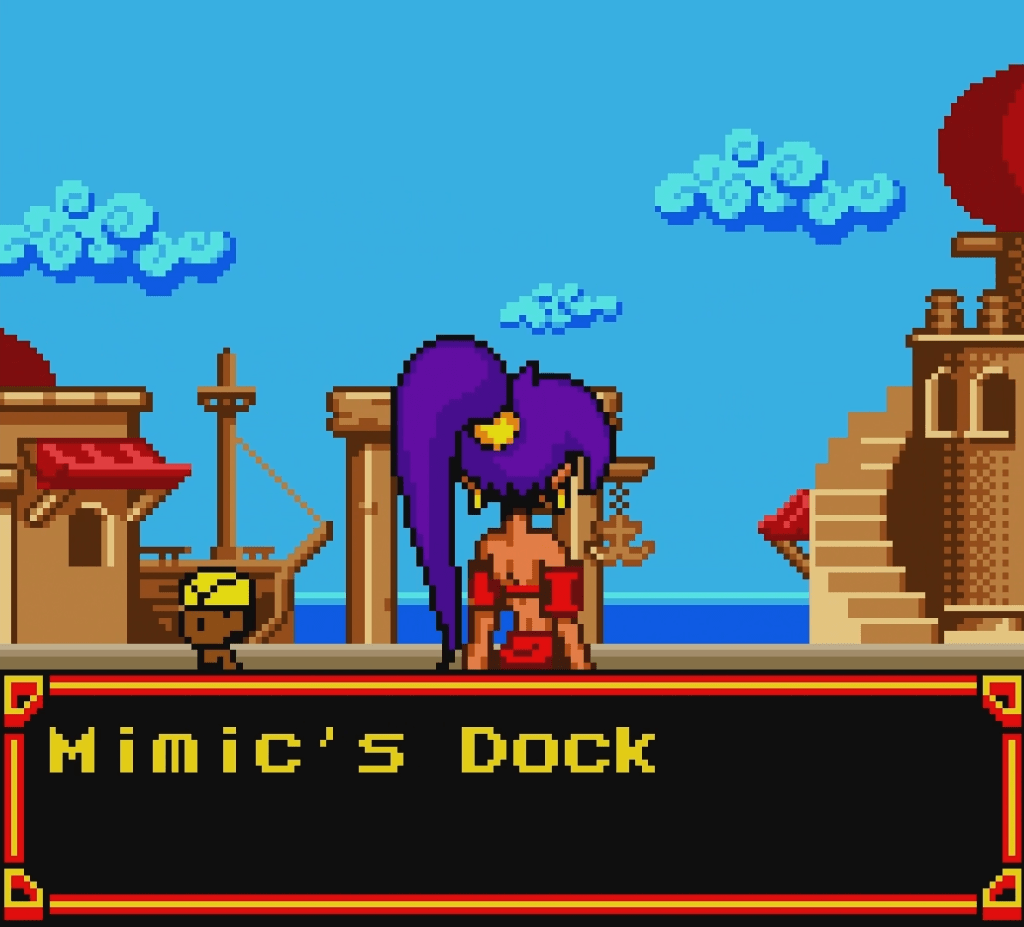
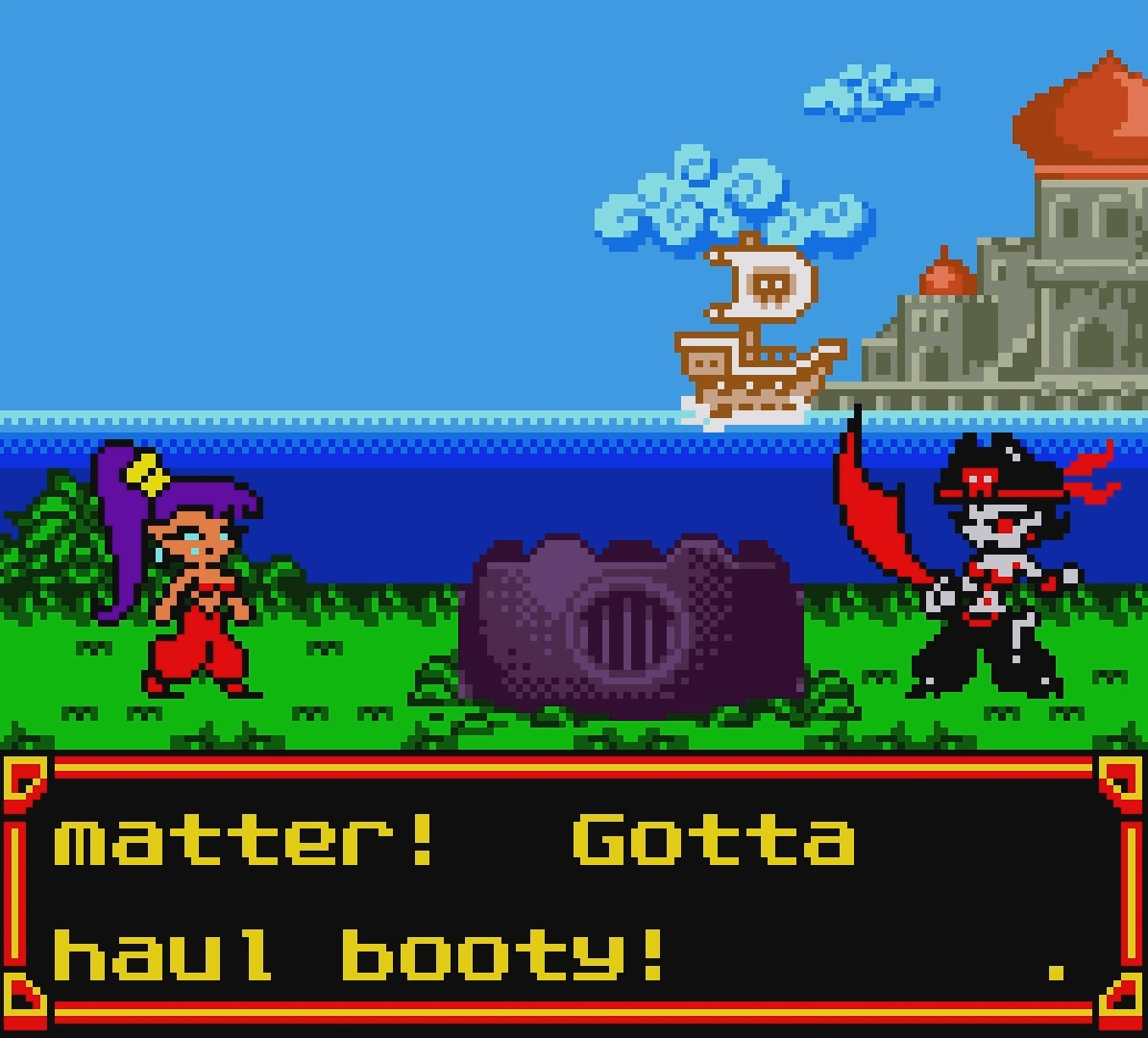
The first Shantae introduces us to the Sequin Lands, a magical realm where the towns are being protected by their Guardian Genies. In one such town lives the eponymous heroine Shantae, a Half-Genie coming to terms with her human half, who serves as the Guardian Genie of Scuttle Town. One day the town is attacked by a pirate group led by the notorious Risky Boots, Queen of the Seven Seas, in a ploy to steal a prototype steam engine from Uncle Mimic. To prevent Risky from gaining total dominance over the Sequin Lands with her steam contraption, Shantae goes on a quest to find the three elemental stones that would finish her infernal machine. This quest takes Shantae all across the Sequin Lands, from the lush forests and fields to the frozen peaks of the mountainside. Along the way she’s helped by a small group of friends, mainly Sky and Bolo, as well as the newest, questionable, addition to the group, the zombie Rottytops. On her journey, Shantae ventures into the deepest parts of the lands and not only discovers the elemental stones, but also relics containing the power of the genies. Each of these grant her the power to transform into an animal with a special dance. Eventually Shantae manages to retrieve all the stones, but is betrayed by her guide, who turned out to be Risky Boots. With the stones now gone, a search of Risky’s lair ensues, bringing her to a mysterious island filled with Risky’s minions, the Tinkerbats. After battling her way through the hordes, Shantae is confronted with a giant steam-powered robot, Tinkertank, as well as its creator. Defeating both the megazord and the pirate queen, Shantae barely manages to escape the collapsing lair and is saved by the magic of the genies. Here, she is offered a choice to remain amongst her own kind, or be barred from ever entering the genie realm ever again. In typical Shantae fashion, she refuses to stay by her friends’ side as Guardian Genie of Scuttle Town, now having embraced both her human and genie sides as her whole being.
At this point it’s difficult for me to not immediately compare the finer details of the game mechanics to more contemporary installments of the series. What was incredibly surprising when I first booted up the original Shantae, was just how solid of a foundation the rest is based upon. Much like the other games, your primary means of attack is the hair whip, which has a much shorter range in this game. Alongside the hair whip you also have access to consumable spells, which can be bought at the item stores in the various towns scattered across the island. What’s neat is that each town specializes in certain items, so while most items, like healing pots, are available in other shops, they’ll be cheaper or more expensive based on where you shop. Along your journey you’ll unlock four transformations; the monkey, the elephant, the spider and the bird. To transform into these forms you go into the dance mode, which at first is just a repeating loop of four beats. At the start of each beat you can press a button, which changes the type of move you do and the music that plays. It makes the transforming dance a rhythmic mini-game that might be a tad rough to get used to at first. For instance, to transform into the monkey you press down, then left, on the d-pad. However, if you miss the beat you have to wait until the next one. If you’re feeling adventurous you can go on a quest to find baby squid to give to the warp squids of each town, which grants you a warp dance to fast travel to that given town. These are much more complicated sequences, but feel incredibly rewarding to hit just right. In similar fashion to Castlevania: Simon’s Quest for the NES, Shantae has a day and night cycle. Travelling during the night is significantly more challenging, with enemies getting substantially stronger and certain shops closing. While it is manageable, certain areas will be incredibly dangerous to explore during nighttime and I found myself frequently waiting for the sweet relief of daylight to make the journey less scary.

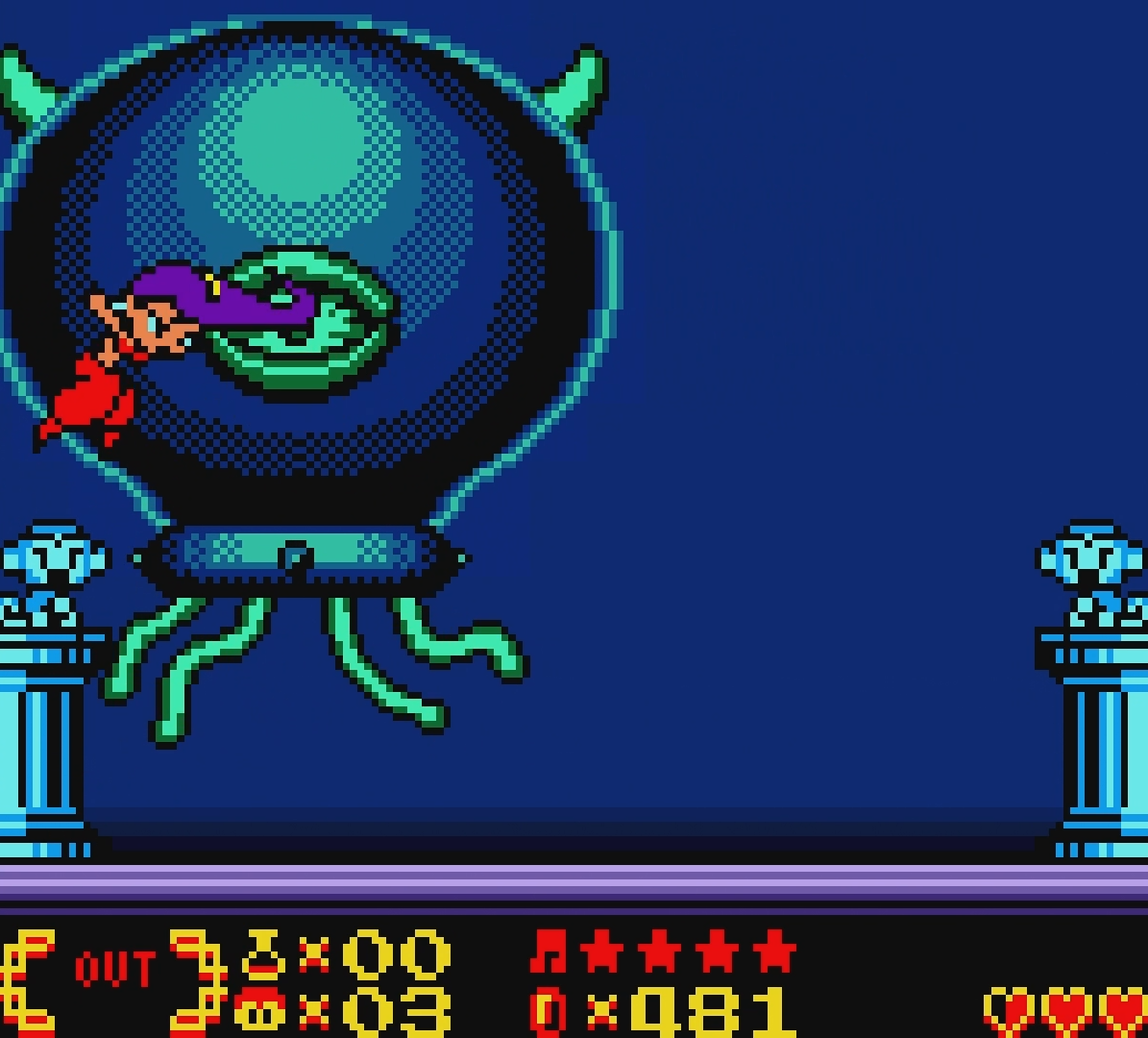
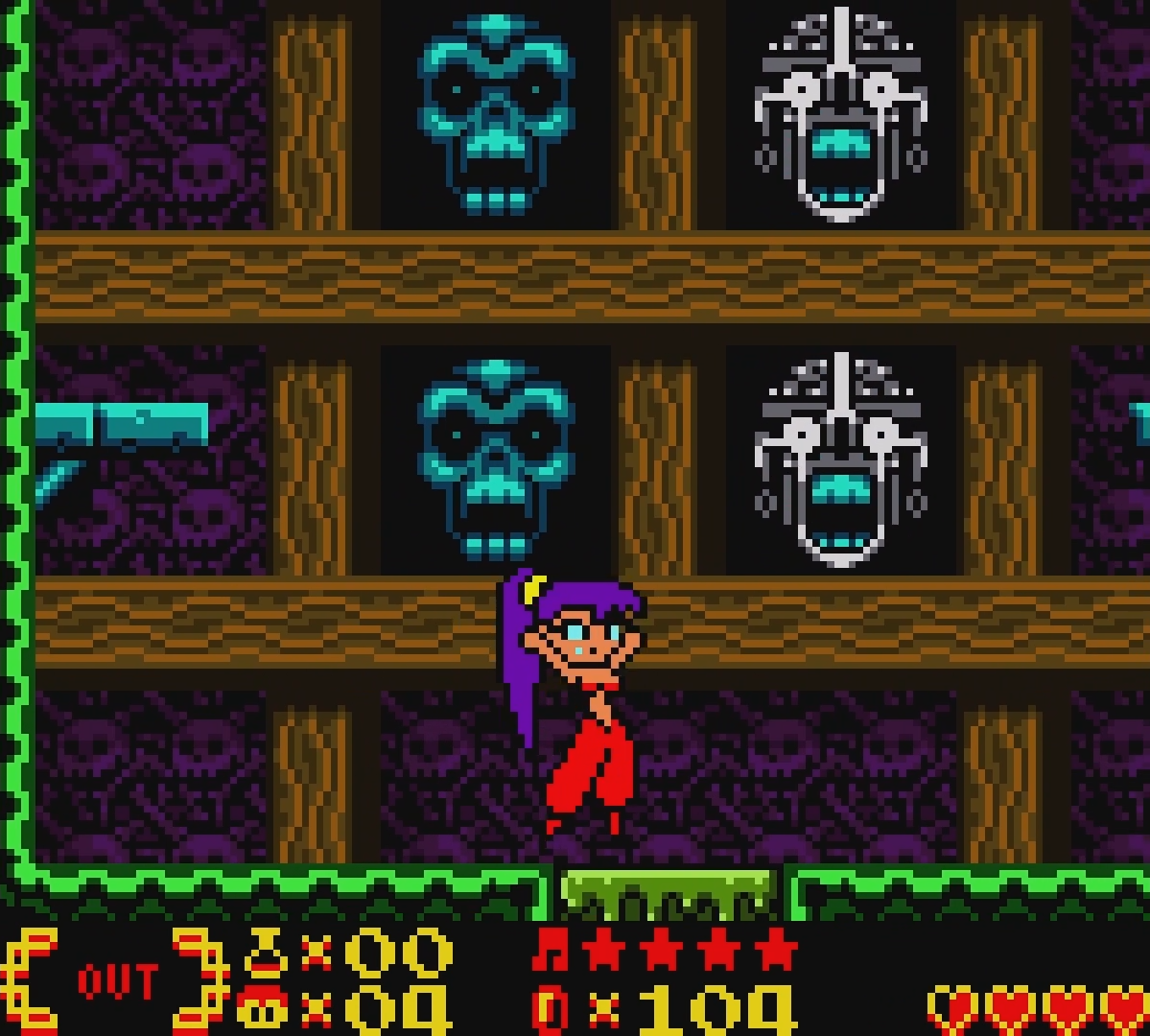
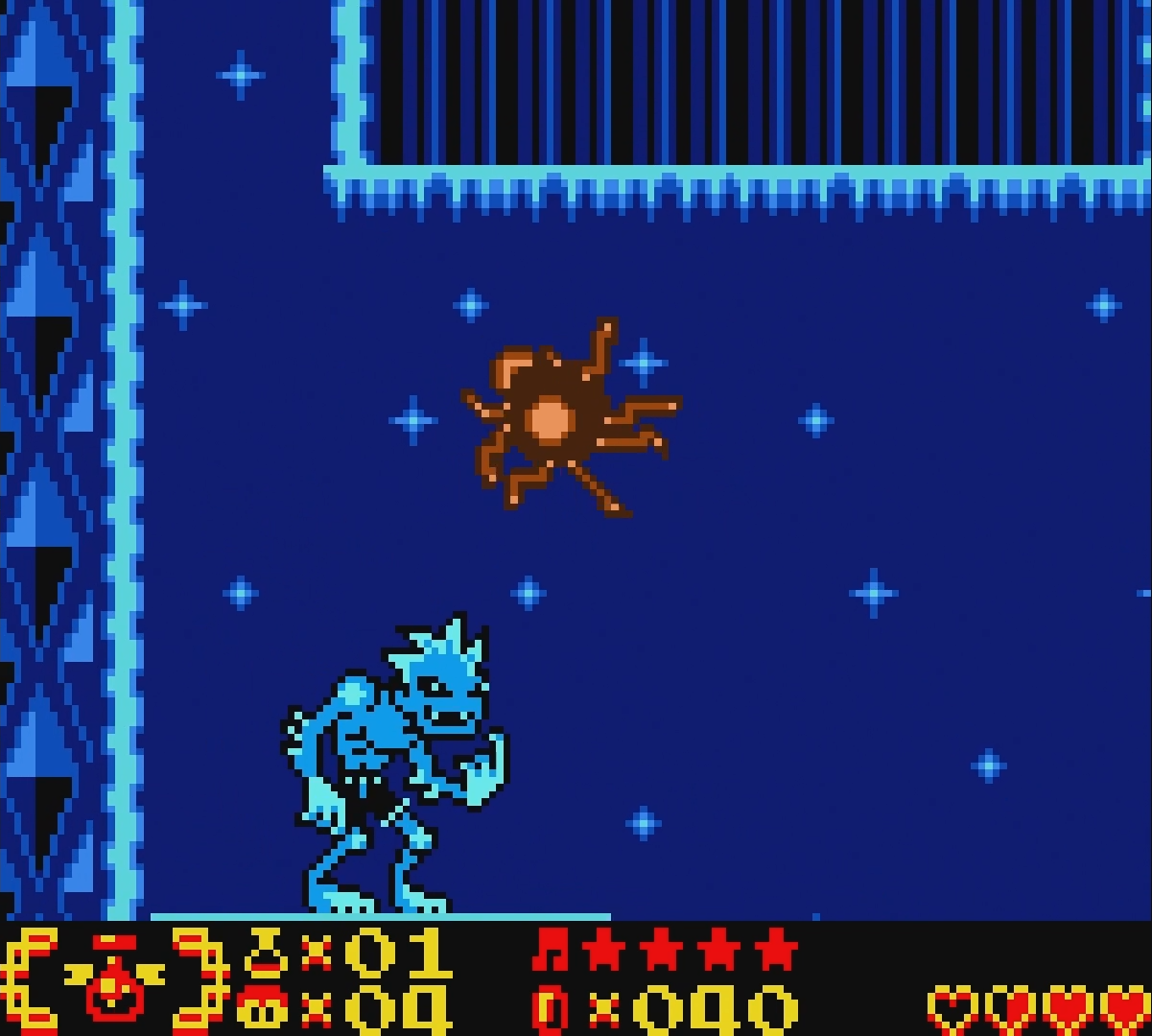
Shantae is a wonderfully ambitious game, especially for the platform it released on. Its striking color palette makes excellent use of the GBC to process its 56 colors at the same time, by simplifying the colors used on the characters. This left the detailed and beautiful sprite work largely unshaded, but allowed for the game to run flawlessly and deliver on some striking environments and enemies on screen at the same time without sacrificing performance. In an almost perfect storm, the release window of the game allowed WayForward to include enhancements for when the game was played on a Game Boy Advance. These enhancements were primarily aimed at brightening the visuals to accommodate for the GBA’s darker tones, but also included a unique transformation that could be bought in one of the village’s Advance Shops. It’s a drop-dead gorgeous game to look at, that perfectly pushes the platform its on to its absolute limit, without ever compromising on performance and design. It also translates quite well to the Playstation 4 version that I played, and somehow maintains some of the quirks of the Game Boy Color in its port.
While the game is stunning and highly enjoyable, I do have some gripes with it. The main one has to be the implementation of a lives system. Like with most games, once you run out of lives, the game is over. However, Shantae does add a minor twist to it, by allowing you to continue from where you last saved. Instead of resetting the game state to the point of said save, you get to continue with all the boons and banes that come with your last bit of progression in the game. It makes the lives system feel a bit more redundant, in the sense that the save points serve more as checkpoints. Luckily, later titles address these issues with a richer abundance of save points to choose from. The other is the attack range of Shantae’s hair. This is a bit more of a retrospective complaint, since the later games do add more lush to the locks and more reach to the range, but for this installment it feels like you have to get right up in the personal space of enemies in order to hit them.
Shantae is a fantastically ambitious title that absolutely pushes the Game Boy Color to the brink. The day and night cycles add quite a lot of extra dimension to an already interesting world to explore, with certain areas only being reachable during either day or night. It creates a fascinating labyrinth for players to explore, both in- and outside of dungeons. This doesn’t make it less of a challenge, though. The game doesn’t pull any punches and will frequently leave you scrambling for heart containers once the sun sets. The dungeons are really well designed towards challenging the player in fun ways, and the bosses are a riot to fight. I do have to deduct some points out of personal bias for the lack of Squid Barons, though. Nothing personal. While the original Shantae isn’t my favorite in the series (that title belongs to Seven Sirens and Pirate’s Curse), it shows a lot of the passion the developers put into it. The mechanics feel fresh and unique, even in light of the entire series. The rhythm mini-game for the transformations took some time to warm up to, but after playing the game for a while, I found myself really enjoying both the mini-game and the thematic implementation. Shantae provides a surprisingly polished experience that lays the foundation for the rest of the series to build its identity on. It is a must play for fans of the series, though I’d recommend playing either Pirate’s Curse or Risky’s Revenge first to sample the flavors of the menu this franchise offers.
belly dances on the beat/10
With that we’ve covered the entire Shantae series, with the exception of the upcoming Shantae Advance: Risky’s Revolution. If you haven’t read the other reviews that we’ve done on TCA for the Shantae series, check out this collection page for an overview of all that we’ve covered. Thanks for reading!

Enjoying the review? Consider supporting TanookiChickenAttack with a coffee at;
https://ko-fi.com/tanookichickenattack

 TanookiChickenAttack