

2010 | BottleRocket, Bandai Namco Games | Playstation 3

From the obscure, shadow and smoke filled corners of the arcades, came a cult classic beat ‘m up series; Splatterhouse. While I never got to play the original arcade game (until recently), I did manage to savor a sip of the blood soaked, bone breaking horror extravaganza when the series released its sequel onto the Sega Mega Drive. However, the entry that I have the most nostalgia for is the 2010 reboot of the series for Playstation 3 and Xbox 360. It’s admittedly a strong contender for the most 6/10 game on the systems, but frankly speaking, that just makes it my time to shine. I have a deep love for the unfinished, unpolished and underperforming, and Splatterhouse checks all three boxes with a misplaced confidence of a toddler handing you a fridge drawing. I’m proud to put it up on display, but we have to collectively admit it still needs some time to improve.
The story of 2010’s Splatterhouse is as complicated and messy as the game we ended up getting. During this time, a rather odd dynamic between Western and Japanese developed games started to create a chasm of unpleasant finger-pointing (I’m grossly oversimplifying). As a result, a lot of Japanese studios started to develop games that were more aimed at said Western market. This gave us some delightfully wild and wacky titles, like; Neverdead, Binary Domain, Quantum Theory, and quite a few others in an attempt to garner some success among Western audience members. While some of these games are good, Binary Domain being absolutely excellent, most of them faded into the obscurity of the mediocrely reviewed game bin in your friendly local game shop (ignore me digging through those bins like a hungry gremlin). With Namco and Bandai fresh off of there merger in 2005, they went looking for a potential hit in the west to supplement their legacy titles a bit more. One of the IP’s they still had lingering around was the 80’s slasher flick that inspired a Splatterhouse franchise, which fit the criteria for an M-rated violent, but simple game, perfectly. And what followed was an absolute mess of a development for a reboot of the cult-classic series.
In 2007, Bandai Namco hired BottleRocket Entertainment to work on the development of their new flagship brawler. Most of the team consisted of members that formerly worked on The Mark of Kri for San Diego Studio (who now primarily make sports titles), and now started working on Splatterhouse under the watchful eye of company founder, Jay Beard. Throughout the initial development of the game, there was a constant rift between the demands from Bandai Namco and the desires from Jay Beard. Development was slow and cumbersome and provided Bandai Namco with some incredibly strange results. A lot of the original designs for the game were thrown out for odd concept art of demons with TV’s for a head, and wires and sockets in places that would make H.R Giger proud. Despite consistently missed deadlines, BottleRocket worked on the game until early 2009, when Bandai finally pulled them off of the project. Despite the setbacks, the game wasn’t cancelled and was instead further developed by the in-house team that worked on Afro Samurai prior to this, as well as part of BottleRocket‘s core team. Through all the hardships, Splatterhouse would eventually make it to the shelves in November 2010 to lukewarm reviews. The game released with numerous bugs, felt unpolished and had long loading times, with the Xbox 360 version’s load screens lasting close to a minute. Despite the rough reception the game did release with a lot of extra’s, including near arcade perfect ports of the original games, giving you the entire Splatterhouse series in a single box.
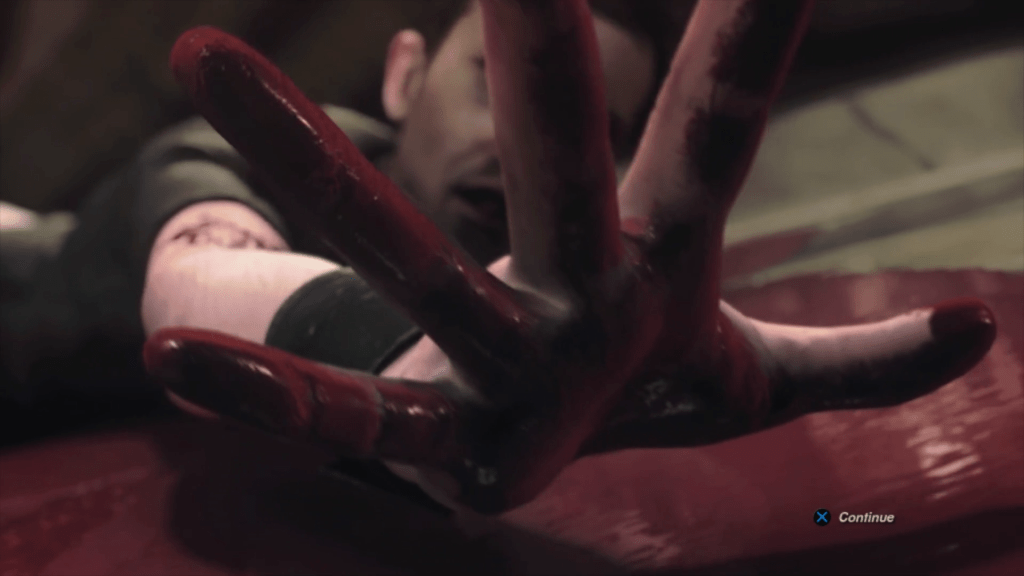
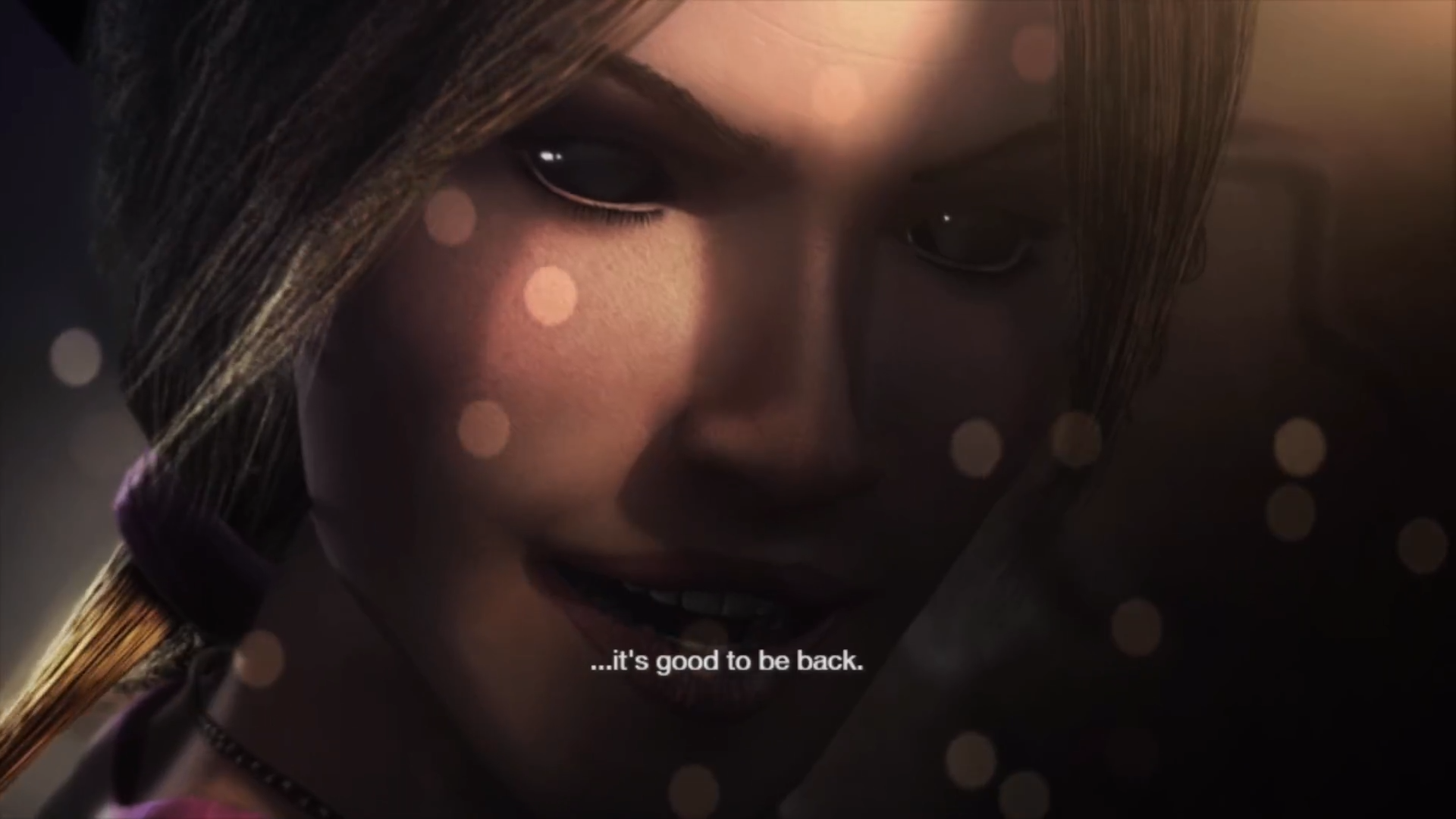
Splatterhouse tells the story of Rick Taylor, whom, after escorting his girlfriend to a dark and shady mansion for an interview with a prolific necrobiologist, gets brutally murdered by the monstrous entities that take house in the mansion. As he lays dying, a mask offers him the power to get Jennifer back from the perverted clutches of Dr. West, and turns Rick into a bulking, hulking monstrosity capable of ripping through the demon horde with his bare hands. The now moderately unstoppable Rick proceeds to do just that as the rest of the story is drip-fed through scattered audio records, contextual clues and scattered flashbacks. The game puts a surprising amount of effort into the presentation of the story and fleshes out a lot of the original ideas with some downright Lovecraftian elements. The little pieces of the puzzle that you’re being given one piece at a time got me incredibly invested in the deeper lore of the game’s universe. After losing his wife to cholera, Dr. West delves deep into the occult to find a means to bring her back. In his searches he stumbles across The Corrupted, an ancient and evil race of demons seeking dominance over the earth, and is compelled into striking a bargain to ressurect his wife. As with most cross-roads deals, the monkey paw curls with a cruel sense of irony. Leonora is returned to Dr. West in a deeply feral state. The superstitious villages find out about the dark magic of the West manor after an incident in which Leonora escaped confinement and brutally murdered a child. The villagers manage to lure the doctor away to the city of Arkham (yes, that Arkham), and capture the feral misstress of the manor. During the story, Rick is thrown across time and eventually witnesses the ritual burning of Leonora through a wickerman-like ceremony, no bees involved unfortunately. This in turn leads to the Dr. West of that time to blame Rick for the murder, which in turn sets in motion the events of the game. It’s an ambitious scope to put against the more straightforward one from the original, but it does manage to entice the player into getting involved with the narrative while putting demons through various Mortal Kombat fatalities, instead of drowning out the noise with rivers of blood.
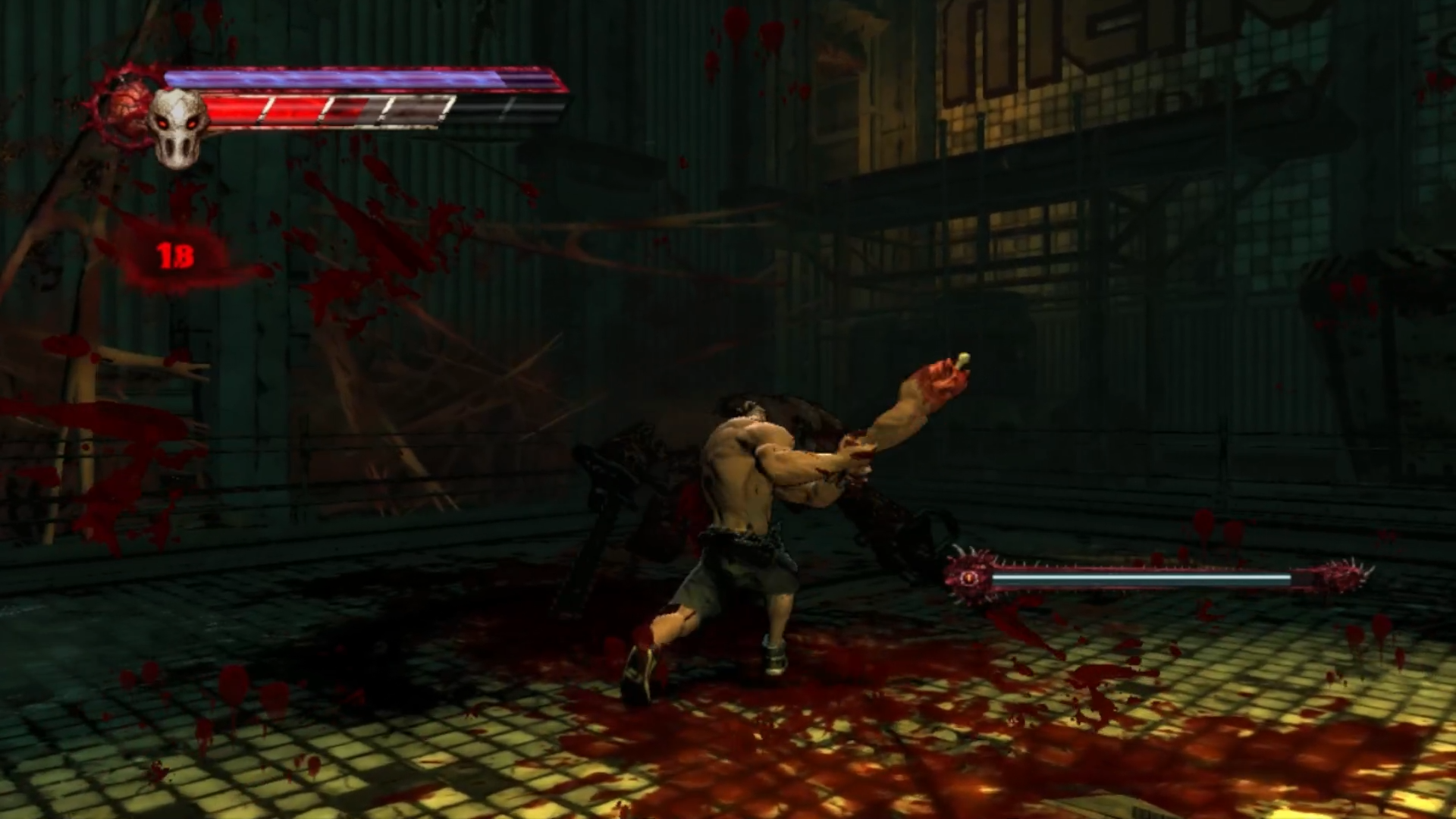
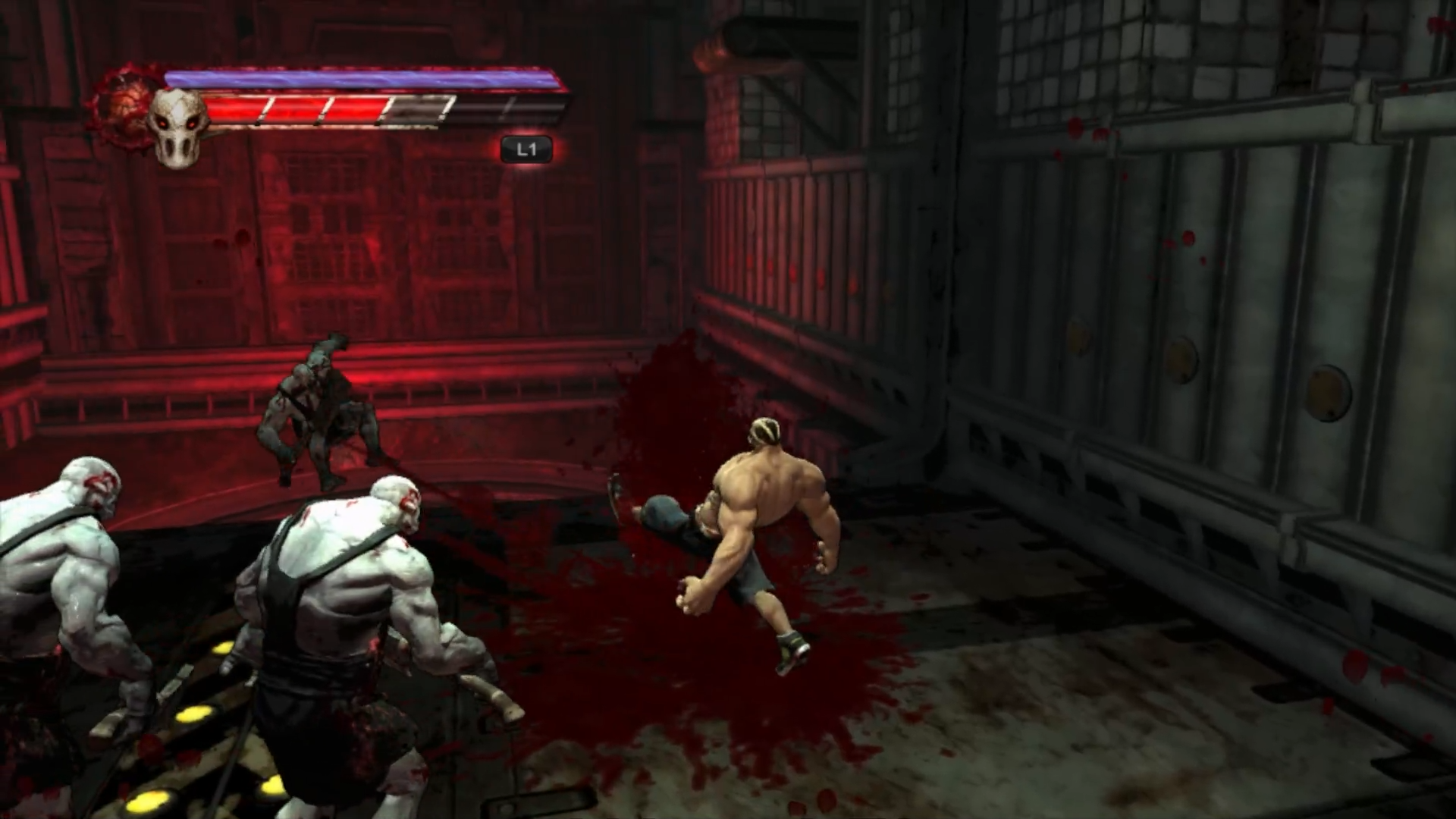
For as much as there was salvaged from the tumultuous development, Splatterhouse did end up suffering a bit of an identity crisis. While the game was indented as a simplistic brawler to hook new players into a fresh M-rated experience, the reality is that there are a few layers that need to be peeled to get to the meat and bone of the game. Despite offering a few tutorial messages that can be reviewed at any time, the game suffers from an immensely imbalanced first act. Upon donning the mask and hulking out, I felt extremely powerful (and well-toned), but was immediately humbled as the first room turned me into a bloody paste on multiple occasions. Those that persevere the blender of blades get rewarded with a clunky, but incredibly satisfying and visceral combat system that translates your current state of health to chunks of missing flesh. You have your basic attacks tied to the face buttons, where square translates to horizontal sweeps to pulverize groups, triangle provides you with a directional attack that makes one demon’s life very unpleasant, and there’s a grab. When you get enemies low enough, you get the chance to perform a gruesome finisher by pulling the analog sticks in correspondence to where you want the limbs to go. If you do find yourself low on health, you have the ability to heal yourself by absorbing the blood of the enemies closest to you. This requires some charge on the game’s Necro Meter, which also allows you to use special abilities as well as enter the all-powerful Berserker mode. I found myself frequently hoarding charges on the meter to make sure I didn’t get degraded to a strawberry slushy, but in the few moments I felt in control, these systems felt incredibly satisfying to interact with. All the punches, kicks, grabs and slashes have a delightful amount of weight to them.
Splatterhouse really enjoys throwing players into the deep end, which can end up being a detriment to your initial experience with the game. However, after struggling in the opening stage, I found myself quickly adapting to the game’s clunky appeal. It certainly helps that the soundtrack is as heavy as the metal pipe you just buried into a demonic forehead. The shredding guitars and heavy drums are accompanied by some incredible voice work, with Jim Cummings absolutely stealing the show as Terror Mask. The game is a constant stream of hilariously vulgar banter of the highest variety with insults flung with the precision of a trained sniper. The entire package is visceral, brutal and beautiful to behold.
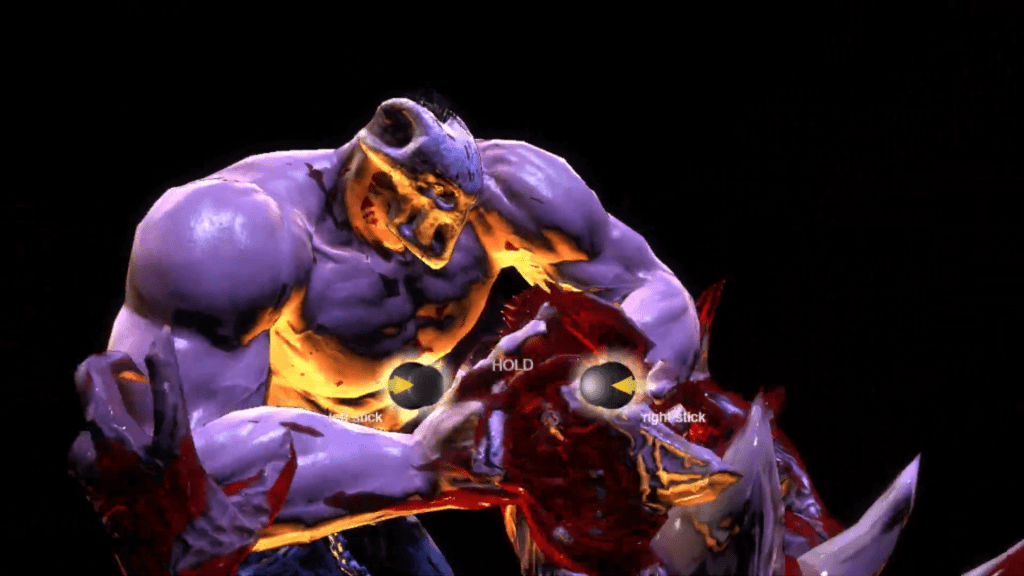
While Splatterhouse noticeably suffers from its tumultuous development story, it does manage to draw out a lot of potential from the salvaged parts. You just have to ignore the few globs of hot glue that hold it together at the seams. The performance is a bit jittery at times, with framerates frequently tanking to the single digits during the larger fights and the game got stuck loading in the next room on more than on occasion. Once you get past the performance problems, you get a relatively solid brawler that has a steep and brutally honest learning curve to it. The lack of enemy variety does provide a certain level of monotony, but this is made up for by the fantastic throwbacks to the original with several stages switching to a 2D perspective. These stages are scattered around just enough to tip the monotony off-balance and back into the fun zone. Most of the stages, however, will pit you against a series of arenas to clear off enemies. The structure of the game, with the exception of the 2D bits, consists of a series of these arenas followed by a big boss fight, which then is defeated in a time appropriate quick-time event to cinematically reduce its pixel count. In this sense Namco Bandai succeeded in creating the straightforward, easy access, brawler they initially wished for. A lot of the aforementioned salvaged parts do sometimes feel as if they’re somewhat capable of working together, but it leaves a lot of gaps in consistency, in particular the difficulty scaling. While in most games you’d either face an increased challenge with more tools to deal with said challenge, or gets easier through these added tools, Splatterhouse’s difficulty functions more like a sine wave. The game starts extremely challenging, then becomes a stroll through the park, after which it randomly spikes a few times, ending on a massive dip in the finale. The whole game feels like you dropped a precious vase and are haphazardly trying to put it back together with dollar store superglue. It’s not detrimental to the overall experience though.
Splatterhouse had many hurdles to overcome to even see its release come to fruition, and despite crossing the finish line out of breath and drowning in a pool of sweat, it does give you one of the grindiest of houses. It does a fantastic job at bringing the Splatterhouse experience to a newer audience, albeit in a flawed manner. I’m not sure what this game would’ve been if it did end up having a smooth development process, but no swords are forged out of cold iron. The attempts at creating a compelling story of cosmic terrors, lost love and time-travel is hilariously juxtaposed by its delightfully vulgar banter. The soundtrack slams your eardrums with the heaviest guitar riffs and adds so much satisfaction to the punching. It’s kind of similar to hearing the DOOM (2016) soundtrack giving you a pat on the butt while you blast demons back to hell. Splatterhouse might be heavily flawed, clunky and inconsistent in its performance, but there is an undeniable charm to the way it proudly puffs its chest. I’m especially fond of just how overproduced some of the pre-rendered cutscenes feel, especially the way the blood is animated. The added benefit of unlocking the original trilogy makes it an absolutely packed experience for those looking to delve into the 80’s slasher genre in video game form. The game genuinely attempts to make something great and that is palpable throughout its runtime. An excellent addition to fans of action games, albeit with a small requirement of being able to deal with its faults.
Learn to love the pain/10


Enjoying the review? Consider supporting TanookiChickenAttack with a coffee at;
https://ko-fi.com/tanookichickenattack

 TanookiChickenAttack