
2012 | RGG Studios | Playstation 3
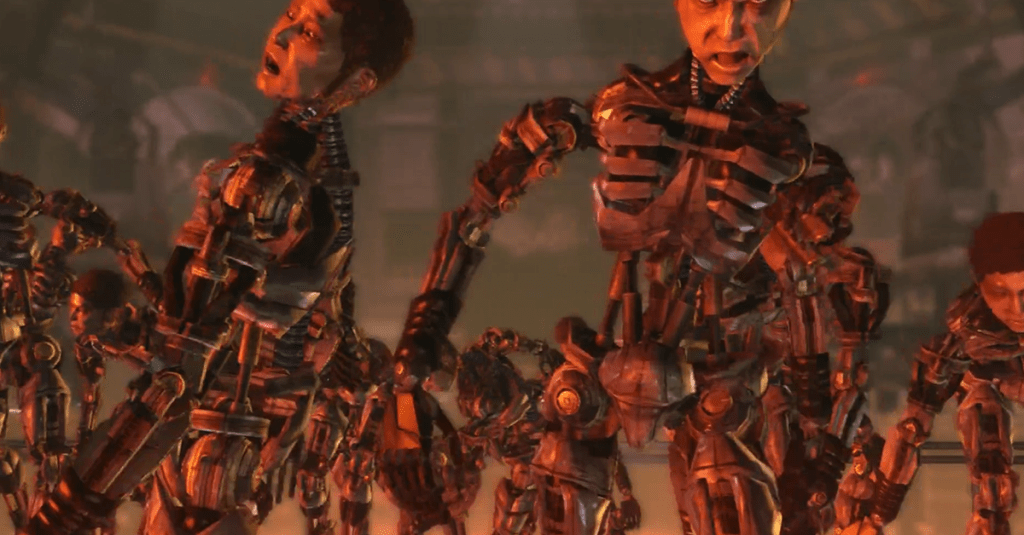
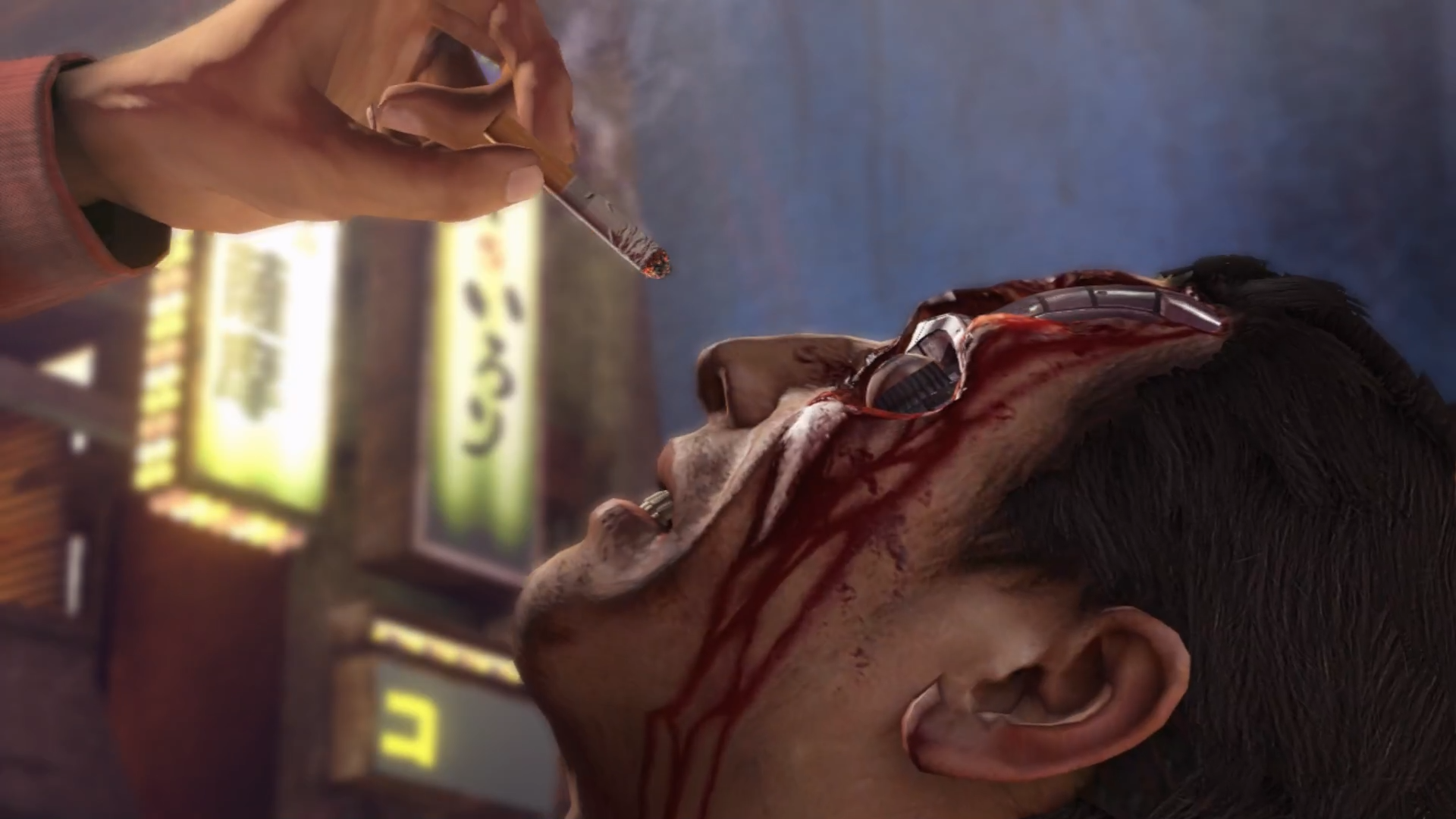
In a by-gone age before the overwhelming popularity of Yakuza 0, RGG Studios ventured into a few side streets and dark alleyways to come up with one of the best shooters of a generation. Binary Domain comes with another one for the pile of “I used to work in a game store” stories. Before the game came out, we had the story teaser trailer running in the background and I found myself endlessly fascinated by the concepts it presented. The tension in the trailer was palpable, the man ripping his face off to reveal a metal frame endlessly intriguing, and the cherry on top was that it was made by one of my favorite developers! So, when the game arrived, I grabbed a copy prior to the release date and spent the rest of my evening, and deep into the night, playing until the credits rolled. The next morning I arrived at work, extremely sleep deprived and full of adrenaline, and managed to get so excited about the game that we sold out within hours of opening. The excitement was infectious, and years later I found myself craving another venture into its world. While RGG Studios enjoys an overwhelming popularity with the success of the Like a Dragon series, I’d like to take a moment of your time to revive that enthusiasm and sell you on one of their best and most forgotten titles; Binary Domain!
RGG Studios‘ roots can be retraced back to the late 80’s, when a fresh college graduate, Toshihiro Nagoshi, managed to join Sega’s second arcade development division, AM2. Here he worked under Shenmue’s creator, Yu Suzuki, on Virtua Racer and Virtua Fighter as a designer. Nagoshi’s background in movie production helped elevate and shape some of Sega’s early 3D titles, with some of the earliest examples of cinematic approaches in video games. This led Sega to give him the reins over the development of 1994’s Daytona USA, which was the first game to use Sega’s then new Sega Model 2 arcade board. This allowed the game to be an incredible standout amongst the competition, with cutting edge graphics, dynamic camera shots following the high speed racing across the screen (and of course the unmistakable main theme that stole your attention the second you walked into your local arcade). After incredibly successful release of Daytona USA, Nagoshi moved on to different projects, working as a stage designer for Virtua Fighter 2, and overseeing the design of Virtua Fighter 3. From here he’d go on to work on 1996’s Scud Race for Sega Model 3 arcade machines and the arcade exclusive beat ‘m up, SpikeOut. With the initial success of the first installment, a sequel was imminent with Daytona USA 2, which was another block-buster success story. Under Yu Suzuki, Nagoshi worked as a supervisor for Shenmue, whose influences on the Yakuza franchise’s early days are palpable.
Being dissatisfied with the way things were going within AM2, Nagoshi requested his own division within Sega. Thusly Amusement Vision, comprised of the remains of Sega’s AM4 division, and the Super Monkey Ball series were born. Alongside multiple games featuring monkeys in hamster balls, AV also worked as a contractor on F-Zero GX for GameCube, and AX for arcades, with Nintendo as a publisher. Around 2003, Sega once again restructured their departments and the majority of Team Smilebit (Jet Set Radio, Panzer Dragoon Orta) were incorporated into Amusement Vision, and through this merging of departments came the initial concepts for the, now legendary, Yakuza series. Due to Sammy Corporation getting the majority share of Sega, both Sega and Sammy moved to become subsidiaries of their holding company, leading to another restructuring within the development departments. Most of Amusement Vision’s staff ended up merged into New Entertainment, or Sega’s CS1 Team, under which they’d release the first installment of the Yakuza series. With the Yakuza series proving to a breakout hit with both Japanese and international audiences, the series continued to receive new installments. The last game to release under the New Entertainment/CS1 banner was Yakuza: Dead Souls, known in Japan as Ryu Ga Gotoku: Of the End.
Binary Domain would be the first game to be released as RGG Studios, with them adopting the logo for the Yakuza series as their production team logo. The original concept for the game was pitched by Nagoshi as an idea to bridge the international markets. The game would explore the concept of humanity through the eyes of robots and featured a Consequence System which would create a unique dynamic between you and your squad members. This feature was the primary selling point used to differentiate Binary Domain from the extensive competition within the genre. The game would, however, still feature the same level of storytelling that the lads of Like a Dragon became known for. It was heavily promoted through numerous trailers to introduce the mechanics, with the “Machine Age has Begun” trailer giving a synopsis of the game’s world and story. These trailers promised a rich narrative, supplemented by a unique system that allowed players to communicate with their team through voice. Unfortunately this system wasn’t properly implemented and left players with an incredibly unresponsive mechanic. The talent behind the game, and the ambitions to make this departure from their flagship series feel as grand as the rest of their catalog, gives it a distinct atmosphere, visual appeal and recognizability for people familiar with their other works. Binary Domain released to a decent success in Japan, selling roughly 100k copies during its first month. The game, however, was a financial disaster in North America, where the game sold an estimated 20,000 copies over the course of its shelf life. Reviews for the game praised the storytelling, but got rather hung up about the voice command system. Binary Domain since faded into the shadows of the incredible success that the Like a Dragon series still enjoys today. Even though Binary Domain is a largely forgotten entry from a company whose history paved the way for incredible experiences over the years, it deserves time in the spotlight. So with the background story of RGG Studios, Nagoshi’s incredible influence throughout gaming history and the development of the game out the way – Let’s take a look at my favorite Yakuza game; Binary Domain!

The year is 2021 and global warming has caused most of Earth’s landmasses to sink below the rising water levels. Humanity started building a new civilization on top of the ruins of the old cities, with those who couldn’t afford to live on the surface left to rot in the shadows of prosperity. Technological growth, however, is relentless in its pursuit of the next advancement, with robots now replacing most of the modern day mundanity. Most of the surface is able to live a life a deep luxury, whilst the forgotten down below fight for scraps as robotic enforcers chase them from whatever homes they managed to build. In 2040, the birth of advanced robotics forced the New Geneva Convention to take measures against robots that could pass as humans. Clause 21 is instated to ban research into this field.
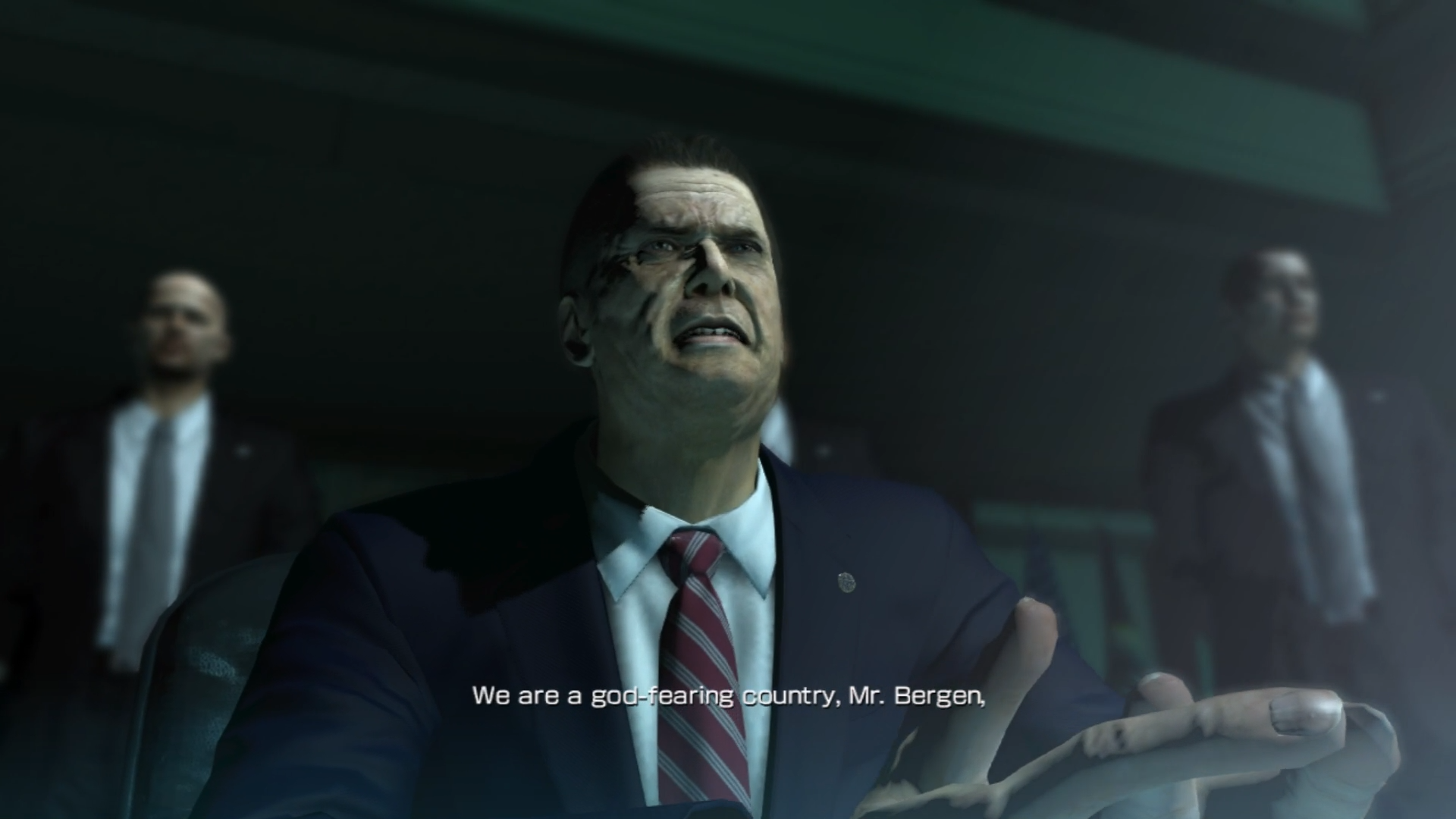
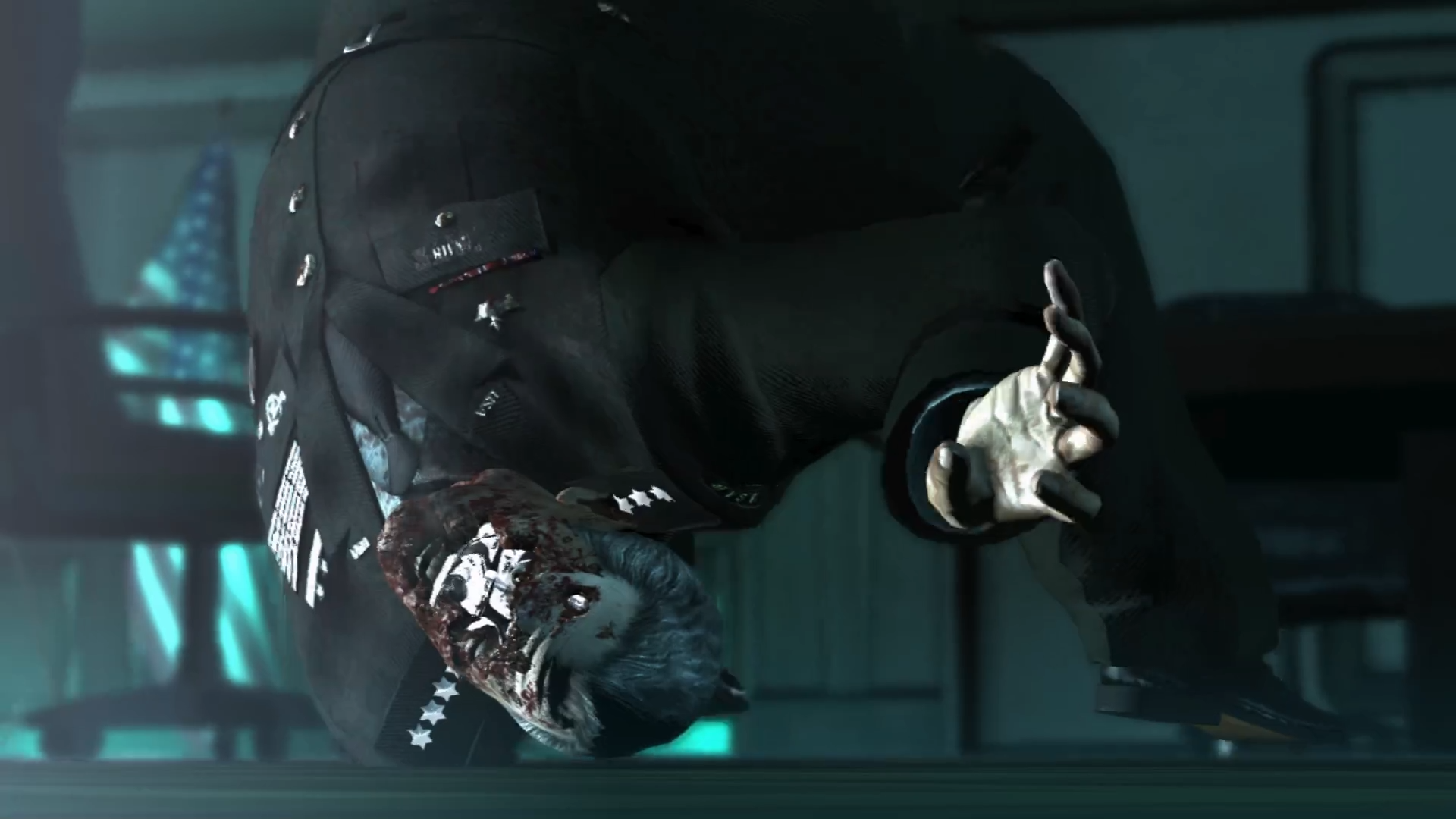
In 2080, a man stumbles into the research facility of the Bergen Corporation in Detroit, Michigan, carrying a gun and a grenade. The seemingly confused, blood-covered man demands answers for something that has been done to him in the past, before being surrounded by security robots. As the anger rises in the man, he drops the weapon and proceeds to tear the flesh from his face, revealing a mechanical frame underneath. A day later, the President of the United States calls for an emergency meeting to discuss the potential violation of Clause 21, designating the highly advanced robots as “Hollow Children”. The Hollow Children themselves seem incapable of realizing that they are robots instead of humans. With no other option the UN Security Council dispatches a Rust Crew, a group of soldiers specialized in anti-robotic warfare, to Tokyo, Japan. Their mission is to apprehend the primary suspect, Dr. Yoji Amada of the Amada Corporation, find answers to how the Hollow Children are made, and dispatch any that they encounter.

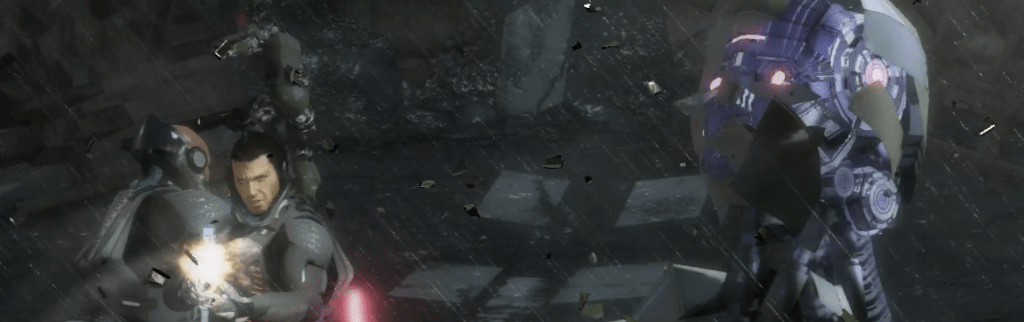
Ten days after the Bergen incident, First Sergeants Dan Marshall and Roy “Big Bo” Boateng arrive at the storm wall surrounding the foundations of Tokyo. Immediately met with heavy resistance the pair has to fend off against the robotic army of the Tokyo PD. After the initial skirmish the two Rust Crew members encounter a few children looking for scraps amongst the rubble, it’s a very early and effective showcase of the deep cutting dividing line that separates the upper class from the rest of Tokyo’s inhabitants. After dealing with a particularly nasty and large robot, Dan and Bo meet up with the rest of the Rust Crew. We are first introduced to the serious and snarky Charlie as leader of the operation, alongside his trusty partner Rachel, followed by resident sniper Faye. Binary Domain constantly manages to get a decent balance between the serious nature of the game and some deep cut dudebro humor. Hence the “Sorry to burden you with my clowns” line from headquarters. The first team is supposed to rendevous with the French squad once they break to the surface layer of Tokyo, but the road there isn’t an easy one.
Our first stop is with the underground resistance movement that gets introduced with the soldier overseeing the children earlier. A contact within the underground is able to get the team to the surface, but not before encountering one of the game’s first bosses. You can tell that while Nagoshi only fullfilled a producer role for this game, his experience with the Yakuza series permeates through each cutscene presented in the game. The introduction of the spider-bot makes it feel like a massive threat, and the fight doesn’t do much to disprove that notion. With each leg detroyed the gigantic automaton consistently shifts his balance to accomodate for the missing support. While it is incredibly funny to watch a giant spider-shaped saucer pogo around on a single leg, the way it’s animated is treated with the same intensity as the robots crawling towards their single directive of your destruction. After destroying the gargantuan cyber-arachnoid, the team manages to get in touch with the underground through a rundown bar. Through the interaction with both the bartender and the maimed robot, we learn a bit more about our characters, in particular Dan’s deep rooted hatred for robots, or Scrapheads as he likes to call them. His motivation for being a Rust Crew operative stems from a deeply abusive father, and a misunderstanding for the house droid that tried to protect his mother from getting beaten by his father. These flashbacks serve as a guide for Dan’s character arc and his progression into being more open towards Scrapheads.
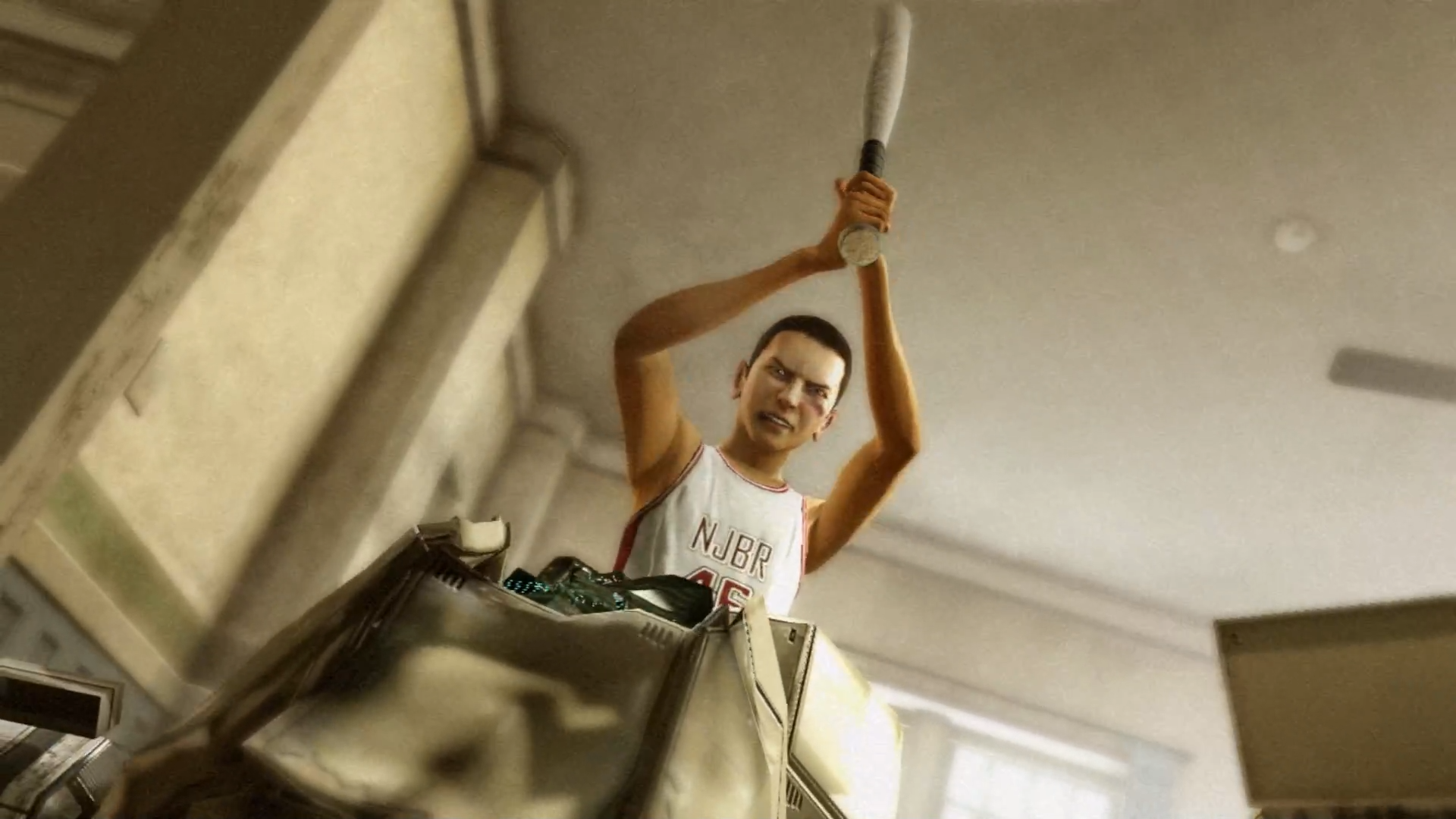
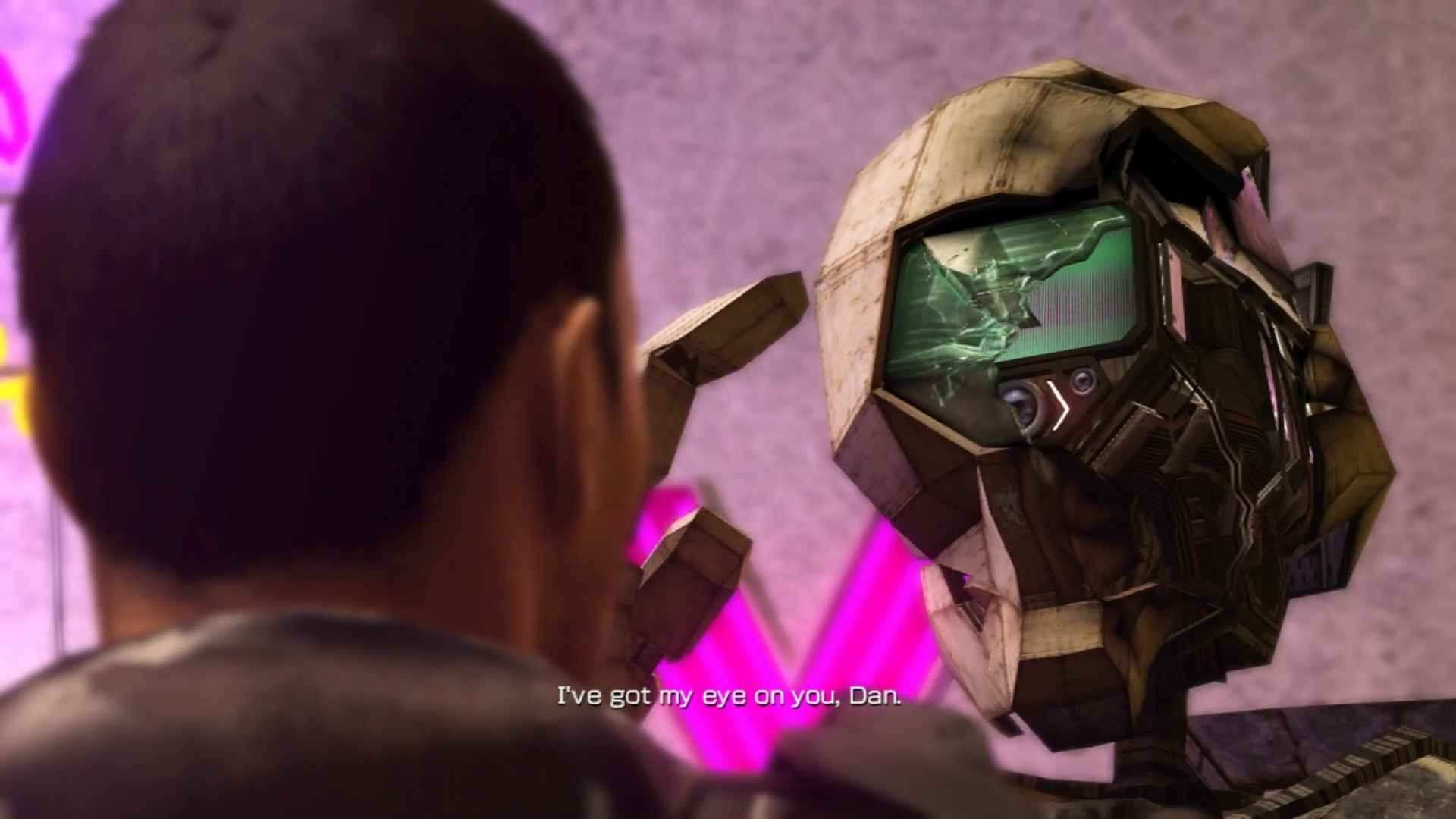

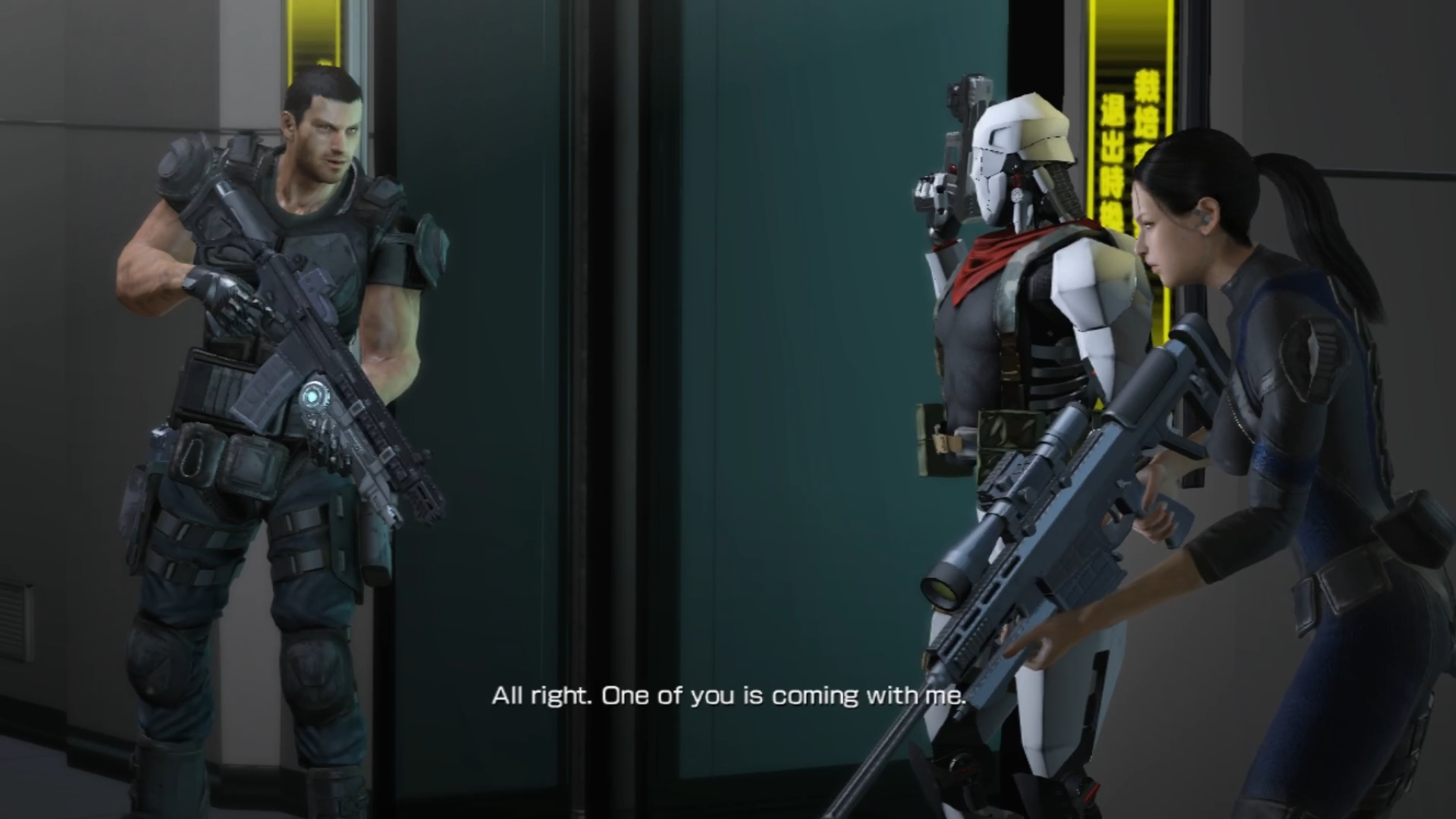
Through their encounter with the underground they’re led through an abandoned subway station that leads into a large sewage facility. During their spelunking adventures the squad gets separated by a swarm of insect like robots, and this is the first major divergent point of the game. When the squad eventually grows beyond three members, you’re given a choice as to which two characters to take with you. While this serves to get to know some of your favorite characters during most of the game, it sometimes leads you to some drastically different outcomes depending on what characters you take with you. The biggest of these is once you meet up with Cain, the remaining member of the French unit, who’s a robot. The game splits into two major branching paths that allow you to experience one of them depending on who you choose. If you bring Cain along, you’ll find that certain parts of the game are significantly easier to get through, plus you’re rewarded with a few extra sequences once the party fully breaks up. A lot of Binary Domain’s replay value rests within the small changes in the story because of your choices and gives you a certain level of control of how you want to shape your playthrough.
The way the story is presented in Binary Domain is straight up “What if Yakuza was Blade Runner?”, and it’s one of its strongest aspects (outside of Dan and Bo’s banter). With Daisuke Sato (director of Yakuza 3, and designer on 1 and 2) at the directorial helm, and Tsuyoshi Furata (Judgment) as lead writer, there’s bound to be some overlap in how the game looks and feels. While Binary Domain borrows a lot of the looks of the flagship series of RGG Studios, in part due to it using the same engine as the PS3 Yakuza games, its presentation elevates the game to a new level. There is a certain level of hammed up moments sprinkled throughout the game, with a cartoonishly evil villain as the cherry on top, but it always juxtaposes the sillier elements with cold deliveries of the more shocking sides. The children looking for scraps at the start is the first example of this, but the game also doesn’t shy away from slight body horror moments when it introduces you to the failed Hollow Children. There is a lot of incredible twists and turns to discover in Binary Domain that I will leave for you to find out for yourself though!


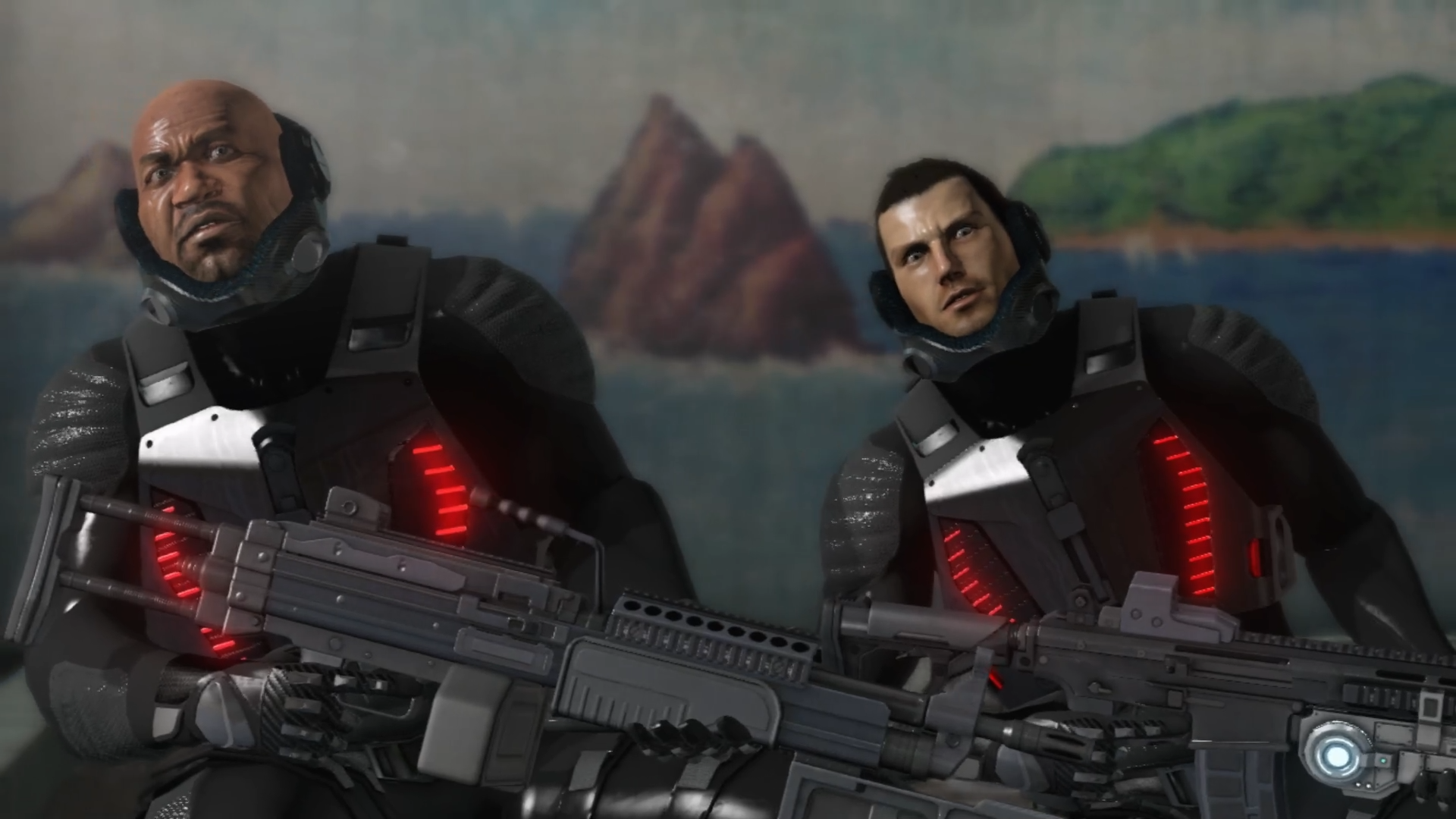
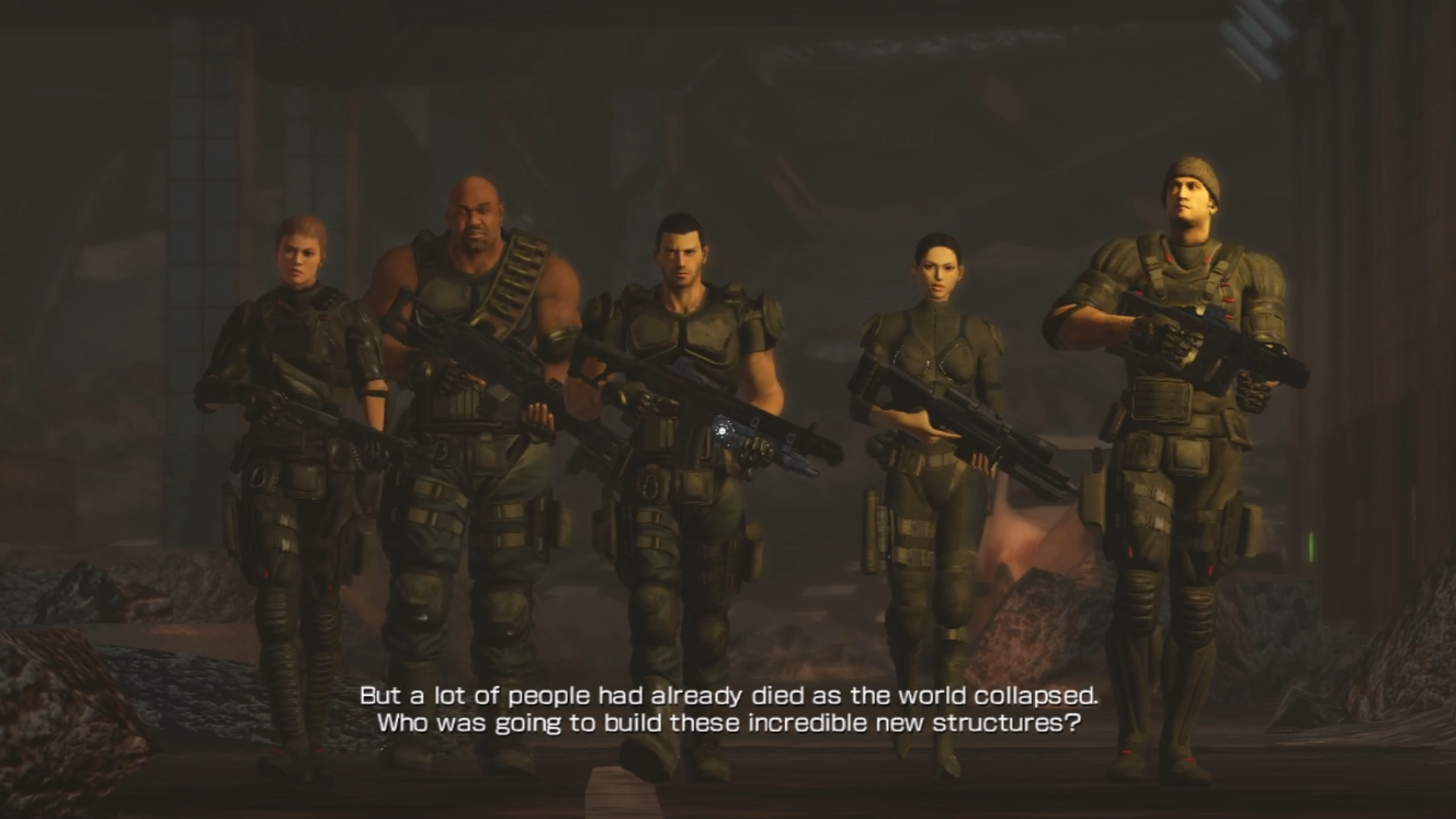
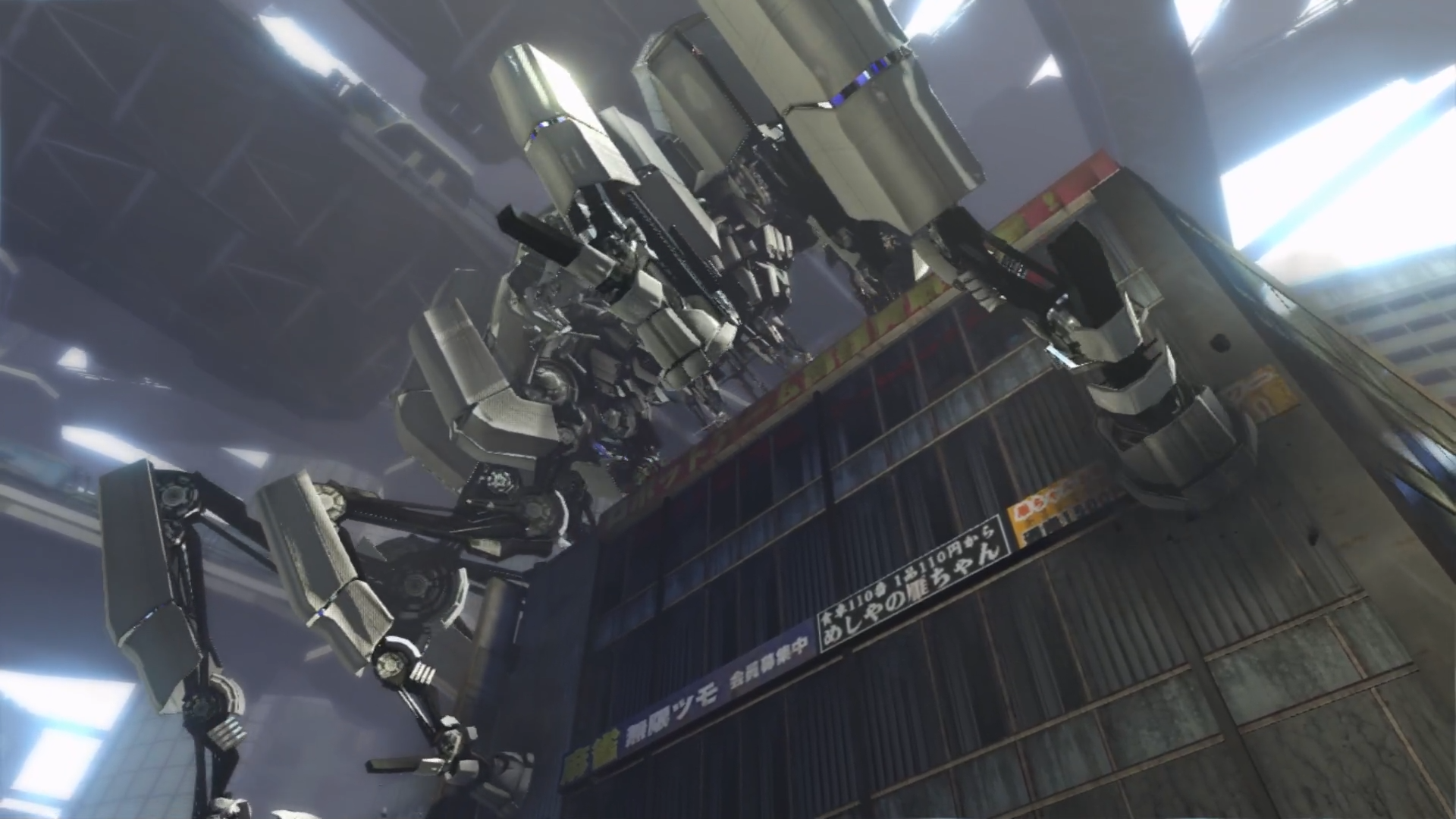
Binary Domain, for the most part, is a third person cover-based shooter with a heavy emphasis on team-building exercises. Throughout most of the game you’ll run from arena to arena, and set piece to set piece to fight an absolute onslaught of machinery that’s trying to stop you from reaching your goal. It doesn’t necessarily set itself apart through its general gameplay premise, but rather chooses to hand the star of today’s show to the robots you face. The machines you tear apart with your large variety of calibers will actively, relentlessly and obsessively try to pursue and destroy you at every step of the way. You can shoot their legs off, and they’ll tenaciously crawl to your location. You can blast their arms off, and they’ll hurl the rest of their bodies at you to self destruct. They can even feign death until you get within grabbing range. The enemies of Binary Domain feel like a force of nature that cascades in waves in your general direction, and at times, feel downright unstoppable. Sure, with the right shot in the right place they go down like fodder, but you’re always cautiously stepping over the scraps expecting the corpses to leap at you and explode. The game does a fantastic job elevating its premise through this. You’re already constantly looking over your shoulders to make sure you’re safe, but what if they can look, feel and sound human?
One of the more unique mechanics that the game has to offer is the voice command system, which allows you to use your microphone to talk to your team mates. You can command them to provide cover fire, give responses to their remarks, talk them down and a whole slew of other possibilities. I’m going to be honest, the voice recognition for this flat-out doesn’t work. Either the game refuses to interpret the voice queue’s or misinterprets them, leading to a similar frustration of yelling desperately into a microphone like 2003’s Lifeline. Luckily for us, the developers somewhat thought ahead, that despite it being a neat idea, it likely wouldn’t work, and gave players the option to turn it off. Once turned off, you can simply hold the L2 button and select from a list of responses. A small downside is that some of these lack context or are slightly mistranslated. There are a few moments where you think you’re confirming something a teammate said, but instead end up insulting them because the prompt wasn’t clear on the intention. This leads to your team members losing trust in you at times, which leads into the light RPG elements of Binary Domain.
Through the Consequence System you can create a specific dynamic with the people on your crew, and form a trusted bond with them (or push them away). This is measured by trust levels, which are displayed as a bar that slowly fills that can be viewed on the menu screen, and is divided into four different tiers. These range from hostile, to indifferent, trusted, and deeply trusted. Each character responds differently to your choices, and each character prefers a specific strategical approach. For instance; Big Bo, Faye and Cain approve of a guns blazing approach, so if you manage to down robots in rapid succession with high accuracy, they’ll be impressed and their Trust level goes up. For me, this is where Binary Domain shines the brightest. Throughout the game you get to take 2 party members with you, and based on your choices you can really build a bond with these characters. It also adds a lot of different scenes based on your choices and Trust level. The last run started with Big Bo and Faye, but once Cain joined the fray I decided to see what his side of the story had to offer. This culminated in some fantastic banter between Dan and Cain, and an additional scene towards the end of the game where Cain gets taken over by Amada. Whereas if you’re going the more reserved route with Charlie and Rachel you’ll see a completely different side of the game and get a few reveals early, putting the ending in another direction. This gives the game so much replay value, and with the characters being as likeable as they are, it’s definitely worth it.



Binary Domain offers a surprisingly deep experience for a game in its genre. While the deeper implications of the meaning of humanity are slightly obfuscated by the military angle, the game does a phenomenal job at making you understand the motivations of each individual in this game, as well a give you a good look at the world it portrays. The game plays fantastically with the only downside being that your team members are more artificial than intelligent. You’ll frequently find them running in front of streams of bullets, more often yours than the enemies. This can be quite frustrating, considering that hitting your allies will drastically lower their trust. Overall it’s an extremely solid game, with a lot of really cool bosses with great designs. The game offers a lot of variety in terms of environments, however I do wish that RGG Studios will never touch a vehicle section ever again. This is more personal, but I simply don’t like sections of games where you hang out of a moving car’s window to shoot stuff. I wouldn’t exactly put this game in the thinking man’s shooter category, but it does fit in a similar line as games like Spec Ops: The Line in the same way that it uses its choice of genre to create layers instead of just loud noises.
Unfortunately, the game released to a market that was heavily saturated with third person shooters, specifically cover-based shooters, and this caused the game to reach a heavily fatigued audience. It’s easy to see why a lot of people overlooked this game. The first hour or two don’t do much in persuading you that it’s going to be any different than the Gears of War‘s we have at home. However, those pushing beyond that point will find a game that is incredibly rich. While a lot of developers were attempting to capitalize on the popularity of the cover-based shooter to break into Western markets, it rarely exceeded beyond just being a gimmick to cater to an audience- Quantum Theory comes to mind. In this sense, Binary Domain sets itself apart by taking the genre and using it as a means to create a strong setting, rich worldbuilding and tell a story with the same gravitas as you would find in the Yakuza series. It supplements the testosterone filled first half to slowly chip away at the layers that make this game so damn compelling. The heart and soul of the story centers around the characters and their interactions with each other and their environment. While the initial parts of the game contains a lot of “oorah” attitude with a lot of references to porn, the second the status quo gets toppled, the characters start to drastically change. Their beliefs and ideals start to waver and new points of view enter the scene. Dan’s development throughout the story is really well done. His hatred for the robots, or Scrapheads, starts off as his defining trait. However, once Cain gets introduced and after he witnesses the brutal treatment of the Hollow Children, his hatred starts to waver in favor of a more sympathetic look. An opposing effect is seen with Charlie, who hides behind his professionality (or the mission) to justify a lot of the things the Rust Crew does.
Binary Domain is hands down one of my favorite things to come out of RGG Studios and replaying it after nearly a decade felt like having a reunion with old friends. If there’s anything to take away from this review is that I really, truly love this game. The presentation goes above and beyond to paint the world’s duality through the cruel treatment of the people living in the slums, to the harrowing ordeals of watching the Hollow Children get slaughtered mercilessly. For all the bravado that comes with the territory of an action spectacle, it has a soft touch for nuance and a brilliant eye for cinematography that uses the genre of choice as a vessel to effectively deliver this. The shooter mechanics feel smooth and incredibly satisfying as bullets do have the tendency to rip enemies apart to the last bolt and screw. Nagoshi’s style and influence can be felt throughout the game, and the team did a fantastic job of using their experience on the Yakuza series to create something special. I hope we get the chance to see the studio’s legacy continue with more risky projects like Binary Domain. They have the aptitude to bring their own special sauce to nearly every genre imaginable. The unfortunate reality is that the Yakuza mines run very deep, and the entrance may have very well collapsed. Until they see the sunlight again, we can still deeply enjoy one of my favorite titles on PS3 with Binary Domain!
Holler if you’re dead!/10


TanookiChickenAttack is made possible by supporters on Ko-fi. If you enjoyed the review, consider becoming a supporter through https://ko-fi.com/tanookichickenattack

 TanookiChickenAttack