

2024 | Julia Minamata | PC
Disclaimer;
Received game key for free from the developer. This is not a sponsored review, all opinions are my own.
I’ll be the first to admit that I am woefully uneducated when it comes to text parser adventures. Most of my PC adventuring came in the form of weird esoteric point and click adventuring in Of Light and Darkness: The Prophecy, supplemented by a healthy dose of Myst and Discworld, and the most recent thing I’ve played that came close are things like Stasis: Bone Totem. I’ve heard of The Crimson Diamond from a friend before and it seemed like a really interesting game, especially considering that I haven’t tried the genre before, and what better introduction than a game paying homage to its roots? So, when I got an email asking me to try out the game from the developer, I was more than happy to give it a spin. The summer shifted to colder, stormier weather, and it seemed like the perfect time to delve up some mysteries, and maybe even some murder. So grab a cup of tea, a notebook and slap on your detective hat as we delve into the mines of The Crimson Diamond!
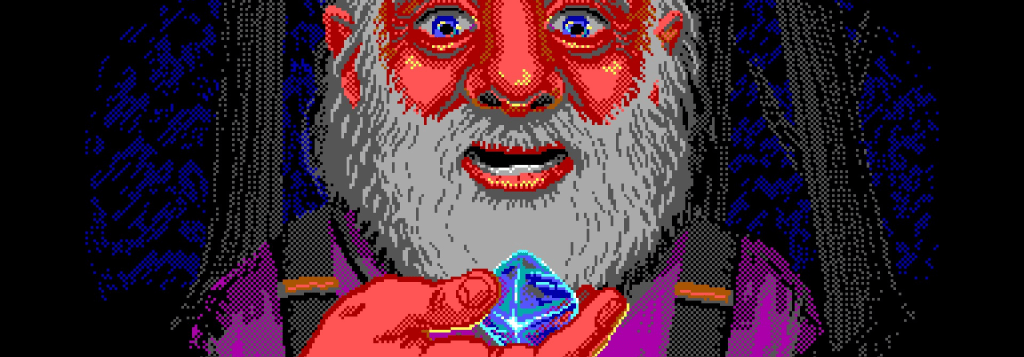
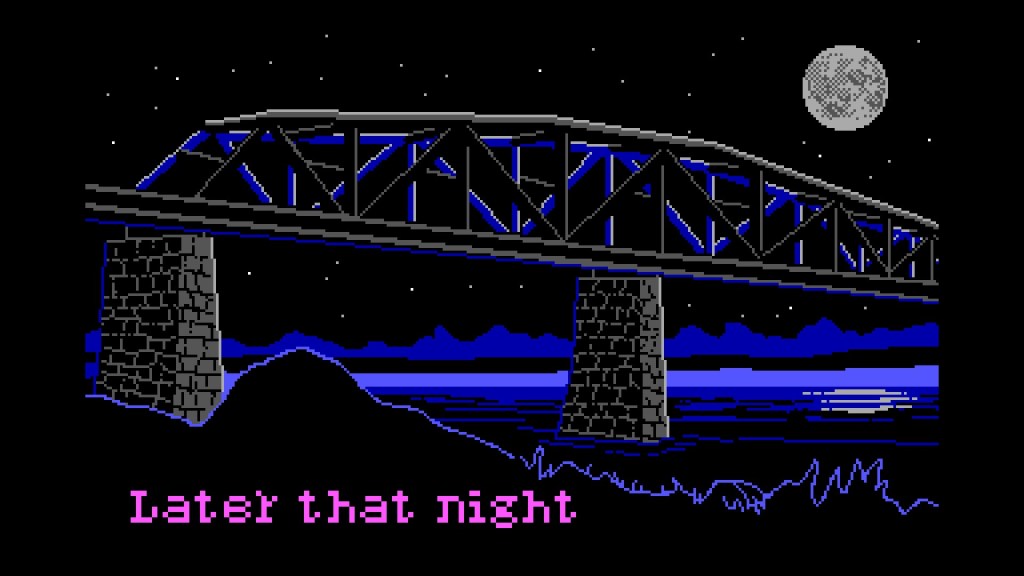
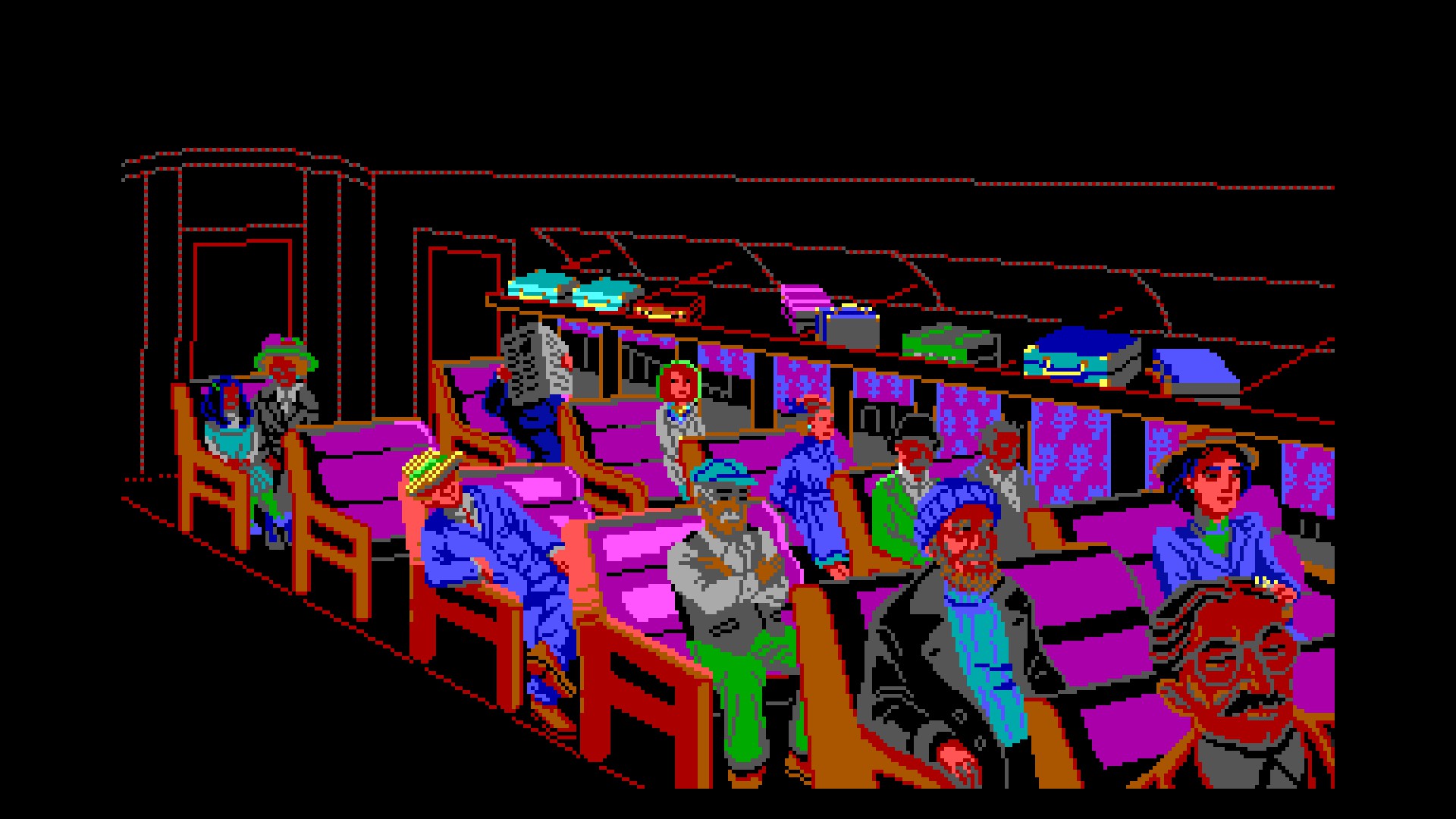
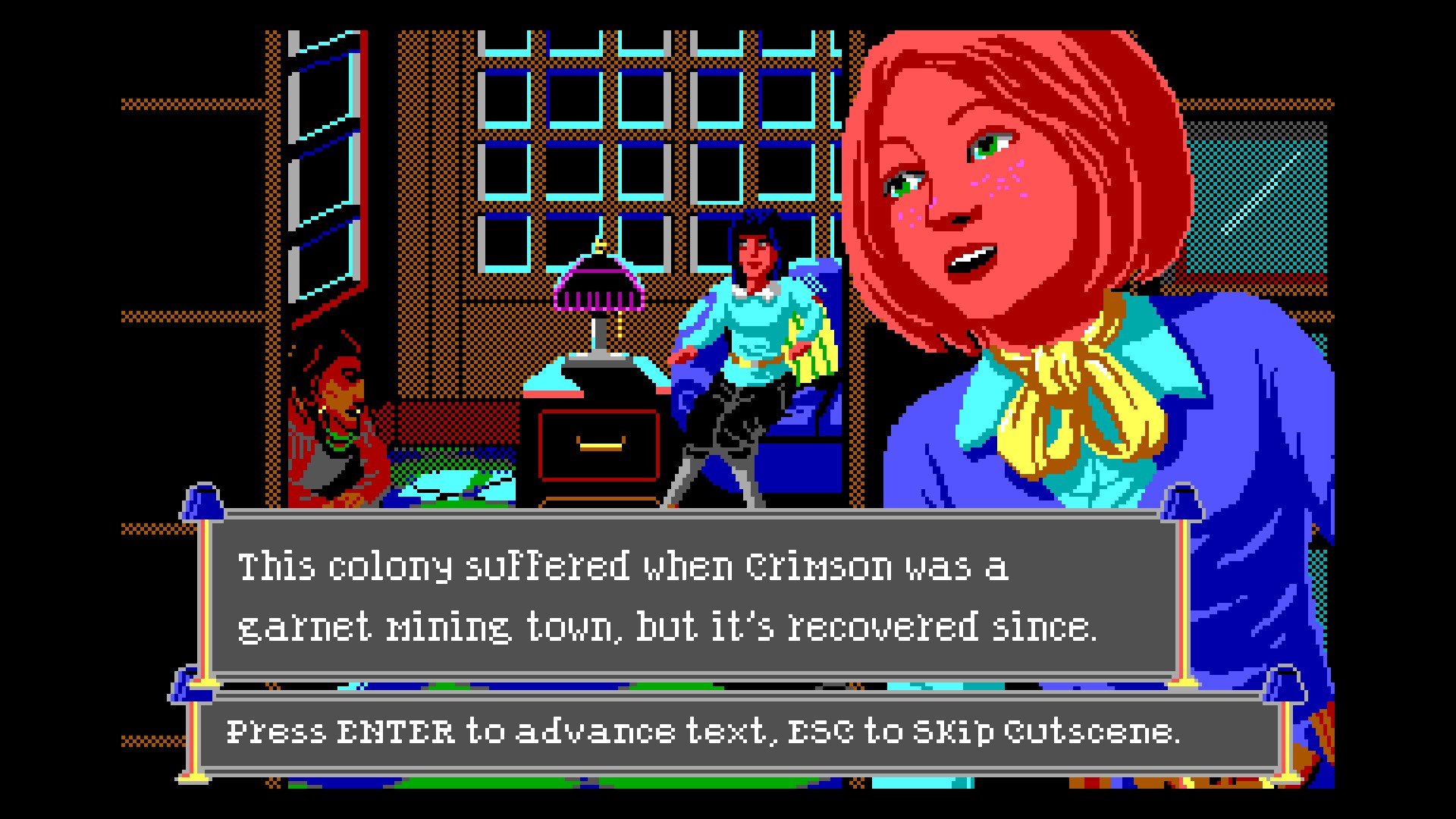
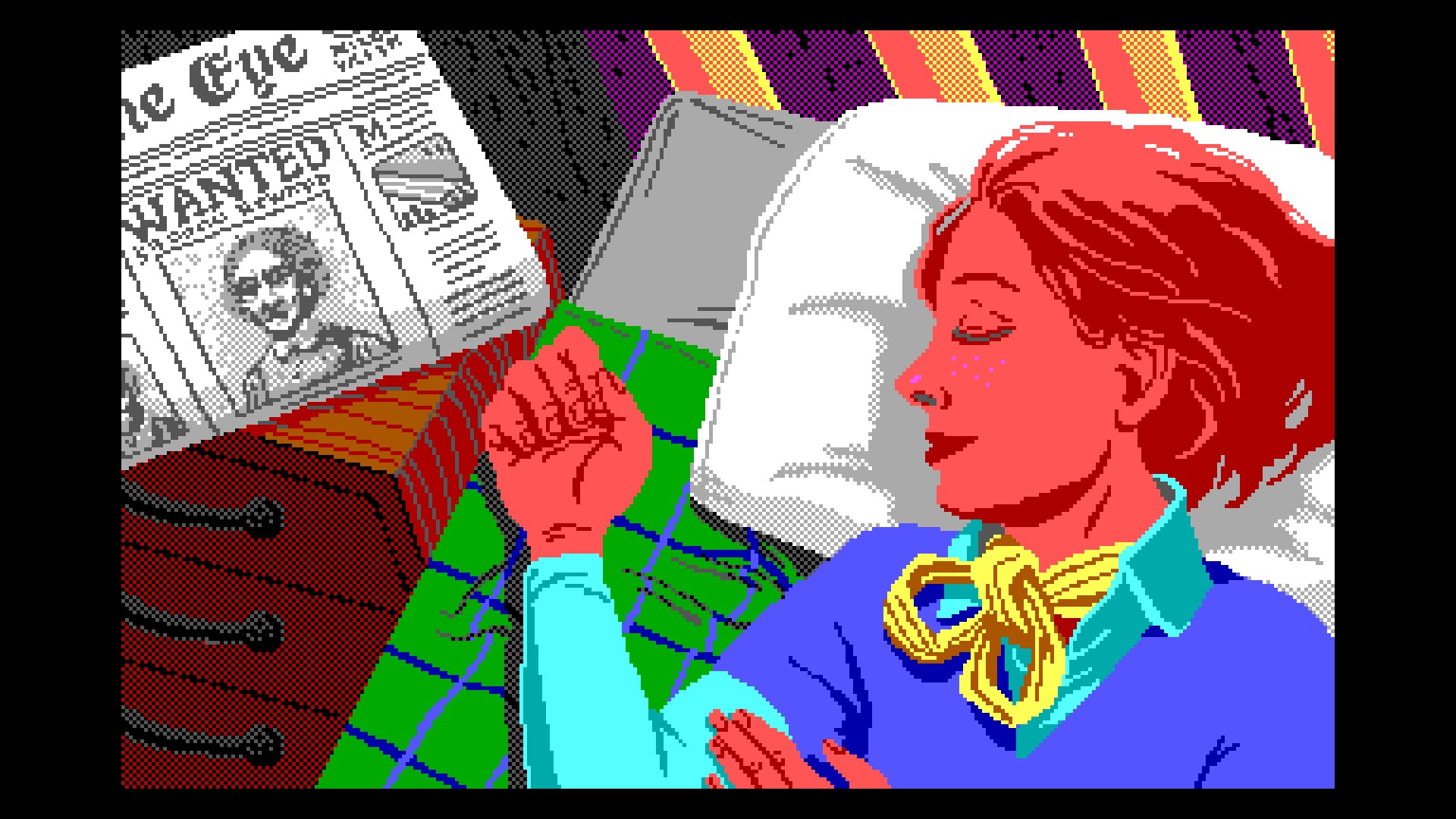
Developed by Julia Minamata, The Crimson Diamond pays tribute to the olden days of EGA powered adventure games, visually similar to the early days of Sierra Online‘s adventure catalog. Despite being released in 2024, the game has an aesthetic that immediately throws you back to the days where home computers needed separate extension modules to modernize your system to display 16 colors. The Crimson Diamond follows the adventures of Nancy Maple, an amateur geologist, as she is sent to the garnet mining town of Crimson to investigate a diamond that was found inside a fish. On the train to the small Canadian town she encounters Kimi, who is traveling to the same lodge, and the two of them decide to become traveling companions. Upon arrival at the station, Nancy, after falling asleep on the train, discovers her luggage missing. A bit of a rough start, but improvisation is one of her strong suits. From here we get taken to the lodge by the caretaker, Jack, in a rather fancy looking automobile. As you arrive at the lodge it quickly becomes clear that you’re walking in on an intense dispute within the family that owns the lodge.
The initial chapters of The Crimson Diamond are dedicated to getting to know some of the cast of characters, and give a deeper look at their motivations to be at the lodge. The first is Evan, the reluctant host and owner of the lodge. Evan took over the lodge after his father’s passing and is currently being hounded by his sister, Nessa, and her lawyer, Corvus (I really hope this name is a pun), who are trying to find a way to take the land away from Evan to profit off of the supposed diamonds. Alongside these two wonders of hospitable loveliness we have Evan’s young partner Margot, who lives in the memory of her glory days, Albert, a fellow mineralogist, and Nathan, a friend of Evan’s who was promised the lodge’s land after Evan’s passing on a firm handshake. Each of these characters bring a lot of life to the game and a lot of motivations to consider, and explore. Once, settled in (no unpacking required), your adventure begins and you can freely explore the lodge and the ground surrounding it. Through your interactions with the characters you get to learn a lot about the history of Crimson and about the reason why everyone is here. However, something foul is carried by the wind as ill intentions turn your peaceful stay into a harrowing murder investigation. The entire game is playable at your own pace, and you might find some really helpful clues if you’re curious enough. The questions you ask, the whispers behind closed doors, and the strange behaviour of some of the lodge’s residents and guests offer a compelling mystery for the inquisitive and curious.
Whilst text-parser adventure titles are beloved amongst enthusiasts, they do present a rather unforgiving barrier of entry. Game over’s and getting locked out of progressing to the point where you had to restart the entire game were common occurrences in the days of yore. The Crimson Diamond manages to throw a lot of these daunting elements out of the window by providing you with a lot of modern quality of life changes that allow you to enjoy the adventure at your pace and at your leisure. The first and most important part is that, while there is a lot you can easily miss out on, it will not hinder your progress. Certain items spread throughout the game will simply give you more options to approach situations or more clues to bring things into context. It’s a breath of fresh air that severely diminishes the barrier of entry, and helps avoid frustrations of running into a brick wall because you didn’t find a small item, or interacted with a wardrobe in a certain way. It takes the pressure off of the player and allows you to breathe in the fresh air of Crimson, and really embrace the wonderful charm that brings the room to life with the nostalgic hum of CRT monitors. In essence The Crimson Diamond really brings the early days of PC adventures into the modern era without all the hassle involved.
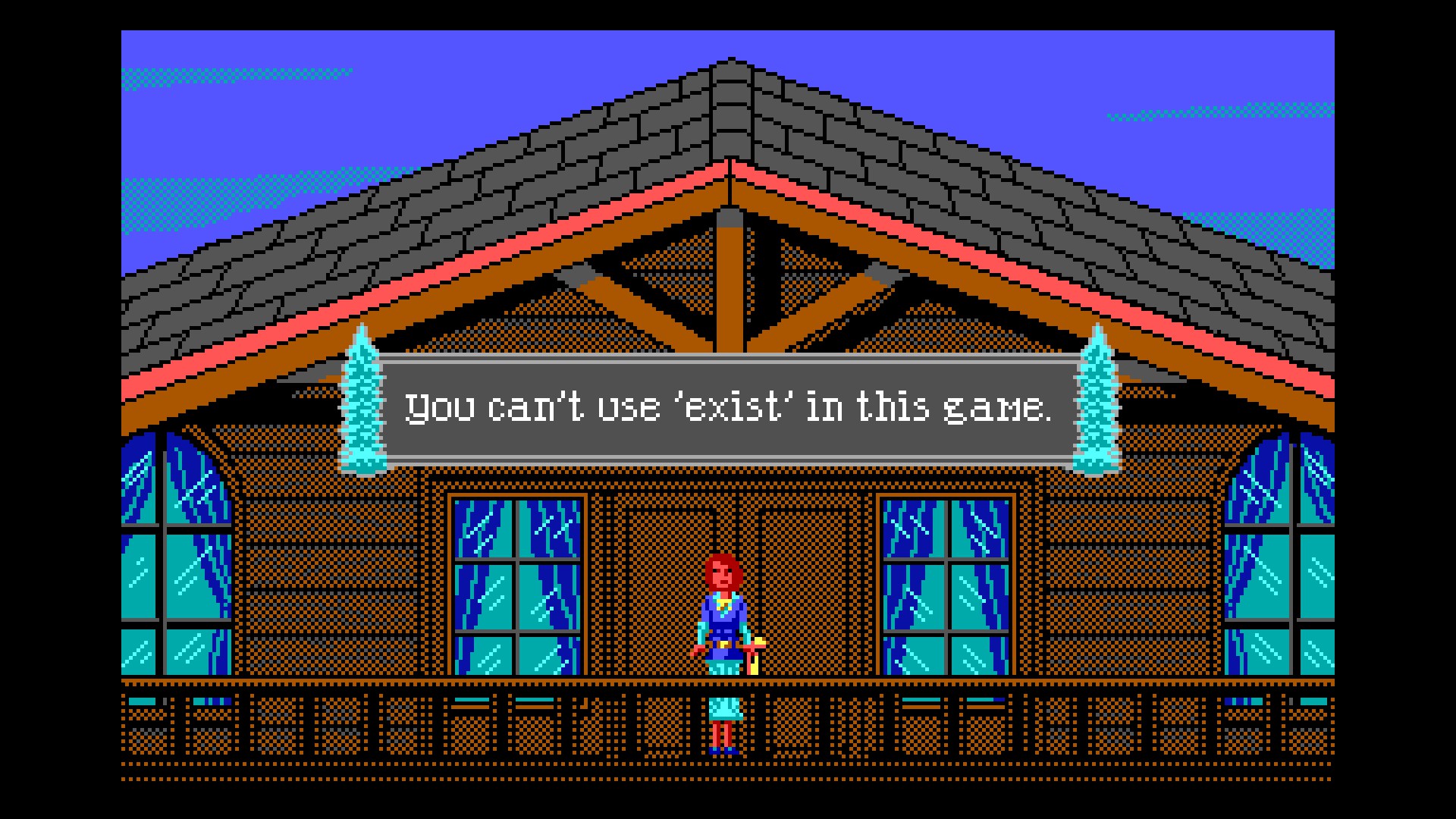
Throughout the game you’ll be interacting with every object and every conversation through text prompts. The game then parses these prompts against a preset set of commands to give you a result, hence the name of the genre. While this can at first feel tedious and slow, the game does a great job at slowly introducing more complex layers to these prompts as the game progresses. At first you’ll be opening doors, curio’s, and rifling through peoples luggage (I mean, we lost ours so we might as well). One of the biggest hurdles I found myself stumbling over was not being able to use the word “Use” as part of these text prompts. Instead of phrases like “Use tea on cup”, you’ll get more results from “Pour tea into cup”, just to give an example. Structuring the prompts to have the game correctly interpret what I wanted it to try took me some getting used to, but quickly adapted my line of thinking to the way the game guides you to interact with it. One of the biggest quality of life changes has to be the help and note systems in place to keep you informed of your progress. At any time you you can review your current situation (by typing “review”), or open your notepad to see what you’re currently engaged in. This gives a good lifeline to prevent you from getting too lost.
While I’m not sure if this is a prevalent mechanic within the genre, typing the word “look” into the text box gives you a thorough overview of everything in the current scene. It’s a fantastic way to subtly guide the player to points of interest as the puzzles increase in complexity. To solve the murder, Nancy will have to gather evidence to put the pieces in place. Most of these are not that complex with the correct context, but gathering said context is where, in my opinion, the challenge lies. Getting to the information needed usually requires an extra step or two. However, this also adds a layer of immersion to the puzzles that I wasn’t expecting. I frequently caught myself thinking “I get it, but how can I help Nancy reach that conclusion?”. The game also features autosaves, which saves your progress at major progression points in the game. It’s a nifty addition that allows you to go back and find stuff you’ve missed in the previous chapters (a certain brooch, in my case). A lot of these small quality of life changes made the game feel incredibly accessible, especially for someone that has never played one of these type of games. One of the biggest things I was pleased with, though, was that you can’t lock out your progress. During one of the later chapters I thought I had to redo a few chapters in order to actually progress, only to find out that it has multiple safeguards in place to continue the game.
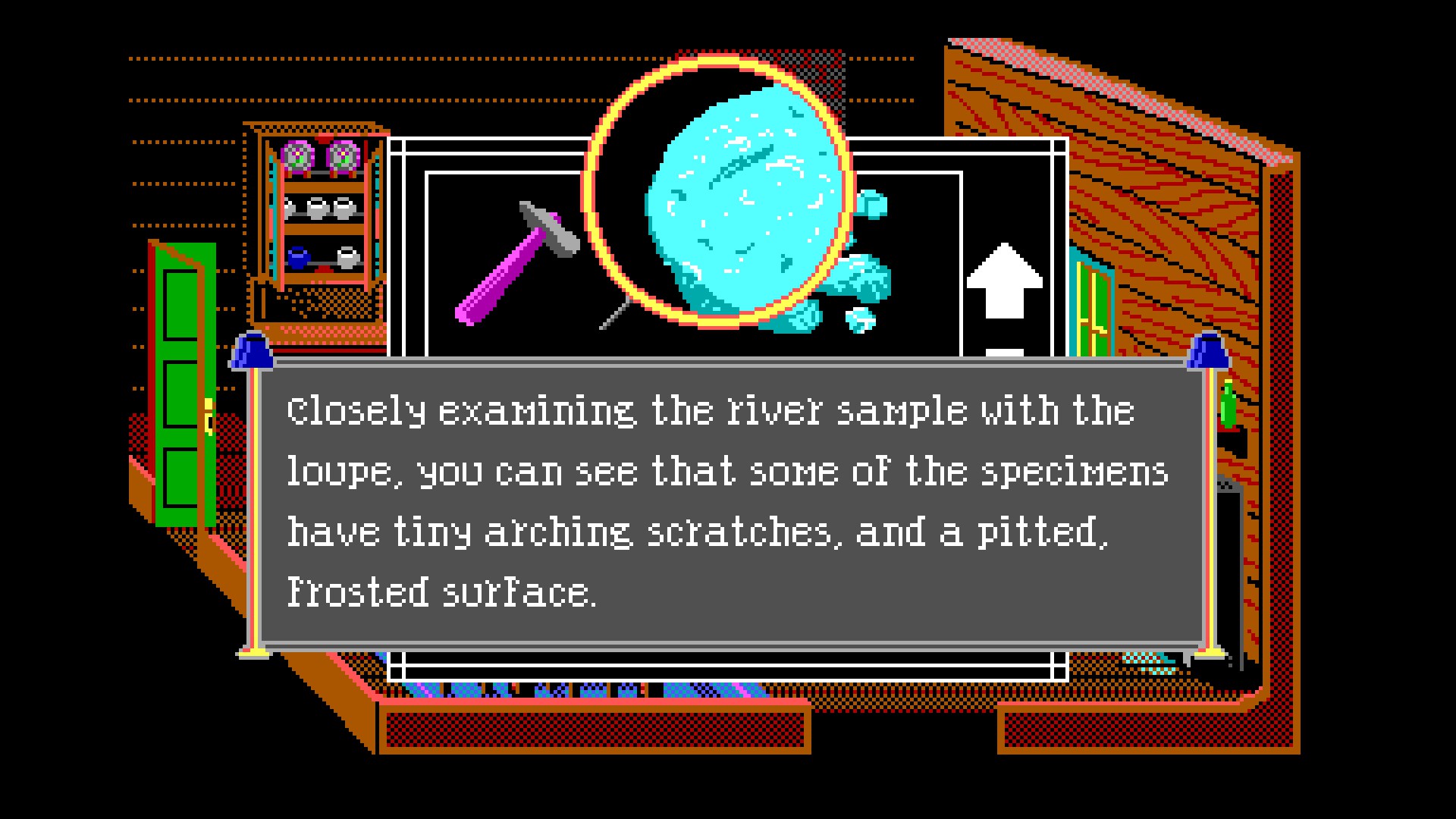
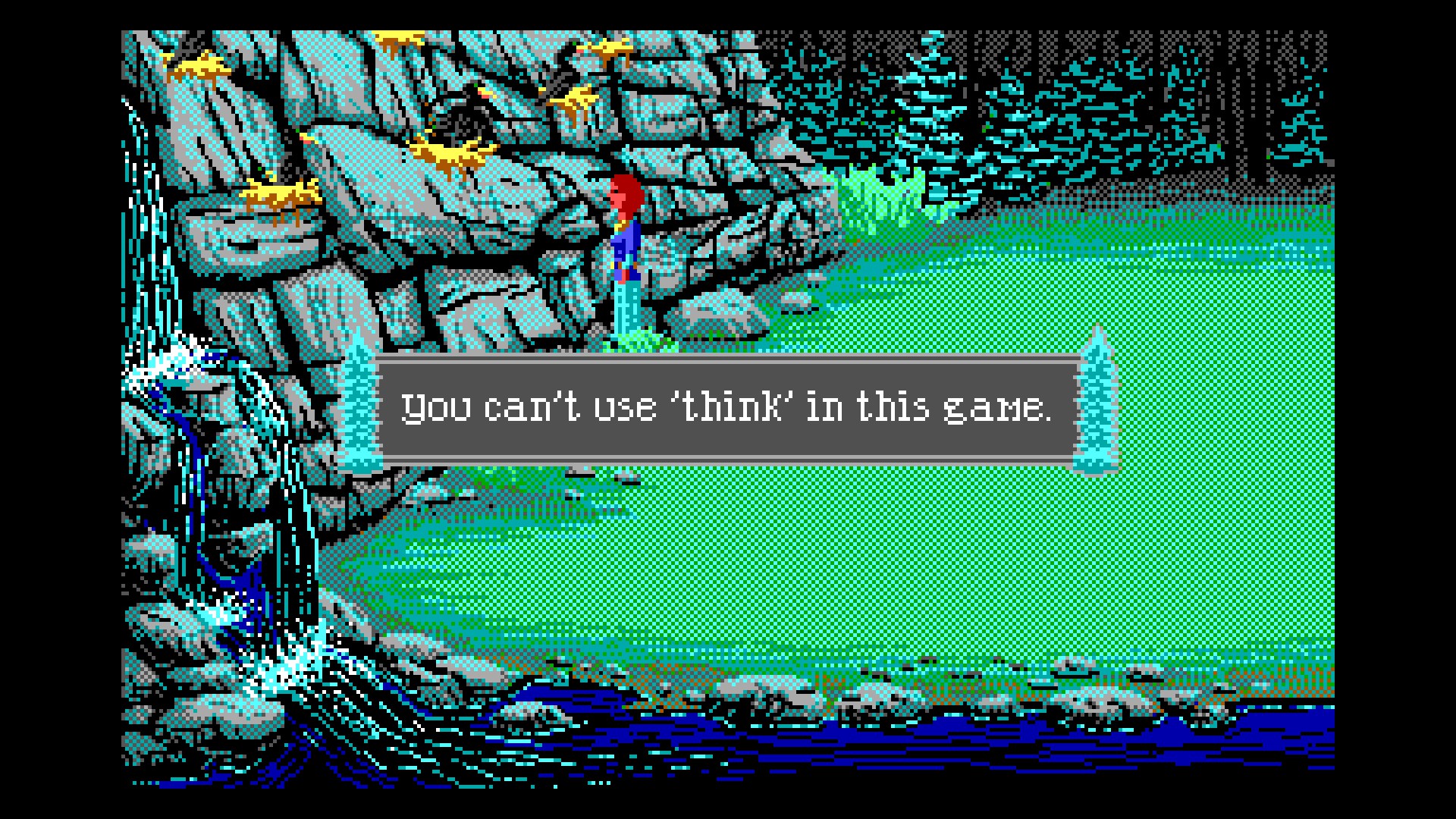
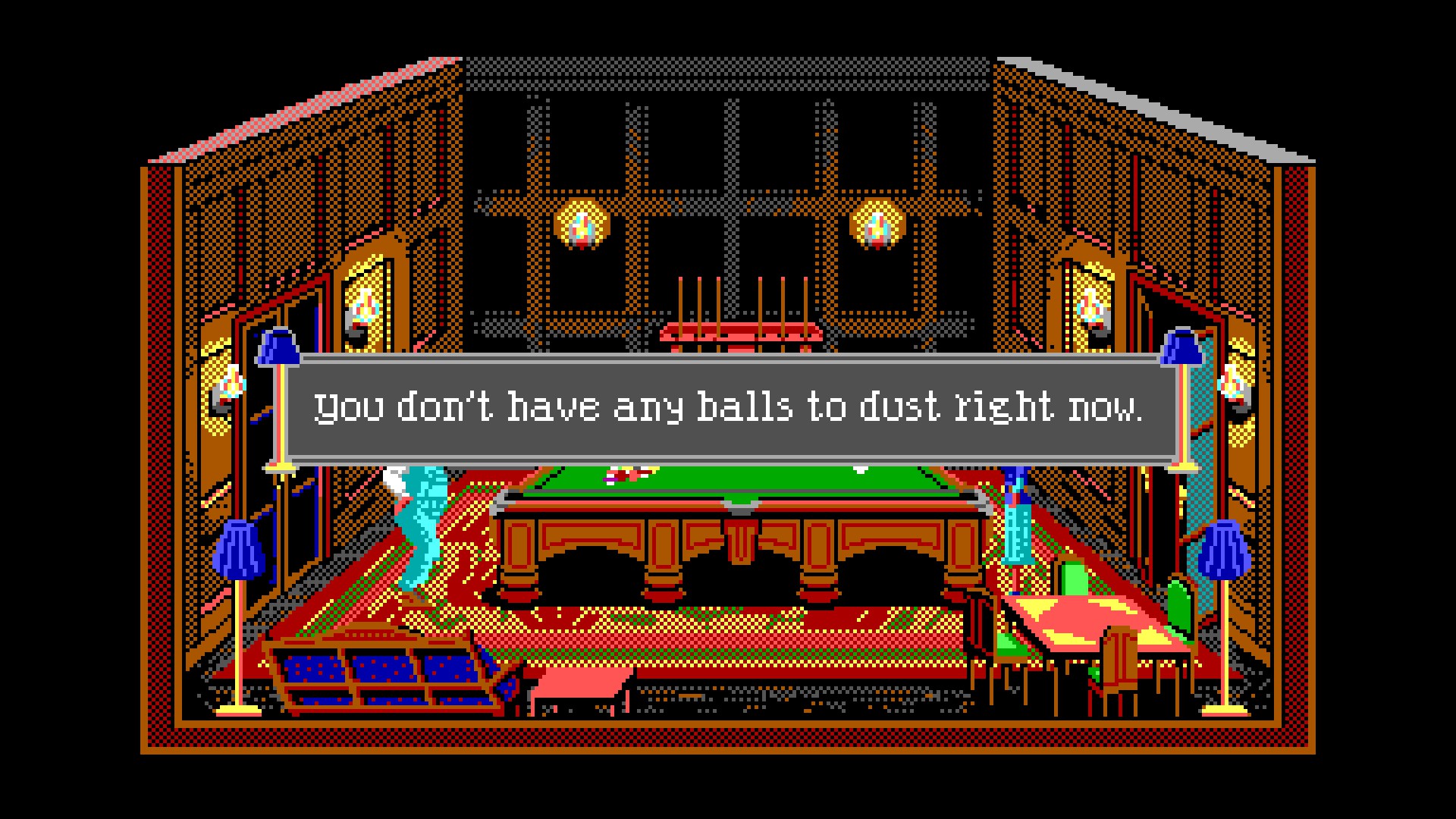
When I first started playing the game, I honestly felt a bit out of my depth. I found myself wandering around the lodge typing “Open Door” at everything that I could to see what was behind it. Slowly, but surely, I started to figure out how to interact with the game and how to ‘think’ in the way that it intends. As I slowly started to put the pieces together in the opening chapter of the game, I discovered a freedom I rarely experienced with games, and it became incredibly immersive. At times it really felt like I was right there investigating the mystery alongside Nancy. The mystery itself felt engaging as well. The unique angle of using minerology as a base for a lot of the puzzle work gives the game an oddly specific twist that makes it endearing. As is tradition with this particular genre, it does have a few points where the classic point and click moon logic comes into play. Those type of puzzles that have you scratching the back of your head and have you frantically clicking across the screen hoping to find a solution, or in this case, typing whatever comes to mind. During these two segments involving cookies and balls, I started thinking through the text prompts and just jotting down whatever comes to mind. Though the game telling me that I can’t think did get a good chuckle out of me.
Luckily most of the game does adhere to the same base level of logic and deduction, so once you figure that out. You look around the room and start interacting with things that stand out in the description. It helps to really let your curiosity lead you through each chapter, and you get rewarded for being thorough and inquisitive. Which is also where the scoring comes into play. At the end of the game you get to present your findings to the authorities and based on how thorough you were, you can answer more questions, thus tallying more points. This led to my first run having an, admittedly, abysmal score of 5 out of 19, but it does open doors to its replayability. I immediately felt like I knew where I missed out on a lot of details and started looking forward to playing through the game again in the near future to see if I could unravel the missing clues.
The Crimson Diamond elegantly presents the classic adventures to a modern audience and new players with a warm and cozy fire to sit by as they solve the mysteries of the lodge at Crimson. The presentation of the game is absolutely marvelous with its EGA powered color scheme, and the music, provided by Dan Policar, adds a fantastic level of tension at dramatically appropriate moments. Although the game rarely has background music, this makes the rare moments that it does have ambiance stand out as highlight moments. The modern conveniences take away a lot of the frustrations that are synonymous with the genre, with Nancy’s notebook providing a particularly good looking olive branch. As fall takes over and the weather gets cooler, as the summer suffers it’s long awaited heat death, it’s the perfect game to cozy up with covered in a blanket and armed with a cup of tea. As my first foray into an incredibly daunting genre of adventure games, the game did a fantastic job at making me feel welcome. The Crimson Diamond is a fantastic step-in point to the incredibly wild and wonderful world of text parser adventures! Just don’t forget your detective cap and streak plate.
Open Door/10
The Crimson Diamond is now available on the following platforms;
Steam: https://store.steampowered.com/app/1098770/The_Crimson_Diamond/
GOG: https://www.gog.com/en/game/the_crimson_diamond
Itch.io: https://juliaminamata.itch.io/the-crimson-diamond-full-game
TanookiChickenAttack is made possible by supporters on Ko-fi. If you enjoyed the review, consider becoming a supporter through https://ko-fi.com/tanookichickenattack

 TanookiChickenAttack