
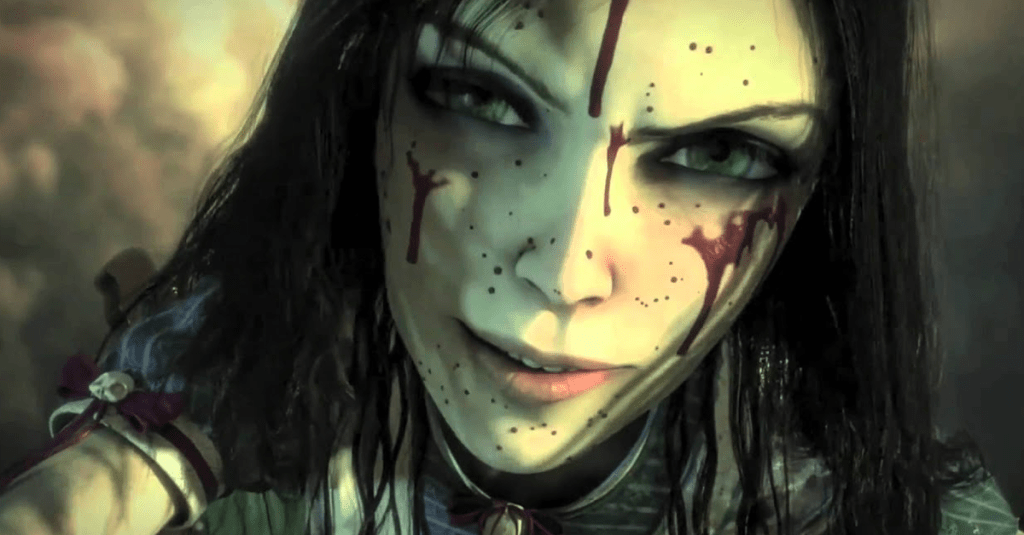
2011 | Spicy Horse | Playstation 3
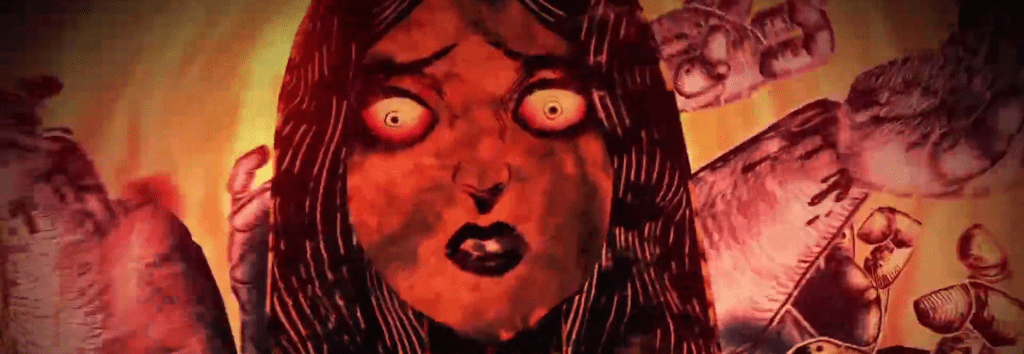
This review deals with very heavy subject matters. Spoilers ahead.
It is rare to see a title receive a direct sequel after a decade of dormancy. It’s even more rare to see a duology evolve into the concept of a trilogy without a third entry, with the madness fading back into the annals of history before its grim conclusion. After Rogue Entertainment’s American McGee’s Alice left a mark on the PC action adventure genre at the start of the millennium, fans of the game were both surprised and excited to hear that the game would get a sequel. The original felt like an isolated story that closes the curtains with a hopeful tone, but leaves a bit of room to look into the future of the main character. When I first heard that this odd, surreal and mesmerizing game would receive a sequel, I was on my feet, clapping with excitement. The initial trailers promised an even more otherworldly experience as we got our first look at an older Alice. When the game released in 2011 I was in my front row seat, ready to devour the game whole. While my first impression was incredibly positive, I didn’t quite get what the game was going for at the time. I appreciated the story, enjoyed the game and the presentation, but I didn’t see the layers of madness peeling away in front of my very eyes until I was a little older. 2024 older to be precise. As part of Seventh Gen Month(s) I finally took another look at this marvelous game, and, with the right context in my back pocket, was taken aback at how personal, intimate and dark this game truly is. The madness had returned.
American McGee presents: Spicy Horse
After the release of American McGee’s Alice, the duo consisting of the game’s writer, R. J. Berg, and game director, American McGee, parted ways with Electronic Arts after the company shut down Rogue Entertainment. Together with the Spanish studio MercuryStream (known for the Castlevania: Lords of Shadow trilogy) McGee would go on to work on the second game to bear his name in the title; American McGee presents: Scrapland. While a lot of the visual influences from McGee, serving as a producer on the game, do seem to seep through the robotic cracks of the game, the tone is noticeably more comedic in tone. The game released to a lukewarm reception, but still feels like a fresh game with striking designs. The comedy is a bit hit or miss though. From here McGee would meet Ken Wong, an Australian concept artist who McGee got to know through Alice fanart. The two would make American McGee presents: Bad Day in L.A., a 2006 third person action game that by own admission wasn’t very good. And the reviews at the time reflected that. This didn’t deter the pair from pursuing new ventures and Ken Wong would continue to join McGee in his next chapter.
From a few bad days in Los Angeles, McGee moved from Hong Kong to Shaghai, where he’d found the independent studio, Spicy Horse, in 2007. The original building for the studio was shared with art-outsourcing company, Vykarian. Being surrounded by art helped inspire the episodic Game Tap game; American McGee’s Grimm. The game was spread out over 23 weekly episodes which allowed the studio to explore a variety of gameplay styles. The influence of the original Alice’s art design was palpable in this series of fairy tale inspired games, as it adopted a similar twisted whimsical aesthetic, albeit more cartoony in its design. With the release of the final episode of Grimm on the horizon, McGee, on a whim, reached out to a representative at EA to inquire about a potential sequel to the Alice series. In a somewhat odd turn of events the project was green-lit and over the course of the next few years the team would be hard at work on Alice: Madness Returns with American McGee as the director (not in the title this time). The project would see the original game’s writer, R.J. Berg, return to his position and Ken Wong would take up the mantle of lead artist. A lot of the original voice talents would reprise their roles for the sequel, with Susie Brann returning as Alice, Roger Jackson as the Cheshire Cat and Jarion Monroe as the Caterpillar.
The first public announcement of the sequel being in development was in 2009 at D.I.C.E Summit, where the game was announced under its working title: The Return of American McGee’s Alice. The year after the title was officially unveiled as Alice: Madness Returns and was accompanied by a series of striking trailers featuring Alice being swallowed by a wagon and dragged off to Wonderland, a short meeting with the Caterpillar before Wonderland is burned to the ground by a pair of phoenix’s, and a wonderfully macabre trailer that will make you double check your dental plan. Finally in the summer of 2011 Alice: Madness Returns released on most major console platforms. The game was released to a somewhat mixed reception, but it nonetheless joined its first installment in cult status over the years.

Layers of madness
Alice: Madness Returns takes us a year after Alice’s departure from Rutledge Asylum following the events of the first game. The foray into the twisted Wonderland after nearly a decade of being in a catatonic state gave her the strength to confront her own guilt and learn to live with the death of her family. A year later we find Alice, now living in a London orphanage, under the care of Dr. Agnus Bumby, a hypnotherapist attempting to get her to forget the traumatic events of the fire. He does this by forcing Alice to confront her trauma and the fractured Wonderland left behind because of it. During a session is confronted with a memory of her and the Rabbit enjoying tea on a river, when the Rabbit’s head suddenly dislodges from its spine, turning the body of water into a river of blood. It may have seemed like Alice’s state of mind was in a state of recovery, but through this therapy we learn that she’s being taught to repress them, to forget.
It’s after the introduction that we’re also introduced to the reality we’re about to bend and break. After exiting dr. Bumby’s office we find ourselves in an orphanage. Here you can freely look around, explore and interact with some of the other children. It does feel strange to have something that resembles a grounded reality form the foundation of the world we get to investigate the absolutely stunning design of the late 1800’s London. There is a palpable bleakness to its design and the characters look like they’ve hopped straight out of a Tim Burton set. It all forms an incredibly strong tonal opposition towards the more whimsical aesthetics of Wonderland. After departing from Houndsditch Home for Wayward Youth, we get to enjoy exploring the streets of London for a little bit. However, shortly after venturing into the back alleys, Alice is seized by a hallucination of people with Jabberwock heads. She is snapped out of it by her former Rutledge Asylum caretaker, nurse Witless, who lures her to a pigeon coop with information about Alice’s rabbit doll. Here the nurse transforms into a humanoid Jabberwock and attacks Alice. The roof crumbles beneath Alice’s feet and she falls down into Wonderland, where she graciously sticks the landing.
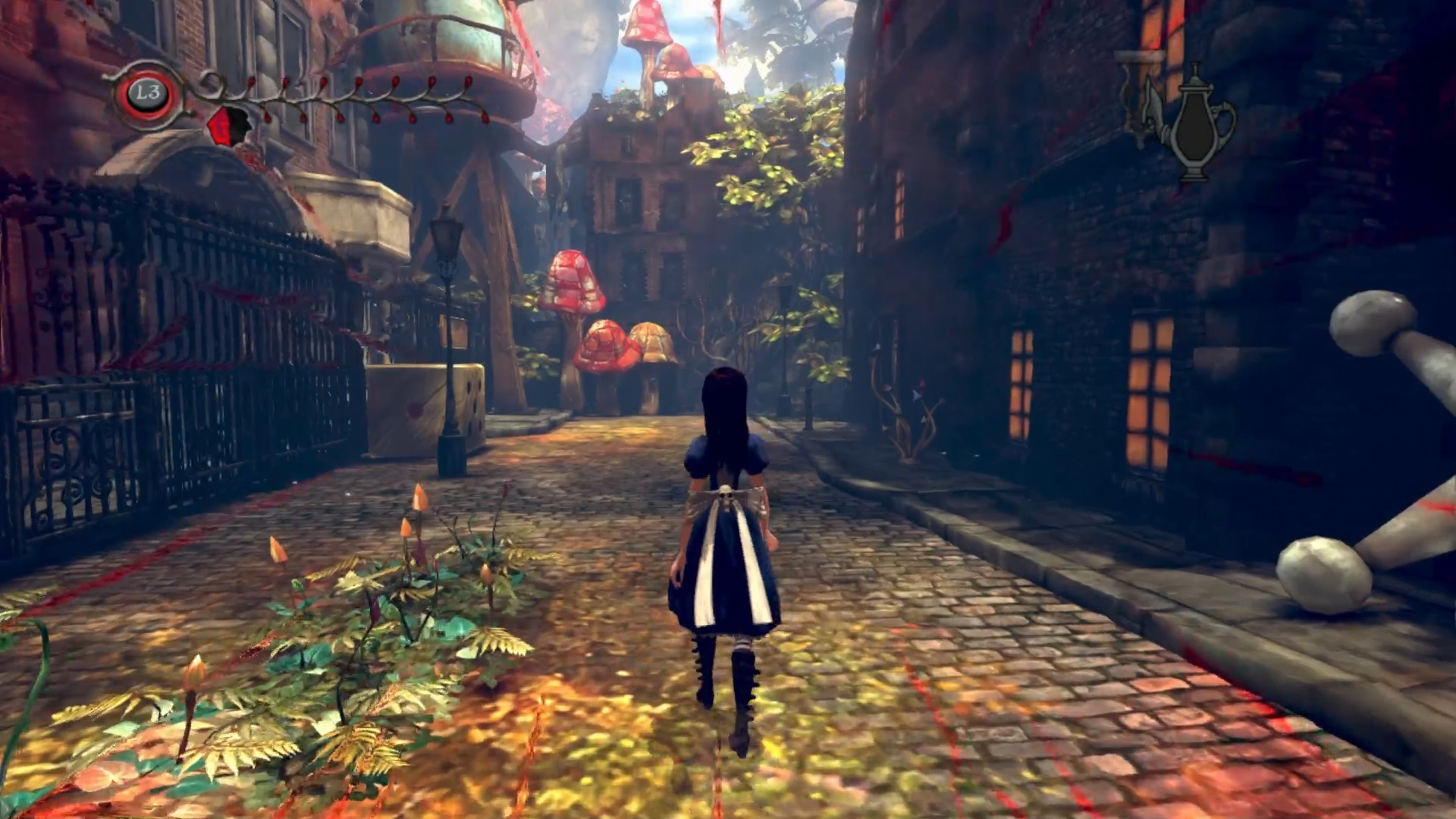
The tonal shift between London and Wonderland is incredible. Whereas the foggy streets are depicted in a heavy overcast of monochrome, Wonderland is bursting at the seams with vibrant colors. The Wonderland version of Alice also gets a bit of a makeover. After transforming she once again dons the blue dress from the first game, although now with a bit more of an air of maturity and confidence. Here we meet our old friend the Cheshire Cat, who tells us that Wonderland is once again on the verge of destruction, and that while Alice is looking for an escape instead of a fight, the fight is certainly looking for her. So, we get to explore the relatively peaceful landscape of the Vale of Tears. Along the way we get our first clue as to what is going on in Wonderland through the scattered memories we find throughout the area. From a mechanical standpoint these are our collectibles for the evening, but they also unravel the mystery behind the curtains of Wonderland and Alice’s memory.
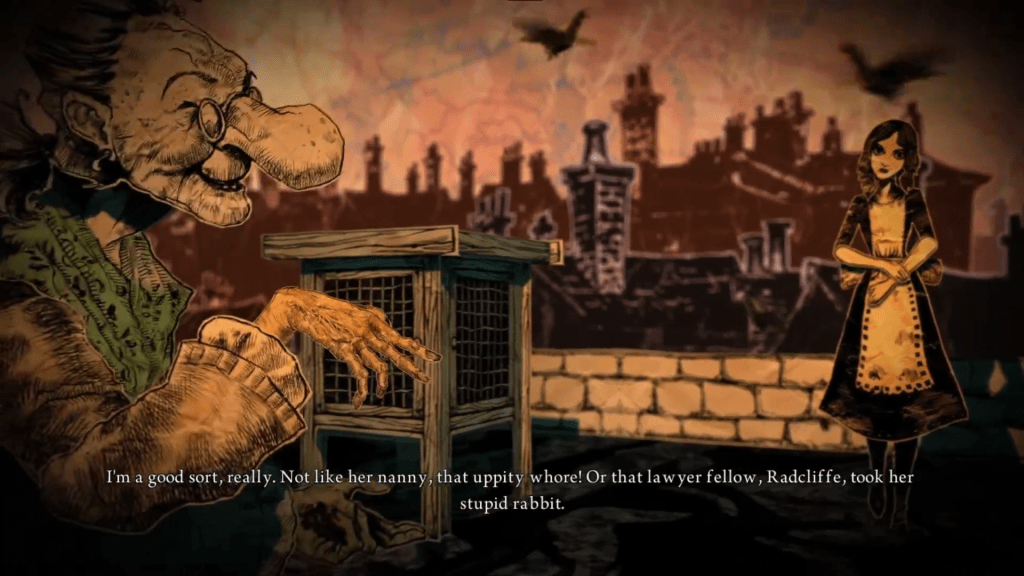
On the surface all seems well with Wonderland, the inhabitants seem lively (albeit territorial), and the Jabberwock is still laying dead on display. However, this quickly changes as a train tears through the realm, tearing the curtain away, and letting the suppressed madness burn freely. Throughout the changes in realms we get to revisit London and the harshness of reality. The first time Alice breaks free from the hallucinations of Wonderland she finds herself on a pier surrounded by two men trying to assault her. She manages to escape, and finds refuge with her former nanny, now turned matron of a brothel. During this sequence a few breadcrumbs are dropped to lead Alice on a quest to find out what truly happened the night of the fire, as the memories you’ve found in Wonderland seem to hold more truth to them than previously thought. As the two worlds start colliding more and more, Alice’s mental state is constantly put into question to both herself and the player. There were certain moments during the story where I completely lost track of where Wonderland began and London ended.
The game then takes us on a rollercoaster ride that takes you back and forth between incredibly designed realms and dreary back alleys to unravel the deeper mystery. As Alice closes in on the Infernal Train, she also closes in on the truth. The memories that her hypnotherapy was treating to obfuscate, tell a very different tale of the night of the fire. On the night of the fire Bumby tried to assault Alice’s sister, Elizabeth, which woke Alice up. After witnessing Bumby leaving the room, the doctor used an oil lamp to burn the house down in an effort to cover up his crime. As a result of the fire Alice got locked in Rutledge Asylum, where she stayed for the next 10 years. When she woke up, however, Bumby feared his crimes would come to light and attempted to get rid of Alice’s memories of the night before she could connect the dots. As we reach the end of the game, Alice completely regains her memory and goes on a rampage to get revenge against the doctor. After cornering Bumby in the subway, Alice changes into her Wonderland form, now having the courage to confront her past and her demons, and pushes Bumby in front of the train. Now with her newfound confidence she sets out to find everyone involved in the murder of her family and the happenings at the orphanage as the credits roll.

In a post traumatic world
The first game deals a lot with themes of loss, grief and the effects of post traumatic stress disorder, reflected by the setting of the game and the time period it takes place in. Over the course of that game it becomes evident that Alice’s aggression towards the twisted version of Wonderland stems from her inability to process the blame she gave herself for the death of her family at the hands of the fire. This is the main reason why the Red Queen is a reflection of Alice’s trauma and the state of Wonderland being a reflection of her state of mind. This visual depiction carries over in the second game, but instead the twisted Wonderland is now being affected by an Infernal Train that destroys the world around it. In contrast to the first installment, in Madness Returns Alice’s PTSD isn’t reflected as prominently through Wonderland in the initial stages of the game, but rather is threatened by an external force. The destruction of Wonderland itself parallels the hypnotherapy that Alice has been receiving. The parts of Wonderlands affected by the train’s rampage seem to coincide with the memories being surpressed by the therapy. This is also why memories are a collectible and a big element to painting the whole picture in this game. These recovered memories serve the purpose of guiding both Alice and the player to unraveling the deeper mystery.
Over the course of the game we see that Alice’s confrontational attitude towards the things happening in Wonderland bearing a resemblance to the way she lashed out around her in the first game. The big change is that there is a certain reluctance towards confronting the bad parts of her memory. Once she recovers enough of her memories, however, this attitude shifts to laser focus that aggression on the person responsible for her trauma. This allows her to harness that trauma to grow beyond it and eventually confront the source of it. The version of Alice we see in Wonderland has always been some form of ideal version of her as she sees herself. Which is then represented in the game by her embracing that strength and transforming into the Wonderland Alice in the real world. This change allows her to overcome her guilt and start building on a new future, ending the second game in a similarly optimistic note as the first.

One, two! And through and through
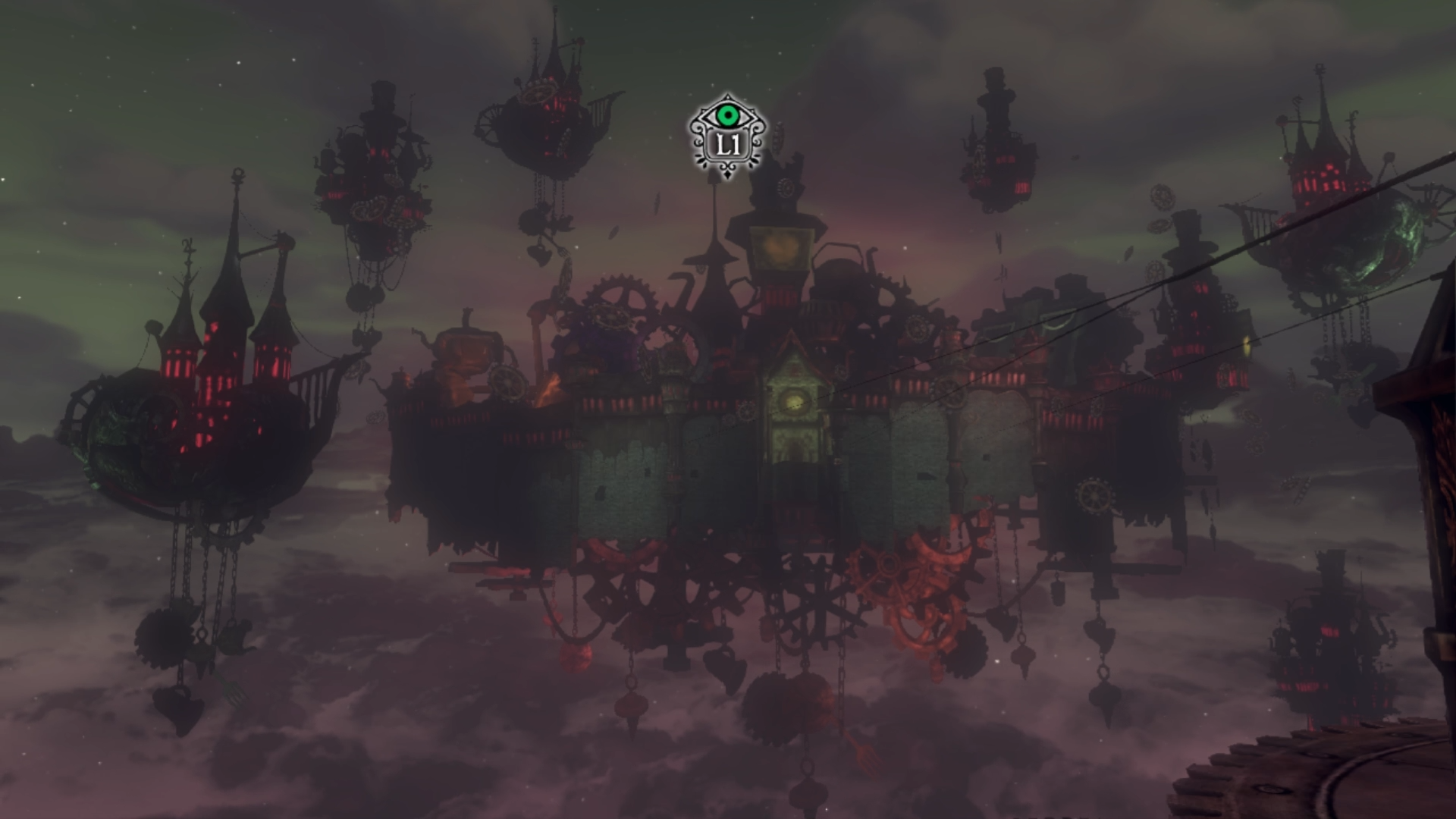
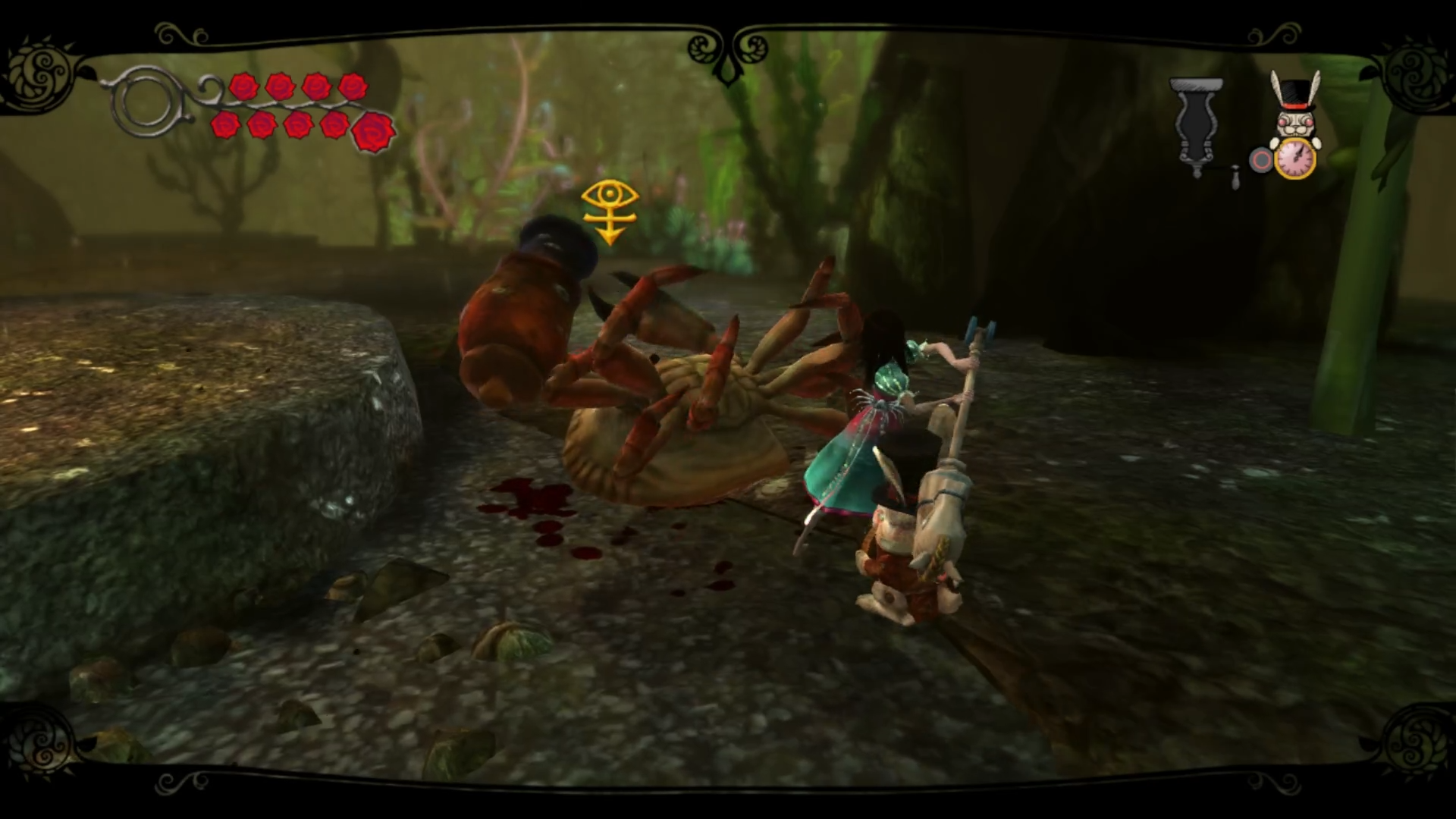
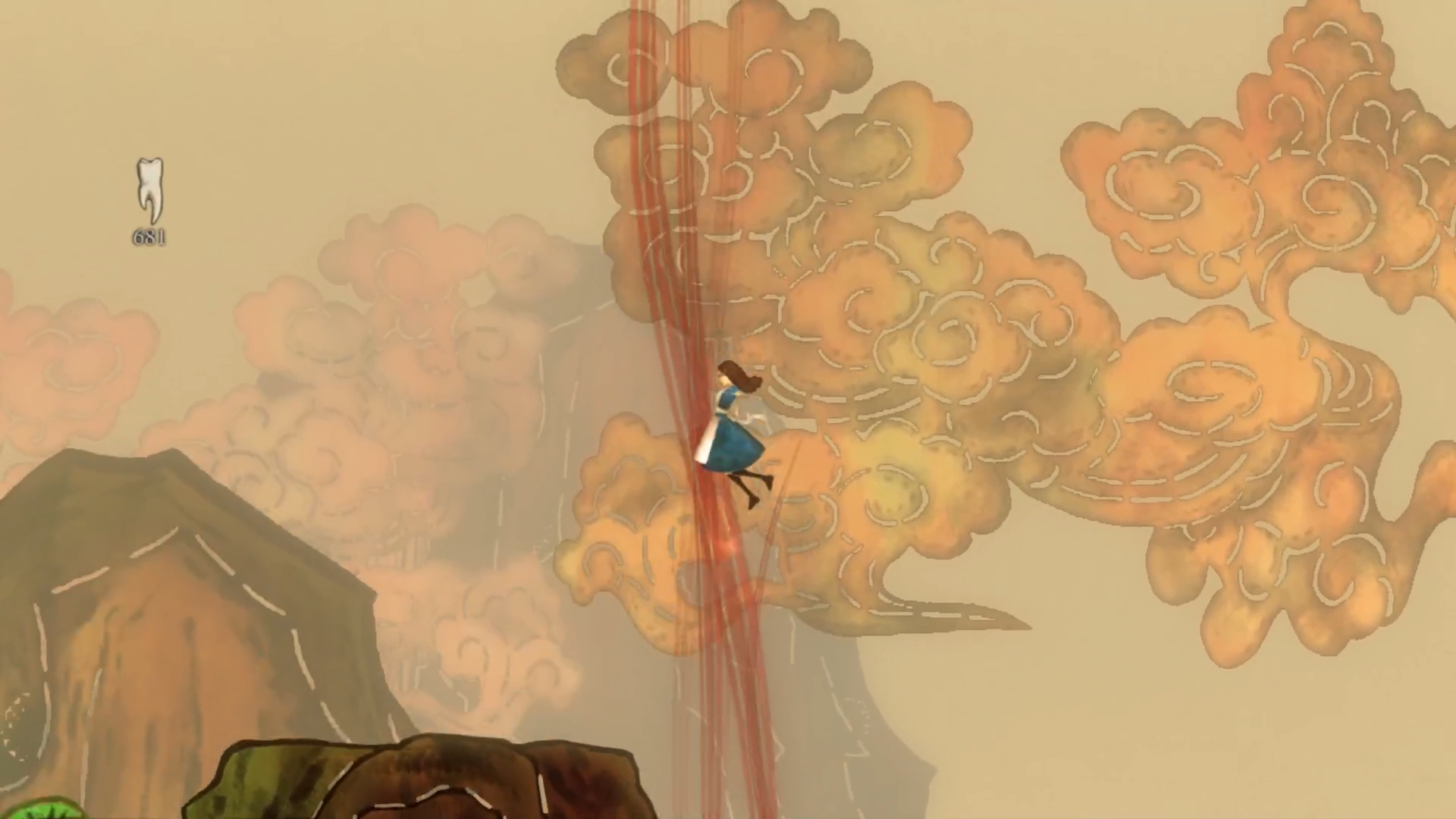
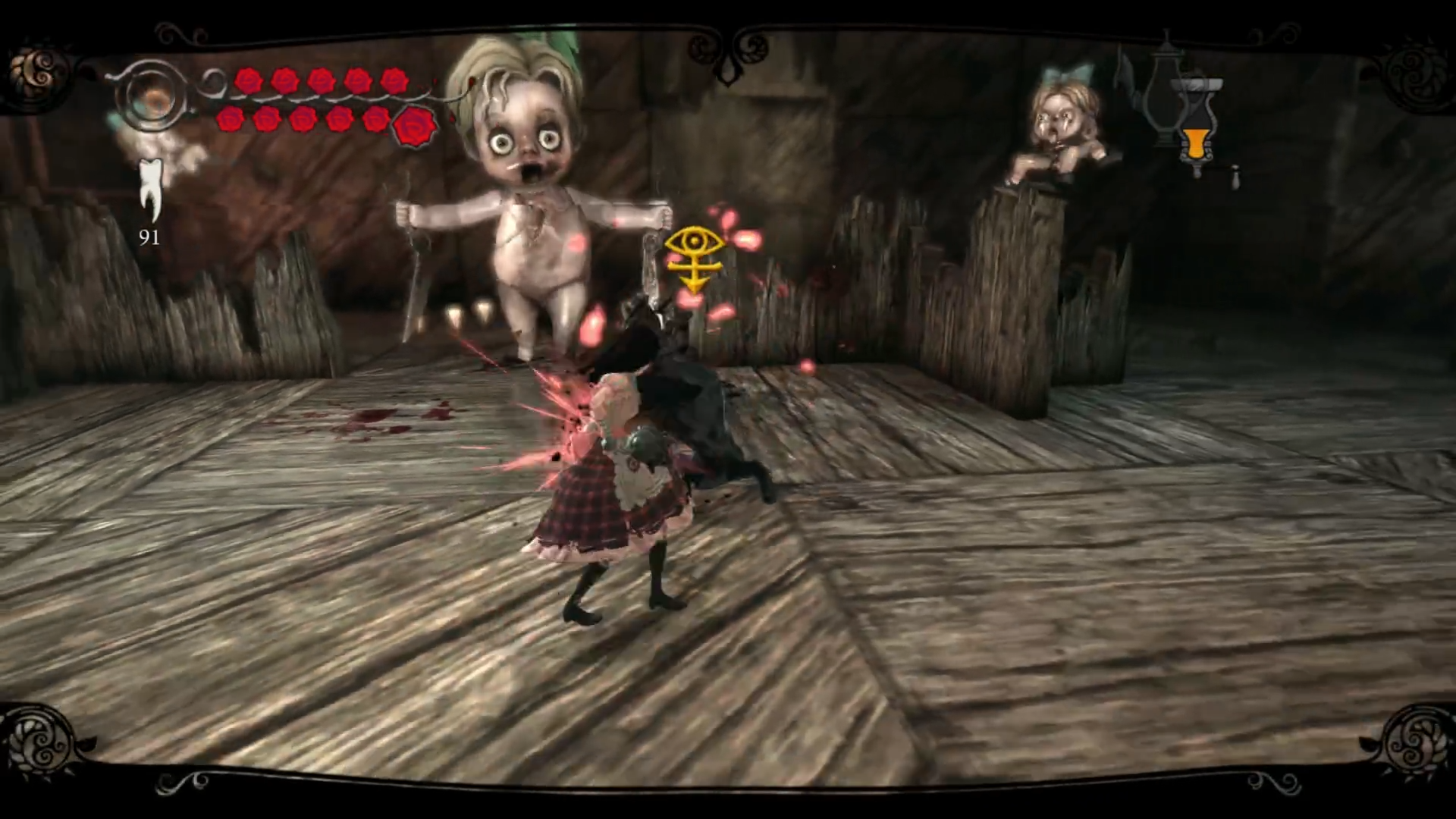
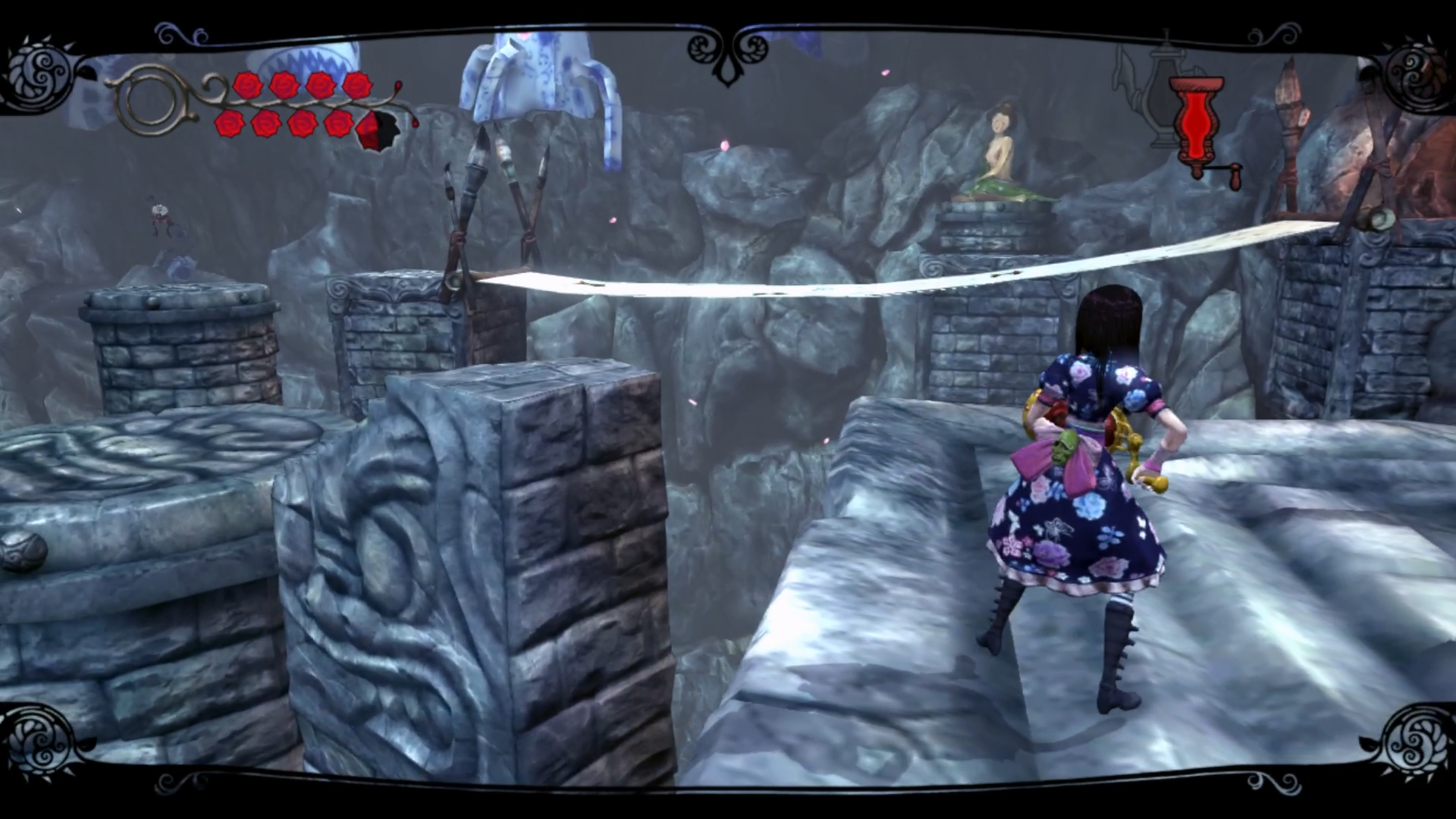
While American McGee’s Alice felt like a game that embraced the core designs of an early 2000’s PC game, its sequel was designed as a console first experience from the ground up. It is especially noticeable when you play both games back to back. Madness Returns translates the platforming into a much more streamlined experience. The routes you can take and jumps you have to make are all clearly telegraphed to the player. This does leave the game with a less organic overall design, with the pathways sticking out from the stunning environments. However, this does make for an overall better experience. Alice controls a lot smoother this time around as well. We can now freely move around with the left analog and look with the right. The trusty Vorpal Blade makes a comeback and serves as the main means of offense against the monsters that infest Wonderland. It’s your basic hack and slash type of deal that does admittedly lack a bit of impact. There is a bit more variety found in the other weapons. We get the Peppergrinder as our main ranged weapon, a hobby horse shaped hammer for the really hard to crack cases, a teapot that spills explosions of splashes, and the Clockwork Bomb to tell us when it’s tea time with a bang.
Most, if not all, of the enemies are more or less puzzles to solve, where you have to figure out what’s the best method for dispatching. A good example would be the crab enemies in the Deluded Depths, which can be cracked with a good swing of the horse, but a good explosion topples them instantly, allowing you to quickly kill them. For the defensive options we have a dash that allows you to dive out of harms way, as well as an umbrella that allows you to deflect enemy projectiles. While the pool of enemies isn’t the largest, even between realms, the set of tools prevents the combat from ever feeling monotonous. At the start of the game I found myself struggling with small encounters, but the more I started messing with the different tools at our disposal the more liberating and breezy combat became. It’s a satisfying and quite natural feeling curve to traverse. In multiple interviews, American McGee has stated that he wanted the combat encounter to feel like action set pieces and puzzles at the same time, and I feel like he succeeded with this.
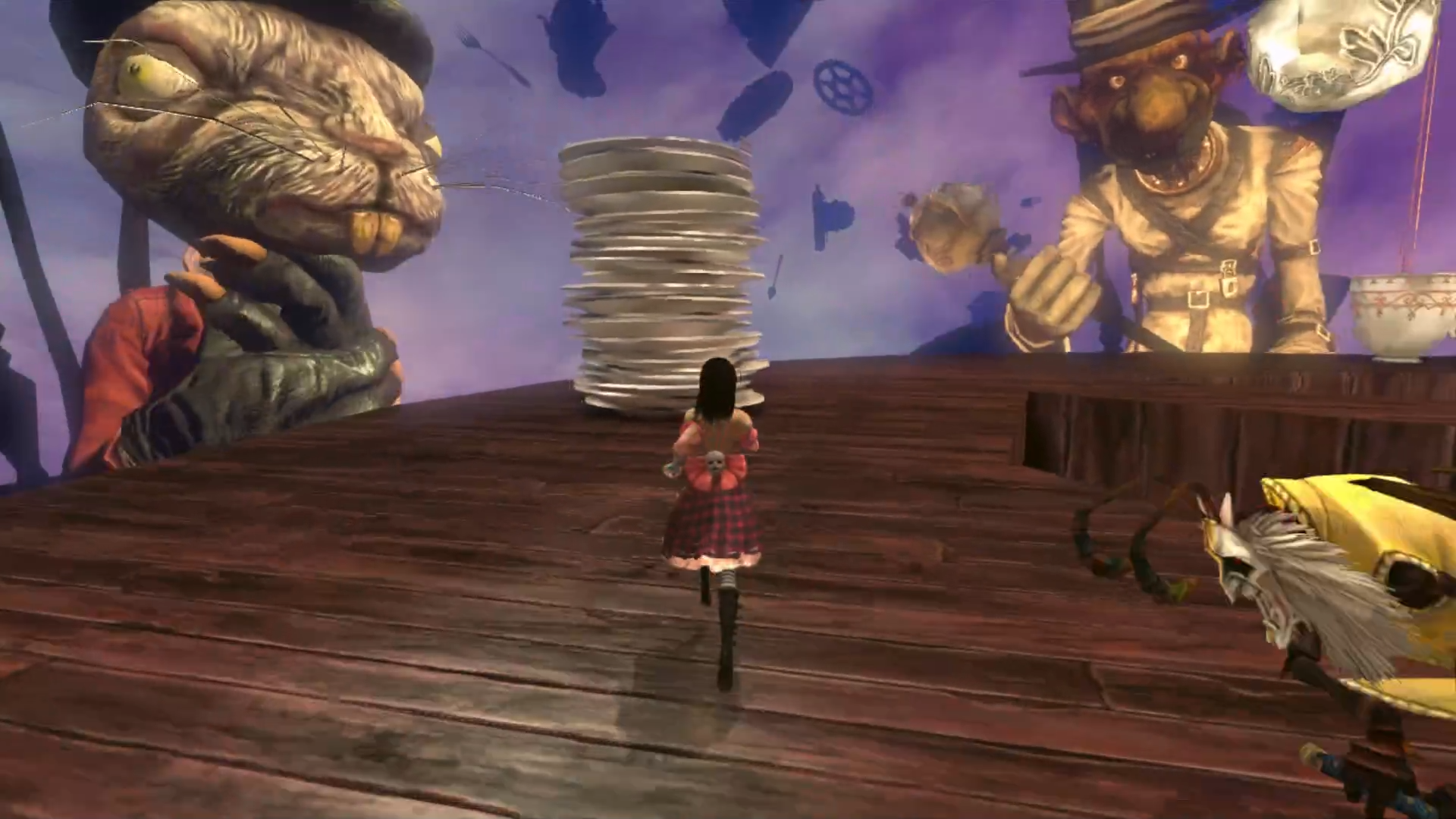
The monotony, however, comes from the game’s overall length and commitment to engaging with smaller storylines. In most cases these storylines turn into sidequests that do give a neat introduction to some of the game’s puzzle mechanics, but quickly become a distraction from an already hard to follow plot. While the scope has been drastically reduced compared to the initial outline, it still feels like certain areas, particularly the underwater theater, overstay their welcome. Madness Returns manages to constantly juggle the excellent stage design with pace breaking sequences that will distract you from the main plot. Each individual stage, or realm, however, is stunningly put together. Each new realm that you visit has a mesmerizing quality to it, something that was also strongly present in the first game. It really manages to put the wonder in Wonderland, even at its darker moments. The sequences in London offer a fantastic counterweight to the whimsy. I absolutely loved exploring the grim and grimy streets, catching snippets of conversation and scenes unfolding around Alice. Its stark tonal juxtaposition contrasting Wonderlands more engaging gameplay provided a much needed reprieve, as well as a stronger backdrop for some of the more grounded story elements. It was a good move to allow players to slow down, as the first game tended to bombard you with sequence after sequence of feverdream.

A visual Wonderland
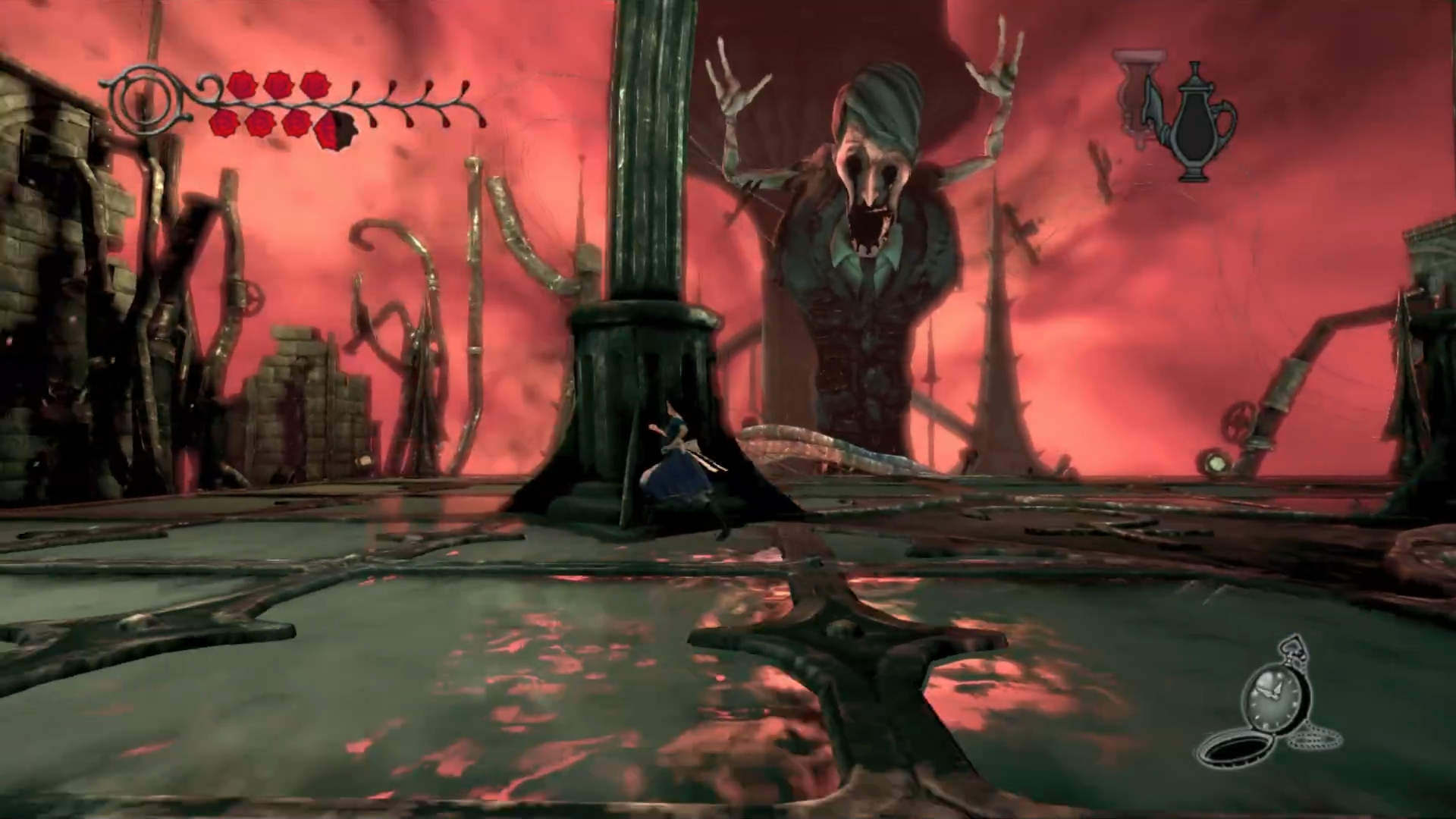
We can’t talk about Alice: Madness Returns without taking a look at the absolutely stunning art direction. Where a lot of the games of that time went on to push boundaries in realism, Madness Returns commits to an almost timeless art style. The character designs, stages and details pop out like no other. Yet it still maintains a somewhat organic feel to it. In a similar way that Bioshock: Infinite, Prey and Dishonored managed to utilize their visual design to create a unique visual style that feels in tone with the world its trying to present. The first stages are jaw dropping and vibrant with bright colors to enhance the feeling of whimsy that comes from Wonderland. Yet when the veil of vibrancy falls away to reveal the dilapidated back alley’s of London, there is an equal amount of beauty to its design. You can almost smell the fish market and the sewer fumes coming through the grates. It’s such a stunningly effective and timeless design that gives the whole game an equally timeless look.
A swansong without an encore
Despite its cult following and commercial success, both of the Alice games have faced significant trouble landing with a larger audience. With the IP for the games being firmly held by the dustiest of corners in EA’s archives, there wasn’t a whole lot more to do for American McGee than to try to get it back. Alongside this Spicy Horse attempted to raise funding through Kickstarter and Patreon for a third game in the series. Unfortunately, with EA being reluctant to return the IP to its creator, this project ended up in a legal purgatory. In spite of all the factors working against them, the team at Spicy Horse remained committed to this project, and managed to get the game near ready for development. After a few years, they finally ended up throwing in the towel and announced that Alice: Asylum was cancelled for good. This left Alice’s and McGee’s story unfinished, but never forgotten. McGee eventually released the stunning Alice: Asylum Design Bible for free on his Patreon, giving the fans a look into what could’ve been. Alongside this came a message that McGee had decided to move on from the series and asked the fanbase to stop asking him about it. Despite the sad news of the game’s cancellation, there is a beauty in a creator being willing hand his magnum opus to the fans that adore the series. He handed us the reigns and told us to create and make our own encore to his swansong.
Back through the looking glass
Alice: Madness Returns is an absolutely stunning looking game that leans heavily on both its narrative and visual presentation. It elegantly balances the darker themes on a very thin line between well told and gratuitous, and the world around Alice matches this. There is a natural quirkiness to everything that happens in Wonderland that somehow makes the atrocities you see throughout the game intriguing and mesmerizing. The whole game feels designed with a clear intention and a clear goal in mind. Even the way that color is used to blend the two realities together throughout the game is extremely effective. There are a few major pitfalls that the game stumbles over on your journey to the credits. The major one is that, once you get to roughly the third realm, the game starts to feel bloated. It often lets the whimsy overtake the game’s pacing and this leads to long sections of sidetracking to do puzzles and tasks for some of the NPC’s. It’s generally not bad as a self contained little segment, but it often comes at the cost of the narrative. This leads to large gaps between major plot revelations and a somewhat muddied narrative flow.
Outside of the pacing issues, the game itself plays rather smoothly, with a nice variety of weapons to experiment with, and a selection of enemies to experiment on. The platforming itself is neatly telegraphed and the stages have a nice flow to them. The game encourages you to scour every nook and cranny for the little breadcrumb trails that lead to more memories and more secrets. However, I will say that Alice: Madness Returns is a very narrative first type of game, which contrasts the overall pacing of the game. It’s a beautifully tragic tale, woven in a beautifully tragic tapestry. As you may have noticed from the sheer volume of text in this review, I really love this game, and this series. Once I get started talking about it I have a hard time stopping myself from doing so. It’s a series that is so rich with narrative details that it’s hard to stop picking at it. The presentation of Alice: Madness Returns and its story are the heart and soul of this game, with the gameplay often tripping over a loose stone or two. Once you regain your footing you’ll find a wild, whimsical and violent spectacle waiting for you through the looking glass.
Tea party/10

TanookiChickenAttack is made possible by supporters on Ko-fi. If you enjoyed the review, consider becoming a supporter through https://ko-fi.com/tanookichickenattack

 TanookiChickenAttack