

1998 | Wolf Team | Playstation
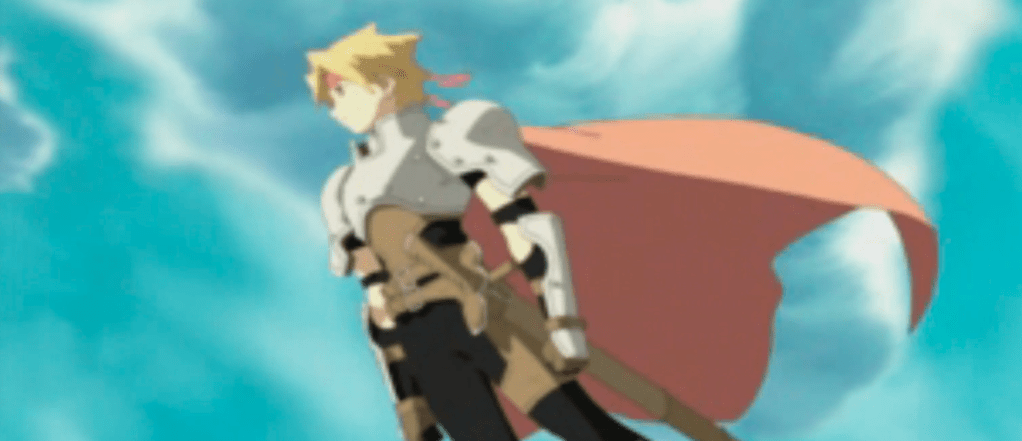
For nearly a decade I have been slowly making my way through each of the mainline Tales of releases, and after nearly a decade we have finally come to the end. Or the beginning. The journey through this series has been a huge part of my life and the stories I’ve experienced went from adrenaline pumping, to heart breaking. It’s been an absolute pleasure to delve into this franchise, and get to live through the stories of each installment. Now with one installment remaining I had to finally take a fresh look at the original. Well, not quite original. This is a review of the Playstation version of the Super Famicom game, because the Game Boy Advance version (the only English version) didn’t want to work on the GameCube. So here we are, at last, with Tales of Phantasia. The first in the series and the last in line!
Before the Tales there was Wolf Team
Founded in 1986, Wolf Team was founded as a subsidiary and game development team under Telenet Japan. Prior to becoming their own development studio Wolf Team was working as a support team to help develop some of Telenet’s earlier titles, as well as working on ports for various arcade titles. They can be found credited on, among others, the Sega CD port for Taito’s Revenge of the Ninja ( released for arcade’s in 1984) and a port for the same system for 1985’s Time Gal, releasing in 1992 and 1994 respectively. After their founding they worked as an in-house development team from 1986 until 1987, after which the team would enjoy a brief period of independency before merging back into Telenet under the subsidiary Lasersoft. During their independence they worked on the first installment for the Valis series with 1986’s Valis: The Phantasm Soldier. Afterwards they would work on various titles like 1991’s El Viento and Arcus Odyssey, the Zan series from 1989-1993. While the company focused a lot on developing action, strategy and action RPG’s, it was 1995’s Tales of Phantasia that really put them on the map as a prominent RPG developer.
Tales of Phantasia was created by Yoshiharu Gotanda, designed by Masaki Norimoto and the soundtrack was composed by Motoi Sakuraba. The concept for the game finds its roots in the unpublished novel Tale Phantasia which was written by Gotanda. The world draws heavy inspiration from nordic mythology and the mythos created by H.P. Lovecraft. With elements of Michael Moorcock’s blend of science fiction and high fantasy. Character design and artwork was provided by Kousuke Fujishima, the creator of the long running Oh, My Goddess series, as well as the artist for Red Entertainment’s Sakura Wars series. Due to complications during development, the game was delayed until they secured a publishing deal with Namco. Despite being the first game in the series, Tales of Phantasia only received a Super Famicom release, and didn’t get an official English release until the Game Boy Advance version, released in Japan in 2003, made its debut in 2006. This makes it the 6th English release in the US (which got Tales of Destiny as their first English game), and the second European release, predated by Tales of Symphonia in 2003. It was made available through a rather infamous fan translation prior to the GBA release, featuring Arche and a bunch of tigers. After the release of Tales of Phantasia, both Gotanada and Norimoto went on to found Tri-Ace in 1995. Wolf Team was sold to Namco in 2003 and was subsequently renamed to Namco Tales Studio. The game remains one of the best-selling releases in the series and produced numerous versions and spin-offs.
The PS1 version of Tales of Phantasia included many upgrades over the original. The release of Tales of Destiny in 1997 took the foundation set by 1995’s Tales of Phantasia and introduced a few staples to the series. While the Super Famicom could address about 128Mb of storage, with a rough 115 reserved for cartridge use, the PS1 discs held 700MB of total storage capacity. This allowed Wolf Team to add more voice files to their games, while keeping the games themselves rather small in size. Tales of Destiny introduced the opening cinematic, animated by Production I.G., and Skits, or Chats as their known in the Japanese counterparts of the games in the series. While Tales of Destiny’s English release didn’t include the voice over, the Japanese versions of the Tales games have since always had their Chats voiced. The original release of Tales of Phantasia was considered one of the largest games on the SFC at 44MB alongside Star Ocean, likely due to the addition of voice lines during combat. With the extra headroom the 1998 rerelease expanded on the characters by including the Chats. Tales of Vesperia would be the first game in the series to feature voiced skits for its western release.


A Tale as old as time
The Tales series is no stranger to obfuscating its heavier themes and darker intentions. It has done this since the labor camps of Tales of Symphonia and the manipulated genocide of Tales of the Abyss. The games have always carried a deeper narrative design than the initial observation of the presentation might be perceived as by the player. The moment from the Abyss example might stick in the memories of the player due to the shock factor of the sequence, but less so the intense manipulation at the hands of Luke’s master that leads up to it. I can write a dissertation on the complex character dynamics of Abyss and why it works, but we’re here to look at a different game. The most recent installment of the series, however, is a bit more out in the open with the darker elements and uses the initial two-third’s of the game to weave a narrative about oppression, death and misery. At first I thought this was just a new direction for the series. However, upon booting up Tales of Phantasia, I would quickly find out that the series had matured gracefully in its own foundation. For a game from 1995 it was shockingly forward with presenting a dark fantasy tale told through the eyes of a hopeful, broken man.
The game opens up with a cinematic face-off between four unknown heroes and a dark sorcerer, named Dhaos. Before Dhaos is defeated he manages to cast a spell which propels him forward through time. When he arrives in the new time period he is awaited by one of the descendants of the four heroes and his companions, where he gets sealed into two pendants. The intro feels like a bit of a subversion of the common conventions of the 90’s RPG, but the way the big villain is defeated and sealed works as an incredibly effective jump-off point. We then cut to a decade later where we get introduced to Cress Albane, our protagonist of the story, who’s out on a hunting trip with his best friend Chester Burklight. While in the forest the pair hears the town alarm bell ring and they rush home to find their hometown of Toltus in cinder and ruin. And this is where Tales of Phantasia shows its delectably dark color palette of ash and crimson. Chester finds his sister impaled with arrows right before she passes away, and Cress finds his parents slaughtered in the family training hall. With her dying breath Cress’ mother reveals that the village was attacked to uncover a family pendant. With Chester staying behind to bury the dead, Cress heads out to family in Euclid to seek refuge. It isn’t long thereafter that he is attacked by the same group that destroyed his hometown.
In exchange for the safety of Euclid, Cress is handed over to the soldiers and is imprisoned. After being thrown in a cell he hears the voice of a woman that offers him an earring that might help him escape, which Cress uses to blow up the wall. On the other end he finds the owner of the voice being a chained up corpse of a woman. Upon his escape he encounters Mint Adenade, who pleads to Cress to rescue her mother. When he realizes that the corpse that handed him the earring is Mint’s mother, he remains silent as the pair try to make their escape only to be thwarted by a monster in the Aquaducts. When he wakes from consciousness he finds himself in the house of Trinicus Morrison alongside Mint and Chester. With both Cress’ and Mint’s pendants taken, Morrison bolts off to the mausoleum that was shown in the opening. As the group follows him into the catacombs they find the seal that kept the Dark Lord imprisoned broken and Dhaos once again unleashed upon the world. Before Dhaos can eliminate the party Cress and Mint are flung back in time by Morrison as Chester takes a hit meant for Cress. Now stuck in the past the pair has to find a way to stop Dhaos from coming into power and to alter the course of history.
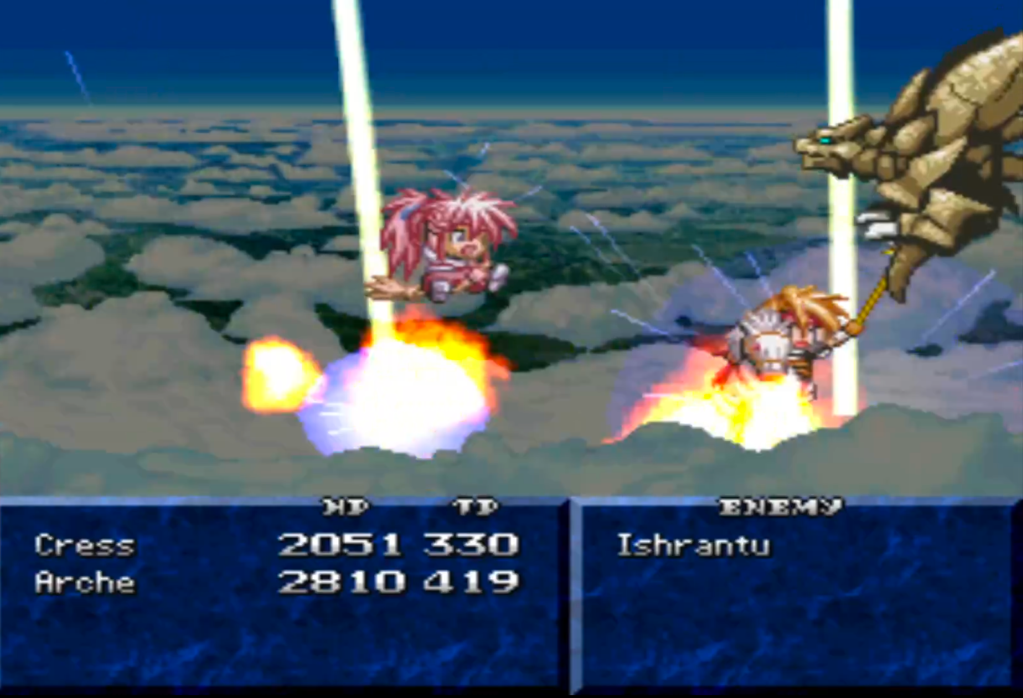
I’ve come to expect quite a few things from the Tales series over the years, but I always experienced the earlier installments as being more heroic adventures and lighthearted in its delivery (barring the Symphonia labor camps). The introduction sequence of Tales of Phantasia paints a brutal and harrowing sequence of events that put the characters through the wringer right out of the box. I wouldn’t quite call it a cold opening, but it’s certainly cold hearted. It does an excellent job at making the stakes feel tangible and personal to the player from the very moment you meet them, and the character writing alongside that does a tremendous job at supporting this. This series has prized itself for excellent characters, and the root of this seems to have set the bar that has been kept that high for many years after. From here the characters get to develop throughout the multiple time periods the story takes place in. The game also allows its characters to grow from these moments of hardship. As each character is thrown into the time traveling turmoil, the game does a fantastic job of giving them the opportunity to grow alongside each other across space and time. This results in an incredibly fun party dynamic filled with banter that can be accessed through the optional skits.
As a first step into the many worlds that the Tales of series has to offer, Tales of Phantasia forms a strong foundation for the rest of the franchise to build upon. It sets itself apart from other games in the ancient era of 1995 with its more character centric narrative, but it still holds onto classic RPG design choices. It’s just that the road leading to those classic design choices is filled with a little bit more nuance. You’re still very much chasing after an evil sorcerer, however even the motivations of the big evil aren’t adhering to a strict color gradient of black and white. Cress is a wonderful protagonist who transforms the pain he’s been carrying into kindness to others, so they don’t have to feel the same loss. Arche’s dynamic of hiding her insecurities behind a bombastic bravado due to growing up an outcast amongst her people creates more layers to a character that can easily be perceived as the embodiment of lit fireworks. The entire party is composed of characters that want to be on the journey, not just for the greater good, but because they need to be the best version of themselves for themselves. Tales of Phantasia does a tremendous job of using the complicated setup of a time traveling villain and uses it as an excuse to give a hopeful sense of optimism in its characters.
Motion in a line of battle
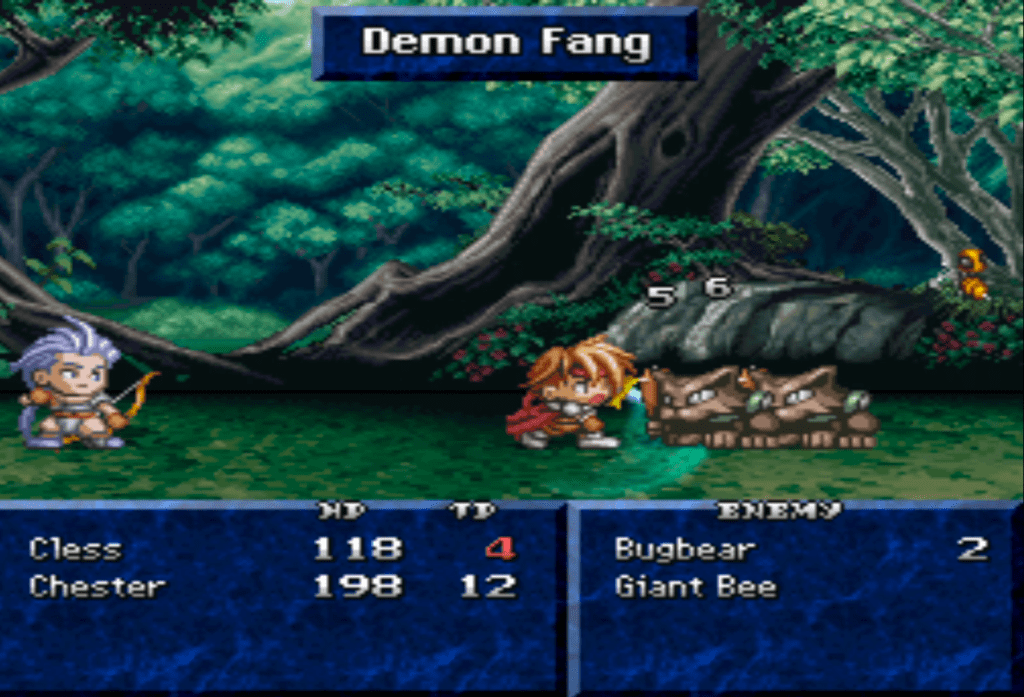
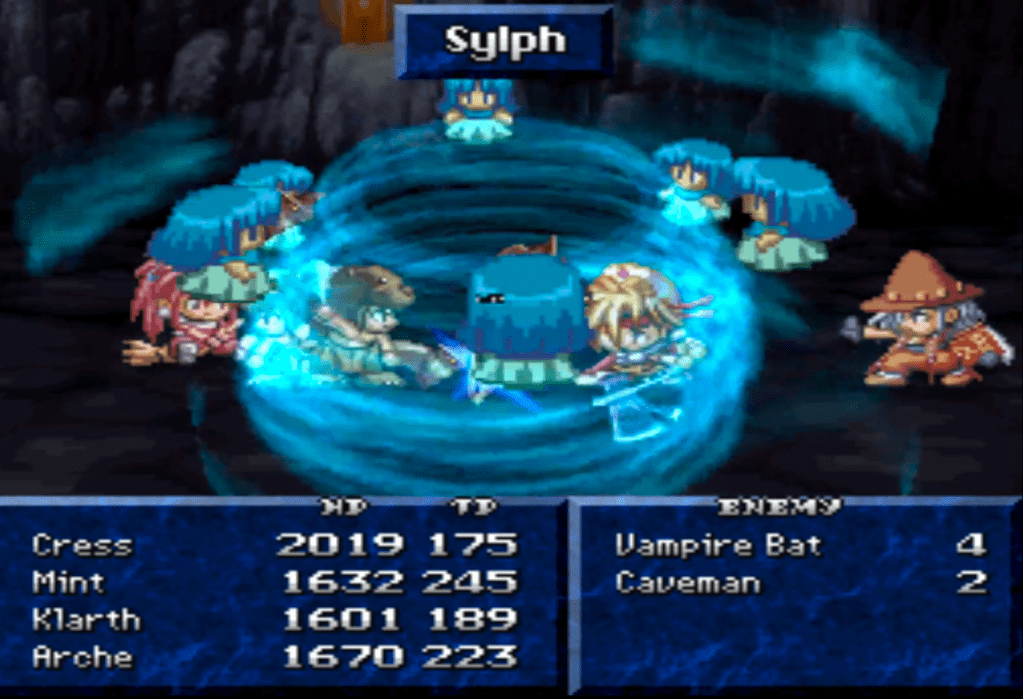
Tales of Phantasia, being the first in the series, is the first game to introduce the Linear Motion Battle System (LMBS). It changes the format of turn-based combat, or the action RPG and mashes them together in a more action oriented form of the random encounter. During these encounters you get to control one of the characters directly and issue commands to the rest of your party. The orientation of the screen changes as well to a sideview that expands beyond a single screen, where you can freely move around the fields of battle. Your main modes of attack consist of a normal weapon strike and the more powerful techniques, known as Artes. You can make different combinations of normal attacks ending in an Arte to create powerful combos and set the enemy up for some incredible damage. While the Super Famicom version of Tales of Phantasia’s combat system does a decent job, it’s noticeably more clunky in comparison to its PS1 counterpart.
In the original it mostly feels like wading through knee high puddles of mud to get anything done, whereas the PS1 version feels a lot snappier. It does come with somewhat of a learning curve that might deter players from getting fully invested into the possibilities of the combat system. The biggest one is the tenacious rubber band that’s attached to the hips of the character you control that snaps them back to their formation position if you’re simply pressing an attack button. After pressing the button, the character will run into striking range, perform the attack, and then runs along home. To keep swinging you have to hold a direction to keep the character in place. This does allow you to change the direction of the swing to accommodate the direction of the enemy, but it does leave your hands cramped around the controller by the ends of a long session.

That isn’t to say that the combat system can’t be fun and wildly varied. The PS1 version adds a lot more fluidity to the movement and the general control you have over the character, leaving you free to experiment with different combinations. Sure, it’s not as elaborate as cancelling an animation to extend your combo hit counter into the hundreds like in Tales of Vesperia, but it does show the same intent in the form of more humble beginnings. I found myself launching enemies a lot to reset my own position to extend combo’s, and learning the casting time of offensive spells to time my own hits to. Phantasia’s core lies more in clever use and positioning of your team, with your formation being of vital importance for your own survivability. There’s also a massive emphasis on the effects of your combo enders. Not in the form of damage, but in the state it leaves your enemy. I kept trying to figure out what moves caused either the most stun-lock, highest air time, or the longest knock-back. Or moves that would lead into a spell’s area of effect. It was quite a refreshing experience coming from the more elaborate and flashy battles of the later installments, and seeing the systems I’ve gotten used to distilled to its fundamentals.
It can take a good bit for Tales of Phantasia to actually start feeling like a fluent and engaging experience. It’s very easy for the game to lure you into the trap of locking you into simple two-hit combo’s and single ability usage, and get you comfortable enough to never explore the options at your disposal. Players can easily get frustrated with the rubber band snapping characters back into their formation positions, as well as the lack of early game options. By the time some of the more tactical elements of the combat mechanics show up, it’s easy to already be on a level of comfort in which you no longer wish to engage with the deeper layers that are offered. The idea of utility over damage also feels a bit foreign to RPG’s. In general, the PS1 version fixes a lot of the stiffness of the original 1995 release, but still has the same pitfalls. The later installments (if looking from the SFC version) expand upon the LMBS and add a lot of quality of life features, making the games easier to play and more fun to engage with. However, these games also share similar critiques with Tales of Phantasia.
Shredding synths
The eternal presence of Motoi Sakuraba throughout the Tales of series lifespan has given us some of the most incredible and energetic music in the genre. However, the Wolf Team era compositions see Sakuraba at his most prog-rock synth shredding goodness. Tales of Phantasia certainly falls into that category, with excellent ambiance and one of the hardest hitting tracks in the series. The OST ranges from the soothing sounds of midi harps plucking in an ethereal forest, to a blasting onslaught of synthesizers creating the backdrop for some epic confrontations. A particular standout is this rendition of “Fighting of the Spirits”. This song is a recurring theme throughout the series as is likely mostly remembered for its appearance in Tales of Symphonia. However, I much prefer the Tales of Phantasia rendition. Its raw and punchy midi melodies accompanied by heavy hitting drums make the track feel like a misplaced Mega Man theme. And I do like me some misplaced Mega Man themes. The soundtrack flawlessly manages to blend the different elements of Sakuraba’s earlier work together into a cohesive and incredible soundtrack. A minor caveat that emanates from a more personal nitpick is that the PS1 is capable of using higher quality sound files, and thusly Arche’s fireball scream no longer sounds like someone taking your order at the Burger King drive through. I really missed Burger King Arche in this playthrough, but the voice files are much clearer than the bit crushed ones of the SFC and GBA versions.

The tale across time
Tales of Phantasia is an incredible foundational pillar for one of my favorite series. After having played the GBA version, I initially bounced off of the game and returned to the comfort of Tales of Symphonia. This was by and large because of the extreme rubber banding combined with the clunky feeling combat. In a sense, I fell into the same trap I critiqued the game for setting earlier in the review. The PS1 version looks and feels like an incredibly polished upgrader over the original. The additional options for skills as well as the optional content makes Tales of Phantasia feel like a massive game packaged onto a single disc. The newly added cutscenes are a massive treat to watch as well with animation provided by Production I.G. as part of the long lasting collaboration between them and Wolf Team, later Namco Tales Studio, until UFOTABLE took over from Tales of Graces onward. This, alongside the absolutely stunning art design and character art getting a bit more breathing room thanks to the higher resolution of the game, makes Tales of Phantasia for PS1 and incredible package.
Time travel is becoming a bit of a theme for games reviewed for this site, but Tales of Phantasia executes its premise beautifully. Its hard to keep track of how different storylines in different timelines would affect each other without causing a paradox. The game addresses quite a lot of the same concerns. The team will frequently stop to wonder if their course of action in the quest to stop Dhaos from erasing magic could have devastating effects on the future. This becomes prevalent throughout the past arc and the part before they go into the future. Its a bit of a wild story that navigates and circumvents logical paradoxes and gracefully steps over the tripwires that a lot of other games have fallen over in the past. The bond that develops between the characters over the course of the game feels like very natural, instead of serving a purpose to propel the plot forward. It also helps that a lot of the cast is incredibly likable.
As an entry point in the series, Tales of Phantasia paves the way for a truly incredible set of video games. It was an interesting experience to play the newest entry, Tales of Arise, prior to this one, yet you can still recognize a lot of elements from Phantasia. The combat may have become a bit more simplified in terms of inputs, but the heart and soul remains the same. I had a fantastic time playing through Tales of Phantasia and seeing the world change throughout the different time period. The graceful navigation of complex time travel paradoxes seems rather well thought out, and the stakes feel high throughout the entirety of the game. Combine this with an exceptional soundtrack to accompany the stunning visuals and you got a really sweet deal on your hands. I do prefer the PS1 version over the SFC version, however, due to the additional content and the extra Chats. It makes the game feel so much larger by comparison, and the characters so much more fleshed out. The Tales series heard the starting signal and finished its first lap around the track in record time.
I, who stand in the full light of the heavens/10



TanookiChickenAttack is made possible by supporters on Ko-fi. If you enjoyed the review, consider becoming a supporter through https://ko-fi.com/tanookichickenattack

 TanookiChickenAttack