
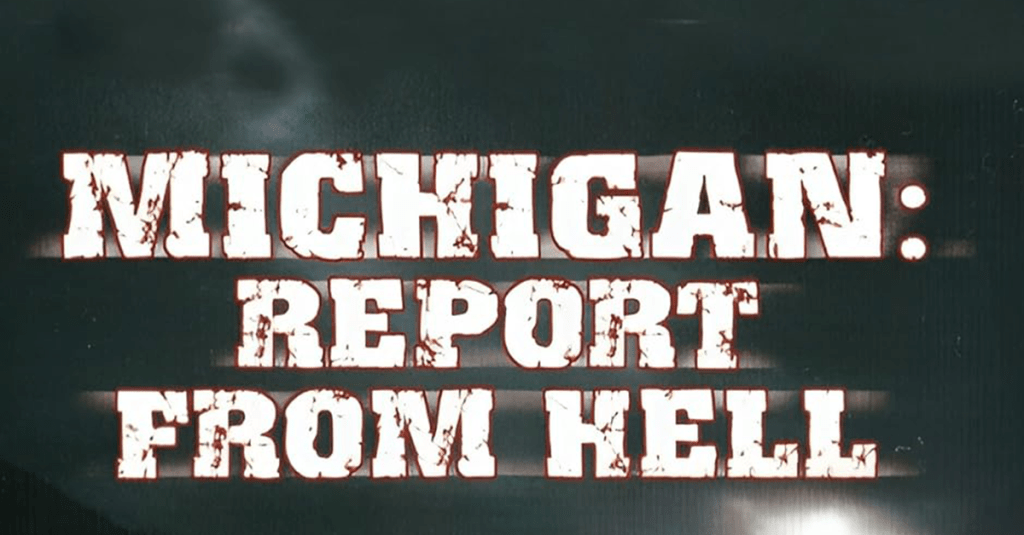
2005 | Grasshopper Manufacture | Playstation 2

I was stumbling across a convention floor a few years ago, scouring through the contents of the stands that were lined up like a labyrinth of challenges to my impulse control. While I didn’t find anything I wanted to get for myself initially, I ended up stumbling into the stand of a French merchant that was selling a small selection of video games. The one that immediately caught my attention was Michigan: Report From Hell. I had heard of the game and felt a compulsion to get it, despite not knowing whether the game was fully in French or not. Luckily 505 Game Street had my back and I was greeted with a language select screen upon boot. Little did I know that I was about to venture on the most ludicrous and fascinating adventure I had ever played. It has since become a staple here at TanookiChickenAttack, and is now the most requested game on the livestream. So here we are, in a post 6th play-through era, about to review the game in proper fashion and exhaustive detail!

Killing the past
Goichi Suda, or Suda51, has been responsible for some of my most obsessive, overly-analytical experiences in video games. His earliest work dates 1993 with Human Entertainment’s Fire Pro Wrestling. Due to the quality he was assigned a director’s role for Fire Pro Wrestling Special (1994), which carried a more bleak and nihilistic tone. A style of writing that would become a staple in his later games. From here, Suda would become involved with 1996’s Twilight Syndrome part way through development, as the previous director left the project due to scheduling conflicts. The horror themed visual novel adventure game used footage of actors in front of a blue screen to capture the characters in game as they investigated urban legends. The game released in two parts due to development time running out, with Twilight Syndrome: Tansaku-Hen (Search) releasing with the first five scenarios in March of 1996. This was followed by the release of Twilight Syndrome: Kyuumei-Hen in July of the same year to complete the planned 10 scenarios.
A sequel to the game was planned, with Suda now having more creative input. This led to 1997’s Moonlight Syndrome steering away from the supernatural elements of the first game, and putting more emphasis on human violence. After the development ended, Suda parted ways with Human Entertainment shortly before it going under. In 1998 he’d found Grasshopper Manufacture, where work begun on the iconic The Silver Case. A brooding interactive visual novel about the concept of crime as a sentient being, embodied through the silver eyes of a serial killer. This would form the groundwork for a complex web of recurring characters, themes, story elements, and a shocking amount of tigers that would become known as Kill the Past. A second game in this series that isn’t an actual series was released for the Playstation 2 with Flower, Sun and Rain. With the ambitious and unapologetic approach to design (often referred to as punk), Grasshopper frequently found itself in financial hot waters, and started working as a developer for hire.

In 2002 Grasshopper got hired as a supporting development team for Nex Entertainment (comprised of former Wolf Team members) on the Sega’s Shining Soul series for the Game Boy Advance. As well as its 2003 sequel. During this development cycle, Grasshopper got contacted by Spike (comprised of former Human Entertainment employees) to work on a horror themed adventure game. Suda51 worked as a producer on the project and drafted the initial concept for the game, basing part of it on Stephen King’s The Mist. The directorial seat was filled by Akira Ueda, who would later also direct Grasshopper’s Contact. Michigan: Report From Hell, or Michigan as its known as in Japan, released in Japan in 2004 and as a rare European exclusive localization by 505-Games in 2005. While the game was generally panned for its rather silly localization, the game stands on its own as a rather unique experience. While not advertised in the EU, Japan received a strange and rather risqué advertisement campaign featuring the games reporters in various states of undressed, which in turn alluded to the game’s morality system.
Despite being a sleeper hit for yours truly, Michigan: Report From Hell enjoys a rather divided, but dedicated following. One side praises the game for the unique gameplay elements and story delivery, while the other loves to laugh at the over the top voice acting. It’s now a highly sought after collectible for Playstation 2 enthusiasts, partially due to its reputation, and partially due to its exclusivity to the EU and low print run.
As a footnote; It took me a good 20 years of playing his games to realize that Suda 51 is a pun on his name.
First report from hell
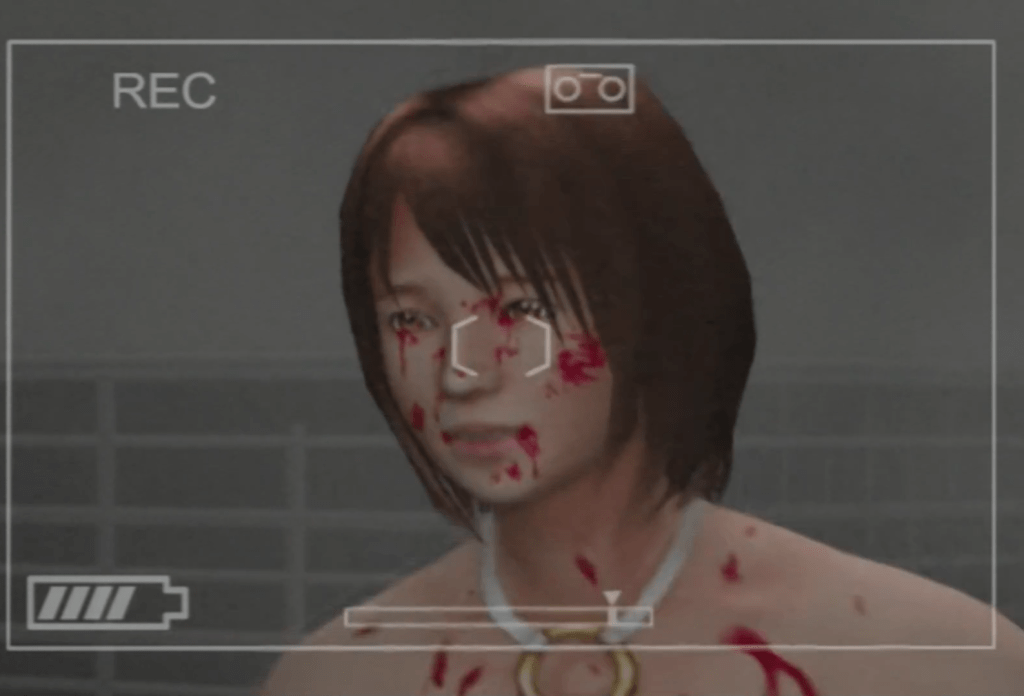
Unlike what the title may suggest, the story of Michigan: Report From Hell actually mostly takes place in the city of Chicago and the area’s surrounding Lake Michigan. After a plane crashes, a mysterious fog starts to roll through the streets. ZakaTV news crews rush to the scene to cover the crash only to be stopped by the military. A few days later, a mysterious fog slowly starts to blanket the streets of Chicago and its surrounding areas. After the unsuccessful coverage of the crash, ZakaTV sends numerous crews into the city to cover the strange goings on. One of the crews comprised of one of ZakaTV’s star reporters, Pamela Martel, the sound engineer Jean-Phillipe Brisco, and a rookie cameraman, the player, finds themselves caught in the middle of these strange phenomena. As Brisco is showing the cameraman the ropes to prepare for a shoot, a woman covered in blood emerges from the fog. The team rushes to her aid, but before the woman can finish her sentence she’s devoured by a monster. In a panic the crew rushes back to the news van and gets into a frantic argument, with Pamela demanding answers. Not noticing the monster sneaking up on them, Pamela also falls victim to the creature, with Brisco and the cameraman fleeing the scene in a panic.
Three days pass and the government issues an evacuation order for the greater Chicago area. During this time ZakaTV sends out numerous news crews to cover the incident. The crew finds themselves in the Chicago International Hotel where they’re joined by Ann Anderson as Pamela’s replacement. After investigating a bloodied hotel room in a search for survivors, a phone rings with a distraught woman on the other end of the line crying for help. With a new lead the pair heads downstairs to meet with a very drunk Brisco, who’s in the middle of his mourning for Pamela. Ann manages to convince the sound technician to continue the reporting on the incident and the group heads to the lobby, where they’re ambushed by leech-like creatures. After managing to kill off most of the ambush they head out to the Center Building to find out who made the call to the hotel room. Prior to this there is a scene where Ann heads to the hotel’s shop to get Brisco some water, where a spider descends from the ceiling. Here the player has a choice to push Ann out of the way, or to get introduced to the games dynamic story.
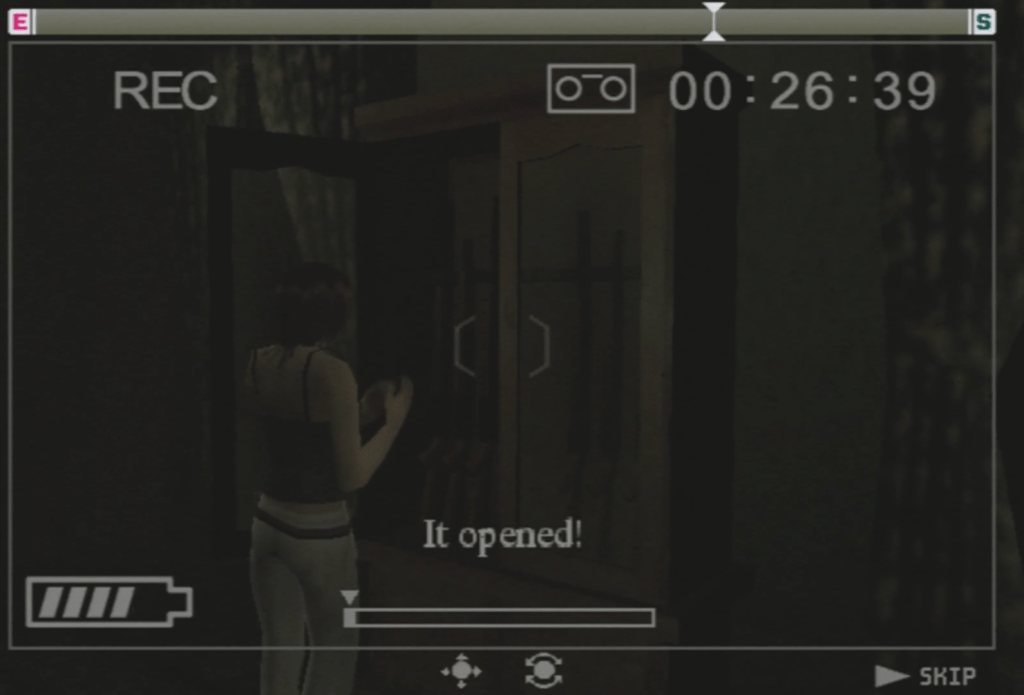
Throughout the game there are various moments where a reporter can die, most of the time in very unceremonious ways. If a reporter is killed, the game simply skips the stage you’re on to the next scene with a new reporter. If you don’t push Ann out of the way, she gets bitten by the spider or is killed by the leeches, and is replaced by Carly Reis. If she dies, she’s replaced by Justine Rhoades, and so on. It’s a rather strange way to present the story, that sometimes leaves a playthrough wildly fragmented if you manage to get them all killed at the earliest opportunity. This can lead to a run of Michigan lasting as little as 2 hours or as long as 8 to 10. The game will mercilessly and unapologetically skip the scenes that are specific to the reporter to the next scene, where a new reporter would join to replace the last.
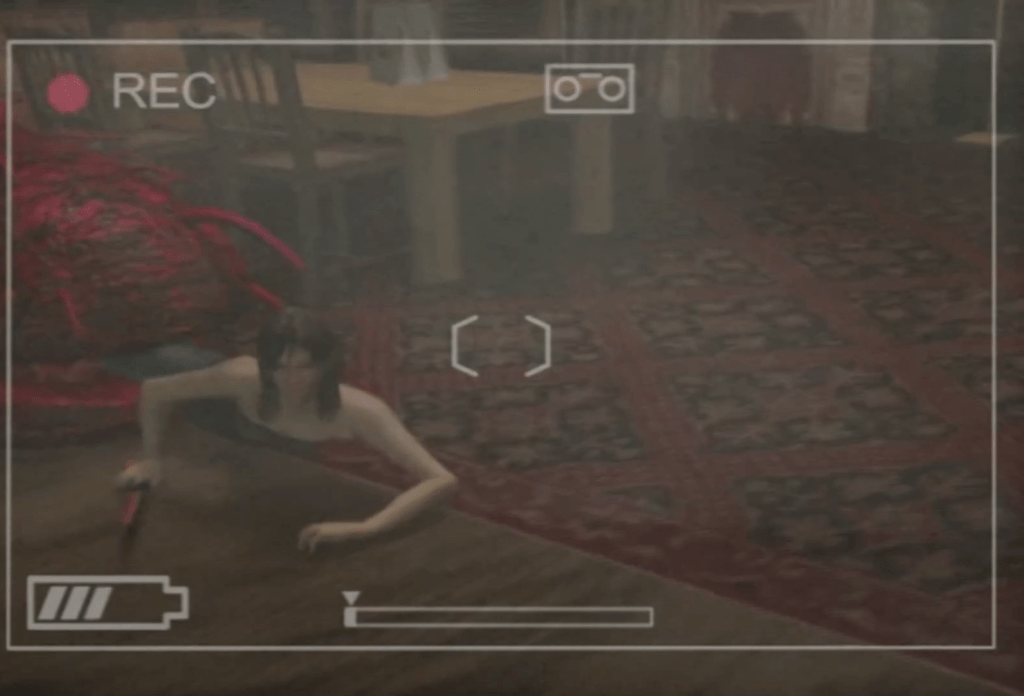
After heading out of the hotel, the crew makes their way to the Center Building, where they stumble across an abandoned ZakaTV news van. After investigating the surrounding area for the missing crew they stumble across a bloodied, but miraculously alive Pamela. Brisco tries to communicate with her, but panics as the raspy breathing turns into leech vomit. The cameraman narrowly saves Brisco by shoving Pamela to the ground after which she contorts her form and starts crawling towards the group with her back scraping across the ground. As she approaches, she mutates further into a monster and gives chase. The crew manages to narrowly escape by dropping a shutter on her, bisecting ZakaTV’s former star reporter.
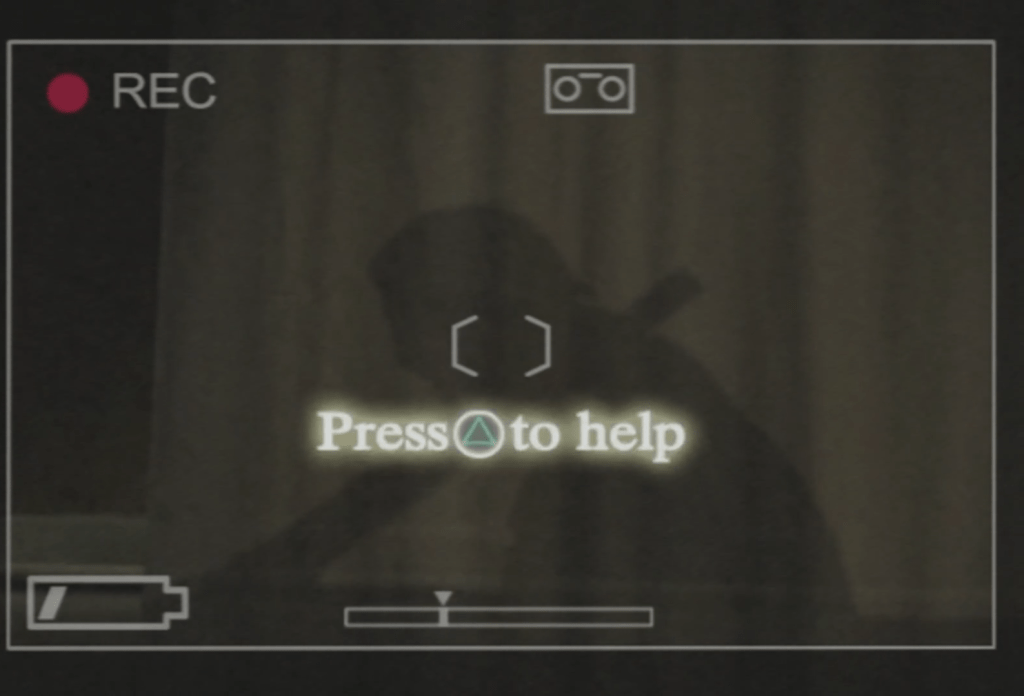
From here the crew follows various leads throughout the city of Chicago to find answers to the monsters hiding in the fog. This leads them on a wild goose chase of surreal dedication to their craft. After finding the woman who called dead at the Center Building, the crew heads back to headquarters to see if some of the other teams made it back alive. With the building abandoned they decide to follow up on a phone call they receive, which leads them to a nursing home. Here they find one of the ZakaTV reporters strapped to a pool table, with a chandelier precariously swinging above her. During this section the crew has limited time to find four pool balls to solve the puzzle and unlock the restraints. If you take too long here the chandelier crashes onto Justine and kills her. If you do manage to save her, you’re greeted with a boss straight out of The Thing in the garage. Nothing a few gas canisters and a lighter can’t fix!
With more clues unraveling the mysteries behind the fog and the ever increasing threat of monsters. The crew ventures out once more to follow after another crew at the Miller Mansion. When they arrive, a monster guards the staircase leading to the second floor. The team decides to investigate further into the mansion to find more clues about the missing team. After investigating a room the cameraman falls down the stairs and finds the corpse of the missing crew’s cameraman in the basement. The way its framed here can be a bit confusing, since the model of the dead cameraman is one of the models of the player character. In the basement they find a key to a weapons locker upstairs, which gives the reporter a shotgun to exterminate the bug monster with (the only good bug is a dead bug!), granting the team access to the second floor. Here they find Christian collapsed and bleeding from a place where his leg used to be. Before his death he gives you a clue to check out the St. Matthews church.

In the church they find another missing crew member that has been slowly mutating. After it notices the crew it attacks, causing them to flee upstairs. Once they reach the second floor they spot a statue suspended from the ceiling, and end up killing the mutated crew member by dropping it on him. Narrowly surviving the confrontation the crew returns to ZakaTV headquarters for answers, confronting the director. She gives them a way out if they can find out more about the cause of the virus. The crew then sets out to unravel the mysteries behind the fog and the sudden appearance of the monsters (with a highlight being the disco monster in the abandoned nightclub). This leads them down a path that lets the team find a potential cure, and the cause of the recent infection that’s spreading through the Chicago area; an infected research assistant that survived the plane crash that was at the center of this nightmare.
After having the chance to play the Japanese version of this game, I feel like I’ve really underestimated the story of this game. The English version is almost legendary for its over the top delivery, but it also detracts from the intended harrowing atmosphere that the game is going for. Pamela’s death in the Japanese version is accompanied by a gut-wrenching scream that absolutely shatters the microphone levels. The whole game has this 80’s broadcast audio quality to it to add to the immersion. Regardless of the substantial difference between the versions, I do really love this game. There’s something endearing about the sheer energy that the game exudes with its English dub. It does muddle the story quite substantially thanks to some events being scrapped from the international release as well as the tension being completely deflated by the delivery of the scenes that did make it. It doesn’t detract from the utter ridiculousness that is incredibly mesmerizing to see unfold. It’s a shame that we didn’t experience the game’s full package, but the package we got is straight up magic!

Lights, camera and action
It becomes apparent just how unique of a game Michigan is the second you take control of a character. You’re less of an active participant, but more of a camera wielding passive observer to the events unfolding around you. That isn’t to say that there isn’t anything to do. From the moment you pick up the camera it is your job to document and capture as much of the events as possible as you accompany your crew through the horrors that spawn from Lake Michigan. You’ll be put through a series of scenarios where you can either choose to intervene or keep the camera pointed at whatever scoop you may find, regardless of the consequences. This often means that you have to make a decision between trying to save your crew from the monsters, or by capturing the carnage for ZakaTV. You earn points for capturing footage, Immoral points for capturing particularly gruesome moments on camera, Suspense for good camera work, and Erotic points for the more slanderous stuff. This means that a playthrough of Michigan often revolves around either feeding a reporter to the nearest open maw for extra scoop points, or crawl under tables to film some candid panty shots. Or Brisco showering. Or a mix of all of the above in a smorgasbord of horrors. Mostly thanks to Brisco’s shower antics.
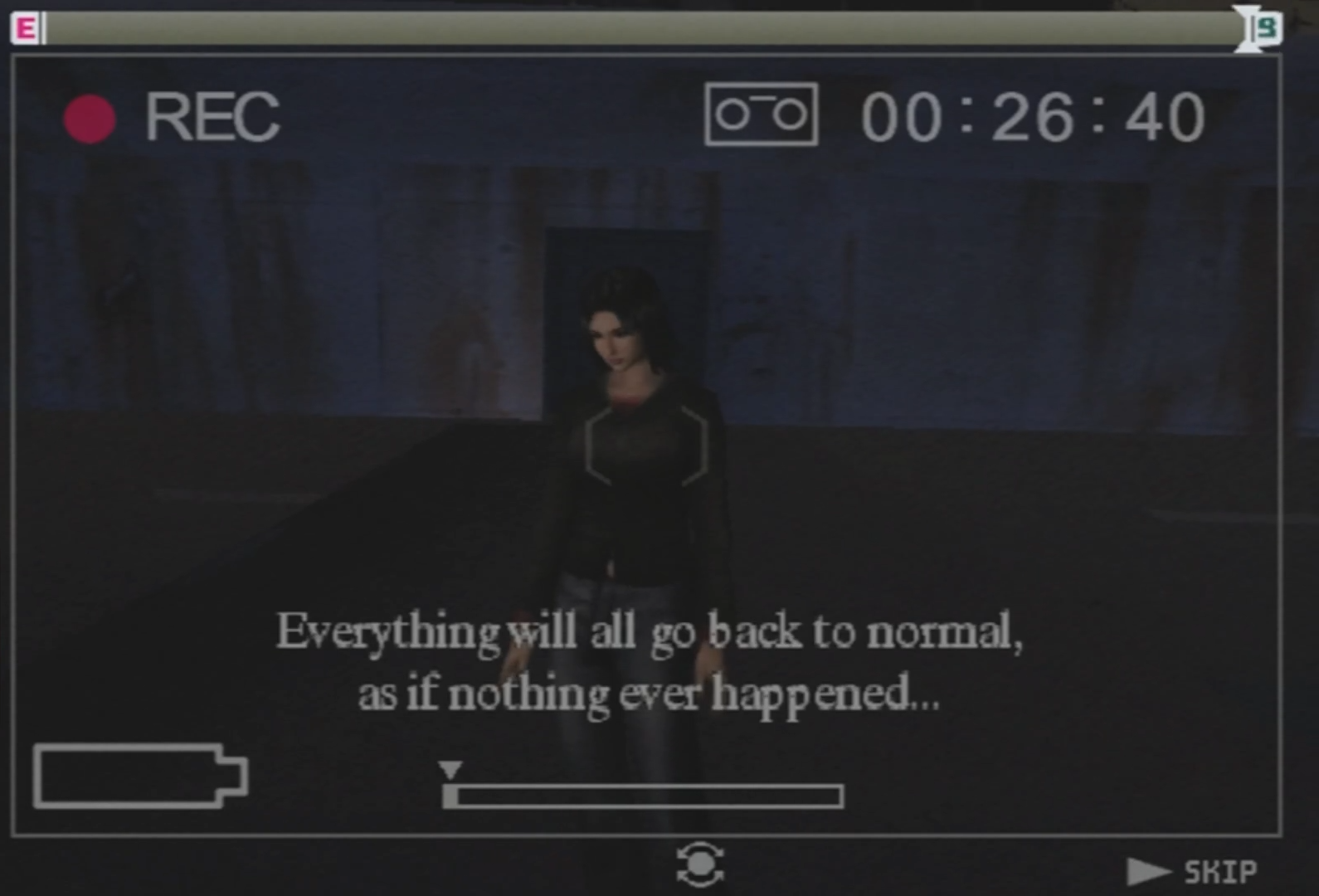
Most of the game takes place through the lens of the camera, in a first person perspective, with which you can freely capture whatever footage you want. Each of the stages has some degree of exploration to them, with some of the more open stages including hidden secrets and easter eggs for you to find and capture. While you’re meant to passively observe your reporter of the day, you can influence them a little bit. Most of the interactions with the world are done through highlighting things of interest and then pressing the X button to select that point of interest. The reporter will respond based on the context of what the point of interest is. If it’s a door, she’ll open it for you. If it’s a monster, she’ll shoot it. You’ll hear a loud sound queue to give the indication that an action is being taken, or a beep when the reporter isn’t feeling up to the task. It’s a very clunky system that feels very unresponsive until you figure out that the game is mostly running on rails. A reporter has to stand in a specific spot to do a specific thing. This means that you have to figure out what these specifics are before you can use them.

The most powerful tool you have at your disposal is the shoulder tackle. You can give characters a light nudge or just propel them across the stage with your camera. It’s a really fun tool that can lead to some very funny interactions. It can also be used to nudge a character that is stuck trying to do a specific thing without the specific spot. Be careful though, because with great power comes great responsibility. I once tackled Brisco down the stairs near the end of the game and he rolled all the way down, soft locking the game entirely. I would be upset too if I had to walk all the way back to the top.
There is something to be said about the callous and mean spirited tone the game has towards the reporters. While on the one hand the ridiculous tone of the game can overshadow the gruesome deaths of the game, you’re still casually feeding these people to the meat grinder (and filming it). You can save all of the reporters, but you have the choice not to act and let your inaction be the next big scoop. There’s a total of four female reporters to accompany the player throughout the game, with each having several instances in which they can meet their demise. There’s a fifth female reporter exclusive to the Japanese version based on the former professional wrestler, Yinling, which was completely removed from the European release. If all reporters are killed you’ll be accompanied by Mark Bockwinkle for the remainder of the game. It has always felt really weird that the only male reporter in the game is the one that can’t die. At least let me feed Mark to the disco monster.
Michigan: Report From Hell is an interesting game from both its unique gameplay style to its morale system. The game is constantly judging every frame of your footage for perverseness, moral ambiguity and gratuitous violence, and tipping the scales in accordance with the current moral alignment. At the end of the game you’re not judged for your actions or inactions, but rather for the footage you’ve captured along the way. There is no punishment for letting reporters die, but rather the game encourages you to either film them on butt or chest height, or put them in the blender. As long as it’s all captured on camera. At the end of the game you’ll get one of 4 reporters; Dwight Murdoch for the Suspense Ending, Andy Steamboat for the Immoral ending, Teddy Snooker for the Erotic ending, and Diego Morales for the High Immoral ending. The first three are filming their confessions to tie the plot together near the end, before getting shot in the head from off-camera, leaving the revelation up to mystery. In the High Immoral ending, a voice can be heard saying “Look closely. It’s me! It’s me, see?”, before jump scaring the player.
Final report from hell
Michigan: Report From Hell enjoys a rather mythical status in the hall of fame for games with ridiculous voice acting, and for a good reason. A lot of this game’s reputation is based on the quality of line delivery and microphone peaking screams that comprise this game’s narrative. While it is a fascinating game once you look past the over the top voice lines, awkward sound design and weird structure, it’s undeniable that the localized version is a bit of a mixed bag because of it. A lot of the game is lost in translation, or rather, localization. Some of the major contextual scenes are cut from the game with the removal of the sixth reporter, and for some reason the PAL release has a substantial lack of fog. You can imagine that this makes frequent mentions of not being able to see because of the fog, a very out of place thing. It’s a game that needs its layers peeled and the contents within investigated to be fully appreciated.
While Suda51 primarily served as a producer on this game, his touch is palpable through every scene in the game. Overt references to Stephen King’s The Mist can be felt mostly in the Japanese version of the game, and are largely missing from the western release on the account that said mist has been removed. I absolutely love the unapologetically bleak tone of the game, once you look past its silly delivery. The game is mean-spirited and unforgiving towards its characters, and will seek any and all opportunities to unceremoniously remove a few limbs from them for a good laugh. It’s a shame that the story is so muddled by the changes made to the game and the tone of the direction. It took me a good few playthroughs to figure out that the insane research assistant, that was wildly flapping his arms while cackling in octaves I can only dream of reaching, was the source of the infection. This was by and large due to getting hopelessly distracted by the tone of the game. There is an optional scene where you can save a man trying to blow his brains out with a shotgun, or choose not to. This should be a very intense moment, but is so drastically undermined by the line deliveries of your crew that it borders on dark comedy instead.
I love Michigan: Report From Hell. Yes, it is incredibly mean to its cast. Yes, it is a very silly game to play. However, it is also one of the most unique horror experiences one can get from the Playstation 2. The only other game I can think of that somewhat embraces this on a similar level is the text parser mystery, Glass Rose, by Capcom. Or Hellnight on the original Playstation. I love exploring these types of games to see if they offer more depth than the surface may suggest. Michigan: Report From Hell certainly offers some layering to it. The Japanese version is drastically different in tone and atmosphere, and can be used as reference point to see what the intention behind a scene is. For a good laugh with friends, the PAL version will also offer that. Brisco has since been turned into a pseudo-religious icon for the livestream, and I wouldn’t have it any other way!
Oh my god/10



TanookiChickenAttack is made possible by supporters on Ko-fi. If you enjoyed the review, consider becoming a supporter through https://ko-fi.com/tanookichickenattack

 TanookiChickenAttack