

2004 | Team Ninja | XBOX

I’ve been experiencing a bit of a revival for a deep passion for the act of pressing buttons in fighting games. For almost as long as I’ve been able to hold a controller, or an arcade stick, or the entire cabinet, I’ve been mesmerized by the genre. Granted, I’m not particularly good at these games, but that has never stopped me from losing 20 matches in a row against a friend and still feeling like I’m on top of the world. While one of my earlier memories of playing fighting games is from the Virtua Fighter and Street Fighter II days, it was a little title on the Playstation 2 that sent me soaring down the rabbit hole. This was Dead or Alive 2. So, with a newfound fire for the genre, some spare time, and way too many hours playing Dead or Alive 6 — I figured, why not take a look at the very beginning of the series. Okay, the port of the beginning of the series that was included in Dead or Alive: Ultimate.
Dev or Alive
The original arcade version of Dead or Alive released in 1996 by Tecmo Creative #3 (now known as Team Ninja) for the Sega Model 2. The studio was headed by Tomonobu Itagaki and founded in 1995. Their first venture into the video game world borrowed design ideas from Sega’s Virtua Fighter series and implemented a few changes to the formula. Dead or Alive emphasized more speed and finesse, with its short and fast hitting combo’s. One of the core mechanics of the game, the triangle system, would allow players to develop a unique playing style, as well as take advantage of overzealous opponents.
After the success of the arcade version, the game received a port to the Sega Saturn exclusively in Japan. This version saw a few changes from the arcade version. The visuals received a slight overhaul, with some background elements being adjust to work on the Saturn. Since the system didn’t have the same capacity as the Model 2. The first international home console release for Dead or Alive, or DoA for short, would be the Playstation version of the game. This version would be ported onto a new engine and got 2 additional characters, a slight adjustment to the gameplay, and new music. The Playstation version also served as a basis for the updated arcade release; Dead or Alive++, released exclusively in Japan in 1998.
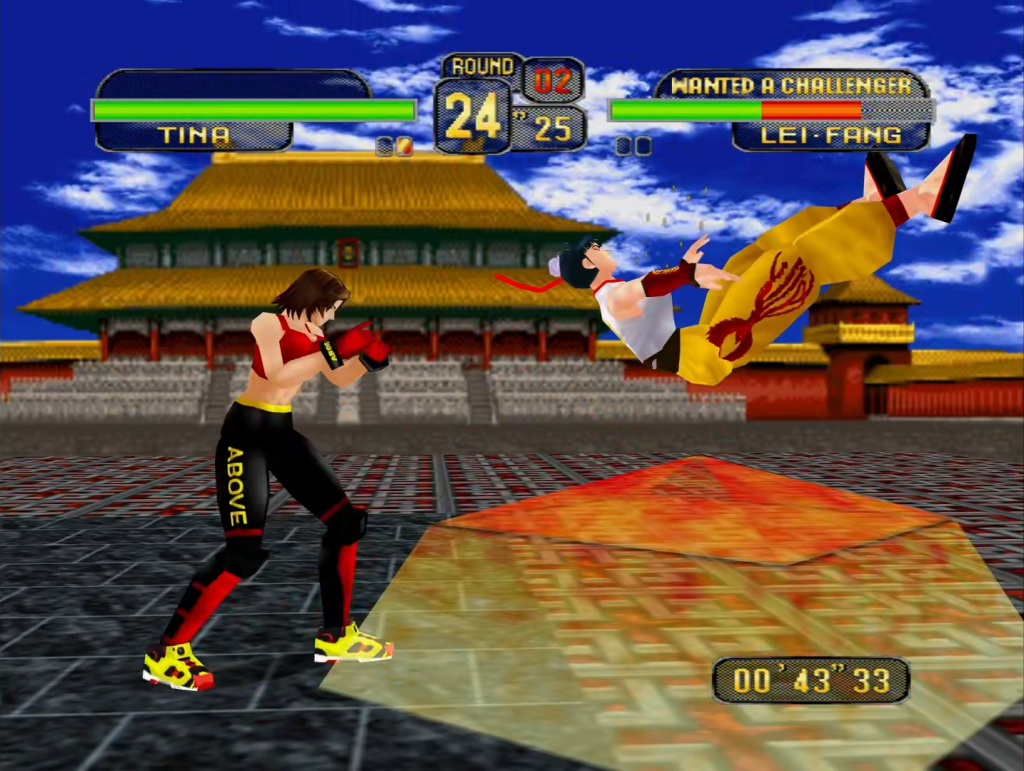
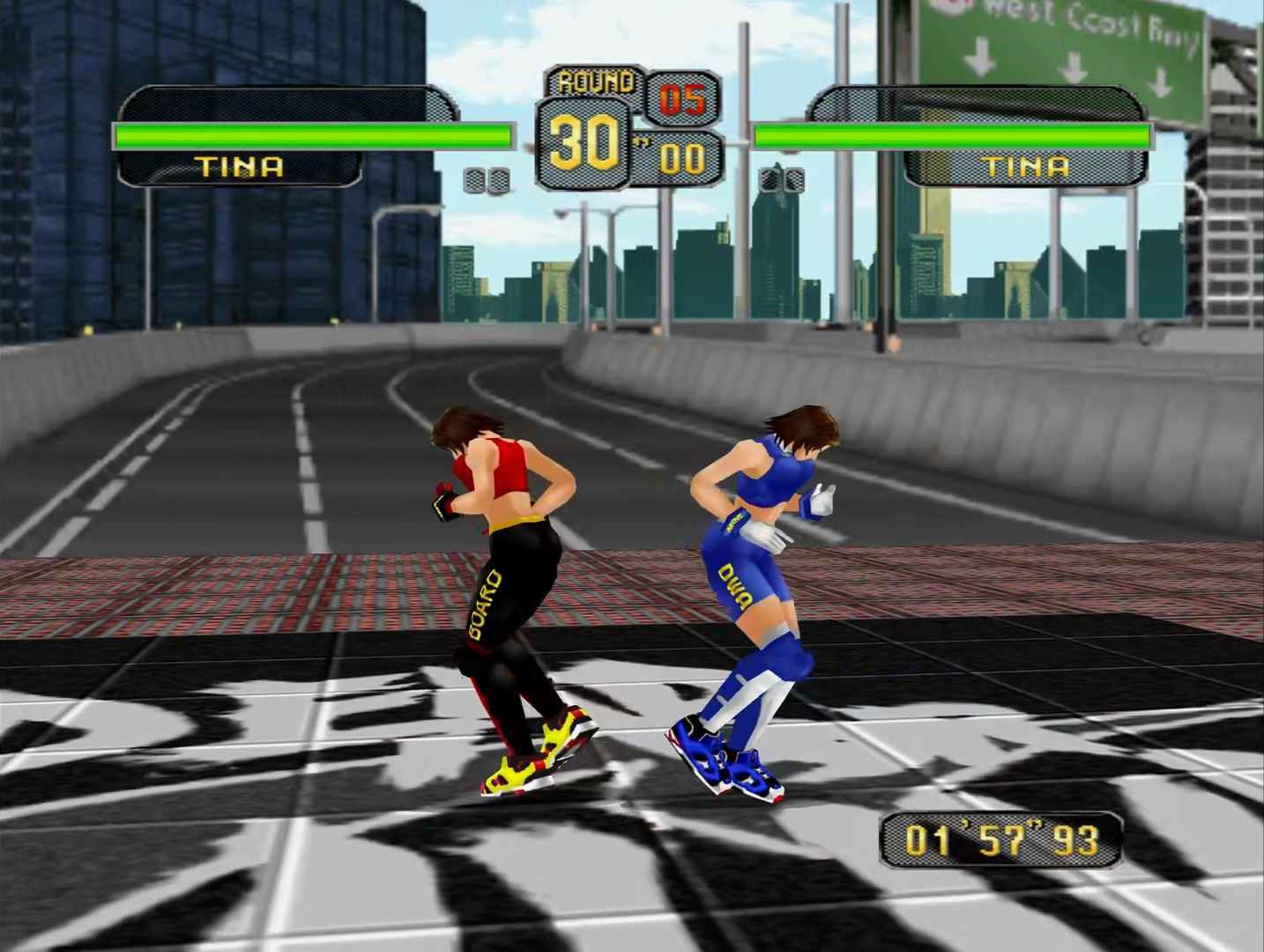
The game received a lot of praise for its unique approach to gameplay, as well as some criticism and ridicule towards the more provocative nature of the game. The somewhat over the top sexualization of the characters was part of Itagaki’s intended design philosophy, as he wanted make the action as sexy as possible. The result is a bit of mixed bag that gave the series both its lasting appeal and long lasting stigma. I will admit though; seeing male characters divided into upper and lower halves, and then seeing female characters add a third half on the chest that defies physics, is utterly hilarious. I’m pretty sure Tina gives herself a concussion at every round start!
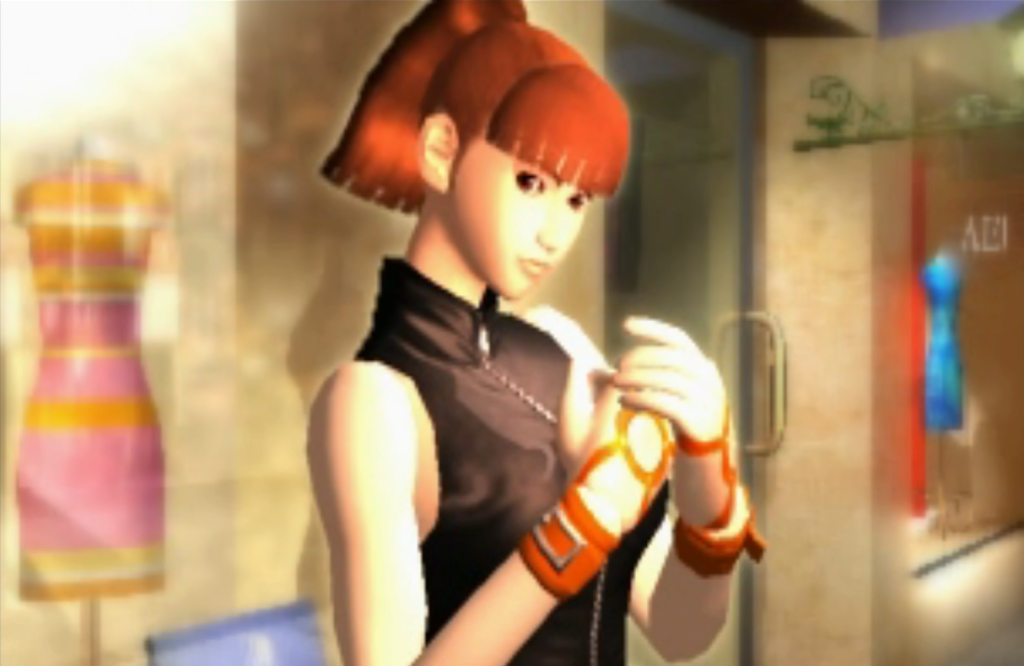
The Saturn version would eventually be ported to the 2004 release of Dead or Alive: Ultimate on the original XBOX, which featured the addition of online play, and one of the best versions of its 1999 sequel; Dead or Alive 2! Unfortunately there are no Ayane’s featured in the Ultimate release of Dead or Alive. While this is a nice addition to the box-set, it ultimately feels like they could’ve done more with this release. Especially when taking the release of Dead or Alive ++ into consideration.

Quads and triangles
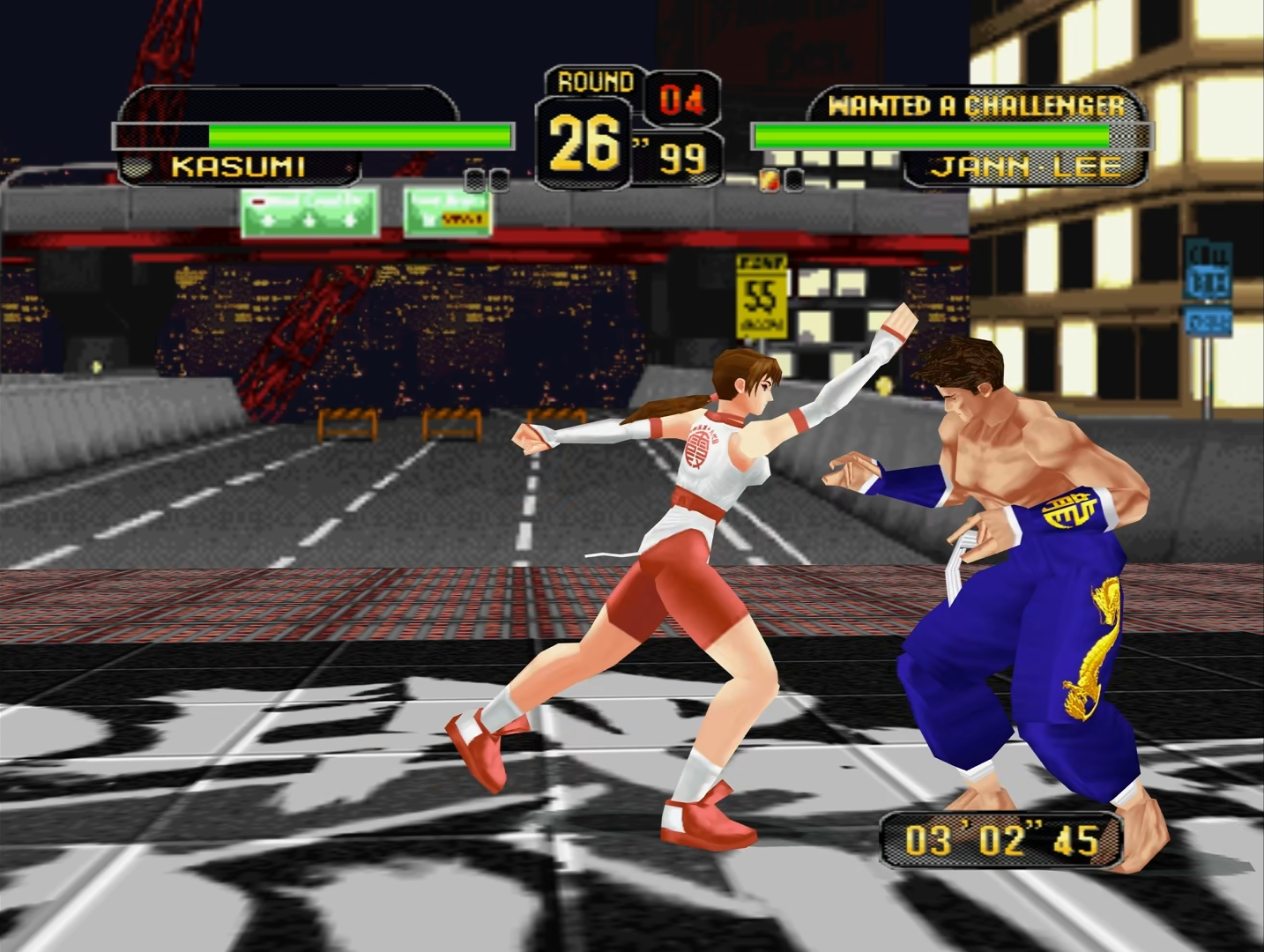
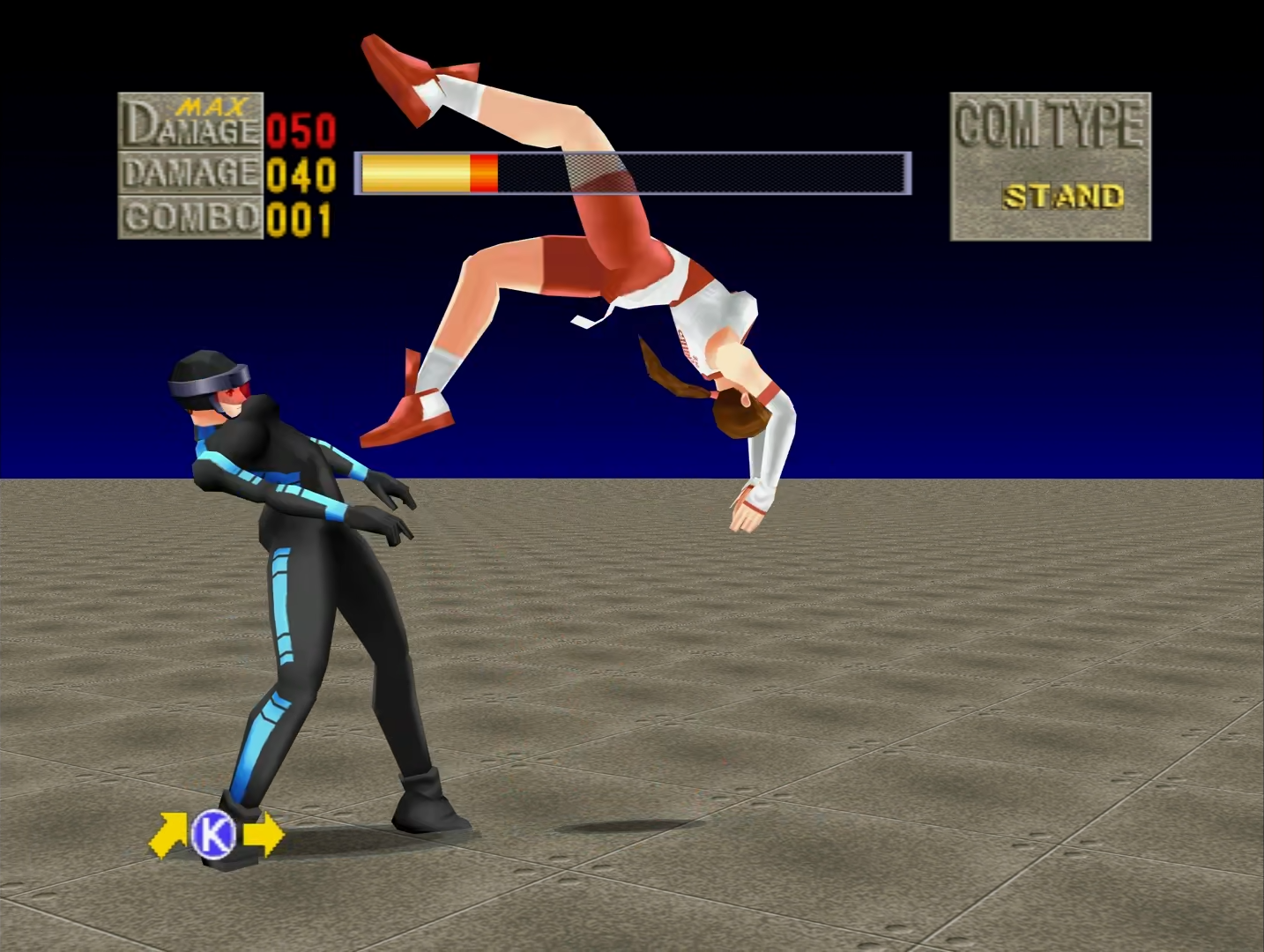
Initially Dead or Alive can feel very clunky to play. The game is surprisingly fast paced and deeply distilled in its intent. With an emphasis on small combo’s or punch/kick combinations that rapidly reduce health bars and keeps your opponents guessing. There are two fundamental aspects that Dead or Alive brings to the table. The first is the triangle system. Strikes beat throws, throws beat holds, and holds beat strikes. Each character has about two columns worth of moves displayed in the manual that can be put into strings of attacks, or combo’s. These strings can be performed with the Punch, Kick, or Hold buttons. With a combination of strikes and offensive holds its your job to constantly keep your opponent guessing. Once you get used to the rock, paper, scissors approach to the game, it will feel significantly less clunky.
While relatively barebones in comparison to Dead or Alive’s later four way hold system, the defensive holds you can perform in this game are devious and devastating. Whenever an opponent throws a strike you can either catch their hands and feet by performing a standing, or crouching hold. This allows you to quickly parry the move and pass the turn to go on the offensive again. This constant tug of war turns into a tense match of rock, paper, scissors as you and your opponent become more familiar with each others habits. This system would later by divided into three way hold — which puts all variations of holds on pressing back and hold — and four way hold. The latter ups the guessing game by having you press a forward direction and hold to catch a kick, and back and hold for a punch. It’s a great system that keeps you on your toes with each strike thrown.
The main issue I was facing is that moves are weirdly contextual. In particular the throws. Whereas these moves would get expanded upon in later games and would receive their own button, in this game they’re performed with a combination of the punch and hold button. While this sounds very similar to other fighting games like Street Fighter or Tekken, this poses a problem when faced with the triangle system. Strikes beat throws. This means that, while throws are some of the most damaging moves in the game, you can only throw an opponent when in between moves — as a punish — or when caught of guard when they aren’t pressing any buttons. If you try to throw an opponent that is in the middle of winding up a punch, the move will simply not work. It gives the game a weird dynamic. On the one hand the jab that comes out if you can’t throw an opponent is rather fast and will beat most moves, but on the other it keeps you guessing a lot on whether or not it’s even worth going for it.
The stages are relatively large, but have smaller safe areas. Much like Virtua Fighter, the game pits two characters in close proximity. Unlike Virtua Fighter, the stages don’t end after the safe zones. Instead, Dead or Alive has an area in between the center and edge called a Danger Zone. If you get knocked down you get relaunched by an explosion, which gives your opponent an extra hit or three. It gives players a bit more room to move around, but it ends in a tug of war for control of the central ring. It’s a little bit similar to a sumo arena, just more explosive. The stages themselves are nicely designed, with some neat pre-rendered backgrounds to accompany the platform on which you fight.
The Tournament Arc
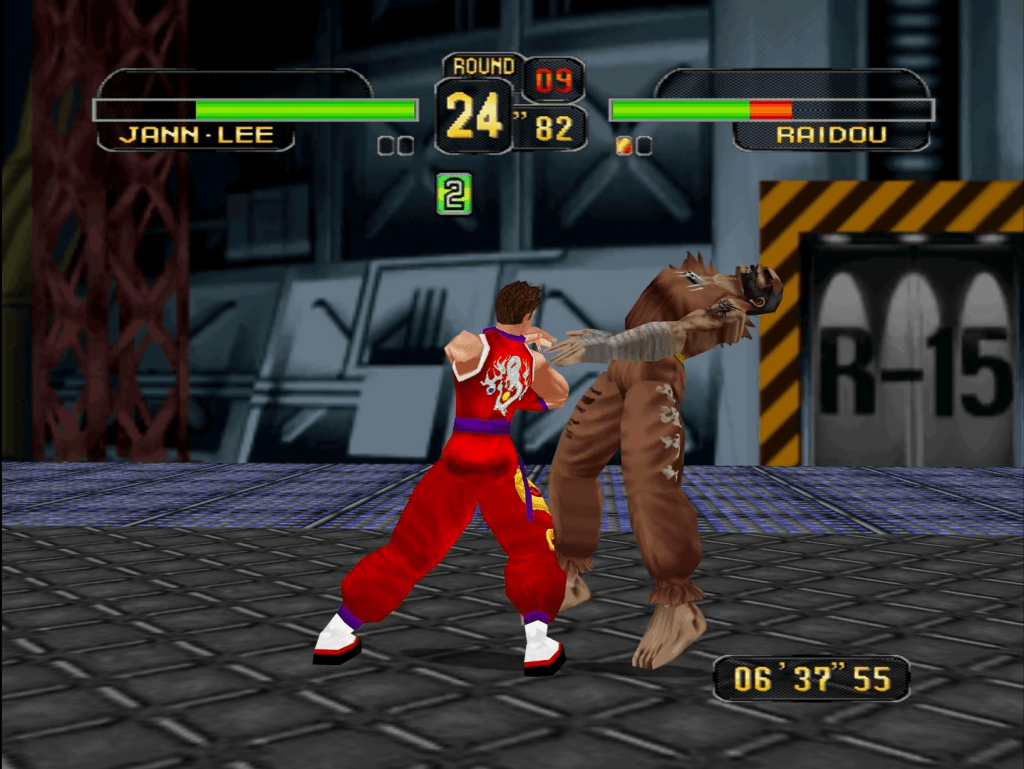
Dead or Alive doesn’t have the largest roster of characters in comparison to some other 2D fighting games on the system, but the 8 default characters — and one bonus character — are incredibly well designed. Each of these characters either stuck with the series for a long time or is still present in the Dead or Alive 6 roster. The story of the first Dead or Alive tournament is ludicrous and over the top, but that’s just the way it should be. Most of the story follows Kasumi, the runaway ninja that abandoned the Mugen Tenshin clan in pursuit of the man who crippled her brother. Ryu Hayabusa returns from a long term hiatus of being the protagonist of one of the best NES series to find the same man in a quest for vengeance. Jann Lee joins the first tournament for the sake of the fight. Lei Fang is there to fight Jann Lee, and Tina joins the tournament to promote herself in Hollywood. Bayman is here to assassinate the tournament organizer, Fame Douglas. That just leaves Zack, who really wants money, and Gen-Fu, who really wants money for his daughters surgery. All of these characters eventually come face to face with Raidou, a mysterious fighter from the same place as Kasumi and Hayabusa, and this sets up the staging ground for one of the wildest sequels in fighting games. And that is including the Mishima’s constantly throwing their kids of off mountains, and a farting bear!
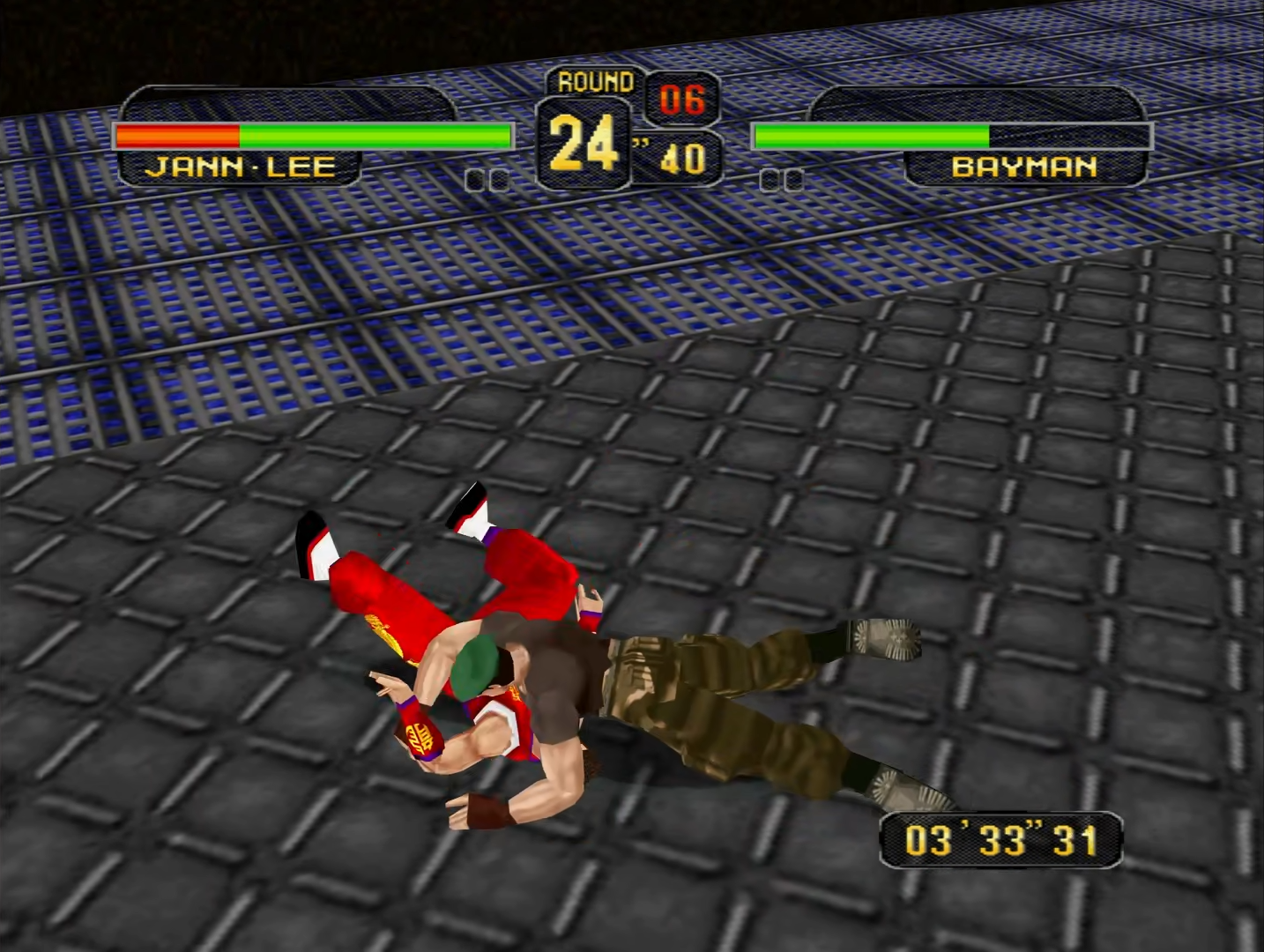
Each fighters unique style and personalities really get to shine through the excellent animation work. Much like Virtua Fighter, the characters are comprised of block polygons, with a clear line around the waist to separate upper and lower body attacks. This design allows the characters to move more expressively, even though it still has that clunky early 3D feel to it. The triangle system also lends itself really well towards expressive gameplay. Tina is a pro wrestler, so most of her moves are variations on grabs and throws, while Gen-Fu has a mean attack that sends you bouncing across the stage. Jann Lee foregoes a spine and rotates both halves independently, while Bayman is excellent at using his opponents’ moves against them. This leads to a great dynamic, where each punch and kick needs to be taken into consideration. Or sometimes you just got to believe. Overall the game is a great example of how the Saturn can be used, and the Ultimate edition adds a few delicious layers of great on top of that.
Final round
I loved delving back into the first game in the series, as this was the one I was least familiar with. The Virtua Fighter influences are palpable from the second you booth up the game, and emphasized whenever a character performs a spinning kick with their lower body moving with complete independence from any spine. Jann Lee has a particularly powerful pelvic rotation. I love the amount of personality that each character portrays through their unique fighting styles and animations. For a Sega Saturn title it feels mighty impressive. Granted, this was the port to the XBOX featured in the Dead or Alive Ultimate box set, but it’s supposed to be a pretty damn accurate port. So, impressive! The soundtrack is absolutely incredible, with its Neo Geo sounding tracks blasting through each stage.
Dead or Alive is an incredibly solid foundation for a fighting game series that I’ve deeply loved over the years. For as clunky as some interactions feel, it does play really well. Once you take some time to go over some of the basic strike combinations, it starts to become a game that controls really intuitively. There are two major drawbacks to this though. The first is that Dead or Alive Ultimate 2 exists, and that game is such a monstrous improvement that this installment feels incredibly overshadowed. The second is that, while controlling a character feels really nice, fighting your opponent can feel weird and stiff. I frequently found myself not quite understanding why a move passed through a characters head, or why I got grabbed out of a strike when I couldn’t. The Playstation version of Dead or Alive does improve on this, so I’d recommend that one over Ultimate. It’s also somewhat light in content, with the two characters from the later versions being absent. Again, this is when contrasted to the other game that came with this package, so this is a somewhat unfair criticism. I mean, the sequel is just so good.
2 Tina’s at round start/10

TanookiChickenAttack is made possible by supporters on Ko-fi. If you enjoyed the review, consider becoming a supporter through https://ko-fi.com/tanookichickenattack

 TanookiChickenAttack