
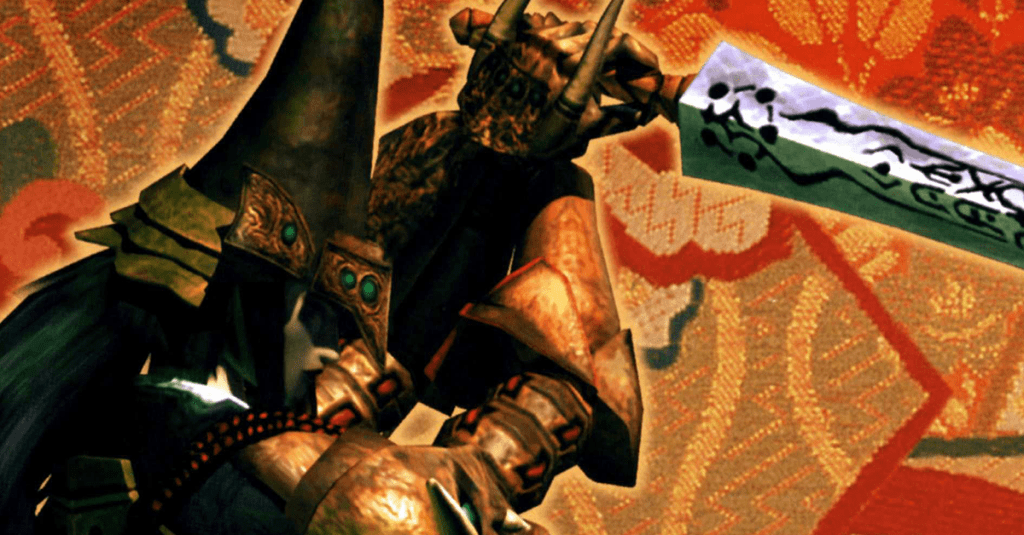
2001 | FromSoftware | XBOX
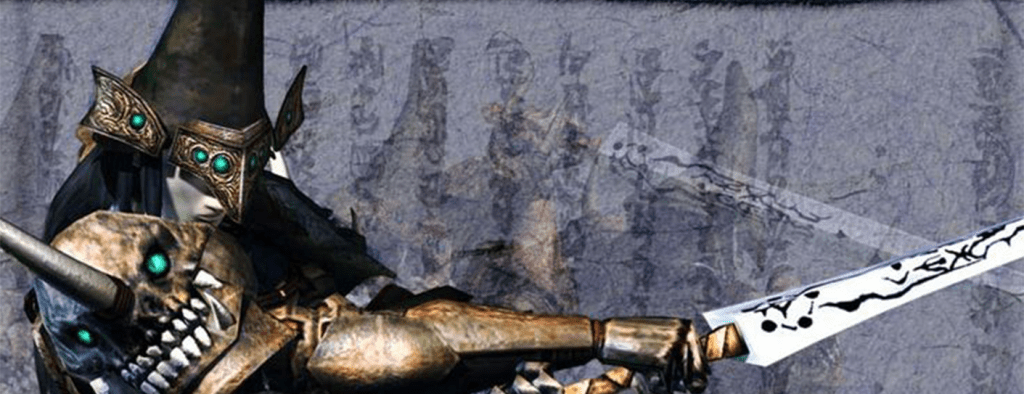
For years the FromSoft’s Otogi series has been recommended to me every time I mentioned owning an Xbox. Not just because it’s a good action game, but also because I really enjoy the pre-Souls era of FromSoftware. There’s something to a lot of these games that makes the culmination of design choices that, individually, shouldn’t work, and somehow turns it into a charming, albeit messy final product. Or as I like to call it; The Evergrace Effect. Lucky for me I stumbled across a set of both the Otogi games recently, and decided to finally give this series a go. As an added bonus the game was backwards compatible on the XBOX One!
Myth of FromSoft
Prior to its claim to mainstream fame with the Souls series of video games, FromSoftware started off as a software application developer in 1984. It wasn’t until 1994 that they’d transition into video games with the release of the first King’s Field game. King’s Field was the result of the team at FromSoftware developing small games in between projects, eventually solidifying into the first person RPG. Within this game are breadcrumbs that eventually mark the trail towards the FromSoftware we know today. King’s Field II would release in 1995 and would be the first international release for FromSoftware, releasing under the name King’s Field in North America and Europe. The third game of the series, King’s Field III, would release a year later, releasing as King’s Field II in North America. With this series, FromSoftware established itself as a known name with RPG fans in Japan, mostly due to the game’s challenging difficulty and designs reminiscent of the PC RPG’s. FromSoftware’s experimental approach led to some unique design choices and high difficulties in their games.
FromSoftware built upon the King’s Field titles to develop 1998’s Shadow Tower, before venturing forth into more horror themed games with Echo Night from the same year. Alongside these games came the dawn of the Armored Core series in 1997. This led to FromSoftware developing one of the Playstation 2’s launch titles; Eternal Ring. This first person RPG took a lot after King’s Field, but strived to make it a bit more accessible. This year also saw the release of Evergrace, my personal favorite FromSoftware game, the Armored Core sequel, and The Adventures of Cookie & Cream (Kuri-Kuri Mix in PAL territories). The studio showed no signs of stopping, and released an updated version of Armored Core 2 with Another Age, Forever Kingdom (Evergrace II) and the 4th King’s Field game in 2001. The year 2002 was the first time since 1999’s Frame Gride that the company deviated from releasing on Sony platforms, with the GameCube’s Lost Kingdom, and Murakumo and Otogi: Myth of Demons for the XBOX.
Otogi: Myth of Demons was the first game by FromSoftware to be published by Sega, releasing overseas in late 2003. The game was met with favorable reviews upon its release and was successful enough to get a sequel with Immortal Warriors a year later. This formed part of the five games that FromSoftware made for the XBOX, with the Otogi series being the only one to release globally. Murakumo: Renegade Mech Pursuit did get an English release for the US. Both Thousand Land and Metal Wolf Chaos never left Japan on their original platforms, or at all. This lead me to a small tangential thing in regards to FromSoftware publications in Europe specifically.
FromSoftware has been a prominent developer since its initial western release of King’s Field II (released as King’s Field) and got a dedicated following of fans through their experimental titles. However, these games often received small prints and even smaller mentions on the English publications of their own games. Which puts them in an interesting position as a niche part of the first and second Playstation’s library. Despite the success that FromSoftware enjoys in the present day a lot of their older catalogue has been obfuscated behind publisher logo’s until their break-out success with 2010’s Demon’s Souls. Prior to that the company largely published in North America through Agetec, and a slew of different publishers in the EU. This led to a lot of their games often being overlooked on shelves, until booted up. In an age prior to having large databases that keep track of these releases for you, it always came as a pleasant, and oddly familiar surprise to boot up a game and see FromSoftware’s logo on your screen. This often lead to the games spreading strictly through word of mouth instead of being naturally associated with its actual developer. As such, the footprint left in Japan by the company is juxtaposed by its obfuscation overseas.
Enter the spirit world
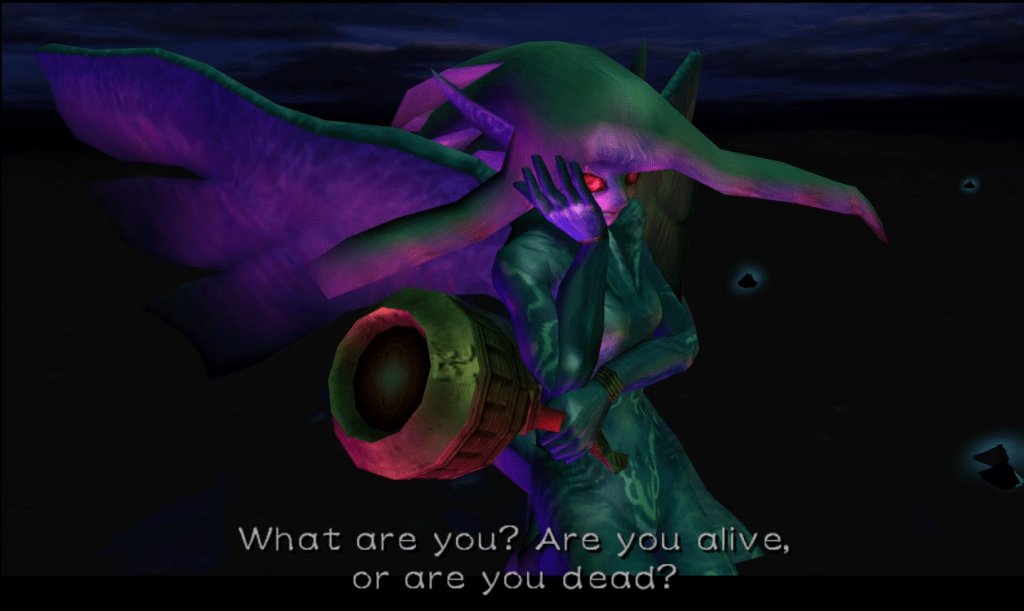
Otogi follows the spiritual reincarnation of Raiko Minamoto. A former executioner for the emperor that upon refusing to kill his own father fled the capital with the ancestral sword, Soul Shrine. After leaving, the capital is razed to the ground as the barrier separating the demon and human world, The Great Seal, is broken. After being saved from certain death by a mysterious entity known as The Princess, Raikoh is pulled from purgatory into a new body. The Princess uses her powers from within the netherworld to put him back together by magic in exchange for his services as her blade. Under the pretense of redemption for the sins committed, Raikoh is sent out into the world to restore the Great Seal. First by slaying four demons to restore four fragments, then gathering four elemental ki to restore its power.
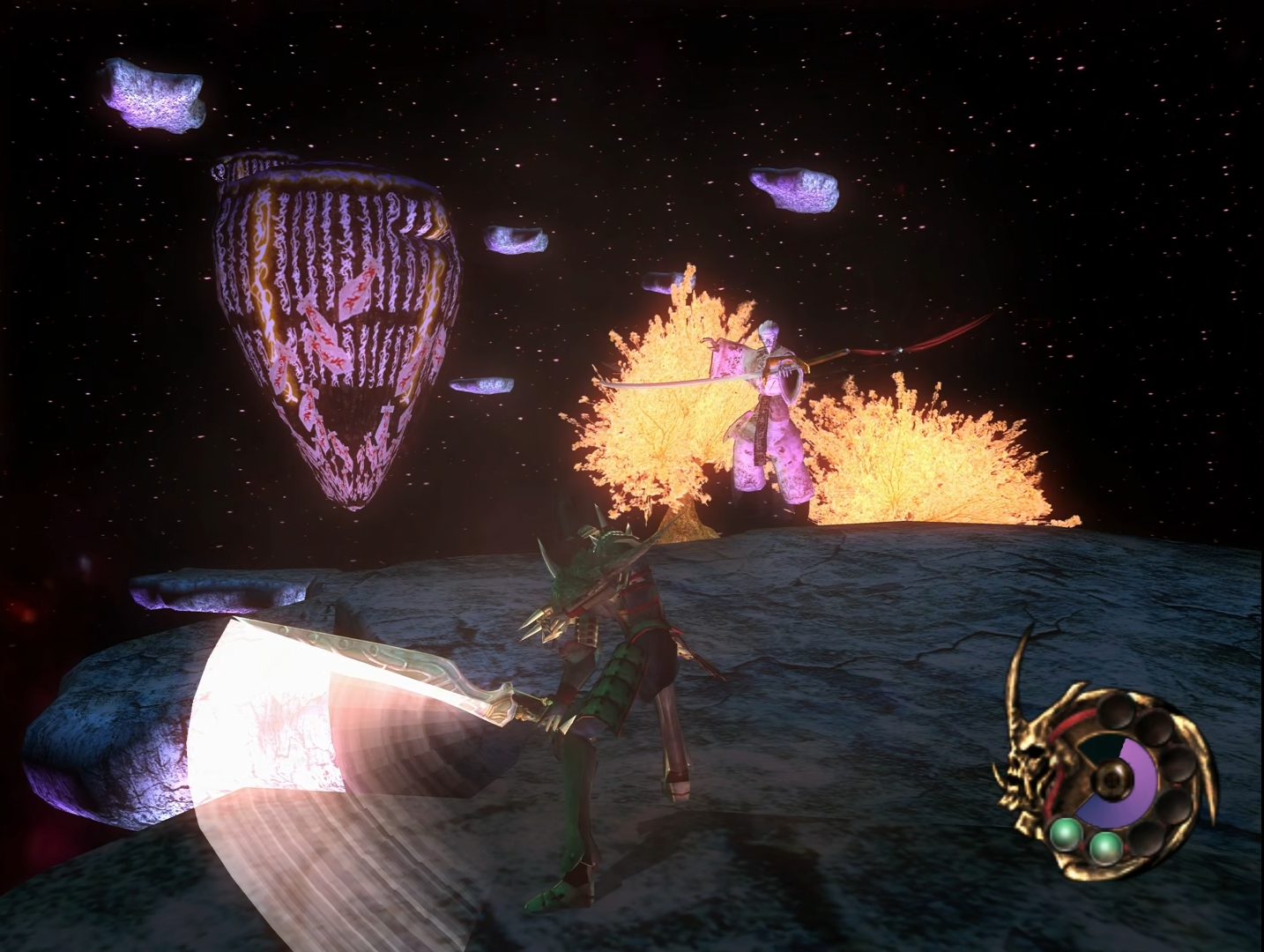
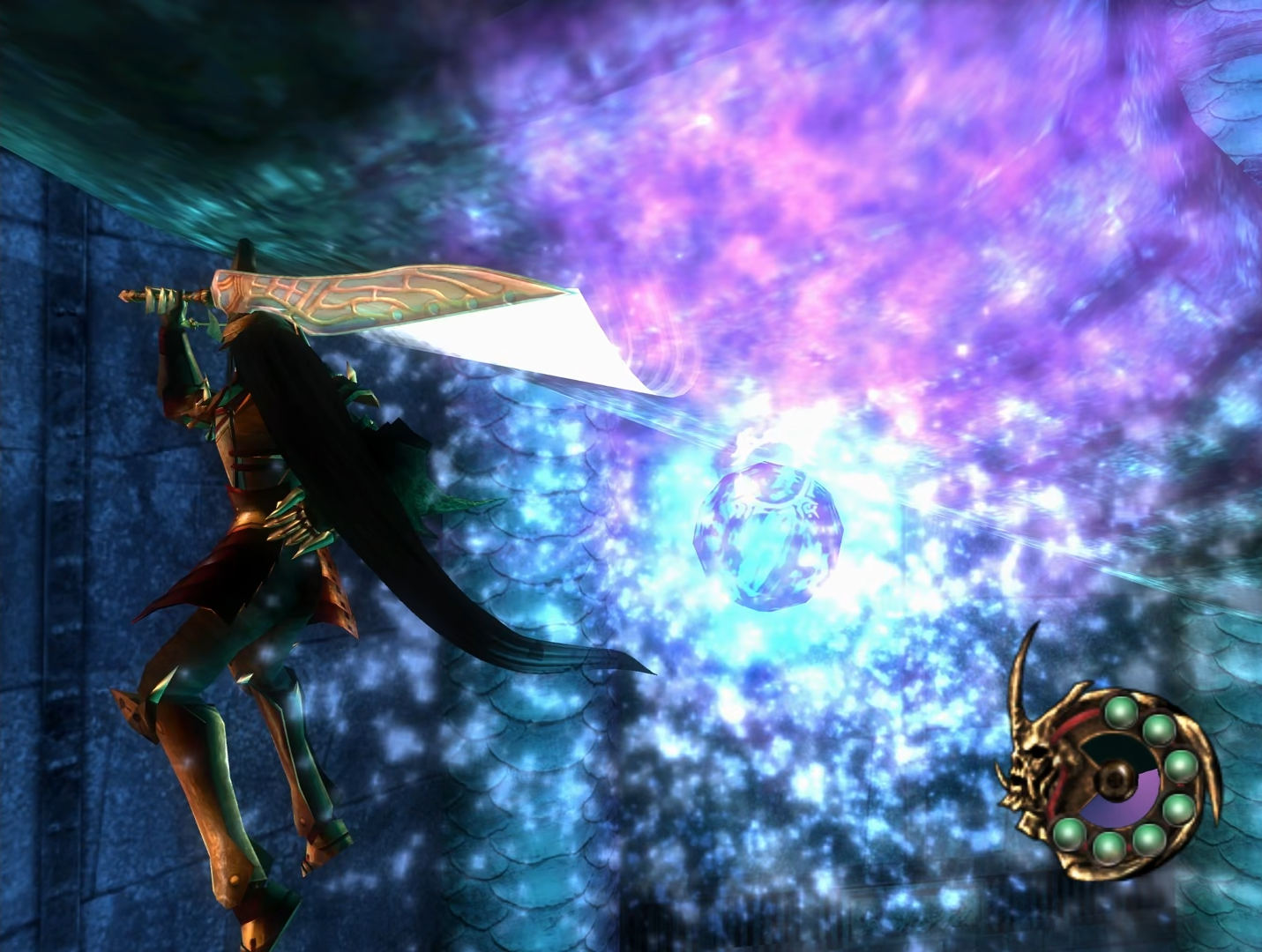
After restoring part of the Great Seal, Raikoh is banished to the underworld, where he must find eight Soul Cords to find his way back to the world of the living. My guess is that the tasks including four elements are related to the number being considered unlucky within Japanese culture, often closely associated with death due to the pronunciation of the number four (shi). This can mean that the Soul Cords represent a form of opposing force, with Raikoh using eight Cords to return to the land of the living. When Raikoh manages to narrowly escape the Yamato no Orochi guarding the gate to the living world, he is then confronted with the demon who broke the Great Seal; Michizane. The two face off in one of the most weirdly frustrating boss battles on top of meteor fragments, with Raikoh ultimately defeating Michizane.
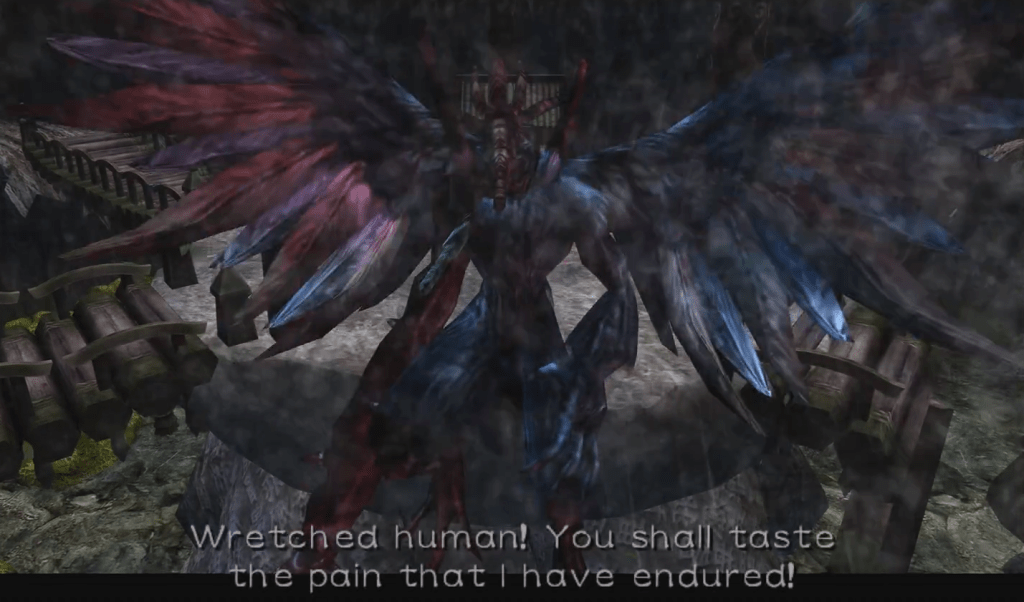
Otogi: Myth of Demons showcases a lot of the early hallmarks of modern FromSoftware storytelling. The premise is used as a framework to present the player with little droplets of information, alongside cryptic sentences, to make sense of the grander puzzle at play. The first play-through of game sees you fighting off a bunch of demons for the sake of redemption, with the true ending hidden behind its second run, or 2nd Play. There’s a neat underlying concept within the confines of this game, but it somewhat misses more than it hits due to its dedication to cryptography. The Princess entity remains a mysterious presence throughout the story, and feels like a puppeteer playing with the strings that bind Raikoh to the world. She constantly looms over the story from behind her rice paper covered doors to command Raikoh on one daring mission after the other. While the 2nd Play does shed a lot of light on this dynamic, I feel like it is a bit too late to be effective. This leaves the story largely in the hands of the first play-through, which can feel cryptic and confusing.
That’s not to say that the presentation as a whole isn’t without merit. The cryptic and strange atmosphere of the game does a great job at selling the premise. Raikoh being reduced to this demon hunting sell-sword on borrowed time gives every mission a bit more urgency. I just wish that the story as a whole would be presented with a smidge more clarity. Not enough to unravel the game in expository tapestries of endless obviousness, but rather a bit more than a moldy carrot on a stick. As it is, Otogi’s story and presentation are so very FromSoftware, which is exactly what it should be; an uncompromising bundle of scotch tape, hopes and dreams! The most fascinating aspect of the game is how deeply it draws on Japanese culture for its inspiration. There is a lot to unpack once you start to read between the lines, and the biggest strength of the game comes from delivering this in incredibly interesting ways.
Being held together by magic and scotch tape
Otogi is an interesting beast of a game to actually play. In typical early FromSoftware fashion a lot of elements of the game initially feel haphazardly put together. It doesn’t quite know whether to be an action RPG, or something similar to Devil May Cry, and as a result it’s neither, both and everything all at once. Otogi is primarily an action game in which you venture into different stages to complete an objective. Whether it is to find a piece of the Seal, an elemental ki, or Soul Cord, the mission usually requires you to swing a big sword around to kill and smash things.
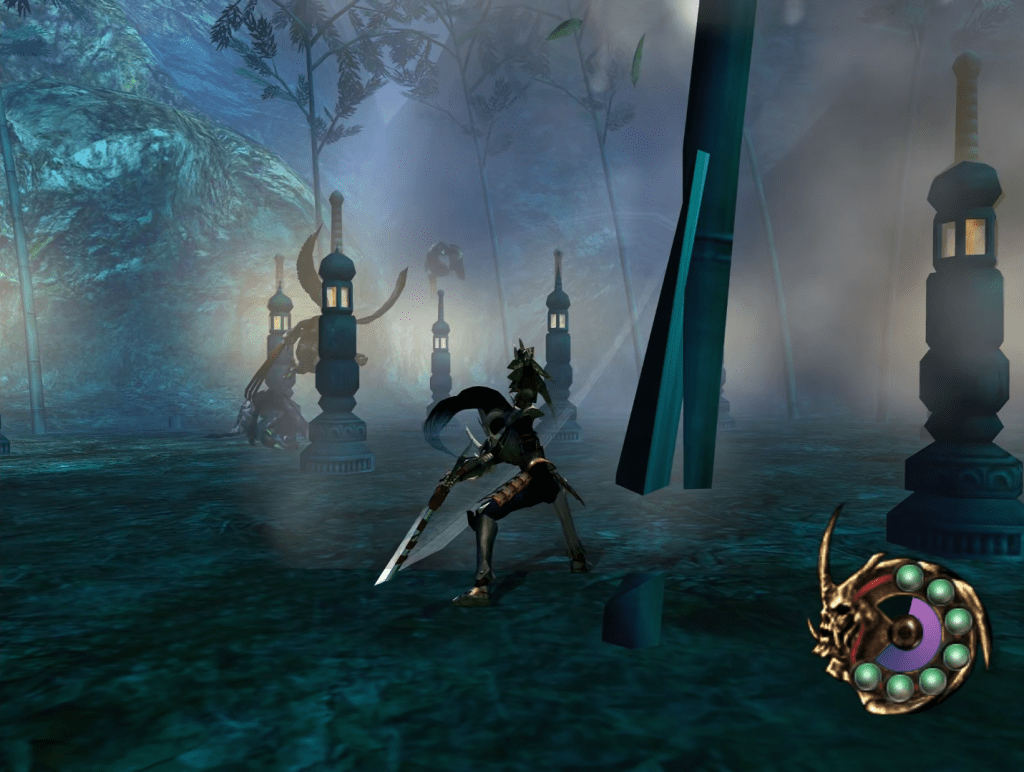
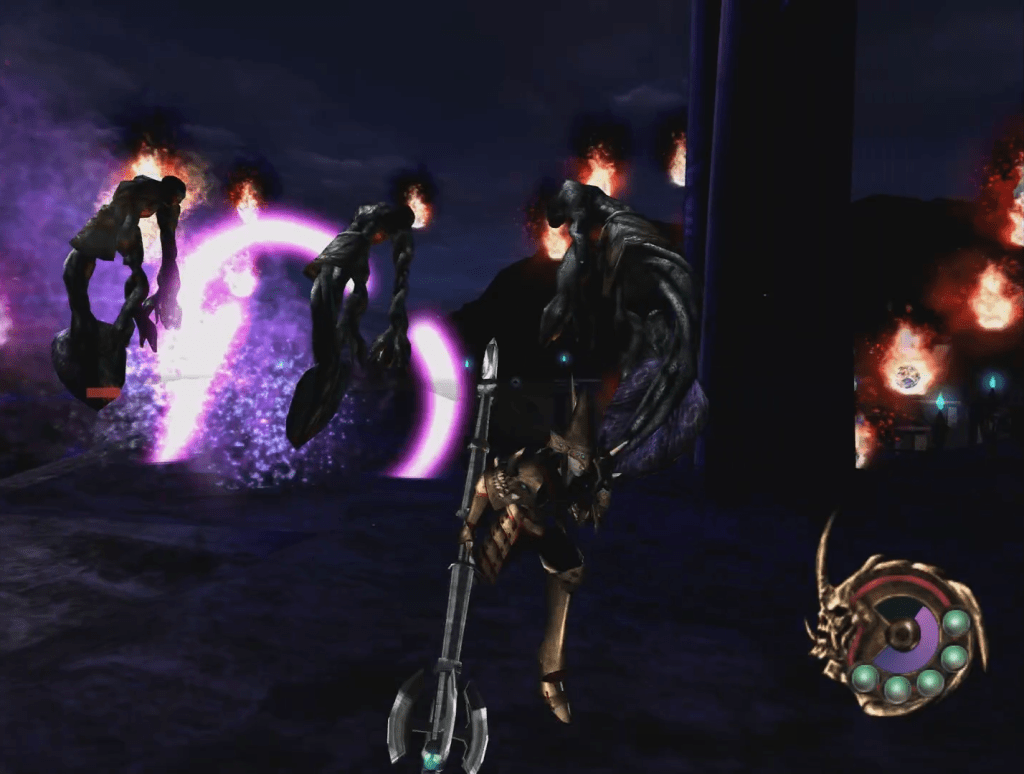
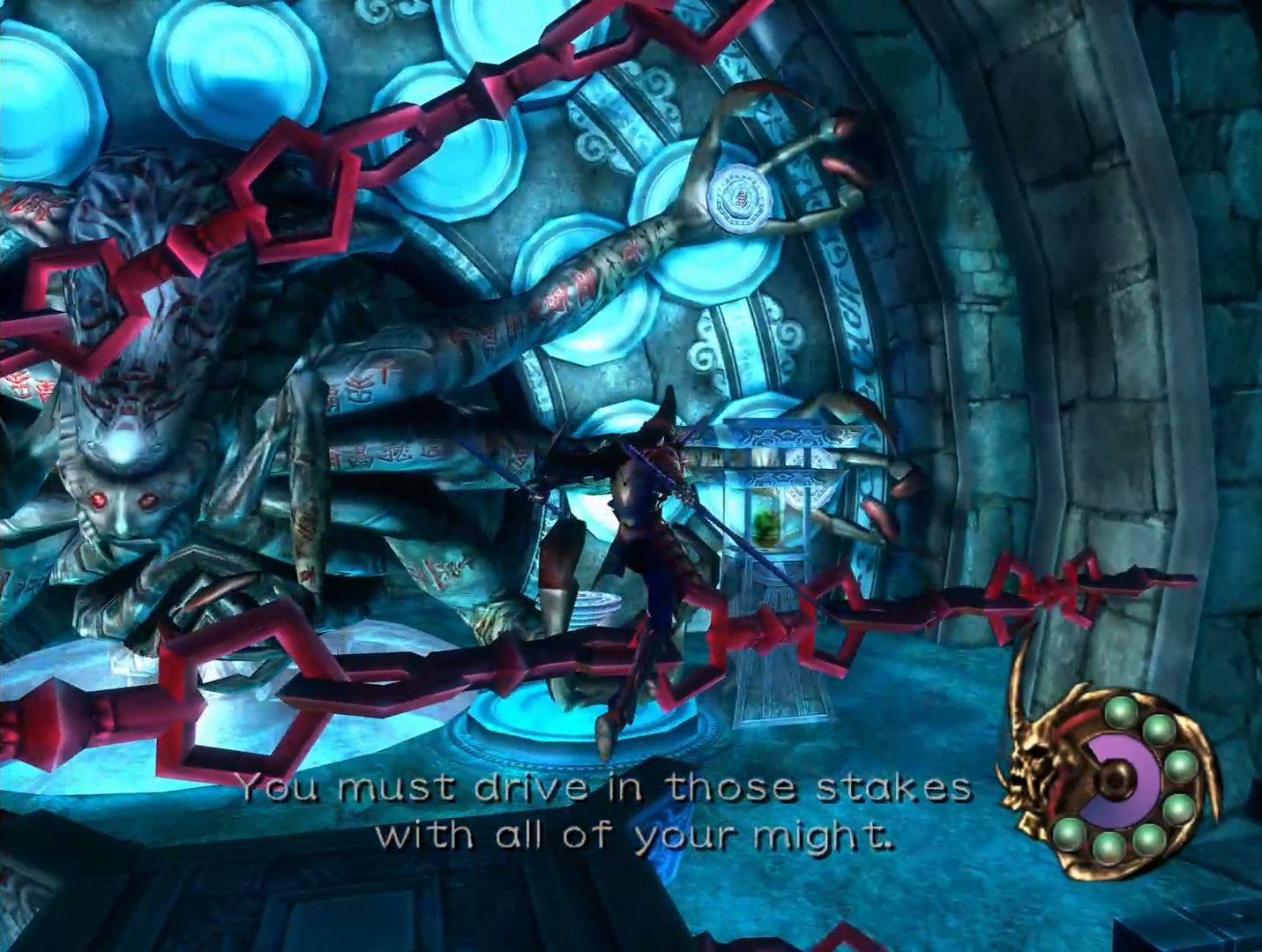
The biggest early game hurdle players will face is Raikoh’s magic. Magic is an extremely valuable resource in Otogi. It represents both the amount of spells you can use, and Raikoh’s ability to hold his form. Your health is depicted as orbs next to a purple bar. As long as an orb isn’t fully depleted the purple magic bar will cause the orb to fill back up. Raikoh dies when all orbs are depleted, but he also loses health at a rapid pace when the magic bar is depleted. This makes every early game stage a rat race to the finish line. I’m not very good with this kind of pressure, so my early game was a lot of frantic, frustrated running around trying to clear objectives as fast as possible. The first boss ended up killing me, because the dialogue after his defeat took too long.
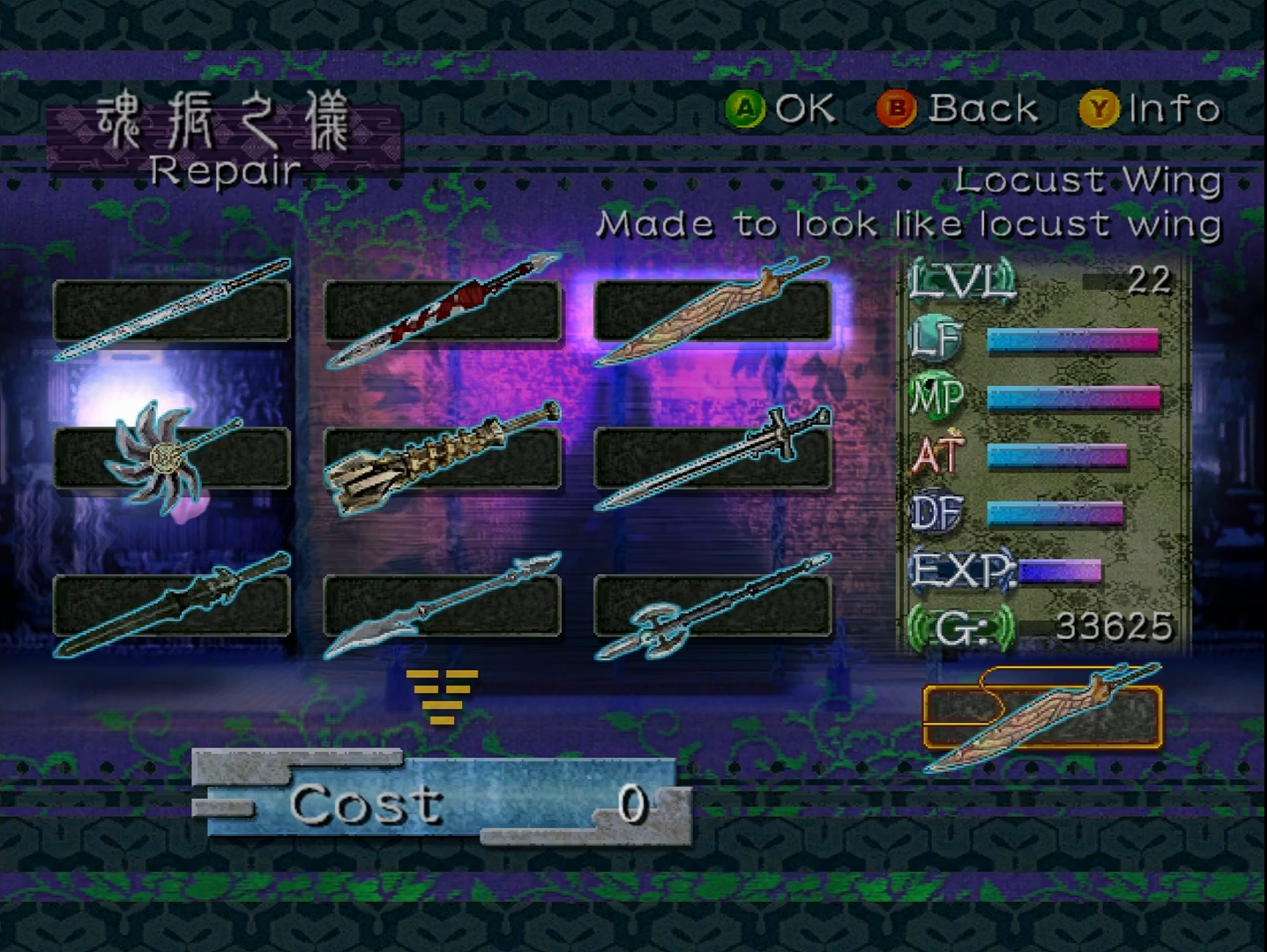
The purple bar is also used to cast devastating spells, at the cost of the time you have in that particular stage. It’s a brutal tug of war between conserving and utilizing resources that does take a bit to get used to. Luckily this is largely delegated to the early parts of the game, and easily mitigated in the later stages of the game. A lot of this is due to finding different weapons, accessories and spells to mix and match. You also gain access to various magic spells that you can unlock through completing missions within certain parameters (no damage taken, within 3 minutes, that sort of stuff), or by buying them from the shop. Through the shop and through these secondary completion parameters you also unlocks a plethora of weapons. Each weapon has unique properties that allow you to somewhat equip yourself for missions, but you’ll generally find yourself looking for increased stats to help you maintain your form for longer in the early stages of the game.
As with most games of this era, the biggest enemy is the camera. There is a lock-on system in place, but this lacks proper tracking (and a lot of enemies tend to teleport). The dash, for as big of a part of your mobility kit as it is, needs to be used with some semblance of caution. You can easily zip the wrong way, causing you to overshoot the target and getting lost in the jittery camera motion from the lock-on.
A myth of demons
For as weirdly messy this game is in terms of ideas, it does feel like an incredibly satisfying package. It’s an endearing part of why I love this era of FromSoftware. It shows an optimistic willingness to experiment, and throw whatever they want at whatever wall they might find. This creates some really unique feeling experiences that are rather hard to replicate. Otogi: Myth of Demons does fall deep in this rabbit hole. On the one hand it somewhat lacks an identity, due to a large amount of conflicting ideas, but on the other this lack of identity is an identity in and of itself. It’s this amalgamation of ideas that culminates into the very heart and soul of Otogi. This is a bit of a double edged sword. The game has a lot of ideas, and has a lot of ideas implemented, but due to this it lacks the commitment to a lot of them.
The RPG elements feel a bit tacked on to add a bit more replay-ability to the stages, and entice players to revisit earlier stages to find new stuff. While the leveling system does add a little bit of dynamic progress to the game, it doesn’t go much further than slightly increasing the statistics of the main character. This can make the game feel somewhat needlessly grindy and take away from the overall experience.
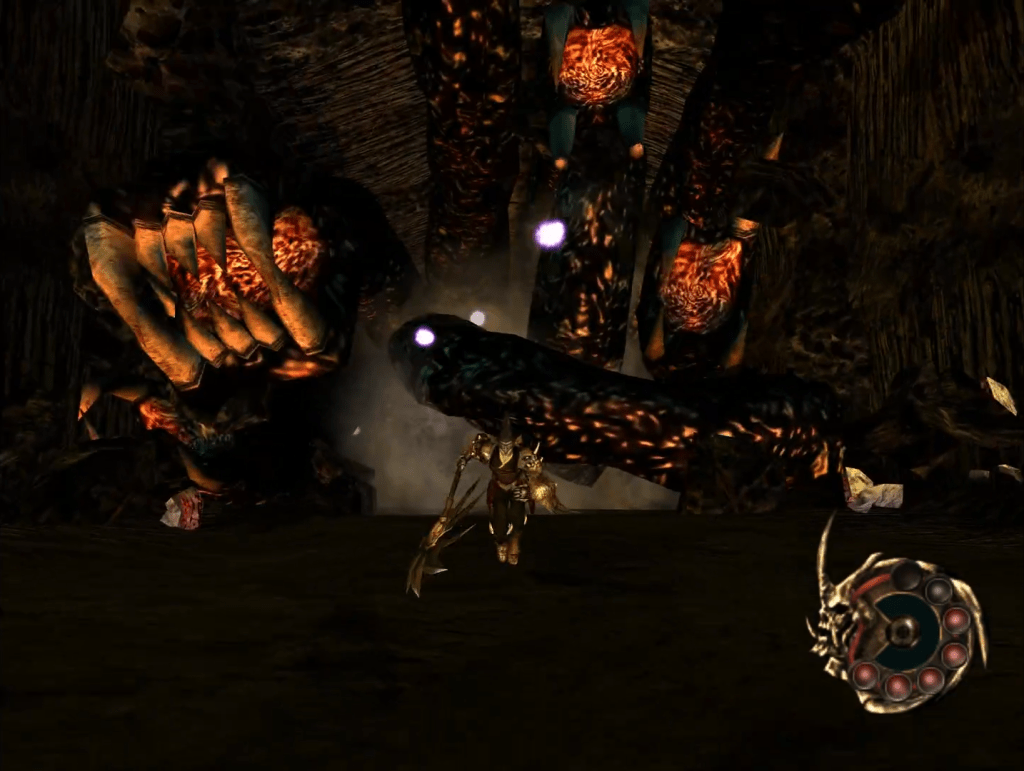
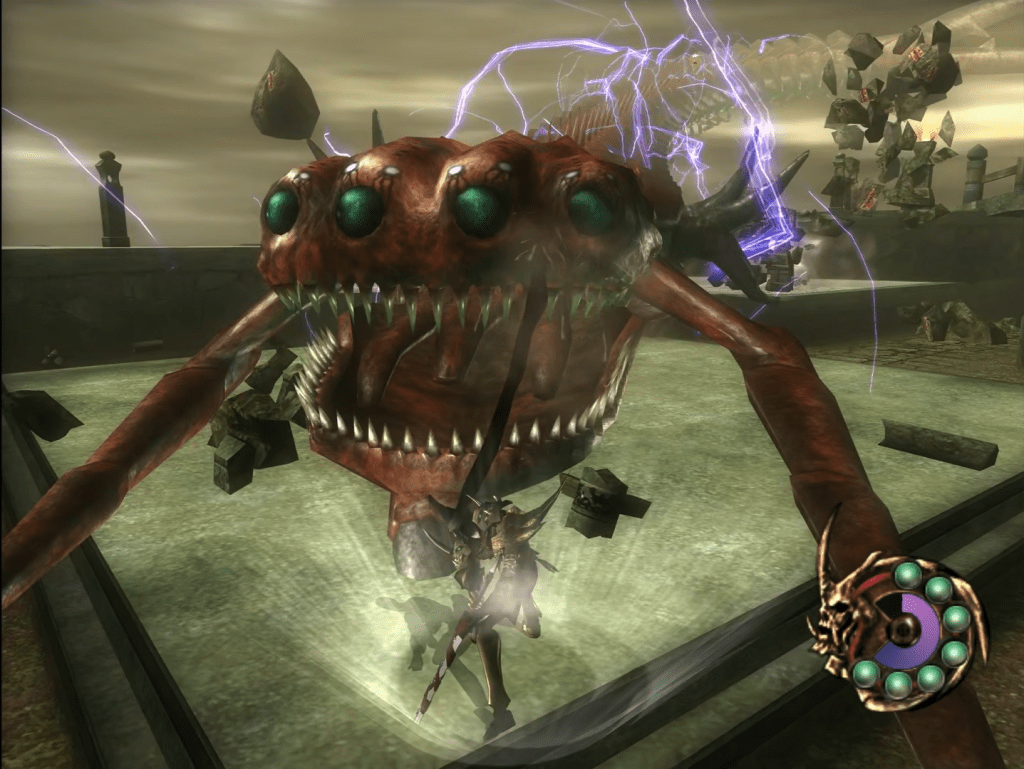
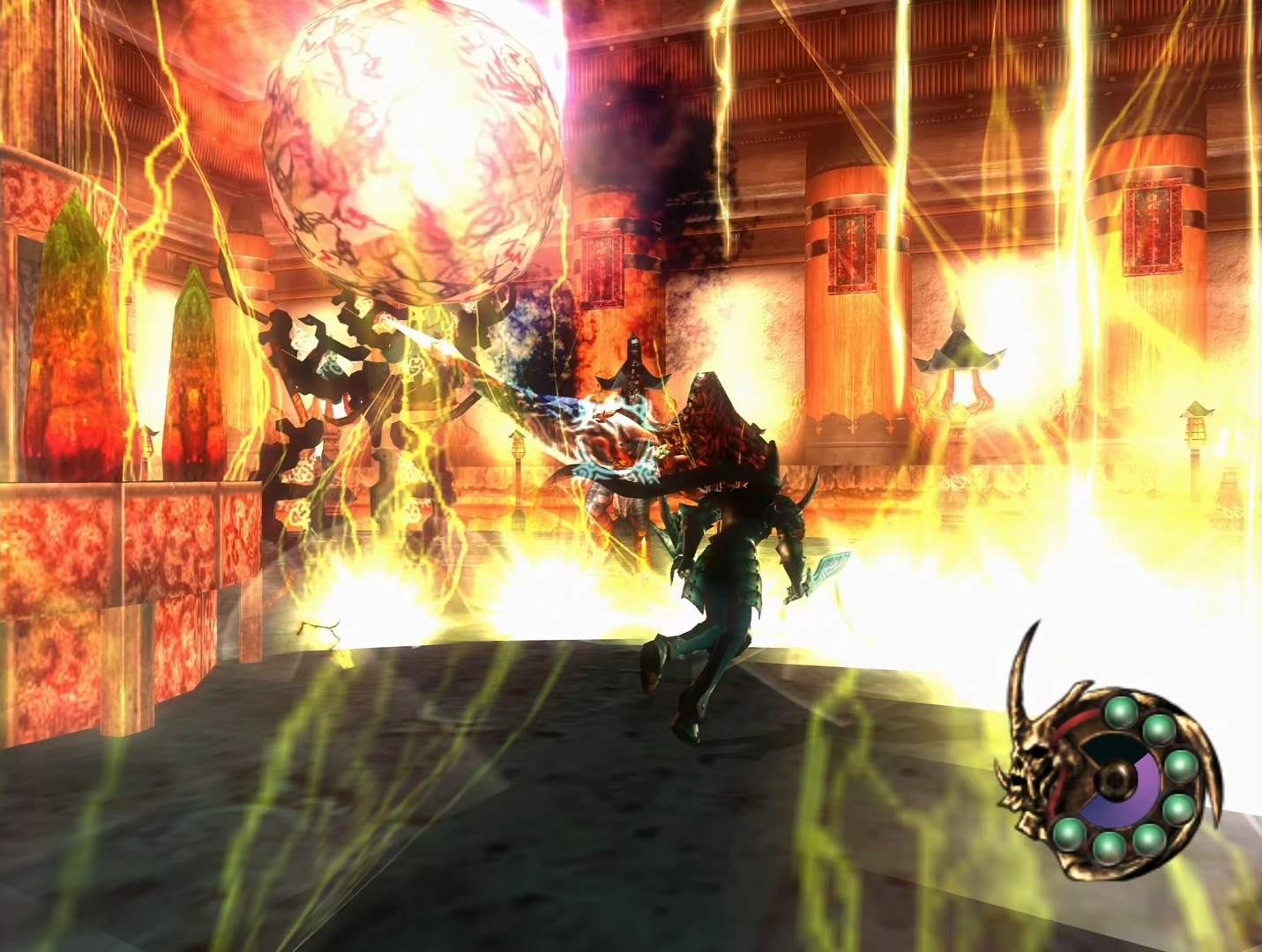
Otogi: Myth of Demons is, however, a fantastic example of prime action games on its respective generation of consoles. The destructible environments are a delight to interact with, and give combat a much needed extra oomph. You can use the heavy attack to punt an enemy into a pillar to collapse an entire building onto the group, or punt the building as a whole onto the enemy. It’s deliciously satisfying, and allows you to find new strategies to deal with situations. You can also use this to beeline a stage to the finish line, before anyone has any idea what is going on. A big plus is the variety of bosses, and the variety in which to approach them. While some bosses will sit there as a gigantic target, there are a lot of bosses that require workaround approaches. From being eaten, to launching crystals at them, to using the moon to beat the crap out of them. The clunky gameplay gives these moments so much more satisfaction.
The other big appeal to the game is just how much it’s overflowing with Japanese culture, folklore, and religion. Once you get invested in the game, part of the fun is finding meaning behind the things being said or shown. Whether it’s looking up the meaning of a number, or the entire infrastructure of the underworld, it gives the game an extra layer outside of its boundaries to interact with. I love this. The music also adds a lot of atmosphere to the game and has a few very unnerving tracks that don’t really adhere to any sensible structure. While the initial foray into the game might be a bit daunting and stressful, I quickly found myself deeply immersed in this surreal experience. It’s a game that comes highly recommended to people who either resonate with the things described in this review, or who own an XBOX. It also upscales beautifully on the XBOX One X.
NONE SHALL PASS/10
TanookiChickenAttack is made possible by supporters on Ko-fi. If you enjoyed the review, consider becoming a supporter through https://ko-fi.com/tanookichickenattack

 TanookiChickenAttack