

2013 | Nihon Falcom | PC/Steam Deck
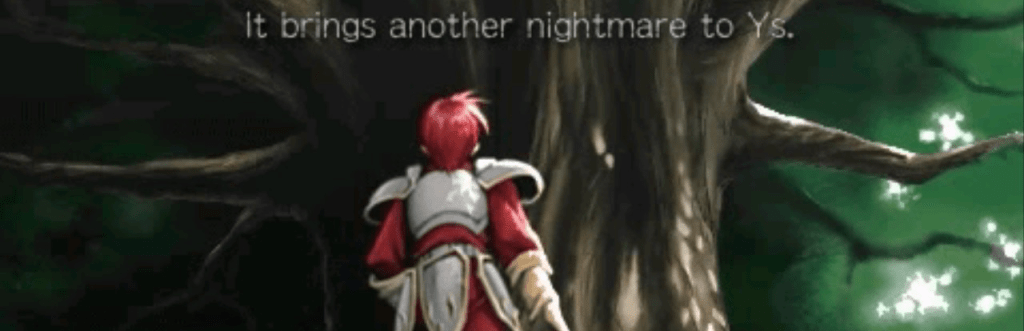
I’ve been a fan of the Ys franchise for quite some time, but I unfortunately lost sight of the series as it moved into its 8th main installment. Since then, there have been two more releases, as well as a remake or two. After reviewing Ys: Origin for the 10th anniversary of the livestream, I wanted to finally go through the entire series in chronological order. And where best to begin that with the Chronicles+ version of the very first game in the series, specifically the 2001 Eternal version.
Nihon Falcom was founded in 1981 by Masahiro Kato, and was a juggernaut in the early days of the PC RPG genre. They were responsible for revolutionizing the Action RPG genre for the home computer with series like Dragon Slayer and Ys, with most of their early releases centering around the PC-88 and PC-98. They gained renown through the immense success of Dragon Slayer II: Xanadu (Xanadu for short) in 1985, as well as their work on video game music. Directed and designed by Masaya Hashimoto, the Ys series followed the adventures of Adol Christin, a red-headed swordsman who likes to shipwreck… a lot. The first two games released as a duology, as Ys I: Ancient Ys Vanished, and Ys II: Ancient Ys Vanished – Final Chapter on the PC-88, with an enhanced version releasing on PC-98 as well.
The games would eventually end up on most available home computers in the following years, with the Famicom version deviating the most from its original form. As well as being one of the earlier home console ports of a Falcom game. The bundled version of the first two games became the blueprint for each iteration going forward. Ys I & II Chronicles+ features both the 2001 Windows version of both games, dubbed Eternal, as well as the 2009 Windows version, dubbed Complete. The most recent version has a complicated history of releases, with small changes to each version dating back to the 1989 release on PC-Engine, called Ys Book I & II. Which was the first fully enhanced port of the game. Adding small quality of life changes, and changes to art an music to each subsequent release. Whilst originally releasing in Europe and North America through Steam and GOG in 2013, the original 2001, and 2009, Windows version only released in Japan. Ys Chronicles did release in North America on the PSP in 2009, alongside Oath in Felghana, Ys Seven, and a number of other Falcom titles. While the PC versions of Ys I and II are probably the best running versions of the games, the PSP games came in fancy cardboard boxes with tons of goodies.
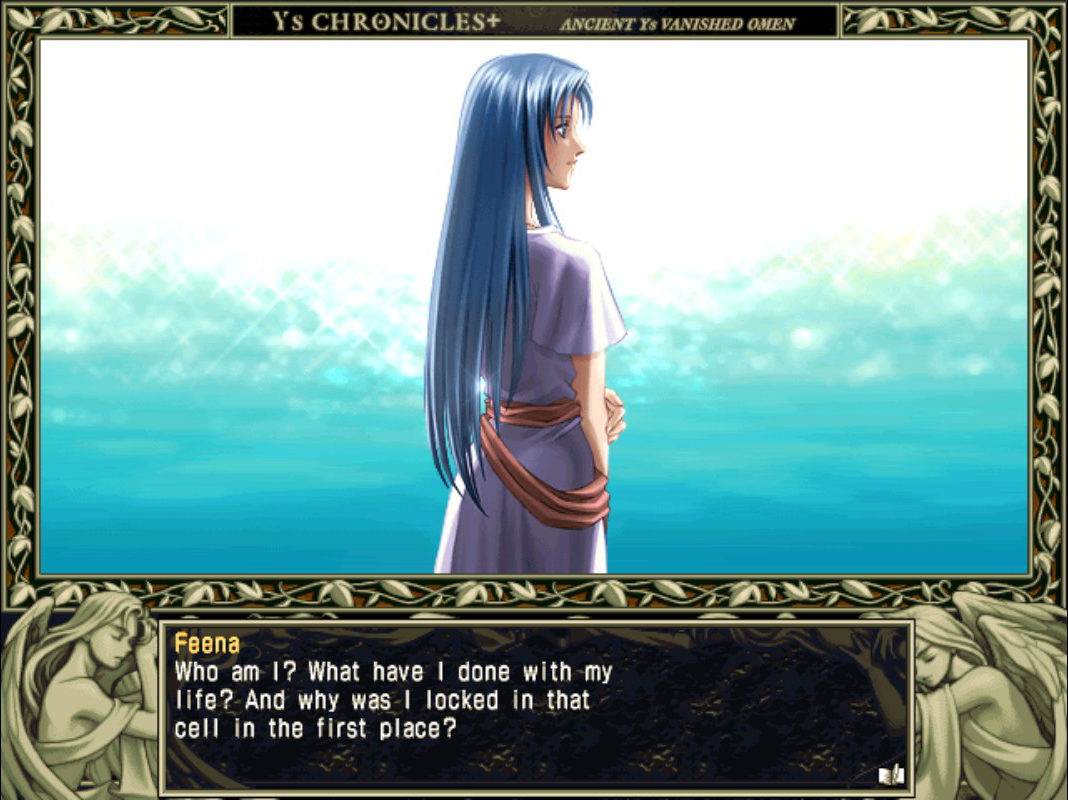
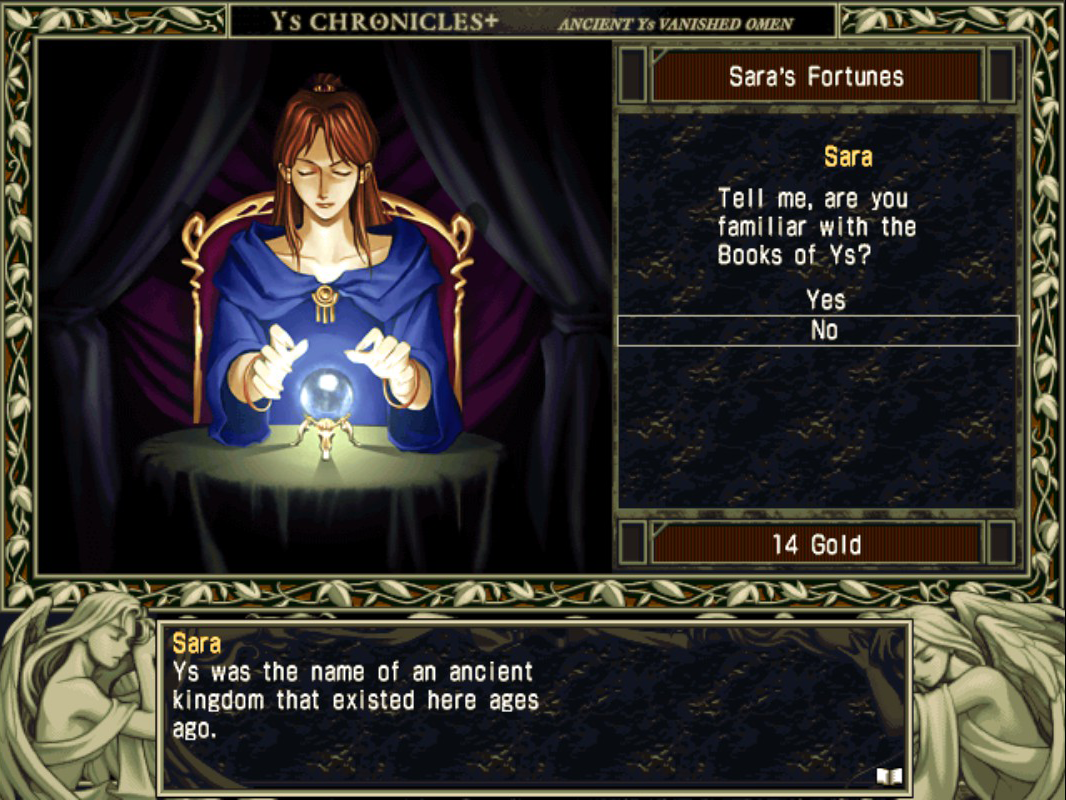
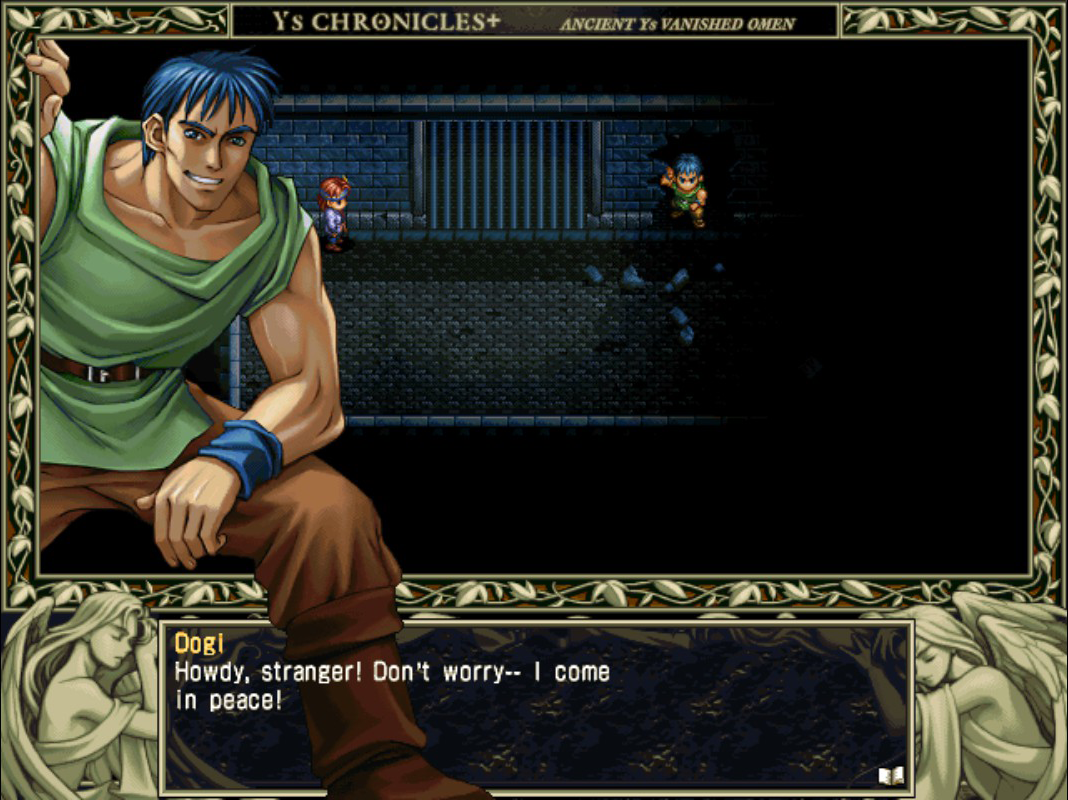
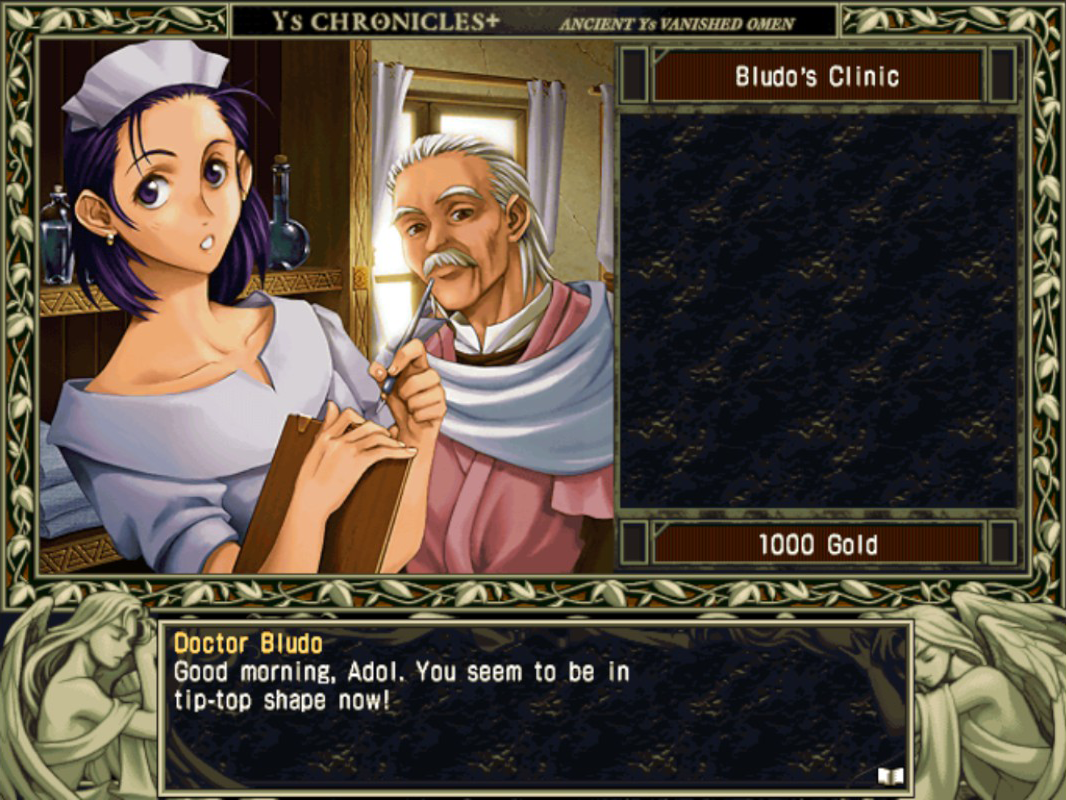
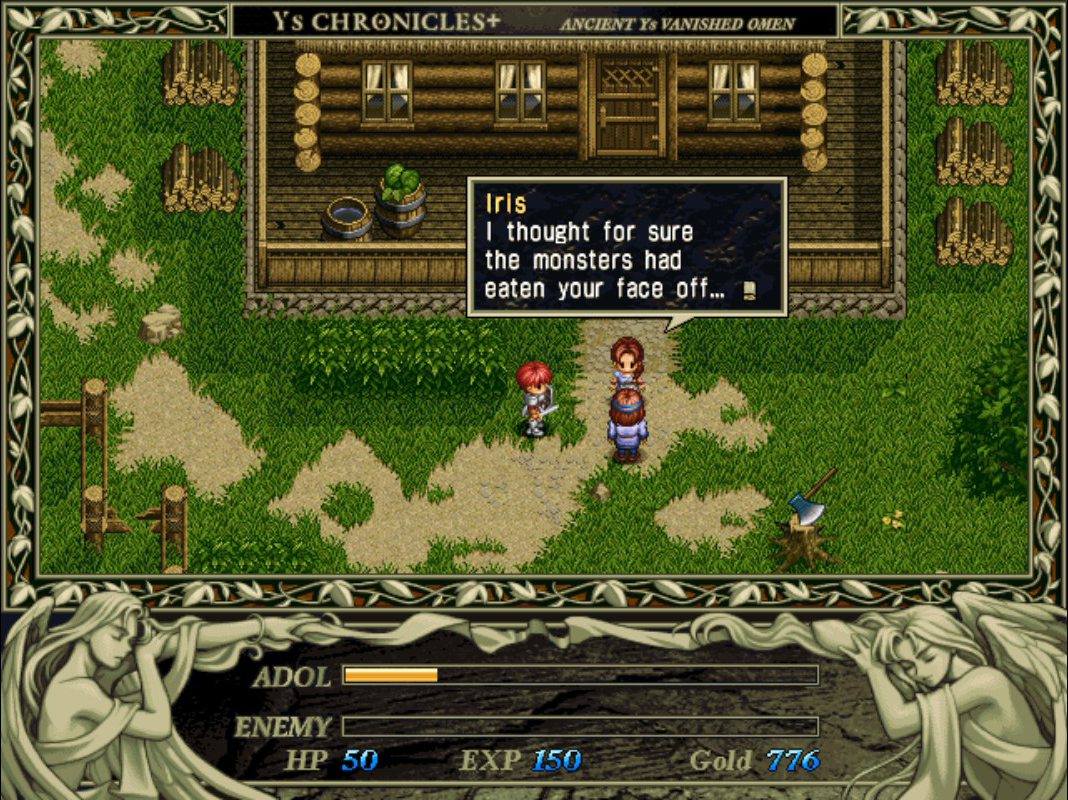
Every tradition has to have a point of origin, and as such Ys I opens with Adol Christin, our red headed adventurer, shipwrecking as he tries to traverse the storm wall surrounding an island chasing rumors of the misfortunes of its inhabitants. He wakes up in the doctors house after being found on the shores of the island Esteria, recovering from his injuries. After getting released from the doctor’s care, Adol discovers that the island has recently become infested with monsters and demons. The island, now cut off from the rest of the world by the same Stormwall that caused your shipwrecking, has its inhabitants hide behind the walls of their towns. And thus begins the first adventure in the Ys series. A lot of the storytelling is delivered through good, old fashioned conversations with the people of Esteria. Through this we learn of the mysterious appearance of the monsters, the increasing thefts of silver throughout the island, a mysterious girl without any memories, and a series of books said to be magical. The quest ultimately leads you to the Tower of Darm — the same one you climb in Ys: Origin — with an evil sorcerer waiting for you at the top.
Side quests are rather naturally woven into the game’s story, and seamlessly blend into the world. From the wandering sleepwalker to the various small quest chains that help you on your journey. Each of these rewards you with either a good upgrade, or some support later down the line. Some of these side quests follow a small narrative line that sees the characters involved intertwining with the main story from time to time. It really helps flesh out the rather simple plot with deeper character dynamics, and makes the game a very impressive remake of the original from 1989. The story of Ys I might be rather small in scope, but it tells it incredibly effectively, whilst never failing to deliver on tight, fast paced gameplay. The game heavily emphasizes exploration, and there are a lot of secrets to uncover on the island of Esteria.
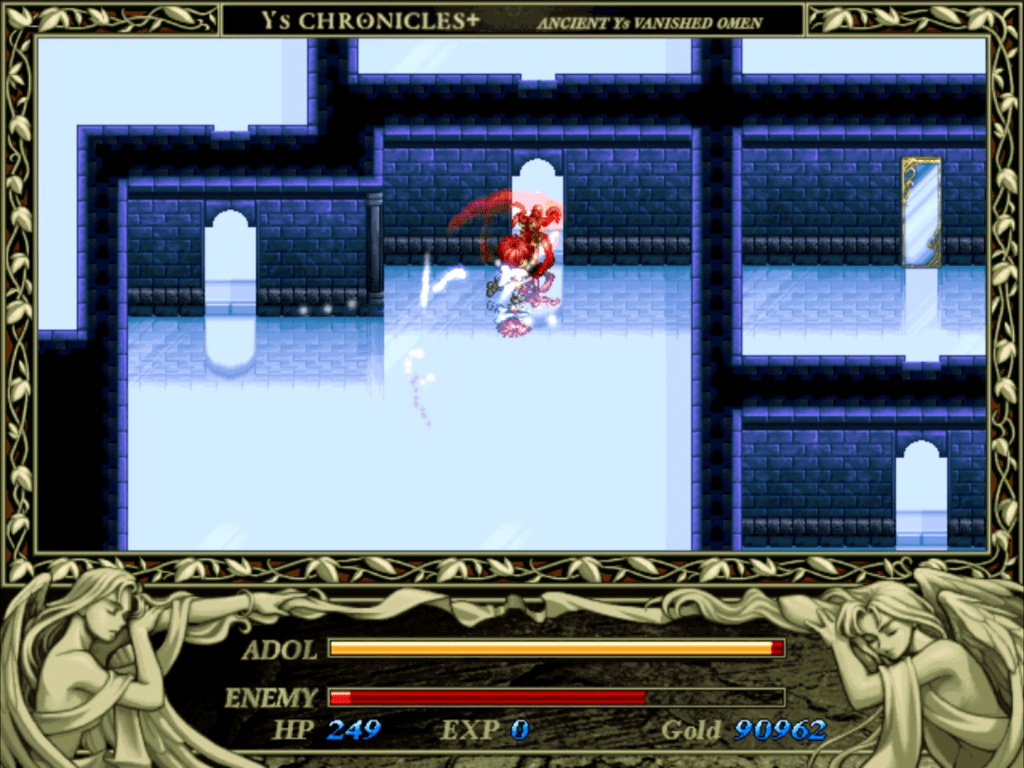
With a new version comes a new soundtrack and Falcom Sound Team hasn’t failed to deliver on something truly epic. Each dungeon is provided with a suitably ambiance of shredding guitars and violins as you engage in violence. The boss themes in particular are a standout, and a big reason to keep retrying after hitting a game over. That isn’t to say that there aren’t quieter moments to be accompanied by an equally intimate sounding theme. It perfectly accompanies the fast paced action that the series has become known for.
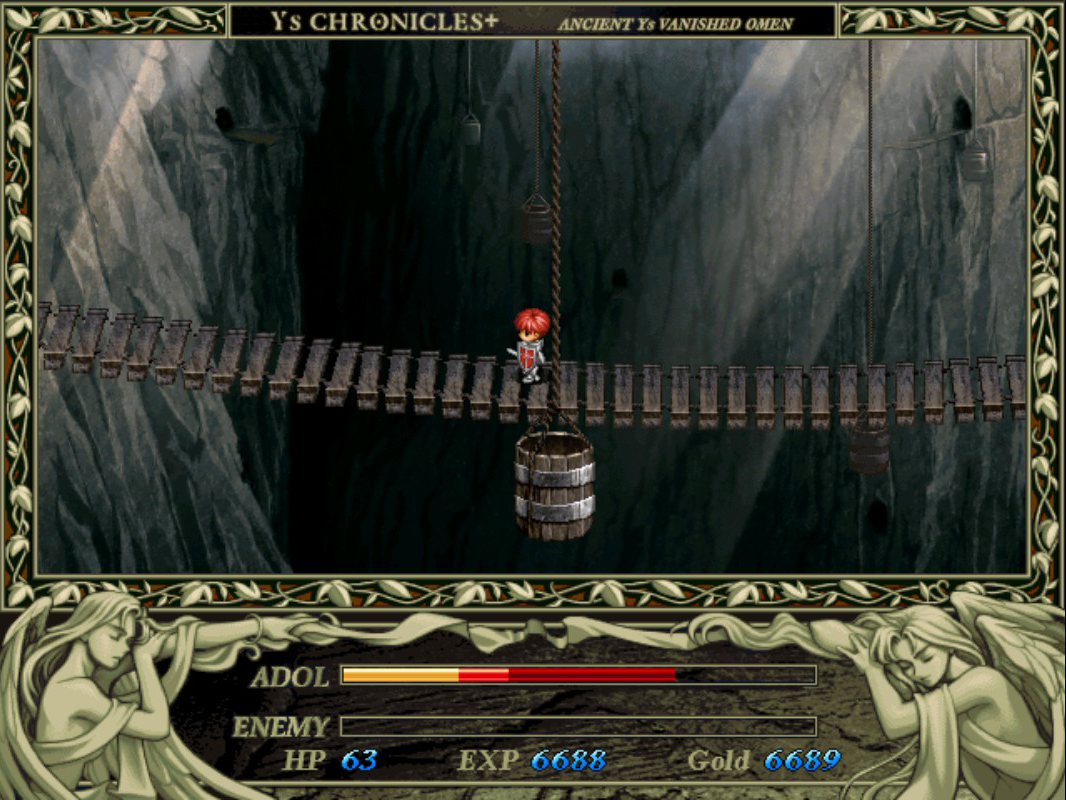
Instead of swinging your sword around with the press of a button, Ys I still holds true to its origins with bump combat. As the name implies, instead of pressing a button you bump into enemies to deal damage. The catch is that if you collide with them straight up, you’ll end up taking damage as well. The trick is to bump enemies at a slightly off-center angle to safely dispatch of them. It does take some getting used to if you’re not familiar with this style of gameplay, and can cause a lot of early game over’s if it catches you off-guard. I did find that I could quickly get used to finding the most appropriate angle to make my way through areas with a wake of corpses marking the path I took. It will quickly make you go from being scared of a skeleton, to aggressively rubbing up against an enemy in a corner until they surrender their lunch money. While bump combat may feel like something from a by-gone era, it does make the game feel unmistakably like a Falcom action RPG. While the original version of the game feels incredibly slick and fast paced for its time, the remake (of the remake) cranks this up to maximum velocity. Movement is smooth, combat feels slick, and the pace unrelenting.
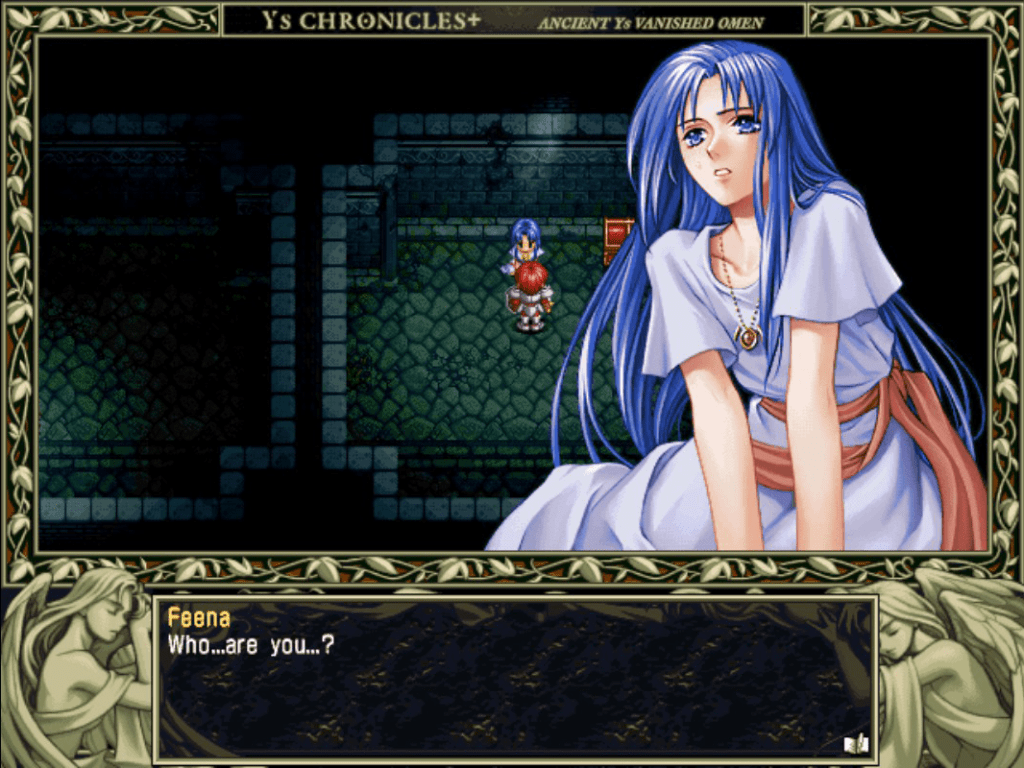
Throughout your journey you’ll encounter a wide variety of items to help you on your quest. These range from simple weapon and armor upgrades, to monocles that allow you to comprehend dead languages. As it is an older RPG by design — with the original being from 1987 — it leaves a lot of discovering to the player, with NPC dialogue being your biggest clue giver. You’re completely left alone to explore and discover hidden secrets and treasures. The game does encourage you to explore every nook and cranny of every mineshaft, shrine and evil tower. This also helps you upgrade your equipment, and, more importantly, level up. Outside of a few items, you can easily complete the game without having to delve too deep. Like many older RPG’s, and in proper Ys tradition, the game is designed around a linear path that requires a specific level to be able to naturally progress. The rule of thumb is that you’re getting to the sweet spot when the enemies don’t kill you in one or two hits, whilst going down with the same amount.
With the maximum level of 10, you’ll find yourself cruising through the game if you take your time to explore. The stronger the enemy, the more experience points you get, with weaker enemies granting less. There is a reward to the risk involved, since you’ll quickly grow too strong for an area. Leveling up and gathering strong equipment will also help you on your path to defeat the games’ stellar boss battles. These range from gargantuan insects, to undead mages, and the manifestation of the concept of a warcrime. Each of these battles is accompanied by a magnificent track to help boost morale, and motivate you to get right back on your feet after defeat. The first few bosses can feel a bit awkward, due to the extra attacks you’ll have to deal with, but I found most of them to be relatively manageable after figuring out their patterns. Most of them….
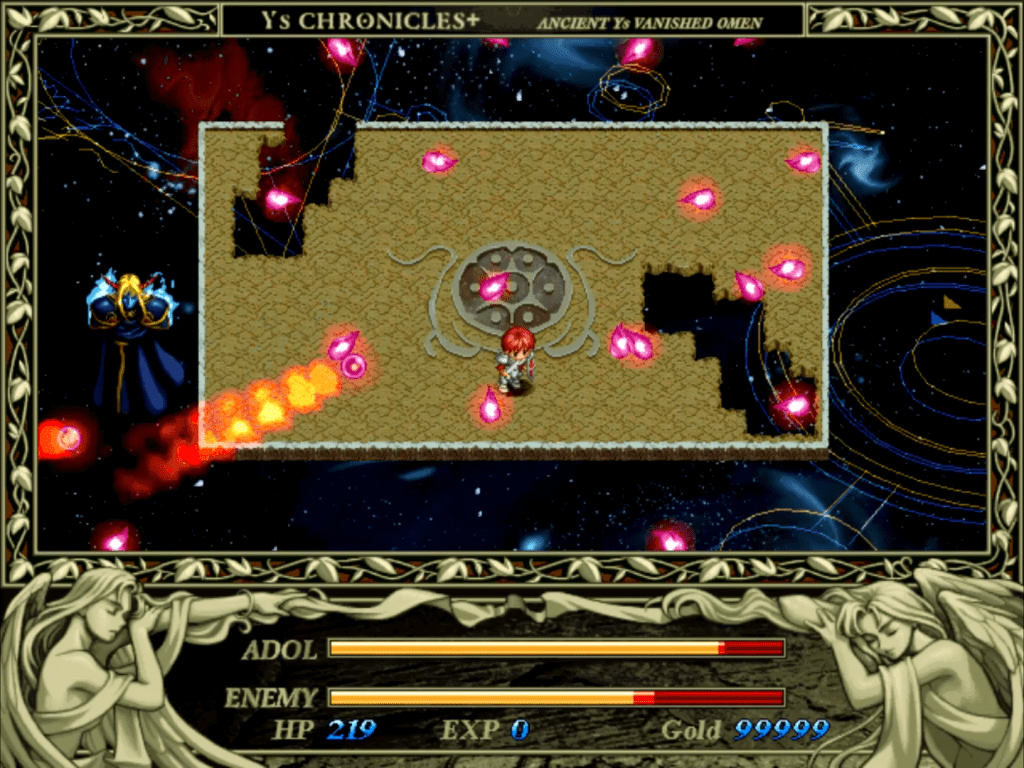
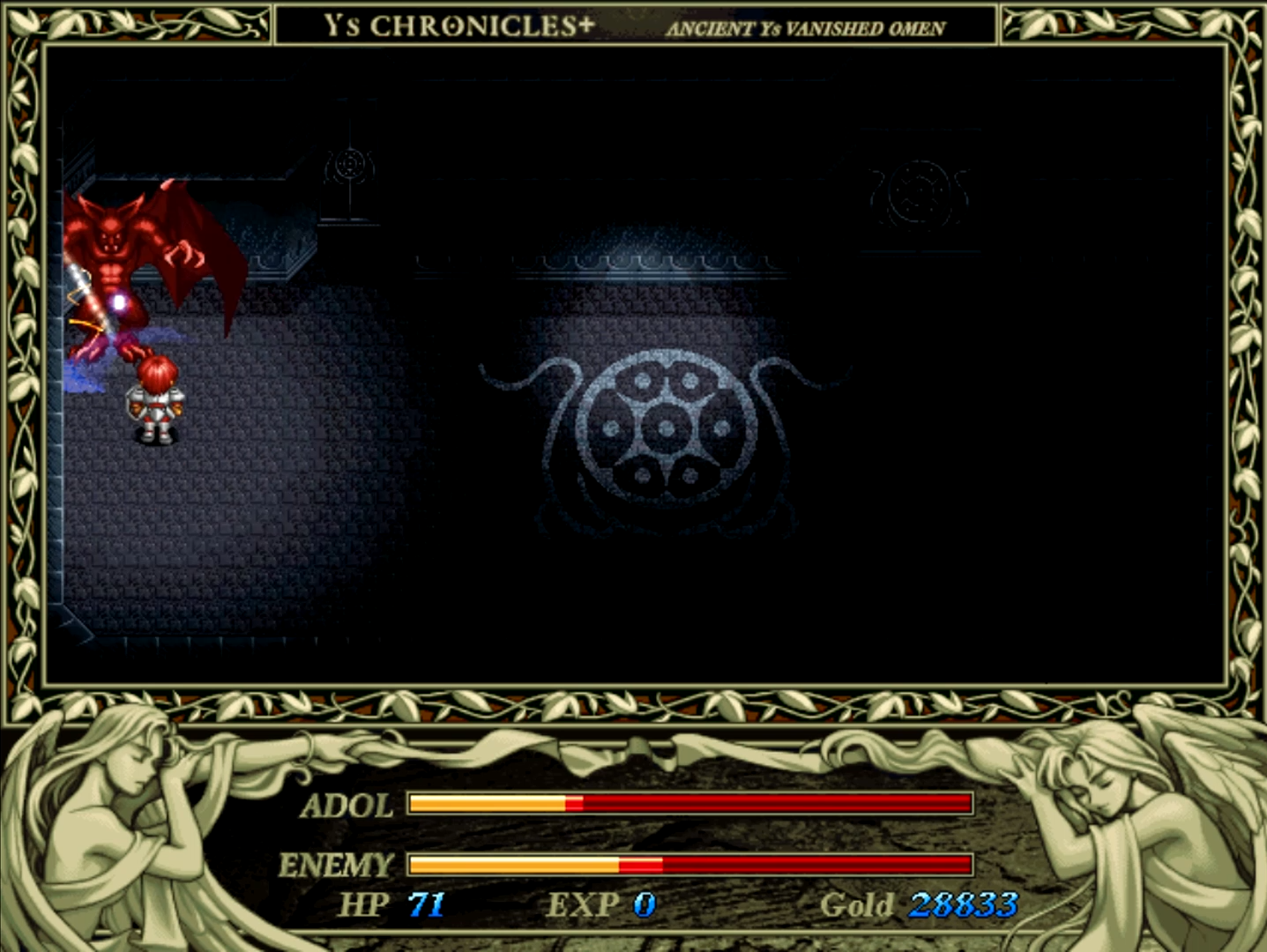
If you’re anything like me you’ll likely walk into the final boss room with a somewhat misplaced bravado. Having conquered most of the tower, and bumped every enemy you’ve come across into a dismember pile of flesh, you’re now faced with the final boss of the very first Ys game; Dark Fact. To the people at Falcom that designed this boss battle I have to ask; Why? Why did you make this fight the way it is? The second this final confrontation starts, you better be running for dear life. Dark Fact is considered one of the hardest fights in the entire series for good reason. He’ll fly around a small rectangular arena like a weaponized DVD logo, and rain down the heavenly host worth of fireballs upon you. Every time you hit the boss, the platform which you stand on vanishes. Should you find yourself with a pixel in close proximity, it is an instant game over. After getting humbled for a good 30 minutes of fighting fireballs and pitfalls, I gave into frustration and started looking for an answer. Shortly after I found out that I was making it significantly harder on myself than needed. Ys isn’t meant to run above 60 frames per second. Anything higher and the game will do some really weird things to boss patterns and walk speeds. So, after setting the frame-rate to 60, I tried again and after another 40-ish minutes emerged victorious.
Ys I is a magnificent game, no matter what version you play. The sense of adventure permeates through every pixel, and each version offers a unique variation of the same game. Ys I Chronicles+ offers the Eternal version from 2001 and the Complete version from 2009, and both offer a different experience. The major difference is in the art and UI of the game, with a few quality of life changes in the 2009 version of the game to help smooth out movement. Chronicles comes packed with the second game as well, so I can’t recommend trying these games enough. It often goes on a very deep sale on platforms like Steam, and can be picked up for a few bucks. Ys I is an incredibly strong foundation to build the rest of the series on. It offers tight, fast-paced gameplay, with rich character dynamics, and a pretty decent story on top of all that. Just be prepared for the vilest final bosses in the series to greet you at the end of it. Adol has been here to stay for a good reason, and his journey is off to a great start… Unless you’re on a boat.
Post Dark Fact clarity/10
TanookiChickenAttack is made possible by supporters on Ko-fi. If you enjoyed the review, consider becoming a supporter through https://ko-fi.com/tanookichickenattack

 TanookiChickenAttack