

2009 | CiNG | Nintendo Wii

CiNG is a company that strikes a bit of a melancholic chord in my heart, with Hotel Dusk and Last Window defining the Nintendo DS for me outside of the RPG genre. I got introduced to the company through the enigmatic murder mystery, Glass Rose, for the PS2. A visual novel styled adventure game where you had to highlight bits of text to progress through the story. I was hooked, mesmerized and charmed by the concept of a word on a page of a book turning into a brand new page for me to explore. Hotel Dusk and Last Window presented itself as an interactive book, having you hold the DS vertically like you were actually reading a detective novel. The whole package was presented in a beautiful manner, with some breathtaking artwork supporting the interesting stories that they were trying to tell. I’ll admit that Another Code initially didn’t quite fit into the picture, more so that I didn’t realize that it was part of CiNG’s category until a friend pointed it out. So I dusted off my copy of the first game and delved into the wild ride that was the first Another Code. Once again I was swept off my feet by the charm of the game that I’d come to associate so dearly with CiNG and what could be better than to find out there’s a sequel? Well, a remake of BOTH games for the Switch being announced for 2024 that’s what! I’m not quite sure what prompted the remake, but I’m definitely glad to see CiNG’s legacy be introduced to a new audience, seeing as they went under in 2010 (not before boasting an impressive catalog mind you).
So with excitement and anticipation under the belt I decided a replay of Another Code R: A Journey into Lost Memories was in order, since it had been a hot minute (2011) since I’ve last played it.
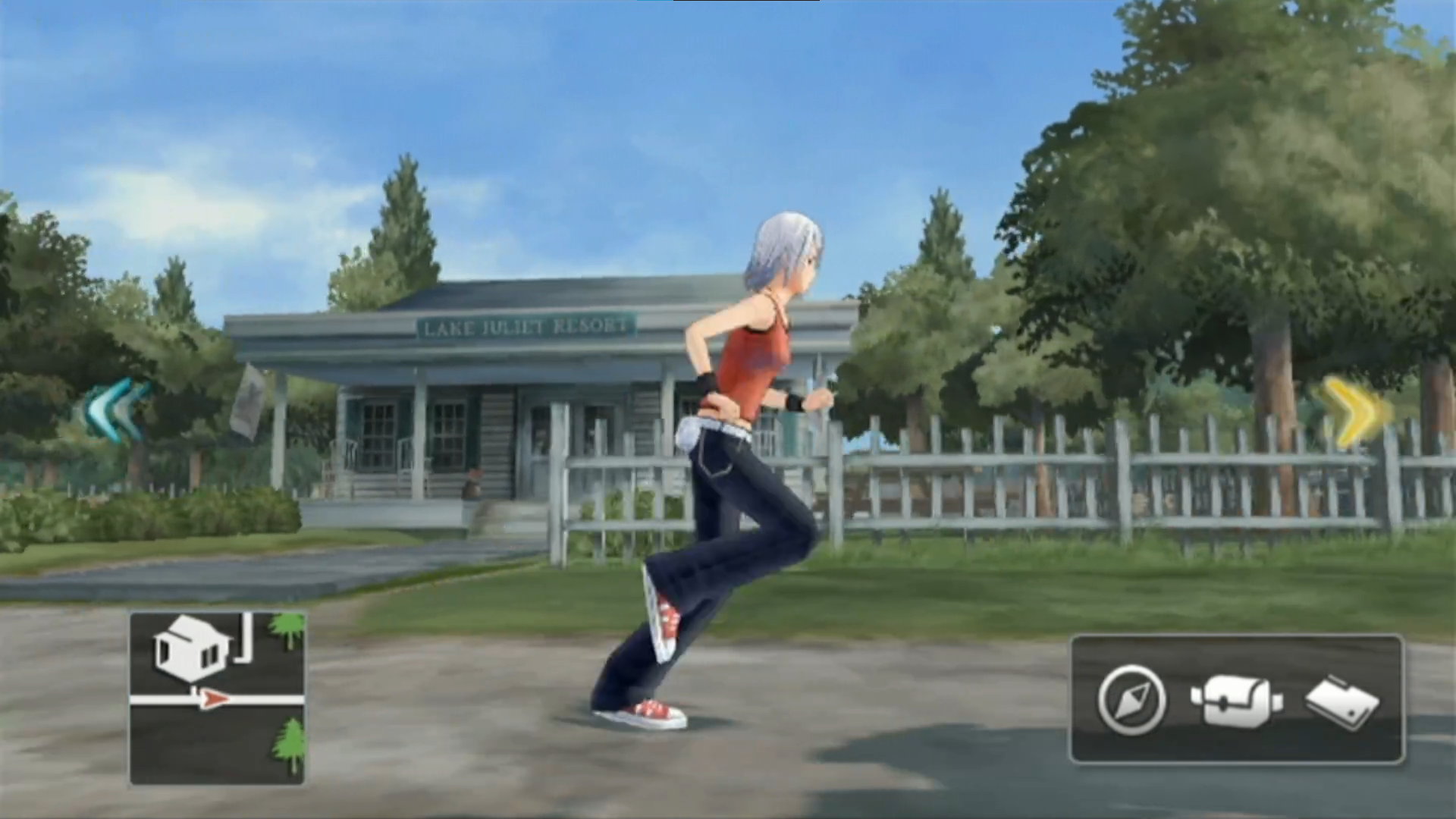
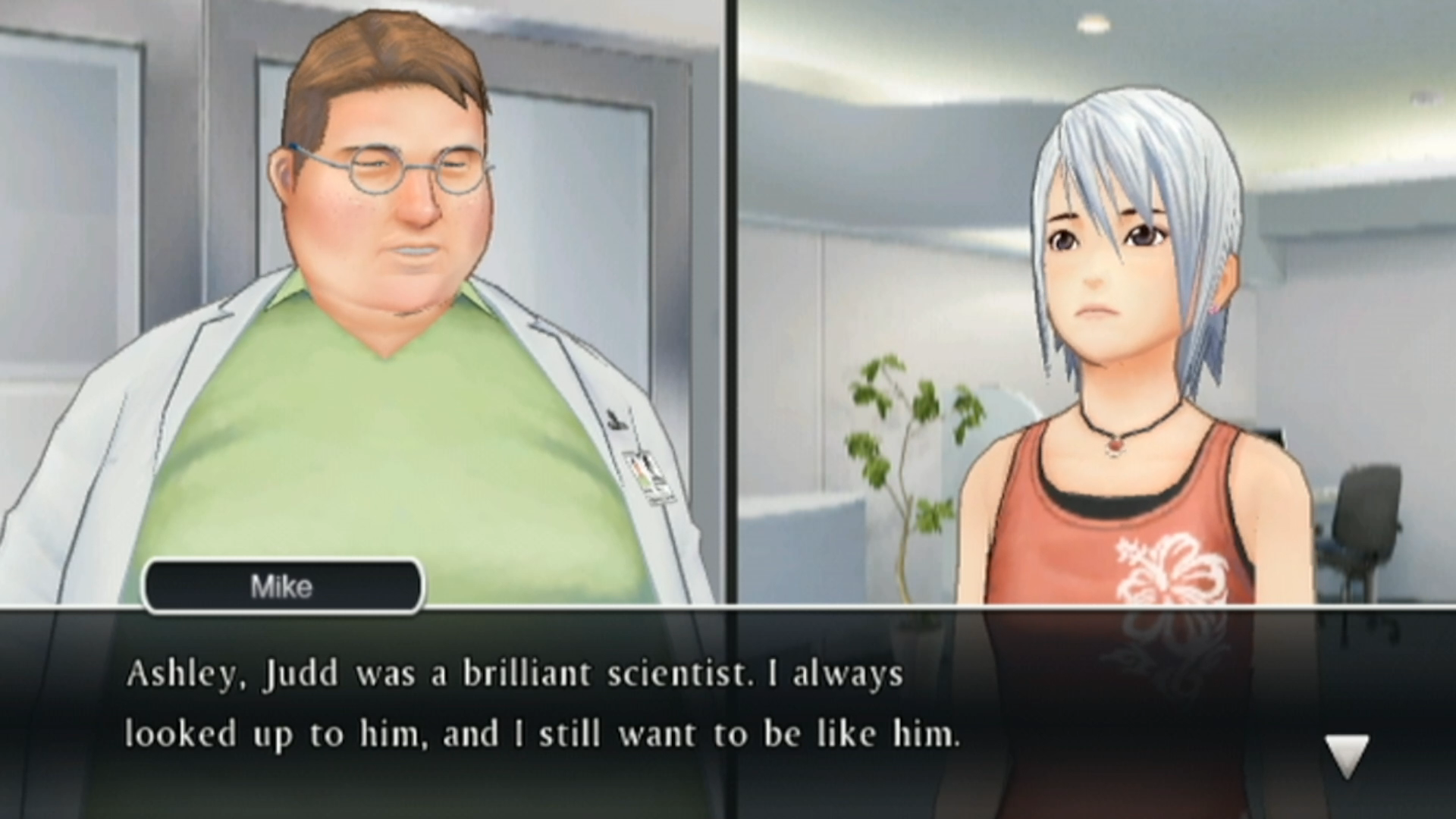
Another Code R follows up 3 years after the events of the first game, in which our pale haired protagonist Ashley, a daughter of two scientists that specialize in memory, gets a birthday gift for her 13th birthday from her estranged father, and an invitation to visit him on Blood Edward Island. This is where the two get involved in a plot to prevent a device that is able to alter memories, called Another, from falling into the wrong hands. 3 years after the events, Ashley’s dad seems to once again have vanished into his work. To celebrate her 16th birthday, her dad invites her to join him on a camping trip on the shores of Lake Juliet. A beautiful lake area renowned for its pristine water and surrounding nature. After getting off the bus, things are immediately off to a rocky start when Ashley gets her bag stolen by someone. With her dad seemingly not showing up, it’s up to us to guide her to the campsite. The game slowly introduces you to some of the core supporting characters as you try to get your ID-card to access the site itself, and we learn that the mansion of one of the most prolific scientists in the area has burned down not but 3 days ago. After Ashley finally gains access to the camping grounds we get introduced to some more of the locals, one of them being in the form of your partner in crime for the rest of the game, Matthew Crusoe. Matt is a runaway looking for his missing father, the owner of the Crusoe Resort, whom mysteriously vanished 5 years ago. The other being Elizabeth, daughter to the director of JC Valley, the company Ashley’s dad works for.
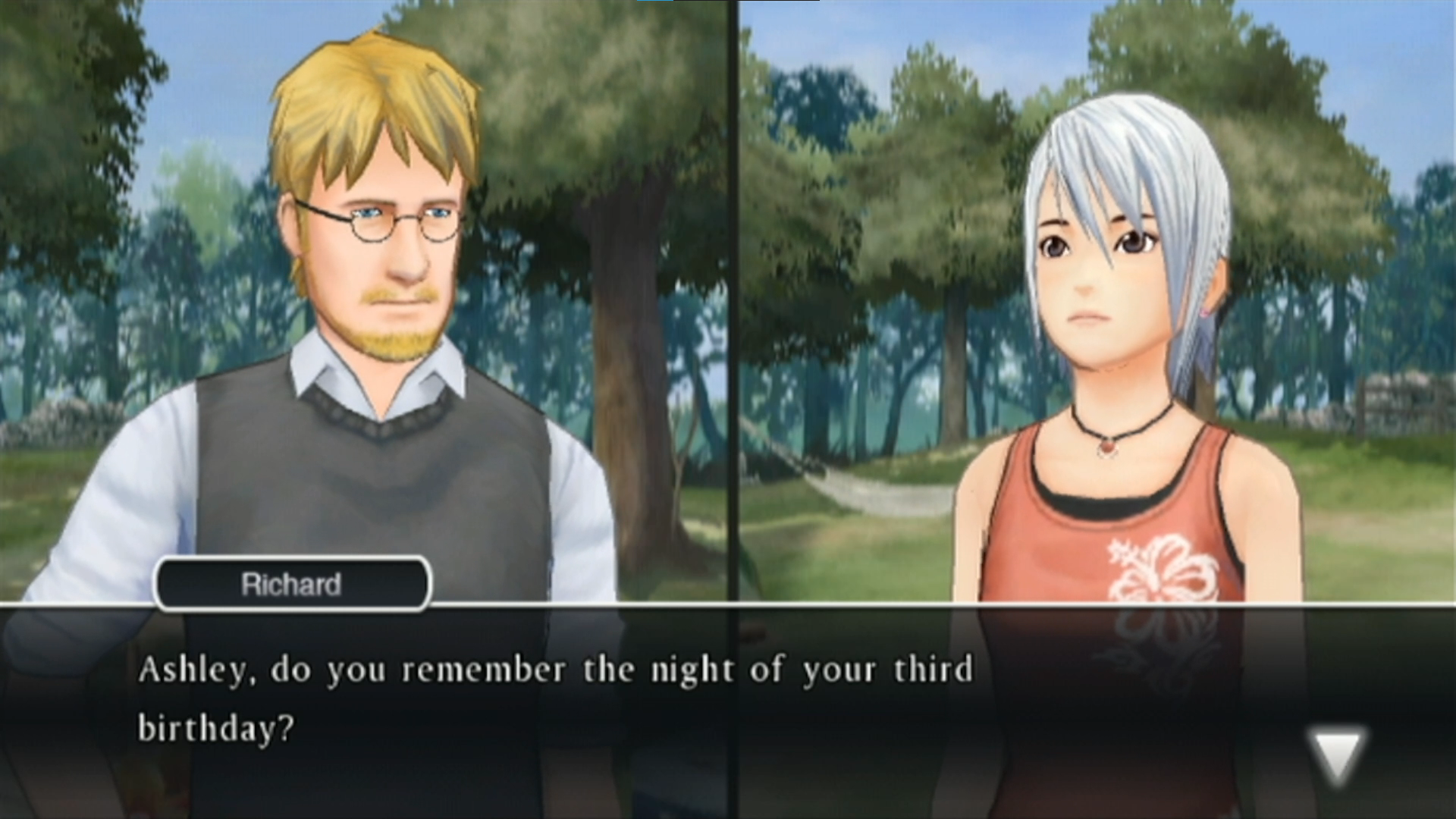
After much sidetracking we finally meet up with Richard, Ashley’s dad, to have a family barbeque. However, he forgot to bring charcoal, so back to the camping store we go. A few sidetracks later and we’re ready to barbeque, if not for the fact that Ashley’s dad immediately gets called back into work. In his place we get to experience some stranger danger with his colleague, Ryan. He’s Richard’s coworker, who gets called in to have the barbeque in his stead.
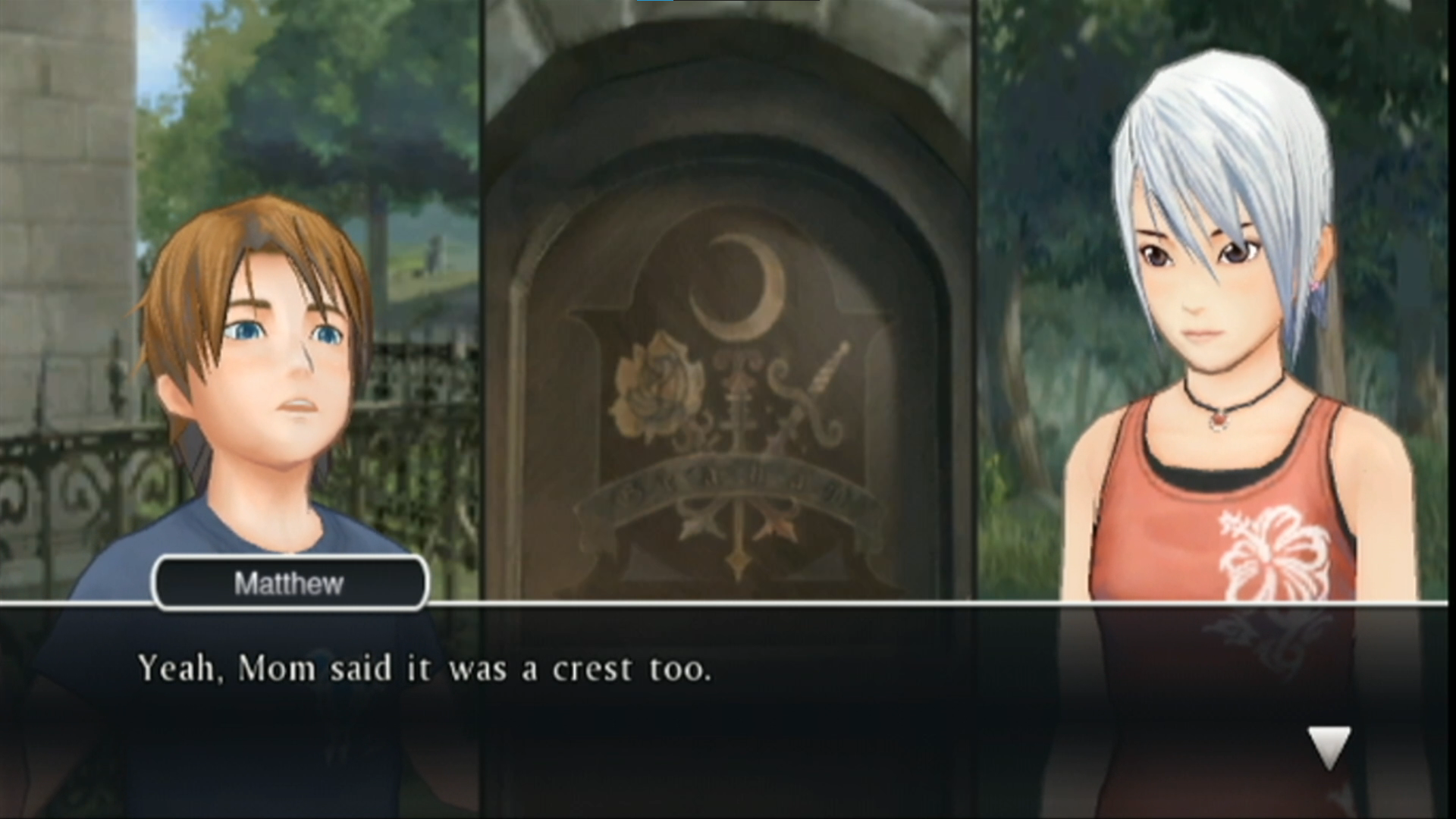
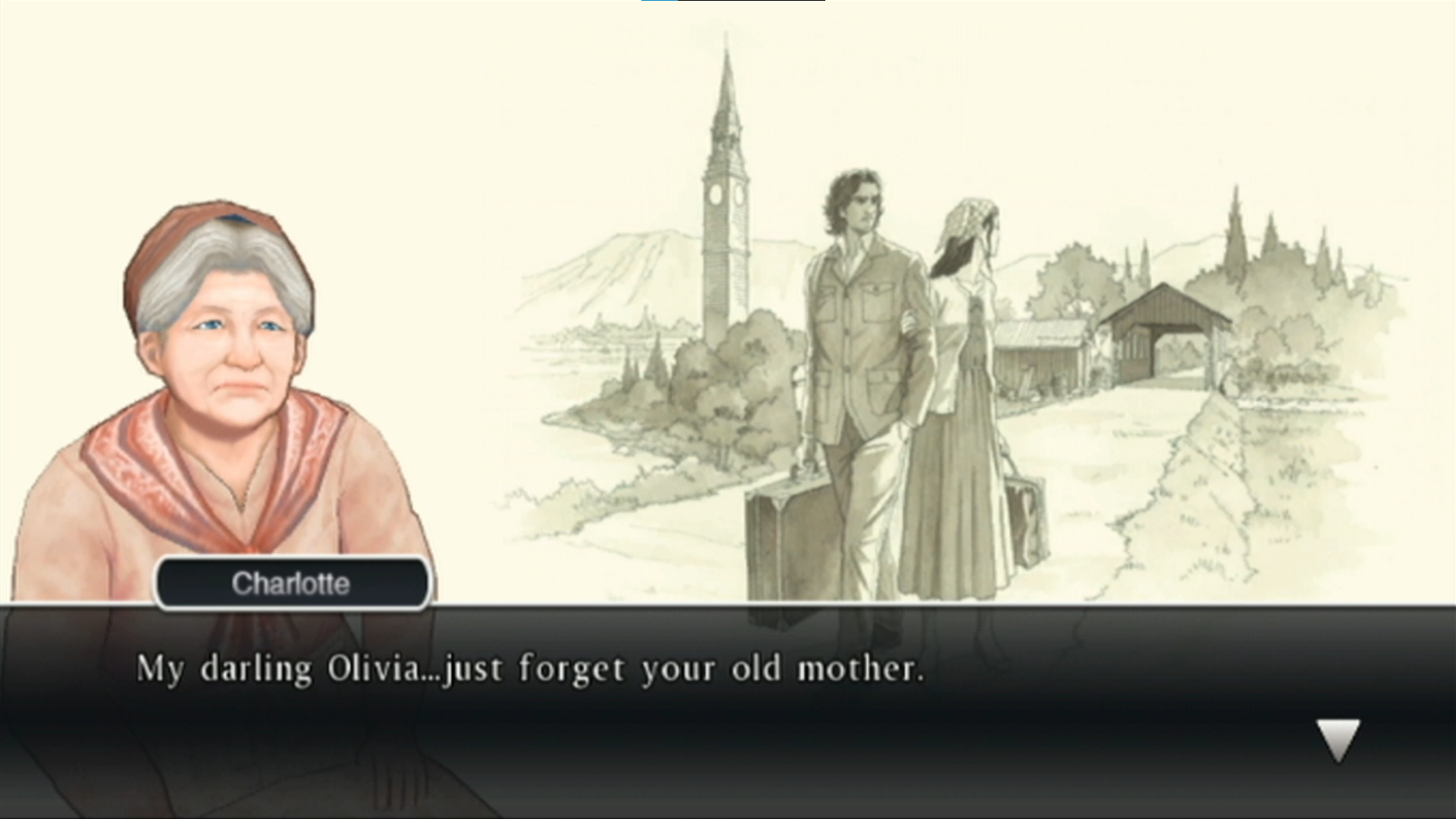
With dinner and pleasantries out of the way, Ashley gets called to dad’s cottage, but not before further befriending Matt and helping him find clues about his missing father. Throughout our adventure along the shores of Lake Juliet, Ashley frequently gets flashbacks from 13 years ago, when she visited the lake with her deceased mother. Seeing it as a way of connecting to a past forgotten, she sets out on a journey to remember more of that preciously short time she shared with her mother. It’s honestly an endearing motivation and a good excuse to roam around the lake, exploring every nook and cranny. However, through these memories Ashley finds out that there was more to her visit than she thought. Suspicious characters and strange interactions riddle the memories of those events, and through exploring the present, we find more answers as to what happened in the past. It motivates the story to interact with the inhabitants of Lake Juliet, which really showcases CiNG’s strength in creating natural feeling interactions with interesting characters.
Much like conversations in Hotel Dusk or Last Window, Another Code R handles interactions like a conversation with an actual person, rather than using the interaction solely to progress the plot. While this is certainly an aspect of CiNG writing that won’t resonate with everyone, when it does manage to immerse you it can easily fool you into thinking these are real conversations. Outside of the excessive usage of the name of the character that is being addressed, this is largely present with Another Code as well. Up until this point in the story is largely a casual conversation with people you meet, asking some questions about the place and some good banter between Matt and Ashley. It honestly feels very charming. The big HOWEVER though, is that the game is written in episodic format. This means that each chapter has a recap at the end which quizzes you on the events of the chapter through some simple trivia and a game of connect the dot with the memories you’ve found. At the start of the next chapter the game feels the need to rehash the information that you’ve just gotten at the end of the last. It’s a great tool if the game was actually released episodically, something along the lines of the original The 25th Ward, but this makes long sessions feel extremely bloated with rehashed information and conversation. Plus it also makes Ashley feel very slow to pick things up, seeing as she has to repeat the same question on average about 4 to 5 times. It makes a game that would’ve felt excellently paced at a rough 10-12 hours of playtime bloated to 25 hours on a casual playthrough if you take your time to soak in the good background art.
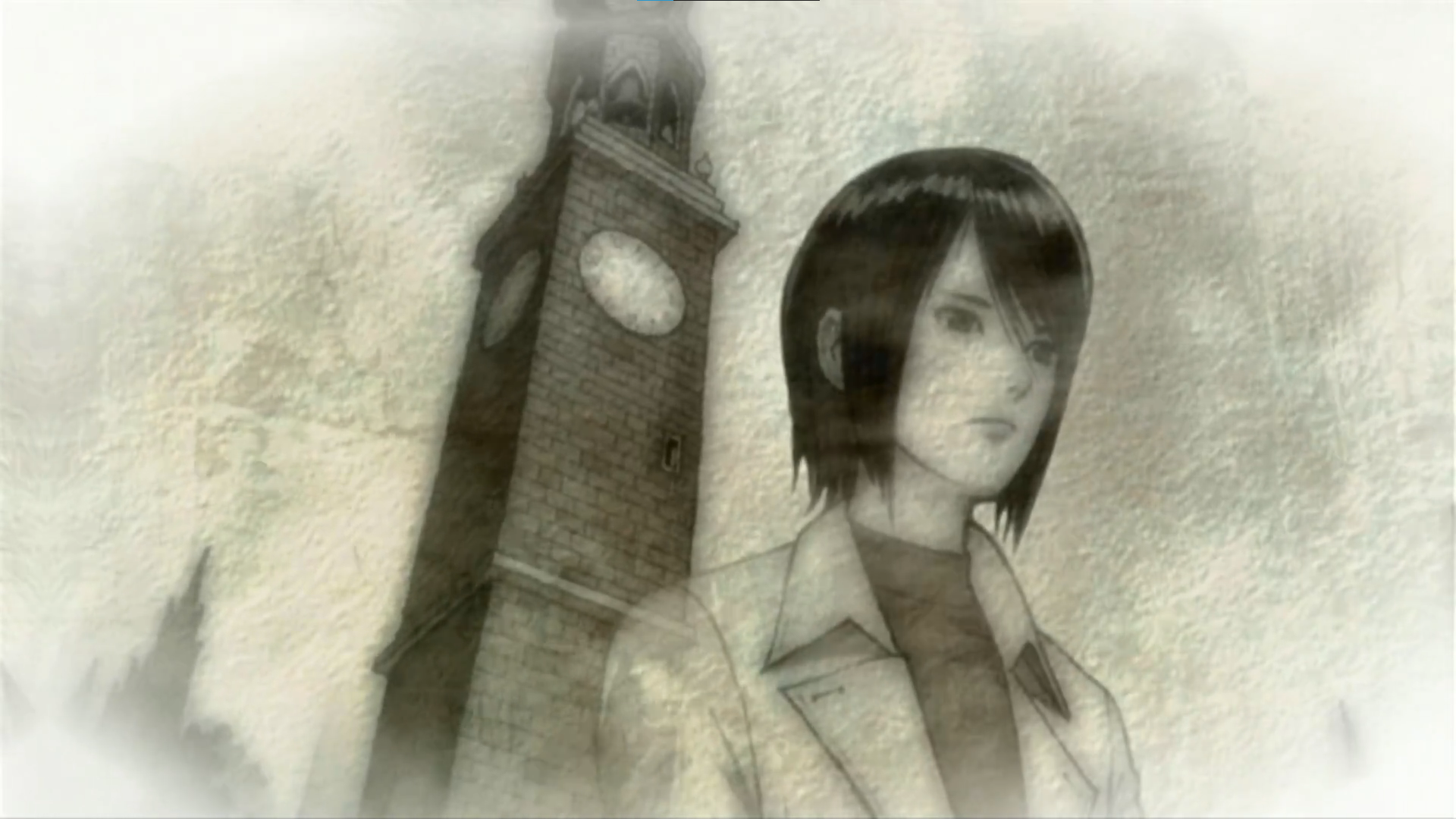
Through the interactions with the inhabitants of Lake Juliet, Ashley slowly uncovers answers behind the disappearance of Matt’s father and the death of her mother. The company her dad works for, JC Valley, was working on a different version of Another, the memory device from the first game, and with their experiments managed to pollute the game. Matt’s dad got scapegoated as his company, Crusoe Resort, was working with some shady contractors to build a luxury camping resort at the same time. This caused his dad to go into hiding and a journalist to start an in depth investigation into JC Valley’s activities. With Ashley and Matt discovering evidence of the frame job, the cover-up gets blown wide open. Ashley is subsequently lured into the JC Valley facility where she stumbles into a revenge plot involving her mothers Another project. It all concludes in a warm ending of forgiveness, repentance and reconciliation. It’s a bit of a broad stroke retelling of the story, but that’s the gist of it. The finale, outside of the previously mentioned bloated dialog, is genuinely well executed and extremely satisfying. Especially when you’ve played through the first game. The story manages to wrap up both games’ loose ends nicely with room for future stories. Matt’s reunion with his dad was likely to be planned for a different game as well as a general character team-up with, in that case, the three protagonists of the games. With Ashley leaving Lake Juliet and gets on the bus the credits roll and I’m honestly left divided on this game.
On the one side I have to commend CiNG for their absolute dedication to keep the story in Ashley’s perspective. During the first half of the game this makes the interactions with the other teenagers in the town feel delightfully casual and somewhat natural. And Ashley shines in this setting, however once she gets in over her head it’s extremely clear that she is not equipped to deal with having a gun pointed at her. She’ll frequently just crack under the pressure and then clings to the nearest adult. This made me hopelessly roll my eyes at first, but also made me thoroughly appreciate how the writing keeps Ashley grounded in her established character. She doesn’t magically gain the courage to stand up to the people hurting her and her family, and instead experiences genuine buckling under the weight of the situation. It’s neat to see the game never wavering from this, and ever going out of their way to make Ashley more heroic than she is. This allows the rest of the cast to feel much more useful to the story and allows them to take the spotlight much more frequently than you’d expect. Heck, in the end it’s not Ashley, but Richard who ends up standing up to the villain, forgoing his revenge out of respect for the memory of his late wife. I find this endearing and it makes Another Code stand apart. However, this same praise also causes the story to be exceptionally bloated. As mentioned earlier, the story constantly repeats information for the sake of an illusory episodic format. It would’ve felt like a much tighter and cohesive experience if this was removed or changed, maybe even cut down some dialogue interactions. The way the game currently is, it writes off Ashley as much more insecure than she actually is and it works somewhat detrimental to her character consistency. She comes across as slow on the uptake in the start of a chapter, but inventive and intuitive near the end due to the constant need to have her repeat information with time progressing linearly.
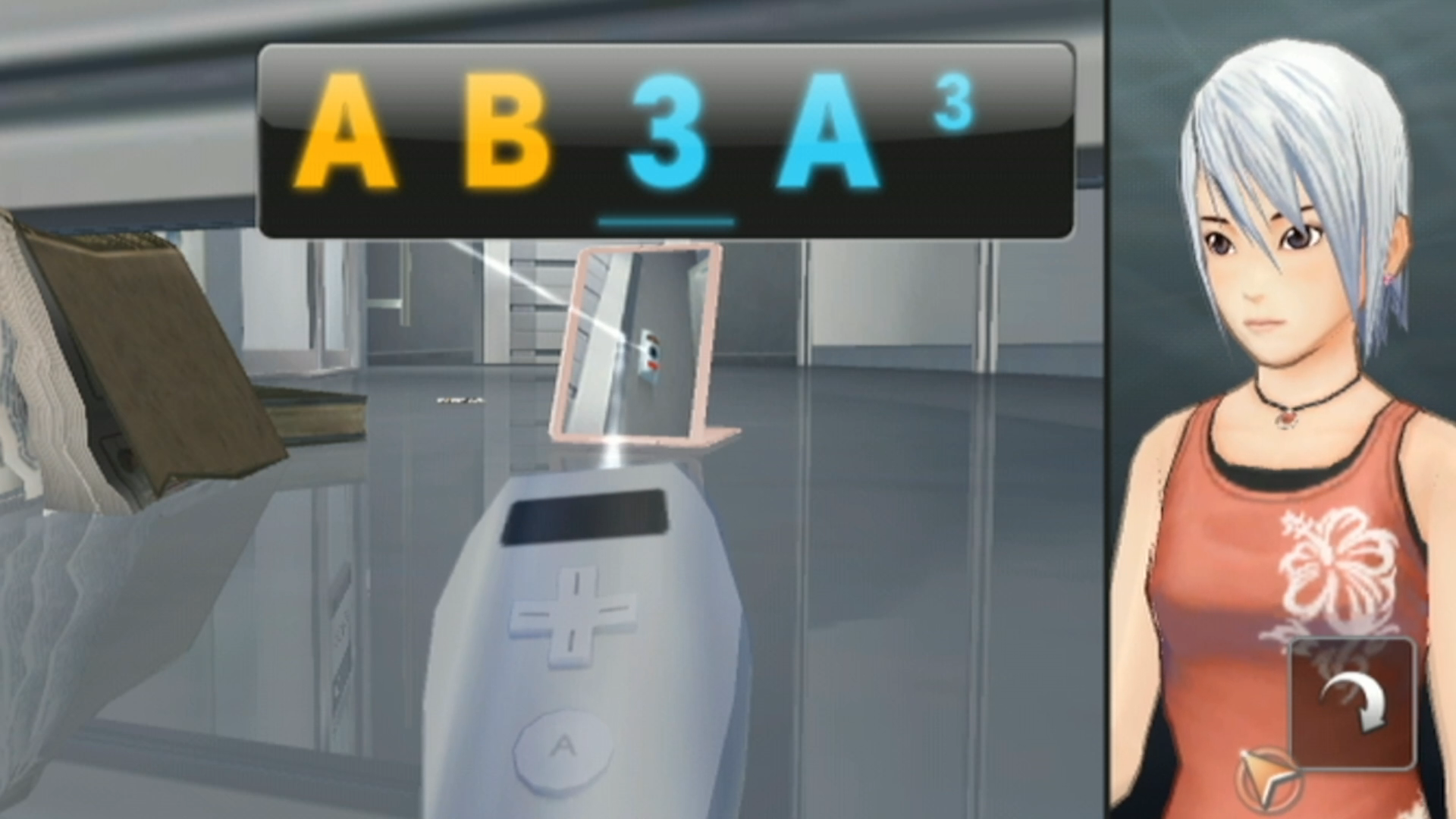
The gameplay is a bit of a hit or miss. I’m a sucker for gimmicks that use the console features in a more tactile and tangible way. The first game really used the DS to its advantage with puzzles using the hardware to its fullest. This is also largely present in Another Code R. This time we get the TAS, a third party Wii-mote that functions as a magic lock opener, alongside an upgraded DAS, the DS device from the first game. The puzzles aren’t as intuitive, but what I did like was that the locks require increasingly elaborate ways of holding the Wii-mote and pushing combinations of buttons. If a lock requires a 3 input you have to sequence 2, + and 1 in order to get the 3 you need, or pushing the home button to reveal the code. It’s nothing outlandish, but it’s definitely a neat touch to mix up the one interactive mechanic. I have one major complaint about the wii-mote which is more related to the printing of the box than the game itself. At one point you get to upgrade the TAS with a Nunchuk, to which you need to plug in an actual Nunchuk. Wii game packages feature a list of peripherals you need to play the game, which only list a Wii-mote. The Nunchuck is NOT optional, so it kind of sucks if you pick up the game without owning one thinking you can beat the game without one. You can’t.
The rest of the gameplay is largely walking around and pointing the Wii-mote at the screen and awkwardly flailing around during puzzles. It’s a simple game in this department and it’s kind of neat.
Overall Another Code R is a fantastic example of CiNG prowess. Even with the open ended story threads that due to the closing of the studio ending up being left open, it manages to close out a wonderful story. Following the narrative from the first game into the second game added a lot of depth to it and assisted with elevating the more blown out of proportion segments. The pacing of the game is a make or break point. Most of the actual answers are left for the last 3 chapters and this leaves a whole lot of empty space to build up for throughout the first 5. The game is slow in its build-up and doesn’t always deliver threads to follow at narratively satisfying moments. It makes the experience more like going with the motions until the fireworks go off, rather than being fully invested. Though, if I’m being honest, part of that might be because the story is written from the perspective of a teenager. The first time I played this I was much more engrossed in the story, but also much younger. Nowadays I find myself resonating a lot more with Kyle Hyde’s character in Hotel Dusk or Last Window, rather than Ashley. This doesn’t take away from the fact that Another Code R: A Journey into Lost Memories still feels like a fascinating experience with beautiful presentation and a lot of heart.
Replaying through this made me all the more excited for the remasters that will grace the Switch in 2024 with Another Code Recollection (also making this the first time Another Code R is officially available in the US). Though, I’m curious if they keep the folding puzzle.
ANOTHER/10

Enjoying the review? Consider supporting TanookiChickenAttack with a coffee at;
https://ko-fi.com/tanookichickenattack


