
2021 | Square Enix | Switch
For as long as I have been playing video games, I have been knee deep in whatever RPG I could get my hands on. It didn’t matter whether this was the newest iteration of Final Fantasy or the Tales series, or a lone forgotten title on a long forgotten system. For some reason, however, the SaGa franchise has always completely eluded me. My only experience with the franchise up until this point was the wildly obtuse and complicated Unlimited SaGa for Playstation 2. However, with the rise in remasters of older, beloved titles, came one that caught my attention in the form of SaGa: Frontier – Remastered. While I was intrigued, I wasn’t overly excited for it at first. However, in anticipation of the new release, the streamer DNOpls did a phenomenal run of the original PS1 version. His enthusiasm for the game was so deeply infectious that I didn’t stand a chance, and had to try the game for myself. Nothing could’ve prepared me for the wild and wacky rollercoaster that is SaGa Frontier.
SaGa: Frontier was originally developed for the original Playstation by Square Product Development Division 2 and released in 1997. It provided an open ended experience, where players got to pick one of seven protagonists. Each protagonist follows its own separate storyline, which can range from; proving your innocence after being framed for murder, taking a sabbatical to go on a road trip, or becoming a Tokusatsu hero, just to name a few.
Each story follows its own path, meaning that the characters don’t really interact with one another within the narrative outside of joining the party to help out. Each scenario gives you a little introduction to the character and then lets you loose upon the world to find your own way through the story. During your exploration you can freely travel to all the different regions and learn more about the world and its people as you go. Despite the framework, though, the story isn’t what’s central to the game. It’s mostly used as a vessel to motivate the player forward, but the meat and bones of SaGa: Frontier lie in its rather unorthodox gameplay mechanics.
Atoshi Kawazu has been at the helm of the SaGa series for most entries and it’s his philosophies that permeate through every pixel of the game. The game is riddled with unconventional mechanics that break the mold of the genre, most of which are inspired by the classic CRPG Wizardry as well as tabletop games like Dungeons and Dragons. His philosophy to always try something new, as well as his inspirations, culminate in the unique and mesmerizing feeling of the SaGa series. A lot of the Wizardry influence can be seen and felt in the open ended nature of the game, and the layers upon layers of mechanics that make up the backbone of the gameplay. Within a genre that generally follows a rather linear plot thread along a prechosen path, SaGa: Frontier contrasts this by air dropping a player in the middle of the field, looking at them expectantly and gesturing you to go on. It’s unorthodox, daunting and incredibly addictive.
The 2021 remaster introduced, or re-introduced, players to the wonderful world of SaGa: Frontier with a few changes to make the game a lot more streamlined and user friendly. The game now features the ability to flee from encounters (I’ll exhaustively explain why this is important a bit later), easier access to skills, new characters, new game+ and, most importantly, saves Fuse from the cutting room floor as the eighth protagonist to decorate this beautiful, tasty cake with a nice cherry on top. It also introduces a chapter overview that gives players a better understanding of what is expected of them to complete a scenario and hold their hand just enough to keep them walking. These changes made the playthrough of a newcomer like myself a hell of a lot more accessible. While the changes introduced are incredibly welcome, it still manages to maintain its original identity and charm without detracting from its intentions. This still leaves you with a fairly complex and obtuse set of mechanics to help you traverse the Regions. It’s going to be extensive, but let’s take a look at how these mechanics translate to gameplay!
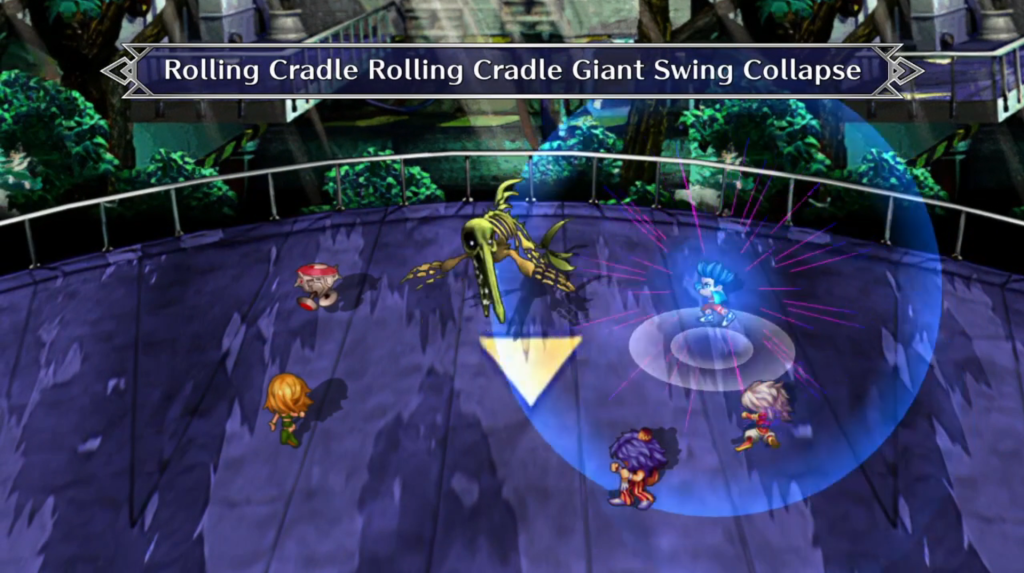
In SaGa: Frontier you’ll encounter a wide and wild variety of enemies for you to beat, ranging from a turnip to biomechanical sheep to a literal piece of programming. You’ll quickly find that the game will throw whatever, whenever at you, and this creates a wonderful mess of themes and monsters that make no sense. And I love it. The chaotic smörgåsbord makes the enemies extremely memorable in addition to some sprites ranging from excellent to goofy. Needless to say, the game keeps you on your toes at all times and for good reason. SaGa: Frontier divides the sets of enemies by battle rank, which increases by winning fights. The higher the battle rank, the stronger the game assumes you are, and thusly challenges you accordingly. Bosses also scale in accordance to your rank, and range from ‘a few hits and we’re done’ to gigantic mountains to climb. It’s a mechanic that isn’t explained, but is naturally ingrained in the way that combat is presented. The remaster adds the ability to flee from field encounters, and this drastically overhauls the way you can approach each scenario. Ultimately it gives you more freedom to approach any story in any way you want.
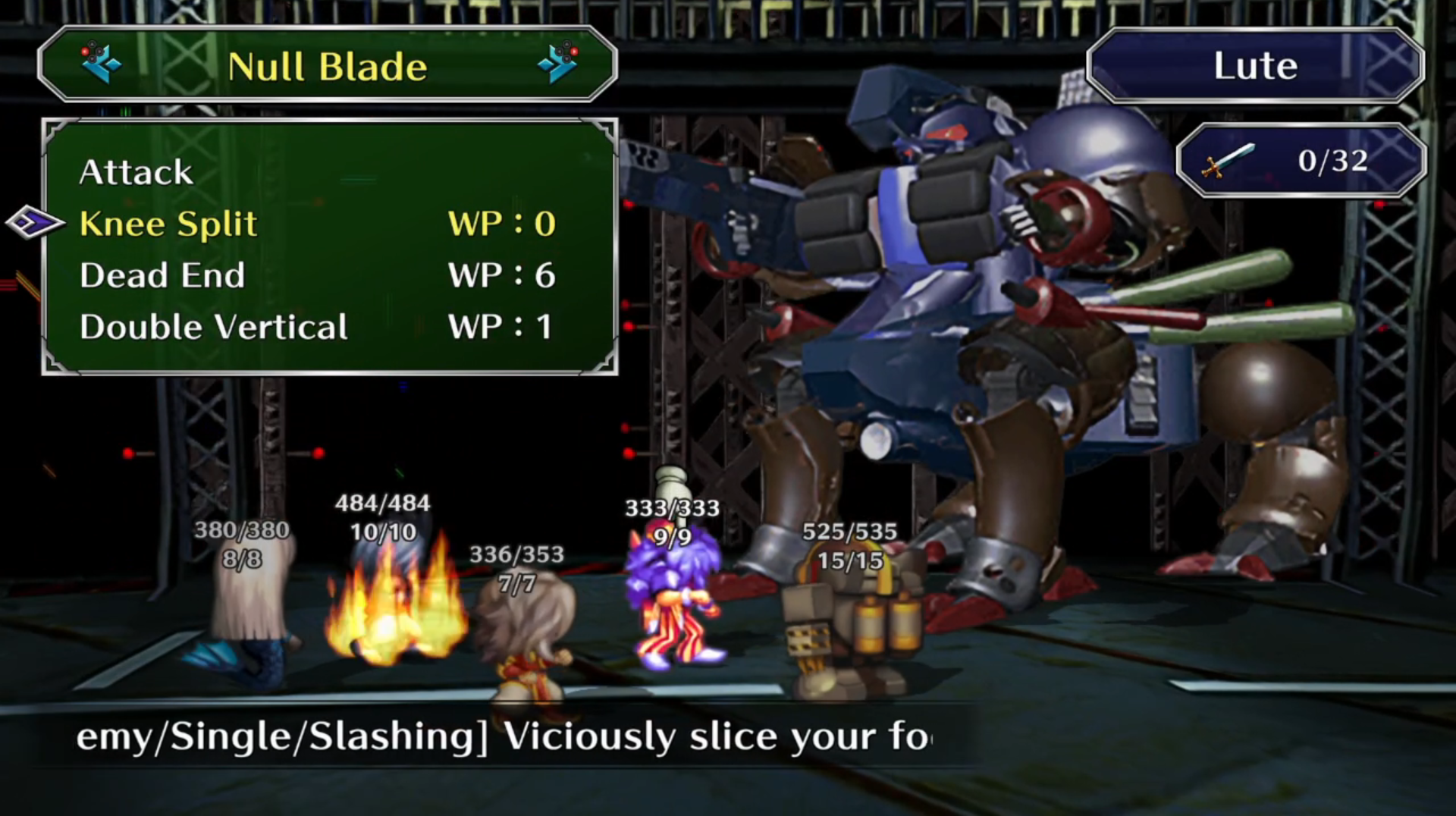
Unlike most RPG’s, SaGa has your character progress through individual statistical increases rather than set increases per level. When you finish an encounter, your characters will gain stats in things like Health Points (HP), Strength (STR), Speed (MOB) and Life Points (LP) among others. The more difficult the encounter, the more chance you have to level these statistics, with the final hit getting a nice bonus. During the turn based battles you get to select which party of the three rows available you’re taking into battle. Each turn you pre-select a number of moves that the characters can then execute. Any spell or ability has the chance to combo, leading to some lovely high damage numbers the higher the combo gets. These combo’s are based on what tier the moves used are, the turn order in which they’re executed and whether the moves themselves are compatible.
A core part of fighting in SaGa: Frontier is to learn as many combinations as possible to do as much damage as possible. It also leads to incredibly funny combo’s like seeing a gigantic metal horse get suplexed five times in a row. The moves you use can also cause the characters to get a brief moment of inspiration that allows them to learn a new move. Each move has a new move that can be learned from it, based on whether you have available ability slots and whether the move is compatible. To complicate matters, this applies only to specific classes and weapons. Human characters are the most versatile by having affinity for certain weapons, but can use basically anything they can get their hands on. Spellcasters learn from experience and whether or not they have access to that specific branch of magic. Robots get their abilities from the sum of their parts. Mystics imbue their weapons with the essence of fallen enemies to power up, and Monsters require extensive knowledge of Microsoft Excel and a base grasp of eugenics. The easy answer is; they absorb moves from other monsters and that changes your character into a monster that is like that monster…. or alternatively, turns into a turnip. The long answer involves a long presentation with elaborate spreadsheets. Life finds a way.
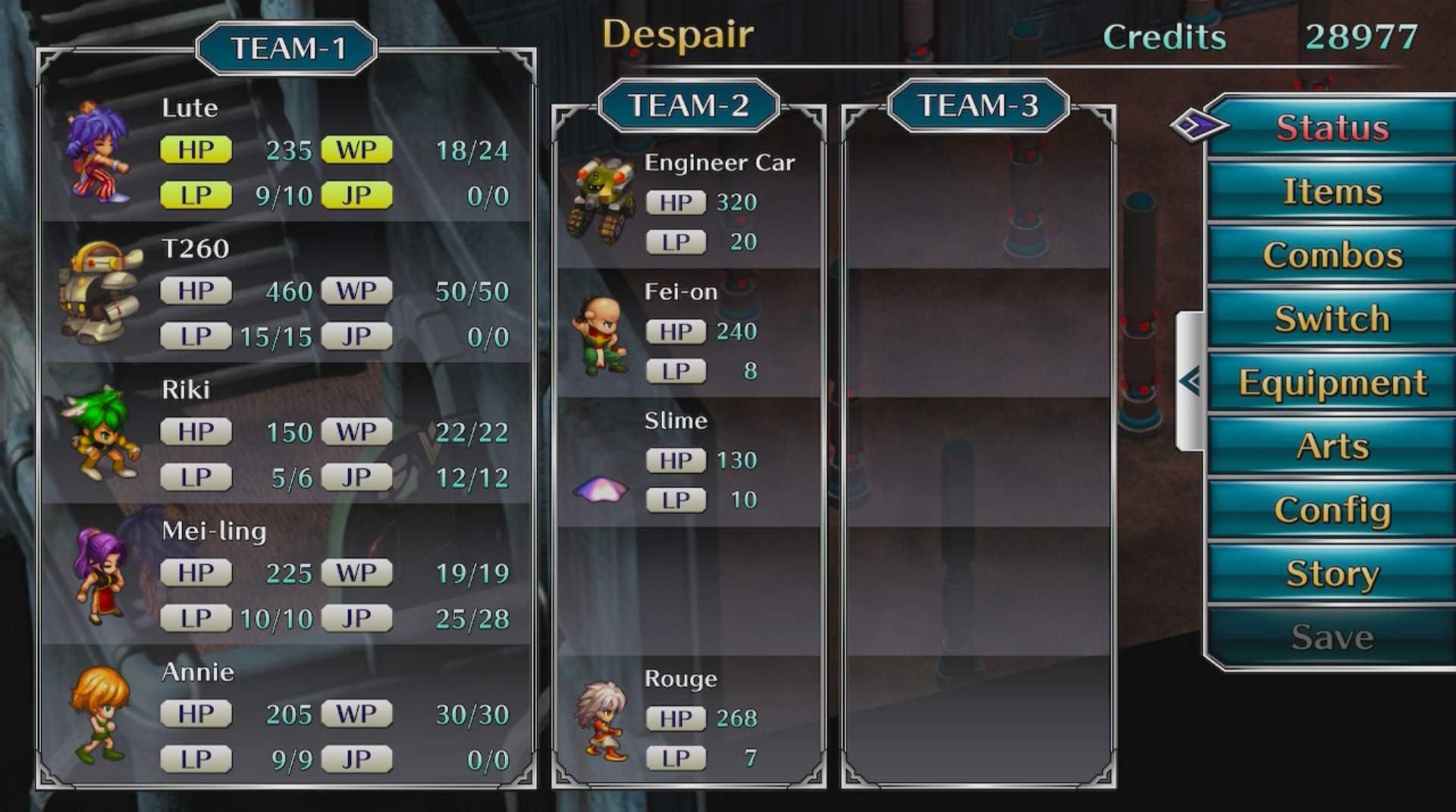
When a character takes damage that drains their HP completely, they go down, but aren’t out of the fight yet. Your Life Points determine how many times a character is capable of being knocked out, with them fully dying when their HP hits zero. Any character can be healed from this state, but as you might’ve guessed, there are exceptions to this rule as well. Robots don’t take well to healing potions and instead crave a nice spray of WD40 and a repair kit to be fixed up. If the main character is fully defeated, you’ll hit a game over screen and, with the exception of Lute, the scenario character is always in the party.
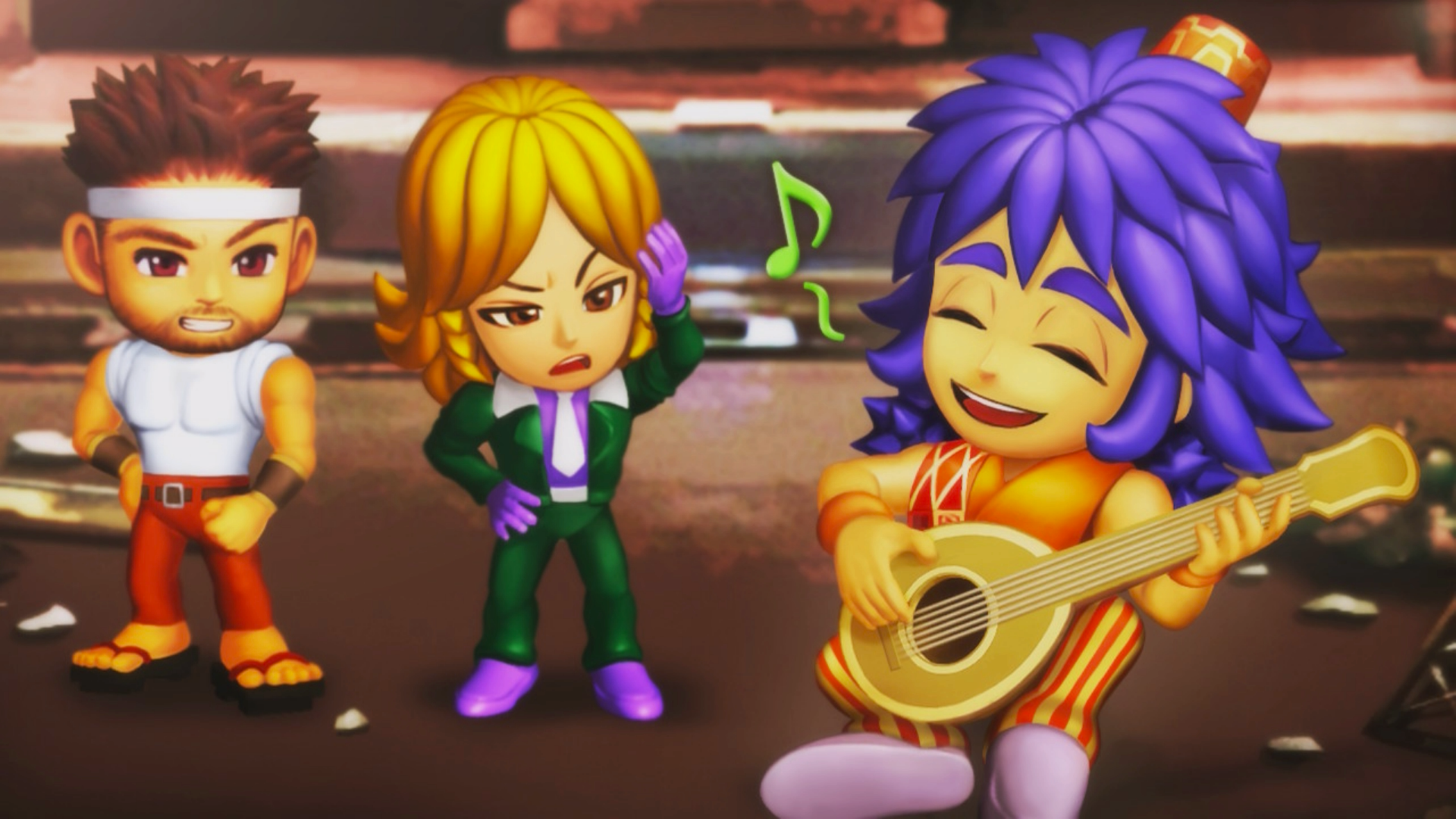
Playing through a scenario of SaGa: Frontier means balancing the battle rank with your party’s statistics and figuring out the ideal risk reward scenario. Remember, bosses scale in accordance to your battle rank, so finding that sweet spot of a moderately strong team with a moderately weakened boss evens each other out. Luckily the remaster introduces the New Game+ feature that allows you to carry over progress from one scenario to the next. It is a fundamental change that allows you to power up a party in one playthrough and steamroll through the next without thinking too much about all the extra mechanics. If you’re anything like me, you’ll quickly start finding your favorite characters to bring into every single one of your playthroughs. Which in turn transformed Lute from slacker to all-powerful demi God that was capable of slicing the world in half, and Rouge unraveling the very fabric of reality with his incredibly strong magic.
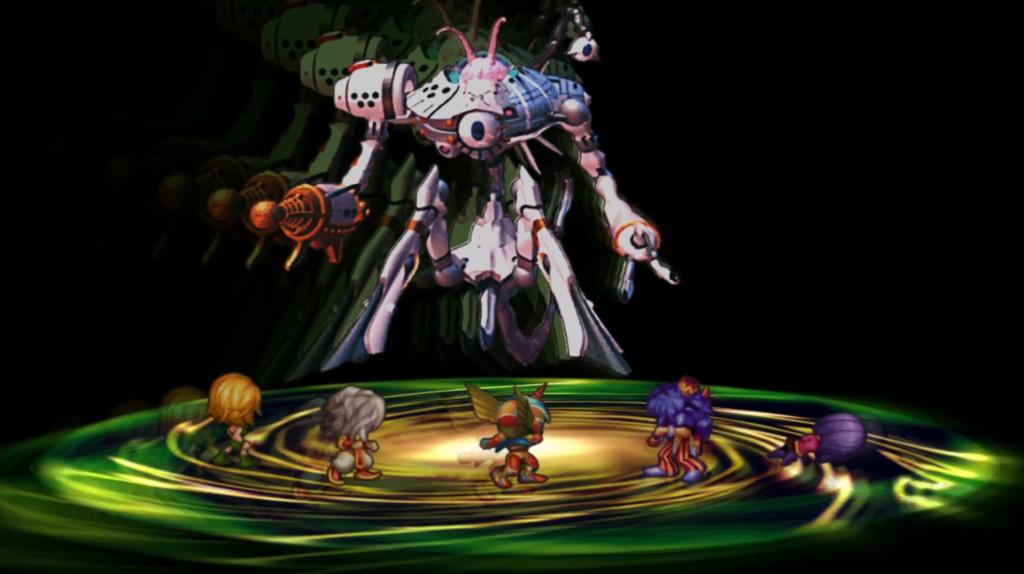
The original seven scenarios of SaGa: Frontier have had some of the cut content from the PS1 version added in the form of new events. Asellus’ story in particular has received a bit of an overhaul, with a bunch of added dialogue and scenes. The stories themselves vary wildly in their approach. Red’s story involves him chasing down an evil organization in a Kamen Rider styled episode, complete with transformation sequences. Blue’s has you travel the Regions to become a powerful wizard in preparation of his fated confrontation with his other half. Emilia is fighting to prove that she’s innocent of the murder of her fiancé. Asellus is on a quest to save the world from the evil vampiric overlord, Orlouge. Riki is on a journey to gather wish granting rings to save his homeworld from destruction. T260G is trying to find the meaning of his existence as he struggles to remember his mission, and Lute is just kind of there. The remaster adds the final character, Fuse, to the mix with a unique twist on his scenario. Fuse is an IRPO detective (basically special forces) and his story is an investigation of the other characters’ scenario’s. Each new playthrough assigns a random case file of one of the seven possible scenario’s and has you run through them like a victory lap as reward for beating all the other scenario’s.
Each character in SaGa: Frontier provides unique challenges and presentation. Some scenario’s will culminate in a cinematic showdown between brothers, have you play out a film noir drama or just have you hitchhike with the wrong ship. There’s something for everyone in regards to the story components, but the story itself is largely secondary to the journey you take through it. The characters play so wildly different from one another that each playthrough will provide you with new challenges to overcome and learn from. At first, you’ll feel incredibly lost, but after a while you’ll start to feel like the world is made of play-doh and you’re about to make an incredibly cool castle. With green and red pillars.
The intricately woven web of intertwining mechanics make SaGa: Frontier an incredibly dense and intimidating game to get into. On the one hand it provides an experience unlike anything else on the system (except other SaGa games), but on the other hand it can also deter players from looking further into the game due to its freeform design. Despite my own enthusiasm, I frequently found myself frustrated with not understanding why I couldn’t progress through certain parts. However, the more I played through it the more I started to internalize the machinations that turned this massively obtuse machine, and I started to feel like the world was mine to grasp and mold. It’s somewhat difficult to convey the satisfaction of understanding a SaGa game, mostly because of my own inexperience with the franchise, but also because a lot of it happens off-screen. You might see a cool combo popping off on screen with all the required fanfare and fireworks, but for me it means that something very potent just clicked in place and the game feels like it is about to bend to my will. It’s an unreasonably good hit of dopamine that connects a bunch of synapses together in ways I never thought possible. You go from a helplessly lost child lost in a world that you don’t understand to a moustache twirling villain about to unleash horror upon those who stand in your way.
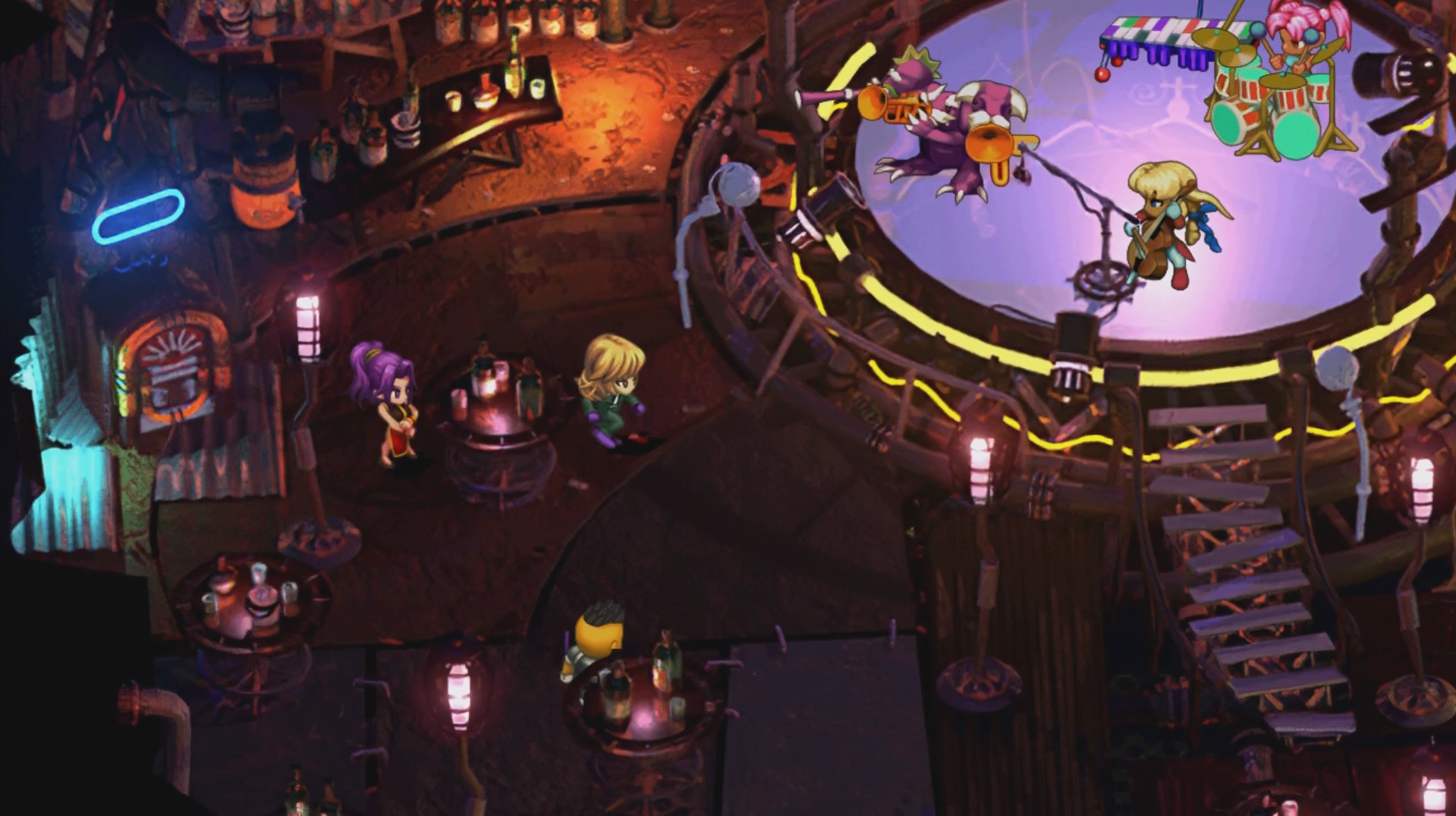
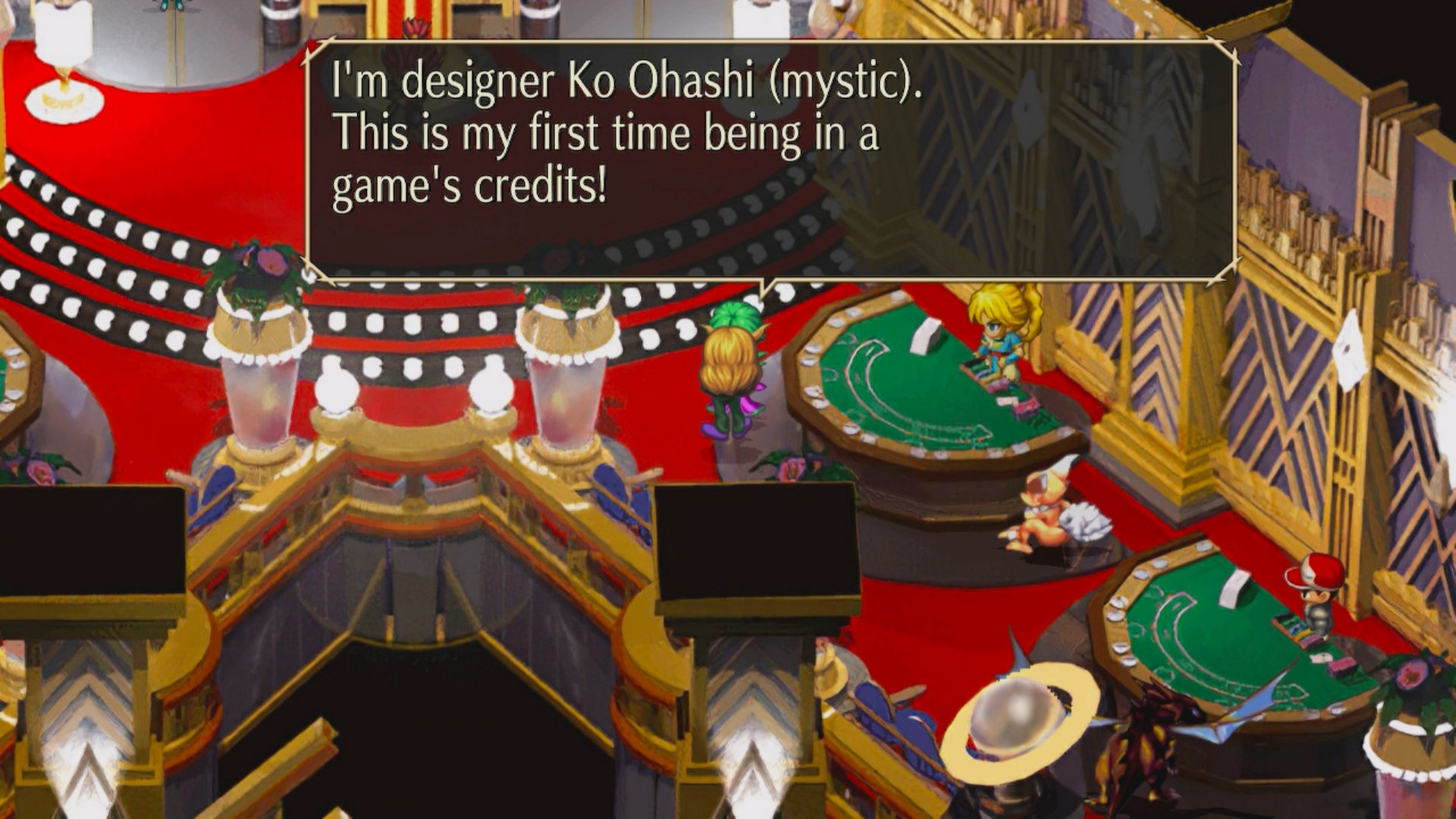
SaGa: Frontier is definitely not the most accessible RPG to have ever graced the PS1, but a lot of people have run the gauntlet ahead of you and meticulously documented their findings in lists and spreadsheets that can help you on your journey. It’s a game about exploration in every sense of the word, from discovering the many worlds and cultures spread throughout the regions, to the deeply satisfying journeys through the gameplay. It’s a beautiful mess of different themes, monsters and characters that somehow manages to feel completely natural in its setting. The initial steps into the game will likely make you feel lost and maybe even a bit frustrated, but once you start to explore and learn more about it, you’ll start to find satisfaction in even the smallest of discoveries. It’s a beautifully designed game with some incredible sprites that make it almost look like claymation at times.
SaGa: Frontier is a game about the journey and not the destination. A never-ending spiral of discovery and wonder that is so incredibly addictive to interact with. Whether you’re finding new bits of worldbuilding, delving deeper into character narratives, or exploring the limits of what it means to truly combo. It’s a game that gives you endless options and equally endless joy if you’re open to learning the ways of its world.
To accompany the recommendation of DNOpls’ run of SaGa: Frontier I’d also highly recommend checking out Voxandra’s video on the game. It’s a fantastic look into the deep-rooted passion that fans of the game have for it, and their joy in being able to share it with as many people as possible. Both DNO and Vox are a huge part of why I wanted to check the game out and now it has entered the list as one of my favorite games. A big thank you to the both of them for introducing me to the wonders of SaGa: Frontier!
ROLLING CRADLE/10
Enjoying the review? Consider supporting TanookiChickenAttack with a coffee at;
https://ko-fi.com/tanookichickenattack


