
2021 | Azrest | Playstation 4

Like most people I’ve been sitting on the sideline, providing sneering jests in the general direction of this game. I originally only played the first two stages through the demo, which left me disoriented, confused and somewhat intrigued to how deep this rabbit hole would go. After all, I really enjoyed NiGHTS, and this reminds me of NiGHTS. Left with a bunch of questions along the lines of “What is a Balan Wonderworld?” and “Why is Balan Wonderworld?”, I needed an excuse to investigate this rather mysterious title. Lucky for me I always celebrate my birthday on stream by playing, what I guess to be, a rather awful game. The quest for true kusoge, however, once again transformed from wanting to have a good laugh at the expense of the game, to a rather surreal enjoyment of this strange little creation. Imagine my shock, horror and dismay when I found out that…. it’s alright.
Balan Wonderworld is an alright game.
Developed by Azrest, Balan Wonderworld has a surprising amount of old talent backing it up. Not to mention Square-Enix’s Visual Works, known for Final Fantasy VII: Advent Children and most of the CG cutscene work you’ve probably seen in Square’s games; dating back all the way to the original FMV sequences of Final Fantasy VII on PS1. From Sega’s side we have the designer of Sonic, NiGHTS and Phantasy Star, Naoto Ohshima, serving as a producer and co-creator of Sonic, Yuji Naka, jumping in as the director. Former members of Sega’s Team Andromeda, known for creating the Panzer Dragoon series, provided the backbone of Azrest’s powerful line-up. So how did a game with this much creative energy supporting it end up with such an ill-fated reputation? The development team behind Balan Wonderworld provided platforms like the Sega Saturn and Dreamcast with some of the most creatively compelling titles that those systems would see. However, that may be where the problem lies.
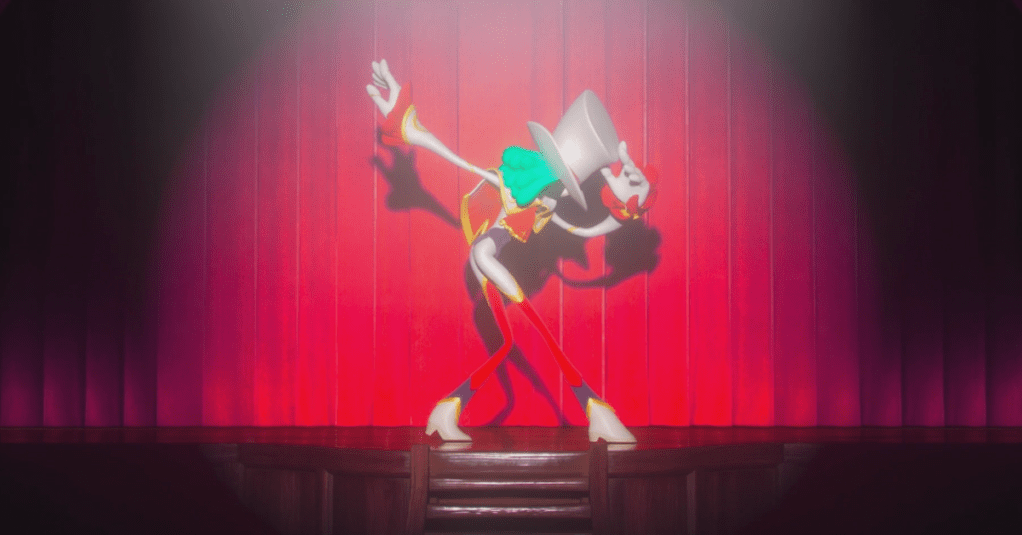
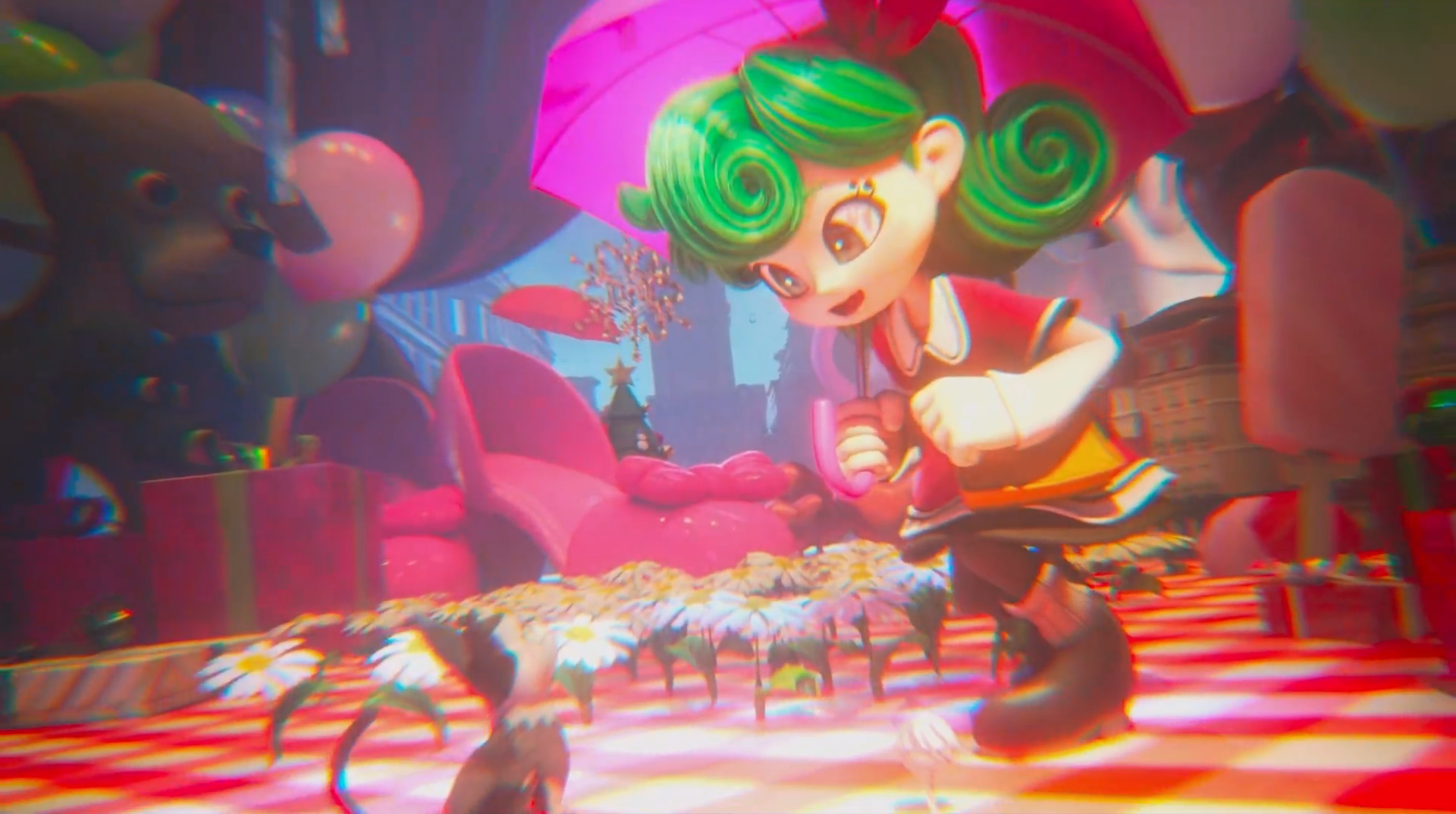
Balan Wonderworld is a 3D platformer in which the player can venture forth into the magical realm of the Balan Theater as either Emma or Leo. After an opening sequence at a playground we bombastically get introduced to the keeper of the theater, Balan, who is a suspiciously NiGHTS adjacent looking individual who takes the chosen protagonist to the hub area of the game. The grassy plateau of Wonderworld serves as an access point to all of the stages of the game as well as a breeding ground for small, rotund birds called Tims. It’s kind of similar to the Chao Garden from Sonic Adventure, however, instead of raising cute creatures to complete tasks, you feed the birds crystals so they learn how to operate heavy machinery. The start of the game only gives access to the first world, but as you unlock more of the hub area, you can freely roam the stages in any order. The first chapter introduces us to “The Man Who Rages Against The Storm“, a farmer by the name of Jose who fell into a deep state of despair after a tornado ruined his crops. Each chapter introduces a new inhabitant of Wonderworld and is themed around that character’s backstory. It’s a neat way to incorporate characterization into your level design. The first chapter, for instance, has a farm motif. With small fields of corn, corn platforms and farm animals. Here we’re also introduced to the game’s main villain, Lance, serving as a counter-balance to the white suited Balan. He mostly just shows up to summon some minions or to fight Balan in the Balan Bout minigame, which is a quick-time sequence in which you have to press the button as an image of Balan overlaps with the model, with a bit of mashing to break monotony.
As you make your way through the chapters, your main goal is to find costumes and collect as many Balan statues as you can carry. The game uses only one button as primary means to interact with it, with each costume changing the function of that button to an ability unique to the costume. You can carry up to three costumes at any given time and every extra costume that’s picked up gets sent to the dressing room for later pick-up. The amount of abilities you can get is insane, with some definitely being more situational than others. They range from giving you a double jump, allowing you to climb webs, to turning into a fire hydrant, or a box at set intervals. You’ll quickly discover that some abilities are extremely useful to keep around, whereas others are best avoided like the plague. It’s a neat idea on paper, however, the costumes also double as your health bar and are quantified. This means that if you get hit you lose that costume, and if you didn’t pack any extra’s, you need to go back to the level you got the costume to get a new one, which is incredibly tedious. It would’ve made more sense that you got to keep access to your costumes if you beat the stage while having them unlocked. It certainly would’ve saved on a lot of backtracking.
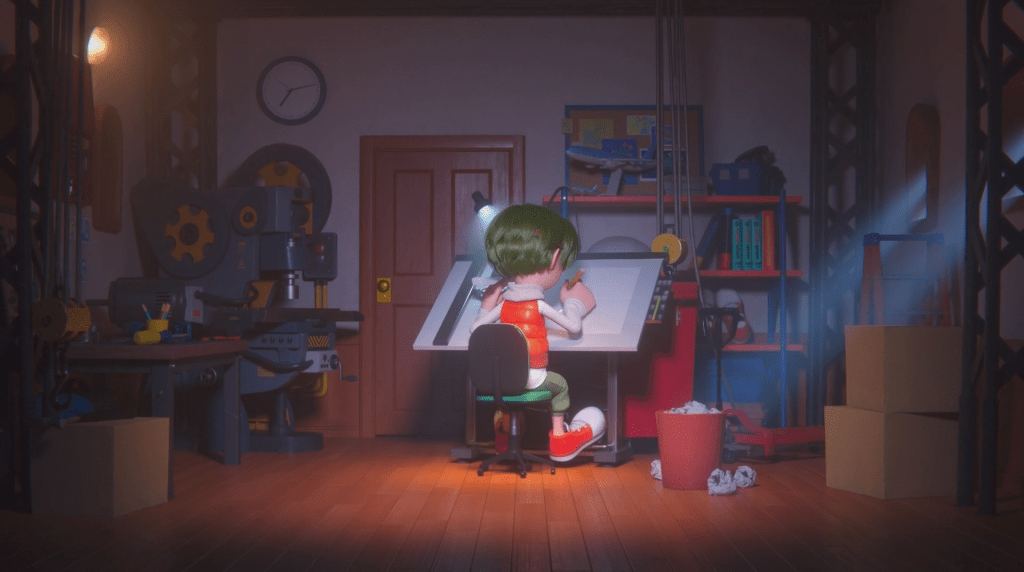
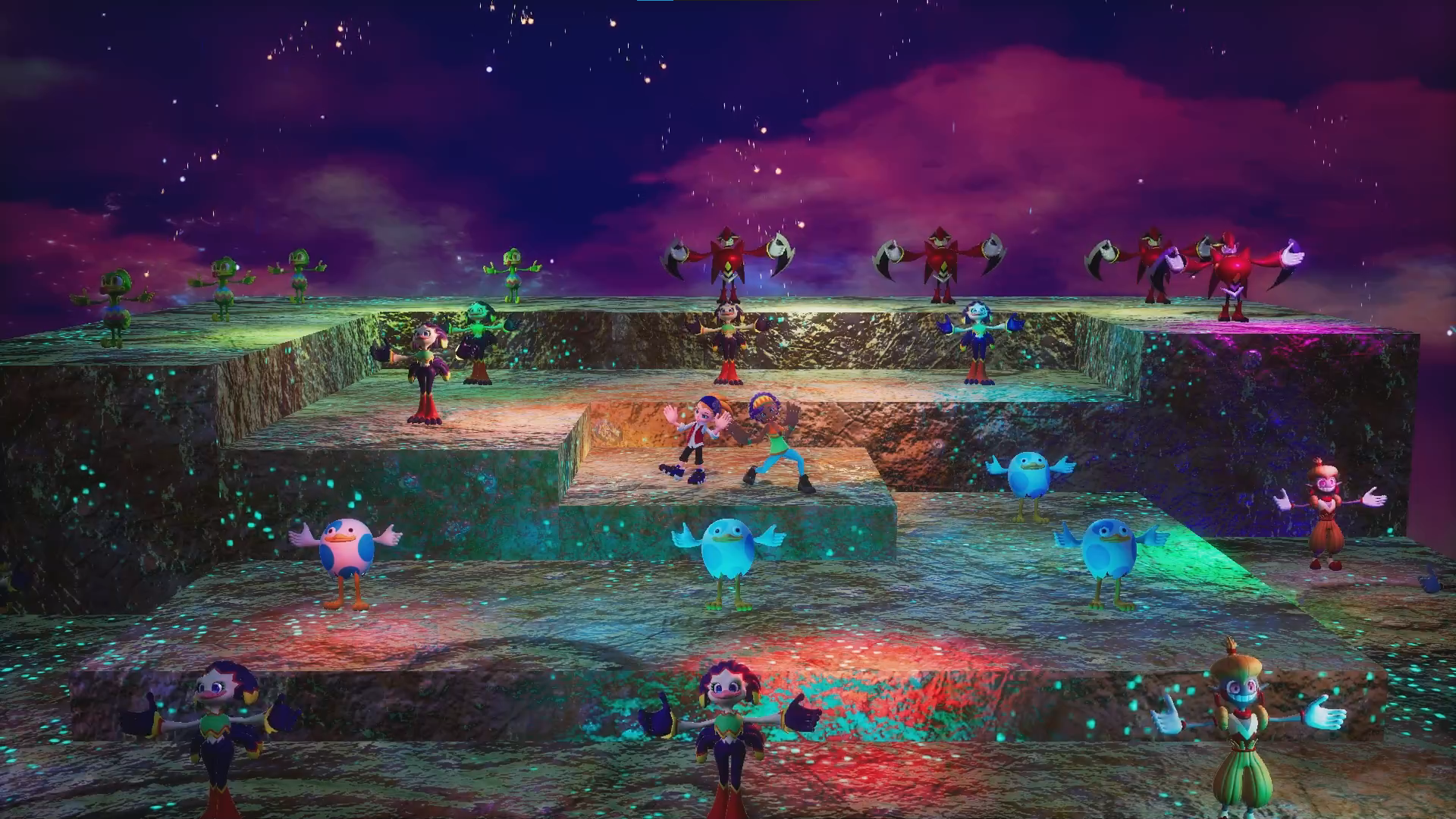
The levels in Balan Wonderworld provide a wide array of challenges to overcome to find all the Balan statues. You need to collect a certain amount of these to unlock new chapters. The stages are designed in such a way that there’s usually more than one way to get all the statues, or you need abilities from other chapters to collect them all. It invites you to experiment with different approaches and to explore every path that seems traversable. It’s not all sunshine and rainbows, though, as certain stages can be quite punishing to explore. This sometimes results in rather frustrating moments of losing a very handy costume at the hands of a stage hazard, forcing you to backtrack to a different stage to get a new one. At the end of each chapter is a boss battle to have a face-off with, and these too can be approached in numerous ways. Each boss has three possible solutions to the fight and each one you find grants you a Balan. All of the bosses represent the negative side of the chapter’s inhabitant and all have some element to the fight that represents their fears or insecurities. After defeating a boss, you’re rewarded with a cutscene of them overcoming their darkness and a baffling impromptu musical number to sing and dance to. The game is REALLY dedicated to musical numbers. It’s incredibly bizarre and equally funny to see, especially when playing as Leo, since his opening is him breakdancing really sad before stumbling into the theater.
There is an endearing part to the story with how each time you help someone overcome their fears and anxieties, yours seem a bit lighter in comparison. Balan Wonderworld kind of follows into NiGHTS’s footsteps in this regard. In both games the main characters have to overcome their negative emotions or negative experiences by going into a dream-like world and helping others overcome their grievances, thusly freeing the main characters of theirs, whether it’s stage fright or worrying about losing your friends over arguments.
Nobody wants to breakdance on the playground on their own.
The presentation of the story is a bit left open to interpretation as most of the dialogue is in Balanese, a fictional language spoken in Wonderworld comprised of reversed English and some Japanese words sprinkled about.
Balan Wonderworld isn’t a great game, but it’s also nowhere near as abysmal as its reputation suggests. The game’s design is rather archaic with how bareboned and clunky the mechanics are. Hell, the walk cycle for the characters is ripped straight out of Sonic Adventure, including the slippery shoes. It feels more like a game you’d find on the N64 or Sega Saturn in the way it presents itself, and when looking at the game from that perspective it makes a bit more sense. A lot of the talent behind this game was making some truly iconic games at the time and that shows. As a result Balan Wonderworld feels incredibly outdated and cumbersome in the modern gaming ecosphere, but presents itself with the creative vision of a game from the Saturn era (I would’ve lost my marbles if this released in 1998). It doesn’t help that the demo only showcased the first chapter, with limited costumes and a horribly disorienting unfolding stage effect. There simply wasn’t a whole lot to do and the things you could do didn’t show enough to convince people to try more of it. The whole experience is juxtaposed with some incredibly high production value. The cutscenes look stunning and the music is way better than it probably should be. I seriously can’t overstate how good the soundtrack is. It’s ridiculous. Overall, Balan Wonderworld is an alright game with some fantastically creative ideas that it simply fails to execute upon. Its outdated gameplay and in-game visuals make the creativity and vision behind it feel like doing brain surgery with mortar fire. It gets the job done, but you’re mostly left with some good pieces scattered around the messy point of impact. I really like a lot of the character design, music and overall bizarreness, however, this does come from looking through the rose colored glasses of someone that really likes the Sega Saturn and N64. In the end, my admission fee to the Balan Theater was only three bucks and the show they put on was more than worth the ticket price.
Also, Yuji Naka has received a suspended prison sentence for insider trading on a failed mobile game, which is an incredibly funny footnote to add to the review.
SAD SYNCHRONIZED BREAKDANCING/10



Enjoying the review? Consider supporting TanookiChickenAttack with a coffee at;
https://ko-fi.com/tanookichickenattack

 TanookiChickenAttack