

2009 | Guerilla Games | Playstation 3
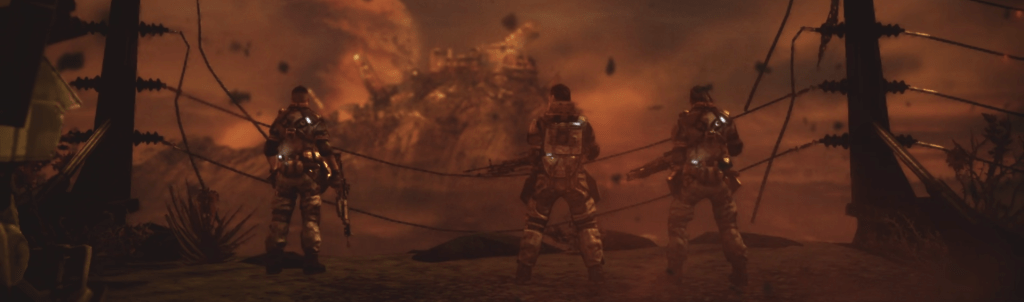
Ever since last year I like to celebrate the seventh generation of consoles (PS3, Xbox 360, Wii) with an event showcasing some of my, and the community’s, favorite titles on the livestream. It has since been dubbed Seventh Gen Month(s), with the plural in brackets indicating my inability to stop playing on these systems once I start. This year I decided to look into my favorite shooter on the system with Killzone 2, a game from my home country of The Netherlands that I have had a deep affection for since its release in 2009. Since this review took a while to get right, the Where the Wild Things Are review is already available to read as well, with 2006’s Prey closing off the main set of games for the event. I got the chance to relive some incredibly nostalgic feelings delving back into the Killzone franchise, and I’m thrilled to get started with the review.
The Dutch legacy
Guerilla, formerly known as Guerilla Games, was founded in 2000 as Lost Boys Games by Arjan Brussee (known for Jazz Jackrabbit, 1994), Martin de Ronde, Michiel Mol and Arnout van der Kamp. The studio was comprised of three smaller developer studios merged into one. Hermen Hulst was hired in 2001 as managing director for the company. In 2003 the studio separated from Lost Boys, and was subsequently acquired by Media Republic, and rebranded as Guerilla Games. The studio got its start developing licensed games, before moving to to start development on the Killzone franchise. The first installment of which released in November, 2004. The anticipation surrounding the game caused it to get dubbed as a potential “Halo Killer” for Sony. After release, however, the game was met with lukewarm response. The critique mostly surrounded the technical issues of the game.
In 2005, the studio was acquired by Sony Computer Entertainment, as it continued to expand on the series. With the release of the Playstation Portable, Guerilla released a spin-off for the franchise — Killzone: Liberation. This isometric shooter released as part of the first wave of post launch titles for the system, and continued to build upon the events of the first game. It was an impressive continuation of the story that showcased the PSP’s capabilities extensively. Alongside the single player campaign it also featured multiplayer game modes. The first PSP I got was the bundle with Killzone: Liberation, which, at the time, was a mind-boggling experience.
With the Playstation 3 releasing in 2006, development on a new entry in the series was already well underway. The tech demo that was showcased during E3 2005 showcased an early concept of the game, as most of the game wasn’t remotely ready to be shown yet. The studio hastily put together a pre-rendered sequence that showed an Infiltrator landing next to a bridge in the middle of a skirmish. There are some aspects to this trailer that eventually served as concepts that made it into the final game, such as the flamethrower, the bridge itself, and the ATAC. Some other elements were scrapped, among which was the Guerilla employee roster as ISA agents. While the trailer itself was an incredible showcase of what Guerilla was capable of, it served as a shadow that loomed over the games release.
Killzone 2 released in 2009 for the Playstation 3 to high praise. The game was lauded for its visual fidelity, incredible soundtrack by series composer Joris de Man, and its gameplay. With the game also came a few items for the now defunct Playstation Home. The multiplayer was deeply loved by the community, and praised for its dynamic game modes and tight gameplay. The only thing the game was lacking in comparison to the other titles was a strong narrative. Despite the initial shadow that had been cast over Killzone 2 — Thanks to the E3 trailer — it has shined as an example of the capabilities of what the Playstation 3 could do, and has been a staple for the system since its release.

Taking the fight to them
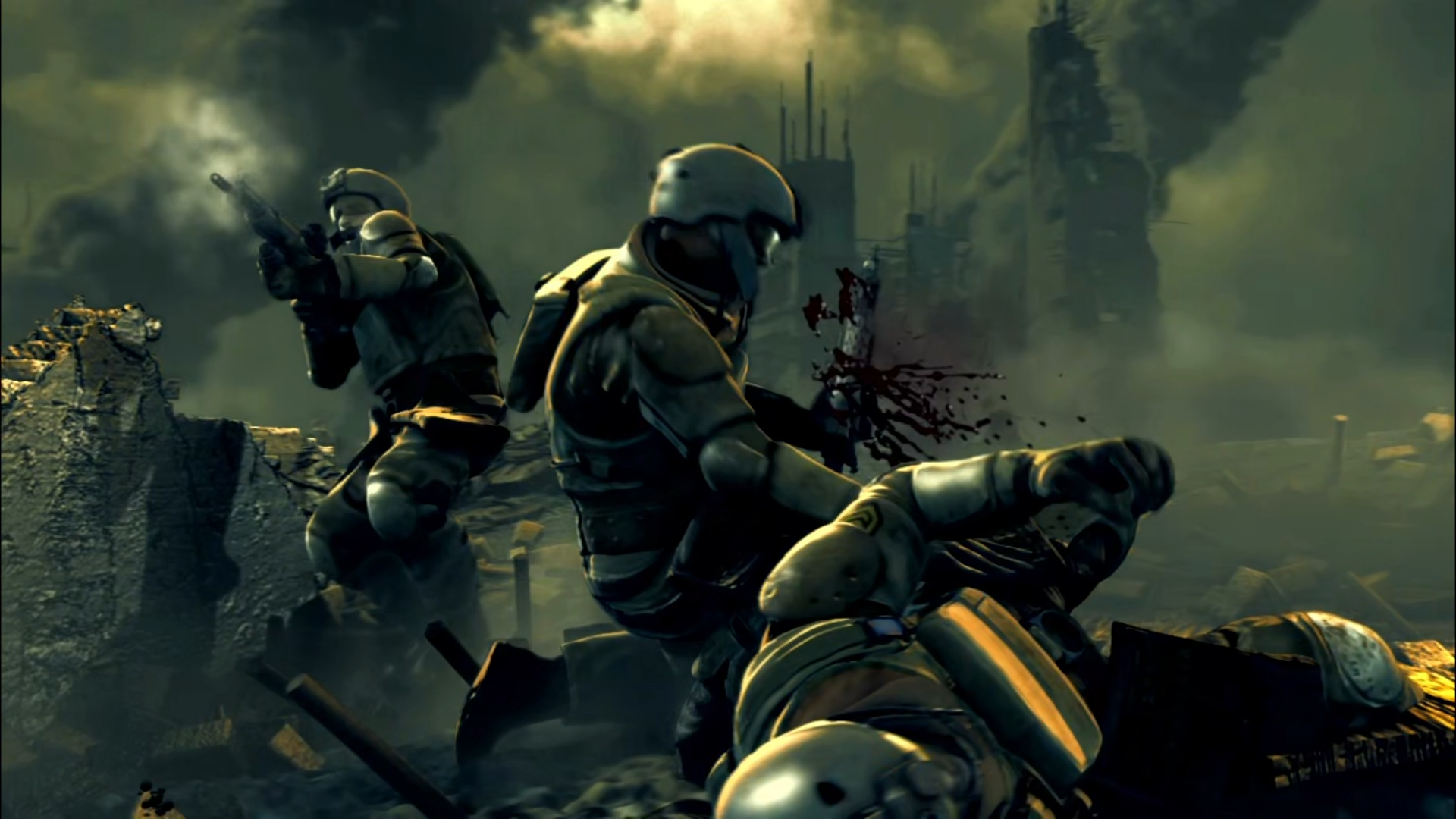
After the Helghast Third Army invaded Vekta, the planet had been in a state of near continuous battle between the invading forces and Vekta’s ISA. The ISA forces manage to push back after Jan Templar, protagonist of the first game, manages to destroy various key facilities that the Helghast set up. Fighting alongside Rico Valesquez, an ISA gunner, Luger, a shadow operative, and Hakha, a half Helghan infiltrator, Templar manages to kill the head of the Third Army. Despite the Helghast forces suffering a massive defeat, their threat remains imminent, and the war far from over.
Following the events of the first Killzone (2004, Playstation 2) the threat of the Helghan forces on Vekta remains constant under the rule of the Helghast General Metrac. Once again, Jan Templar takes it upon himself to fight off the invaders. With the help of Rico the ISA succesfully kills Metrac and push the Helghast off of Vekta. Killzone: Liberation (2006, PSP) ends with Scolar Visari, the Helghan emperor, threatening Vekta with nuclear annihilation. Following the broadcast the ISA decides to bring the fight to the Helghast instead, attempting to stop the launch of the nuclear armaments, and to kill Visari.
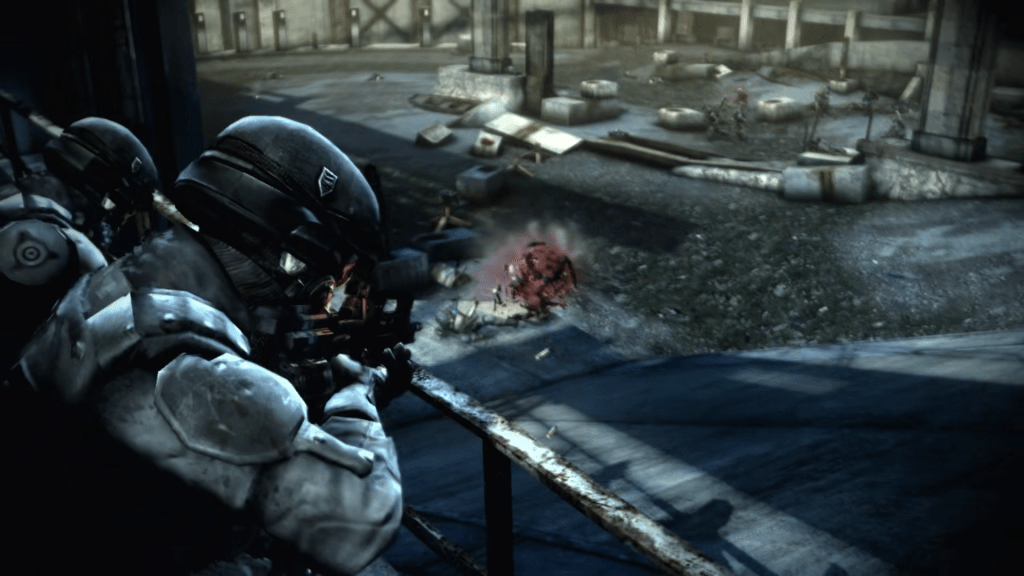
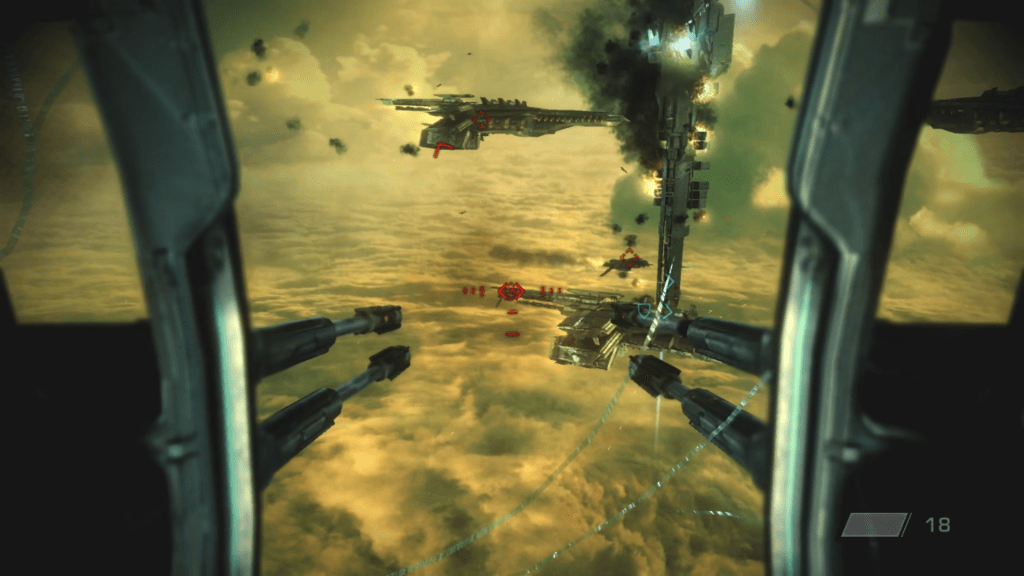
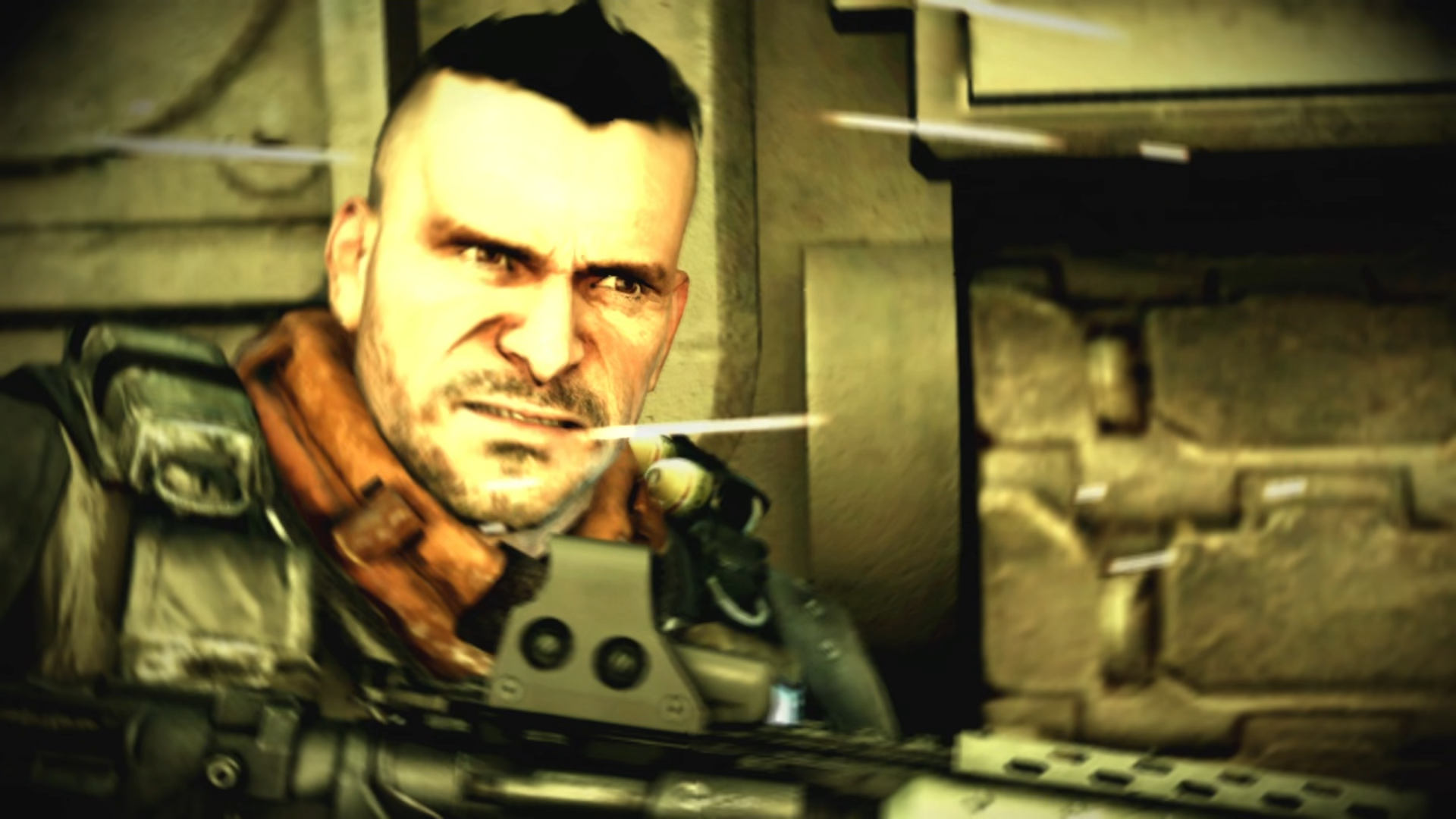
Killzone 2 kicks off right as the ISA forces are about to make landfall on Helghan. As the fleet, under command of Jan Templar on the ship, The New Sun, approaches orbit, they bombard the capital city of Phyrrus. For this game we play as Tomas “Sev” Sevchenko, alongside Rico Valesquez from the prior games. As Alpha Squad, under command of Dante Garza, prepares to make landfall, the fleet is nearly destroyed by a network of arc towers hidden beneath the city. Through the destruction, the transporter carrying Alpha Squad, makes it to solid ground, where they find the Helghast ready for their arrival.
The game immediately throws you into the action, as you push your way from the shoreline deeper into the city. Along the way you’re tasked with finding a means to disable the network, or power source, that keeps the arc network operational. The ISA eventually find out that the weapons are powered by a volatile mineral that’s unique to Helghan. This leads Alpha Squad to a massive ore refinery, where the team gets separated and captured by the leader of the Helghan Second Army, Radec. After catching Radec off-guard, most of the team manages to make it out alive, destroying the refinery. Now, backed into a corner, Visari shows how deep the tenacity of the Helghast goes, and detonates the nuclear warheads. With the city turned into a radioactive wasteland, the final assault on the palace begins.
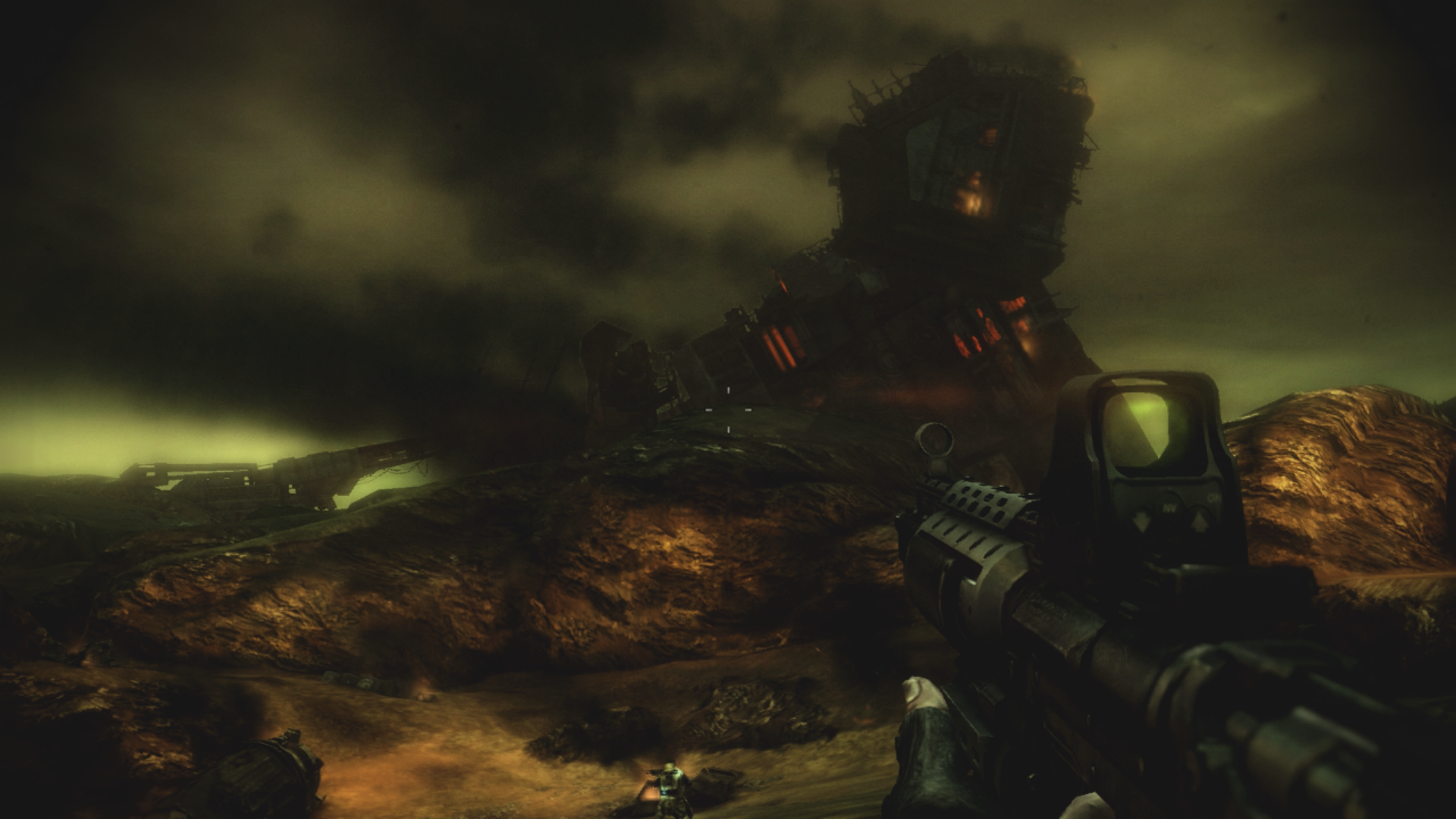
The first game was a bit more multi-faceted in its narrative design, with layers of intrigue and betrayal comprising the body of this delicious pastry. Killzone 2 is a lot more straightforward; We’re here to shoot bad guys. As such, the game foregoes a lot of the nuances that Killzone 1 and Liberation brought to the overall story, in favor of giving a much larger spotlight to Helghan itself. The planet’s harsh environments really get to shine as well, thanks to the Playstation 3 being able to render quite a lot more detail. You’re constantly fighting off the elements, as well as the Helghan forces. I like the chaotic simplicity of the story, as well as its much more aggressive tone. Overall, outside of major plot points, the story is largely secondary to the gameplay.

Lock and load
Killzone 2 stands out quite a bit amongst its shooter peers, especially around the year of its release. In a landscape where shooters started to emphasize mobility, snappy controls, and a generally more homogenized approach to the genre, this game comparatively feels like a sluggish heavyweight trying to complete a triathlon with mud for feet. While this may sound like a negative criticism, it is not. The entire game feels like it has tremendous weight to it. This gives Killzone 2, whether intentional or not, a sense of intent to every move you make. It’s the hot knife carefully carving a path through the chaotic butter surrounding you to distribute large quantities of lead amongst your enemies faces.
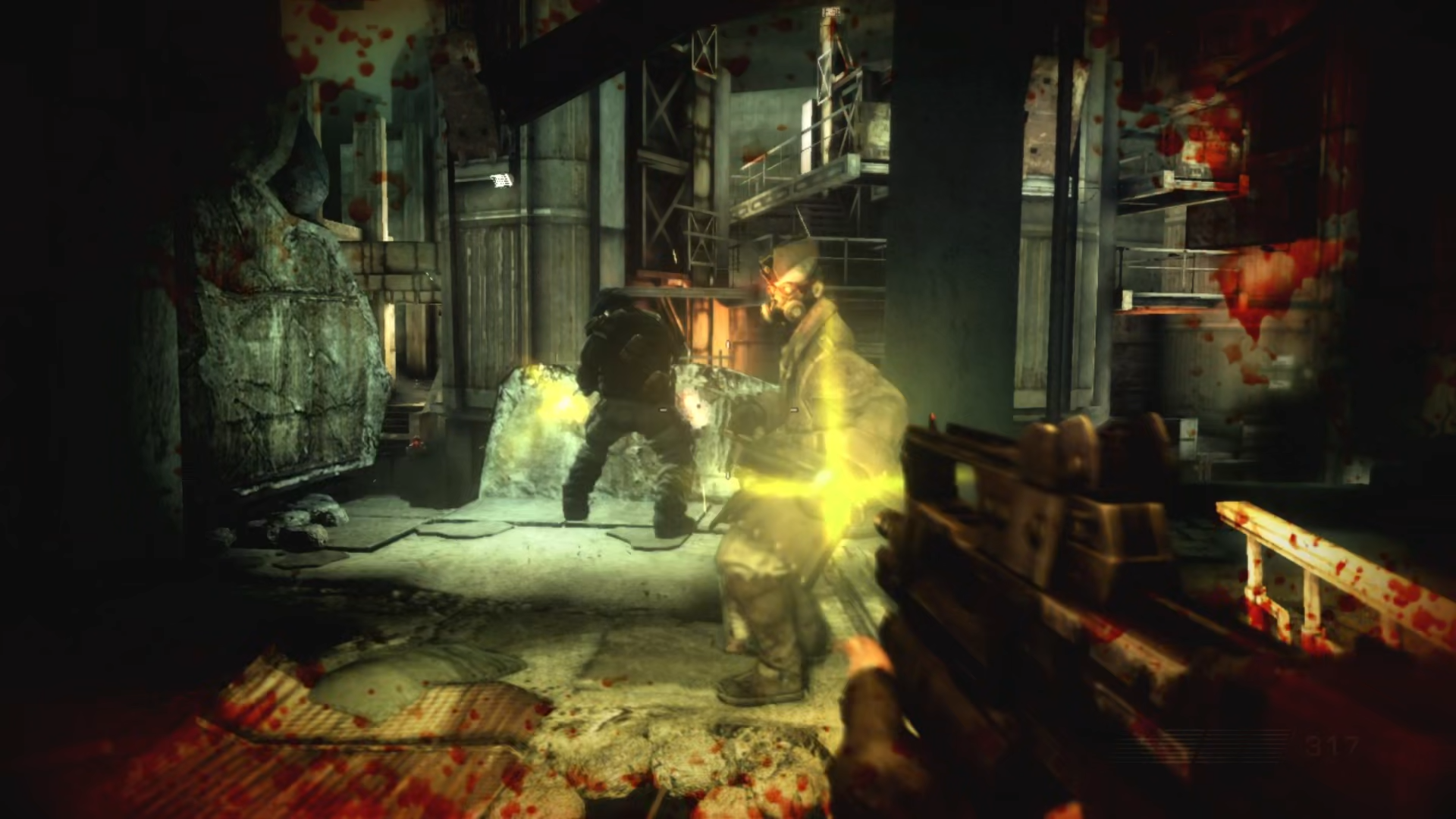
The primary gameplay elements consist of shooting Helghast and ducking behind cover. With the press of a button you can snap to, and crouch behind, improvised cover. Every pillar, every piece of large rubble, can become a staging ground for a firefight. But make no mistake. The Helghast are tenacious, and they will try to get you to leave your pillar of refuge. Much like the way that enemies behave in the incredible F.E.A.R., so too do the Helghast. The first time this becomes evident is when you’ve just landed on the planet. You’ll find yourself in a firefight to take a beachhead. This section is a quick lesson in staying alert, as the moment you snap to cover the enemies will start moving into flanking positions, while grenades fly from the cover of an armored vehicle.
The controls take a bit to get used to, as it adheres to a similar control scheme of the previous entry. The first thing you’ll notice is that the turning speed is incredibly slow. There’s a rather aggressive acceleration to the aim that makes it feel incredibly clunky to work with. This is easily fixed by cranking up the sensitivity in the settings. You’ll mostly walk around with a primary weapon and your side arm, a revolver with infinite ammunition. The game has a rather large variety of primary weapons to choose from, and each of them plays, and feels, surprisingly different. The basic machine gun for the ISA troops have a dot sight that allows for precise burst fire, whereas the Helghast counterpart is an iron sighted sledgehammer by comparison. There’s something for everyone, and the game provides plenty of choices to work with. Your accuracy with these weapons can also be somewhat improved with the way you move and fire. By crouching and standing still for a brief second you can use the Helghast LMG as a ballistic sniper rifle with burst setting to mow down hordes of enemies in seconds.
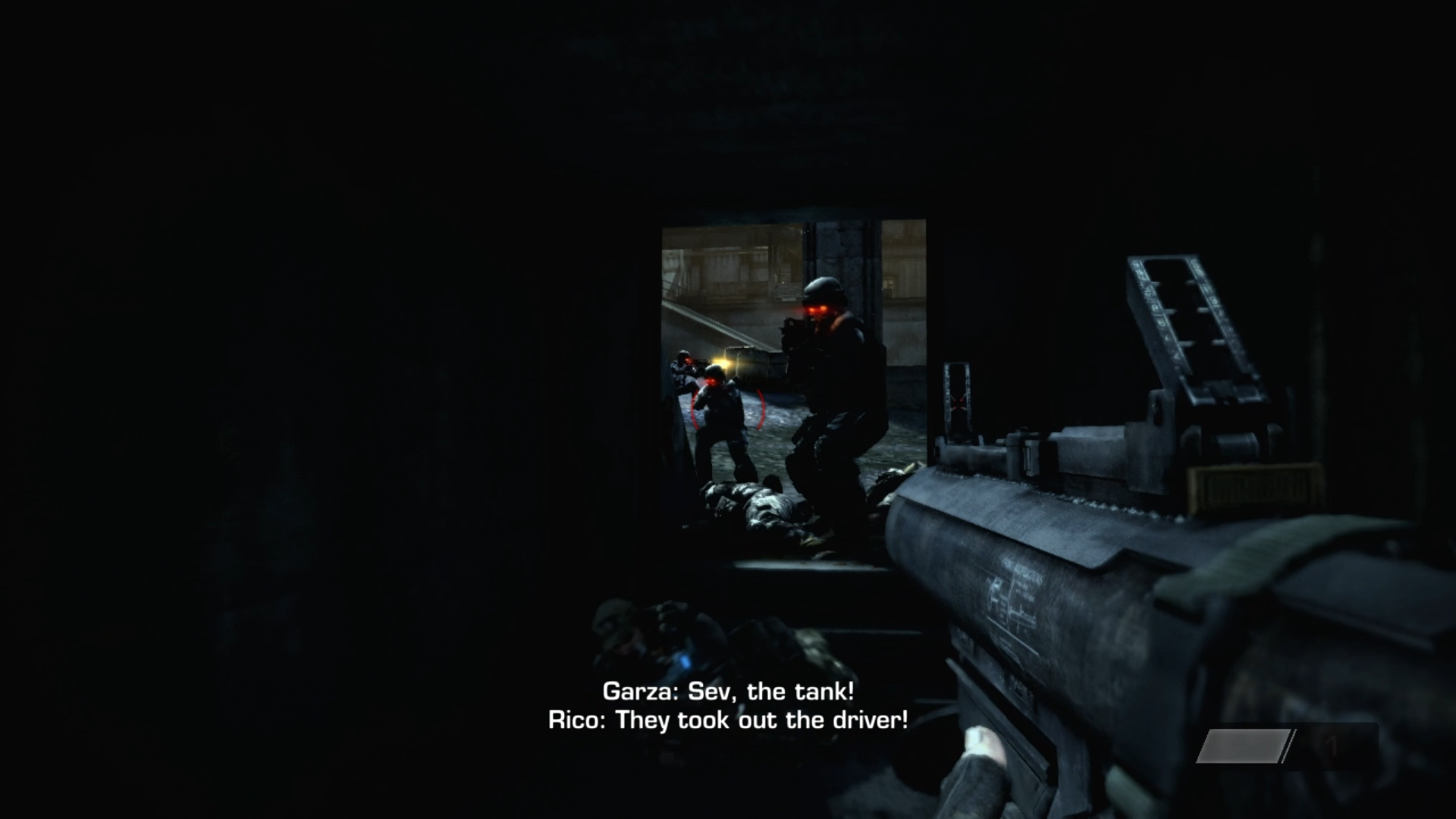

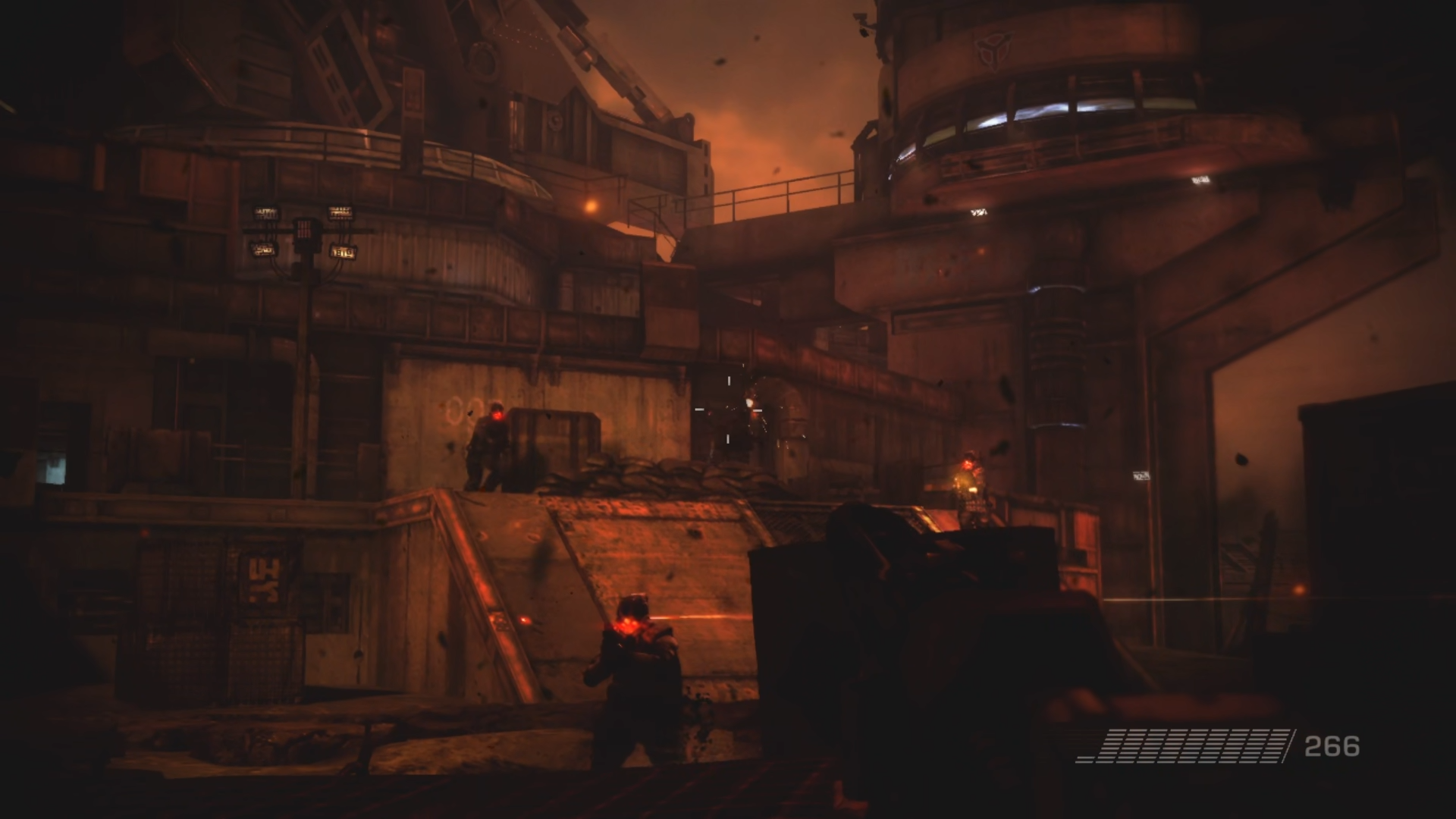
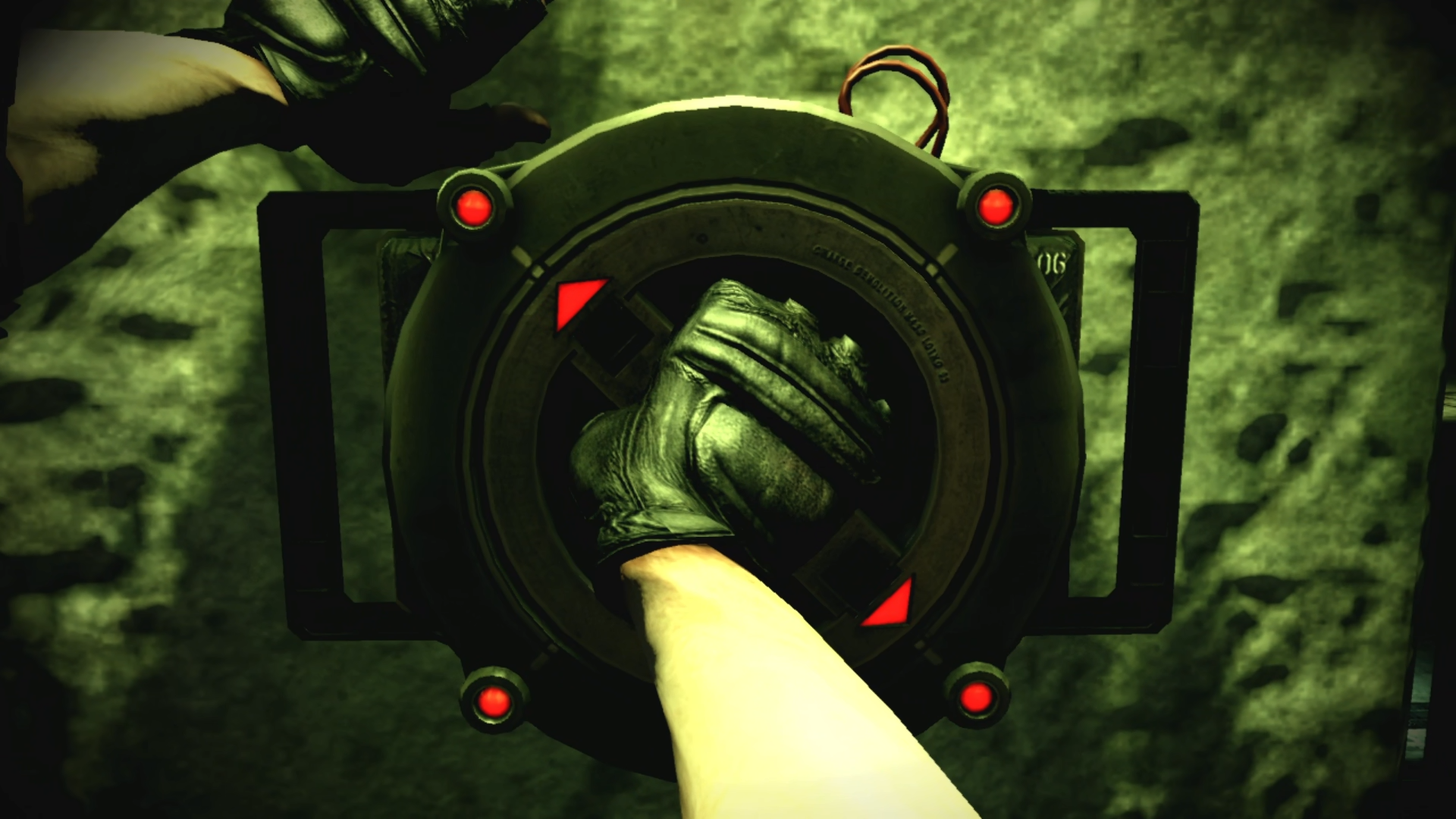
Alongside an incredibly delicious arsenal, the game also adds a lot of emphasis on using grenades to blast enemies from behind cover. The grenades have an indicator on the side which allows you to time to blast enemies on impact, or use it as a means to scatter them from behind cover. Alongside your explosive companions you also have an extremely lethal knife to accompany your melee attack. The melee attack is generally meant to knock an enemy off balance, but the knife is a surefire way to immediately dispatch a Helghast. This is also a shooter of the SIXAXIS era, and this means that we have to add gimmicky controls. The Playstation 3 controller has a gyroscope in it that lets you interact with the game by moving the controller. You only need this to either turn a valve, or to trigger a detonator for planted explosives. It’s a funny little addition to the gameplay, but it doesn’t really add or detract anything. It’s just kind of there.
If there is one bit of criticism that I have towards this game, it’s the build to the finale and the finale itself. While it functions rather well from a narrative perspective, the assault on Visari Palace also serves as a cautionary tale for breaking the rules established within the parameters of the game. Games generally adhere to a certain set of “rules” that help define the expectations of the player. These rules set the way the player interacts with the game, and helps guide their train of thought when approaching problems. In the case of Killzone 2, its set of rules define that an arena filled with Helghast need to be vacated of said Helghast ( usually with large quantities of lead) before the next section opens up. This rule is abstract, but a consistent facet of the game’s design and serves as a leading line for the player.
Visari Palace breaks this rule, by having you face an unending horde of enemies to reach the palace door. This segment is meant as a final act against insurmountable odds, but comes across as a deeply tedious ordeal, because of this. You’re meant to push forward through the hordes and get the front line closer to the door of the palace. This pushes the spawn point of the Helghast backwards. The idea behind this scene is fantastic, but because it juxtaposes a lot of the game’s design, it instead causes friction within the pacing, nearly grinding it to a halt. The fight against Radec switches this back around as enemies keep pouring through the doors, like they’re stepping out of an oversized clown car. It creates this confusing fight that ends up being deeply frustrating. It certainly doesn’t help that you can shoot Radec, as you’re fighting off the Helghast that joined.

While the previous two paragraphs might be a bit confusing as a read, I do recommend going into the finale of Killzone 2 with this concept in mind. It helped me understand a bit more of where my frustration, as well as a lot of others’, came from. A way to maybe fix a problem like this would be to introduce the infinite waves and front line pushing at an earlier point in the game to prepare the player. The game does present the perfect opportunity. As you’re fighting for control over a bridge around the midway point of the game. You could, for instance, have the player push forward as Helghast keep reinforcing their front, until you reach certain control points on the bridge causing the reinforcements to be cut off.
Despite cover-based shooters generally having a slower pace, with a more tug-of-war approach, Killzone 2 finds a delightful middle ground. The way you snap to cover never takes you out of the action, instead of bunkering down behind cover it encourages you to use the environment to constantly get a one up on the Helghast. This, in combination with the heavier feel of the games, and satisfying gunplay, makes Killzone 2 an absolute delight to play.
In the zone to kill
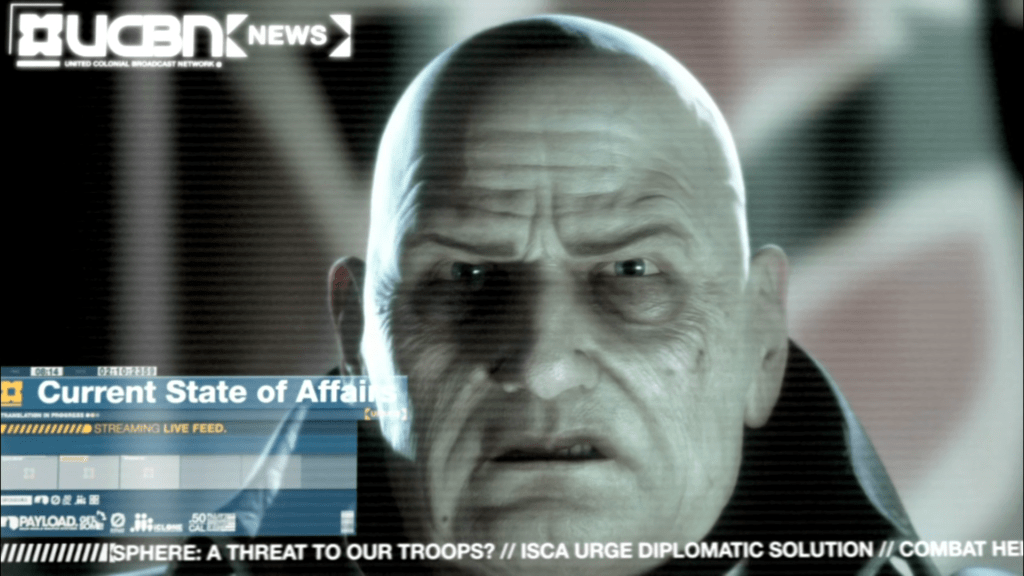
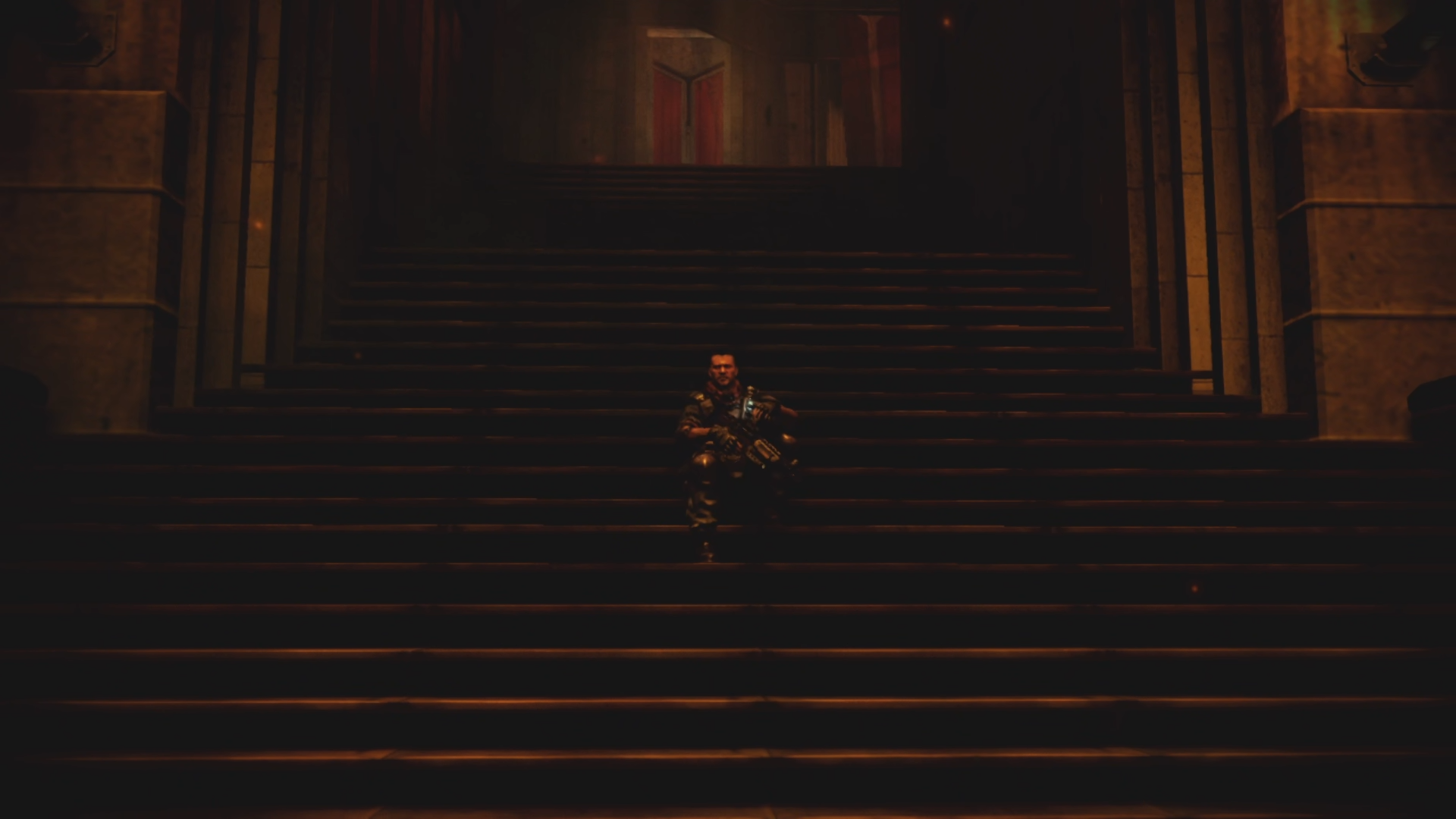
The presentation of Killzone 2 is incredibly well done. While the game sometimes goes a bit overboard with the darker areas, it does create a wonderful opportunity to create a bit more atmosphere. This is particularly present during some of the areas in which you fight in dark abandoned buildings. The darkness is only interrupted by the glowing red and orange eyes of the Helghast helmets, in a way that’s taken straight out of Jin-Roh. The downside is that it often is very disorienting to move around, but it does look very cool and intimidating. The outdoor areas are rather well designed as well, with a lot of the megacities remains serving as a backdrop for you to navigate. Gigantic factories are intertwined with apartment blocks in an industrial dedication to Helghan devotion. Everything is densely packed, and it is beautiful for it. Not to mention the absolutely staggering animation on the opening cinematic of the game. Visari’s speech provided a look into what the studio was capable of in terms of animation and visual design, and still feels like an incredibly realistic and menacing sequence.
I absolutely love the sheer weight of this game. Every step feels like you’re carrying a metric ton of equipment with you, and every gun (with the exception of the revolver) feels heavy to aim. It gives the game a distinct and unique feeling in a time where shooters started to aim for homogenization. The cover system is a bit of a rough spot in certain areas. I found myself somewhat frustrated with how sensitive it was in the more cluttered set pieces. It caused me to snap to random objects while I was sprinting through it. The soundtrack is probably one of the more undersold aspects of the game. Composer Joris de Man managed to create a fantastic soundscape for the game that makes each scene and level feel bombastic, claustrophobic, and outright epic at times. A lot of the music draws heavy inspiration from The Matrix in its use of specific synthesizers, but these add so many layers to the entire experience.
Overall, Killzone 2 is a ridiculously well executed shooter with one glaring problem; It’s final sequence. The rest of the game stands as a proud monument to the capabilities of the development team, as well as the Playstation 3. The SIXAXIS bits feel a bit tacked on and gimmicky, but are good for a laugh or two. The final sequence can be a bit of a deal breaker for some people, as its often the thing mentioned when discussing the game, but it still serves as a brilliant scene from a narrative point of view. It definitely shows the colors of a post Gears of War era shooter, in particular in its character interactions, but that does give it some extra charm. Once you’re done with the story, you can still play the Warzone mode, which pits the Helghast and ISA against each other to compete for objectives. I’ve loved Killzone 2 since I played it on release, and continue to love it to this day. It’s a must play if you’re looking into shooters on the Playstation 3 (that, and please play Resistance: Fall of Man).
Dutch cheese/10

TanookiChickenAttack is made possible by supporters on Ko-fi. If you enjoyed the review, consider becoming a supporter through https://ko-fi.com/tanookichickenattack

 TanookiChickenAttack