

2006 | Human Head Studios | Xbox 360
The history of Prey as a franchise is a bit of a muddled mess. While most people would likely think of 2017’s Prey by Arkane Studios, the title saw its first video game release in 2006. I can’t really call this a franchise, or series, as the games have very little in common outside of the name. I originally played Human Head Studios’ Prey a little over a year after its release, when I found it on sale for the PC. The back of the box showed screenshots of enemies sticking to all kinds of surfaces and grotesque aliens fused with living weaponry. Accompanying the screenshot was the tagline “Mess with your mind.” Around this time I was tinkering with a new pc build and was knee-deep into collecting bargains for it. A mind bending journey through an alien hive, with ceilings for floors? Sign me up.
A very human head
The history of Prey as an IP is a bit of a tangled web of promises made, promises left unfulfilled, and the accidental inception of one of the greatest modern immersive simulators. However, the inception of the original concept by 3D Realms dates back to 1995. The first concrete draft of the game would see the player take the role of the Native American Talon Brave aboard a massive alien ring-world. The game was first shown to the public in 1996, demonstrating a unique game engine that allowed the developers to tie rooms together through gateways. The engine, aptly named Portals, gave the development team the means to create dynamic environments without spacial restrictions. The original demo showed the player moving through a portal and seeing themselves on the other side of the room through it. This was an ambitious piece of work to say the least. This showcase of incredible innovation promised to push the genre into its next evolutionary state, however, the ambitious scope of the project ended up being this version of Prey’s downfall.
The project got put on hold around 1998 after most of the work on the game was more focused on further developing the engine, rather than the game itself. Work on the engine was helmed by Corrinne Yu, which may have been the inspiration to the name of the protagonist in 2017’s Prey. The project wasn’t cancelled, however, and in 2001 the development of a new version of Prey picked up where the 1998 version left off. The game would run on the id Tech 4 engine, giving Prey it’s distinctive look. 3D Realms brought Human Head Studios on board to continue development of the game, as they were likely busy with Duke Nukem: Forever at the time. Prey would make its formal press debut in 2005, with a press release from 2K Games, which would also serve as a publisher for the title.
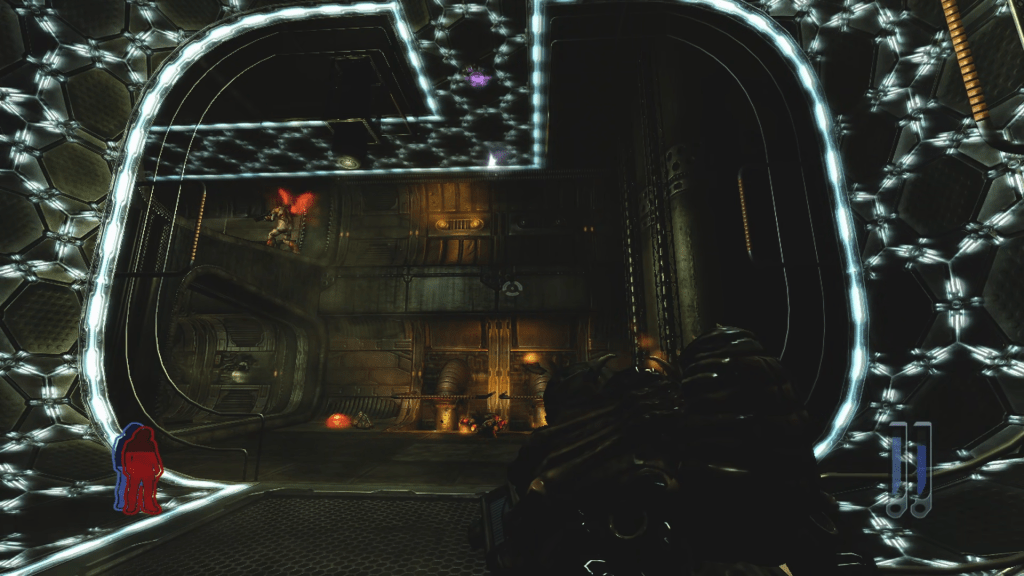
The game builds on a lot of the ideas from the original concept. The protagonist would still be kidnapped by aliens, but instead of a ring-world, we’d get a massive Dyson sphere of a world, and the portals would still form the foundation of the game’s main mode of navigation. Prey released to generally favorable reviews, receiving a lot of praise for its unique approach to the first person genre, as well as its story. There is a very early, playable version floating around the web for the interested parties to try out.
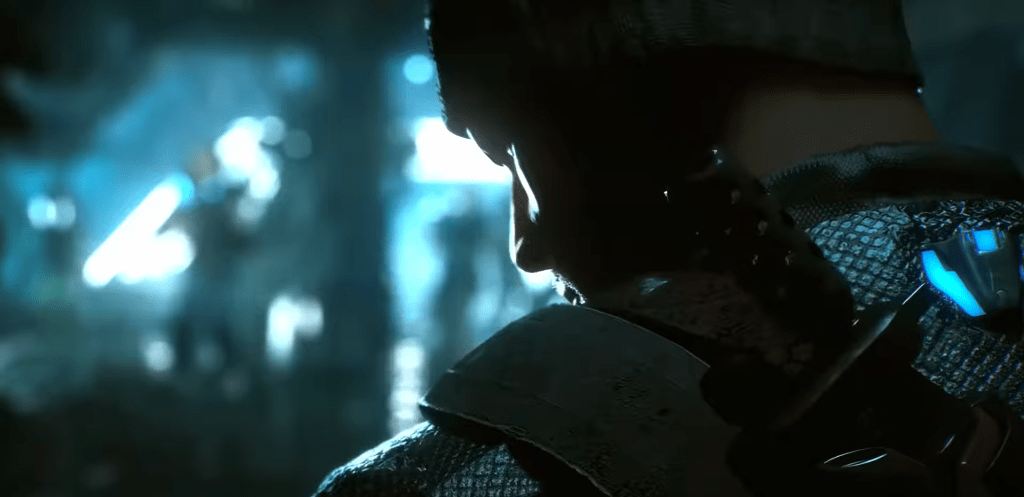
Shortly after the release of the game, 3D Realms announced that they were working on a sequel. The rights to the franchise were acquired by Zenimax Studios in 2009, with a release date for the Prey 2 being set to late 2012. A few trailers were released to accompany the games’ announcement, the most infamous of which is the 2011 Bounty Hunter trailer, showing a brand new character navigating an alien world after the events of the first game. In the trailer we see glimpses of the vision Human Head Studios had for the franchise, focusing on high paced chases as you hunt down your bounties in this gigantic alien city. 2012 went by with no word from the actual game, and in 2014 it was officially cancelled, citing subpar quality as reasoning.
Space, the final frontier
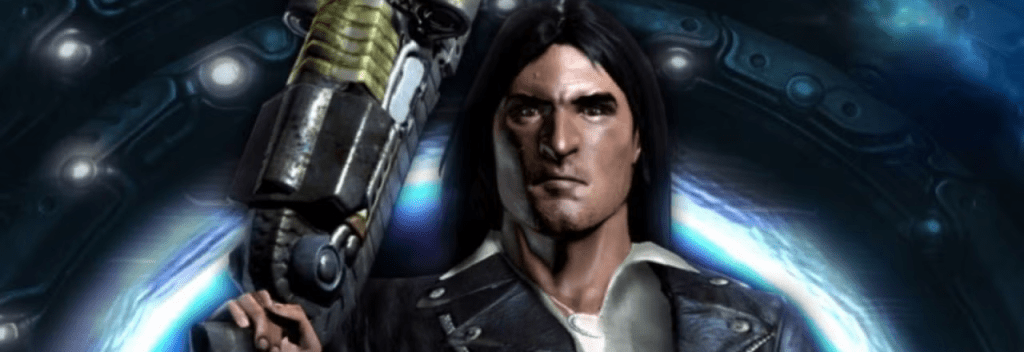
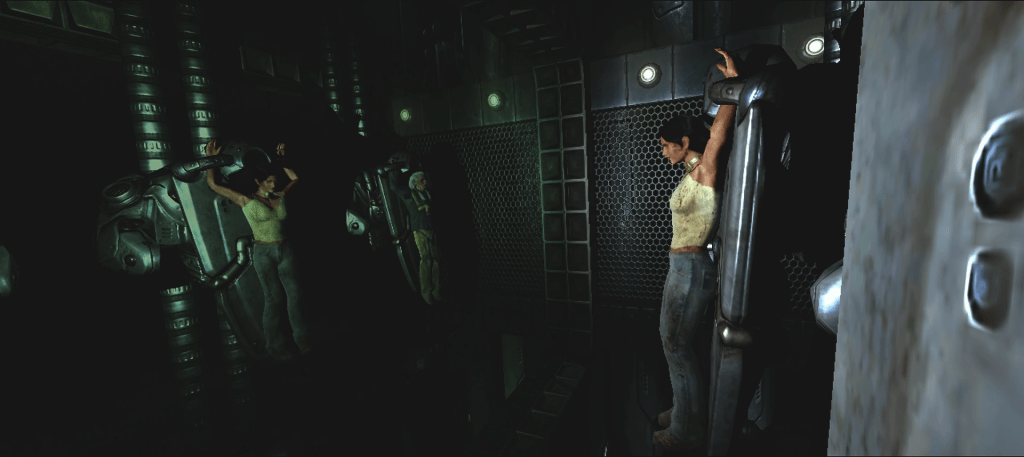
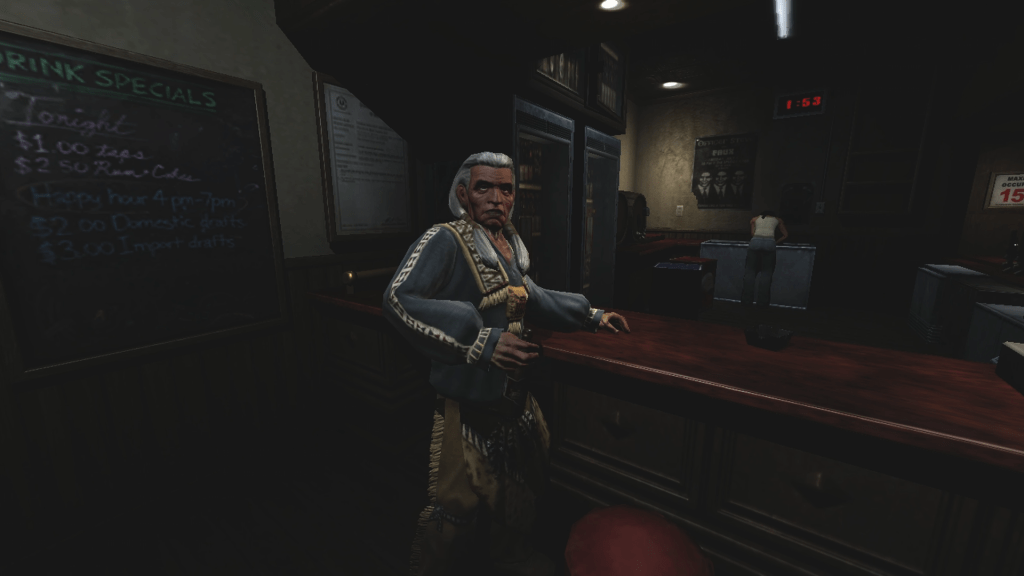
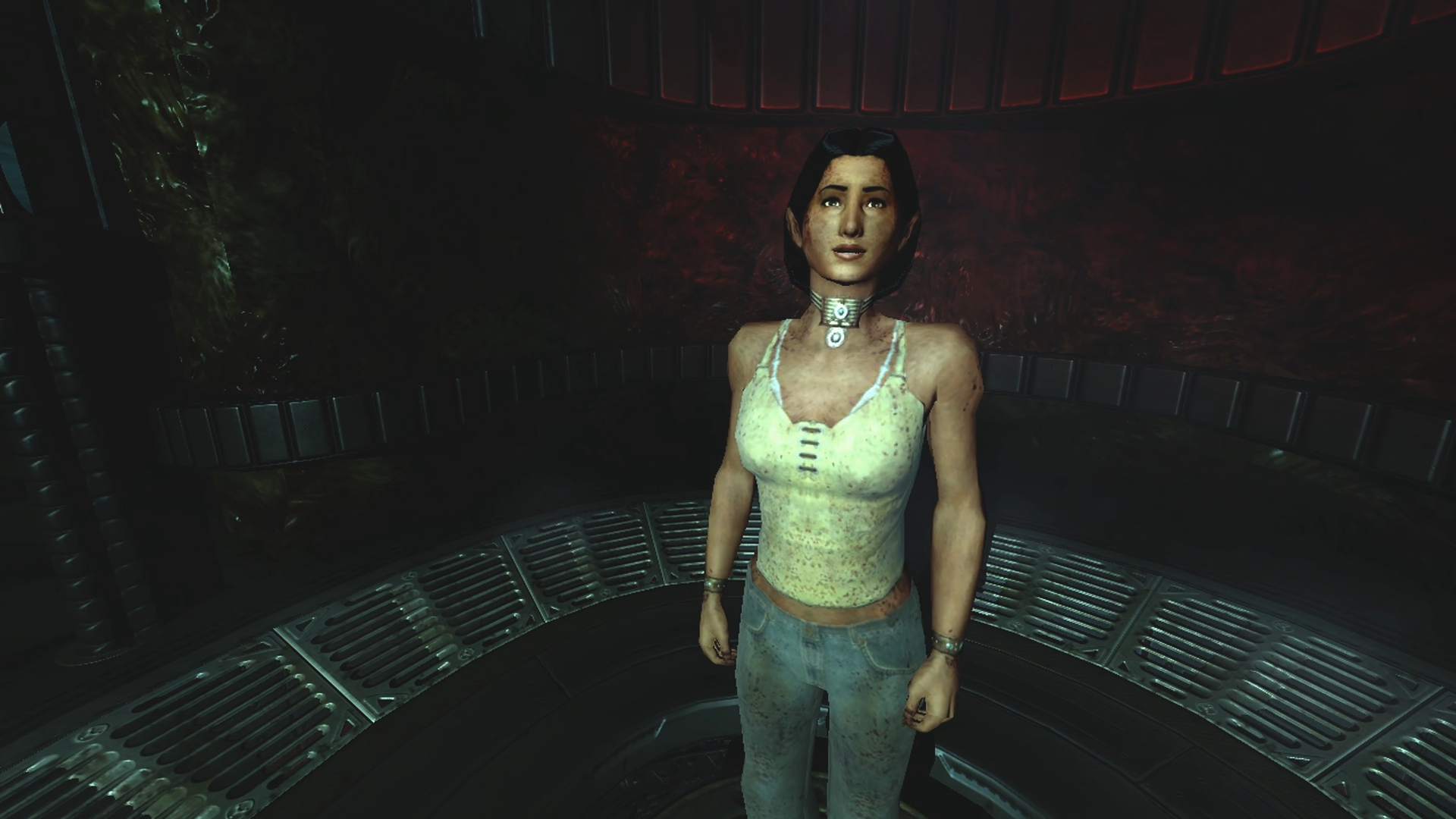
Prey follows Domasi “Tommy” Tawodi, a Cherokee mechanic and former soldier living on a Native American reservation. The game starts in a bar run by Tommy’s girlfriend, Jen, as Tommy is staring into the mirror, venting about his discontent with living in the reservation to his reflection. Upon leaving the bathroom we encounter our grandfather, Enisi, giving Tommy some heartfelt advice about the recent fight between him and Jen. When Tommy enters the bar, he pleas to Jen one more time to leave the reservation with him. A few of the bar’s regulars start accosting Jen, causing Tommy to beat them to near death as the roof of the bar is torn apart by a green light. The mysterious light starts pulling his grandfather and Jen into an unknown vessel, while the jukebox starts playing Blue Oyster Cult’s Don’t Fear the Reaper.
Tommy finds himself waking up on a massive alien vessel, called the Sphere. Disoriented, he tries to move, but finds himself shackled to a device alongside Jen and Enisi. Desperately looking around for a way out, a mysterious figure sets of a detonation that causes Tommy to plummet down. After regaining consciousness, Tommy sets out to find Jen and his grandfather. He finds his grandfather strapped to a protein recycle machine, before Enisi is brutally murdered and swallowed up by the device. After his grandfather is reduced to a post-workout shake, Tommy sets out to find and rescue Jen from the clutches of the Keepers.
Shortly after this, Tommy has a near-death experience that draws his spirit from his body to the Ancient Lands, where the spirit of his grandfather awaits as his guide. Here we learn a bit more about the history of Tommy’s tribe and the powers at play. We also get introduced to our spirit guide, Talon. Together you scour the Sphere for any signs of Jen. On your journey through the alien vessel, you’ll run into survivors that formed a group called the Hidden, led by Elhuid. They aid Tommy from time to time in exchange for saving them from the Keepers. All the while a mysterious voice starts to talk in your head. This voice belongs to Mother, the one who controls the Sphere.
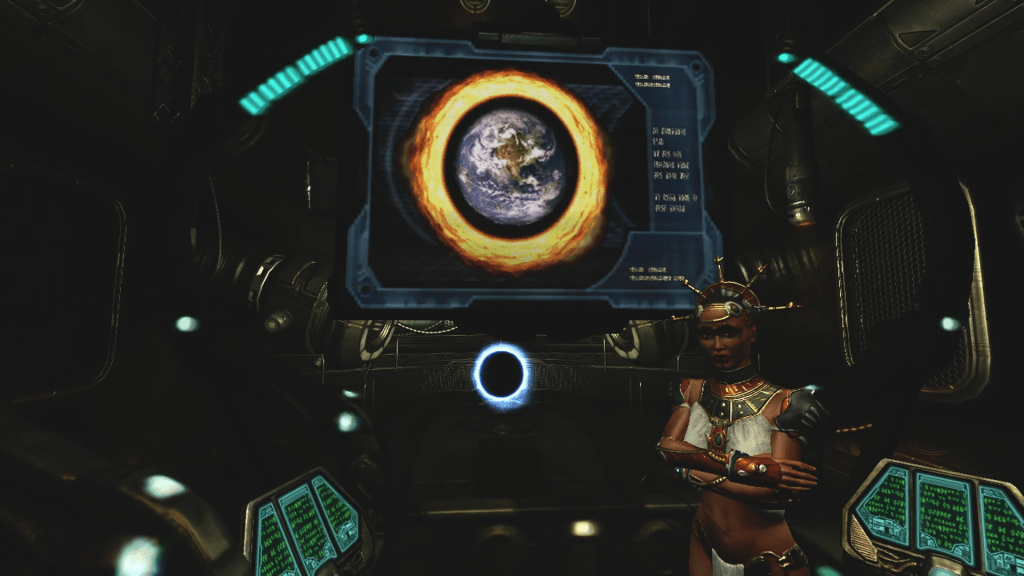
The more you explore the Sphere, the more facets of the world of Prey get to shine. The game does an excellent job at portraying the hierarchy and, almost, symbiotic relationships between the plethora of alien species scattered about. The being at the top of it all also comes across as just another element in a vast, and brutal universe. There is always something right beyond the horizon for you to explore, and Prey navigates this beautifully. Tommy’s spiritual journey as well as his quest for vengeance, gives him a lot of likable qualities. He starts off as a very angry and dissatisfied individual who longs to explore the possibilities beyond the reservation, to someone that embraces the role of savior by high caliber weaponry. By the time you reach the end of the game, Tommy has to fight Mother to take control of the ship. However, it doesn’t feel like he does this just out of a need for revenge. He comes across as a protagonist that grows, embraces his roots.
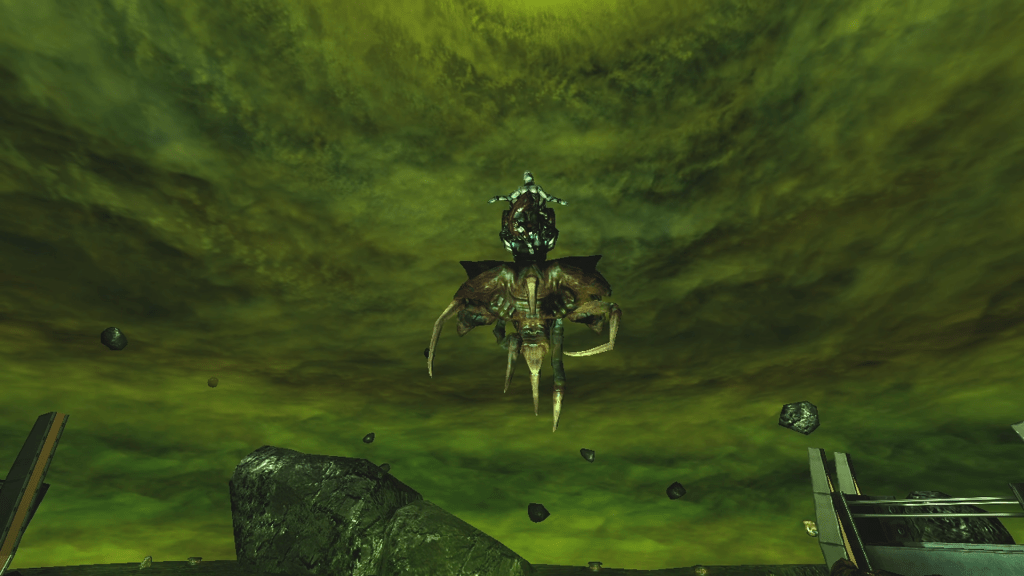
The final battle of the game takes place in the central control chamber. Here we fight Mother, a being whose powers seem to reach divinity. After the control of the Sphere is wrestled away from the control of Mother, Tommy acquires near god-like powers as he takes over the gargantuan living vessel. The temptation that this power brings nearly drives him from his goal of destroying the Sphere, but thanks to the wisdom of Enisi he manages to resist and fly the vessel into the sun. In a post credits scene we cut to Tommy having rebuilt the bar. A portal opens up and Elhuit steps through, claiming that higher powers wish to meet with Tommy. With this promise of a new grand adventure in this brutal universe, the game fades to black and three words appear on screen.
Prey will continue…..
These words accompany the final screen of the game, and I can’t help but sit back and wonder about the what-if’s of a world that never was. What if Tommy continued his journey away from Earth, forever changed and scarred by the memories of the events of the first game? The cancelled sequel’s trailer serves as a hollow reminder of endless speculation, and excitement surrounding a quietly forgotten game. What worlds haven’t we seen that are ripe for exploration. Prey’s legacy endures as a weird, tangled web of potential. Not that I’m complaining. The sequel that never was, got reformed into the shape of the greatest immersive simulator of the modern age of games. I still revisit the Prey 2 trailer from time to time, letting my mind wander to alien worlds. A testament to a vision, and a gateway to excellence. And regardless of what form it takes, I must play Prey.
The walls are ceilings on the floor
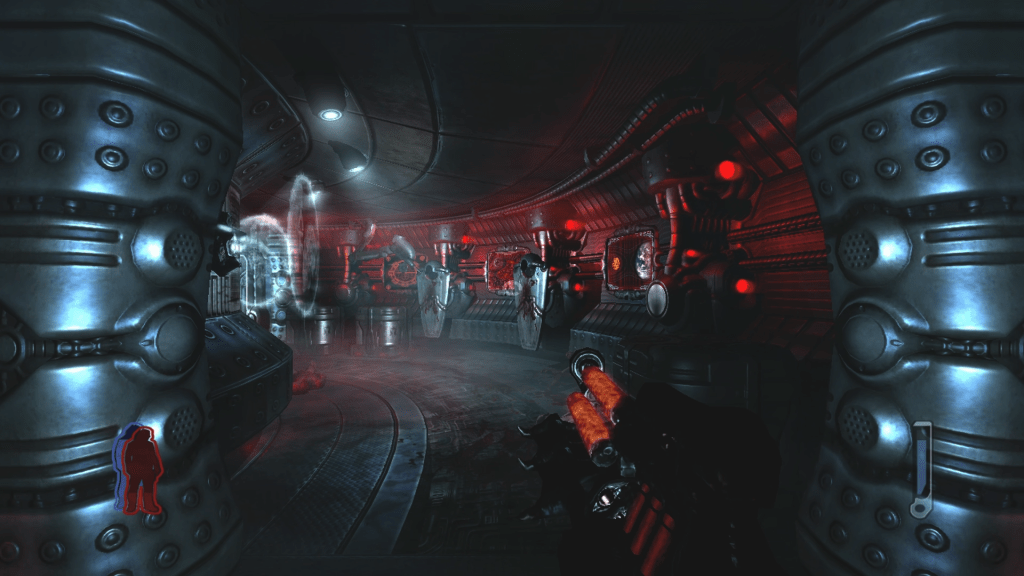
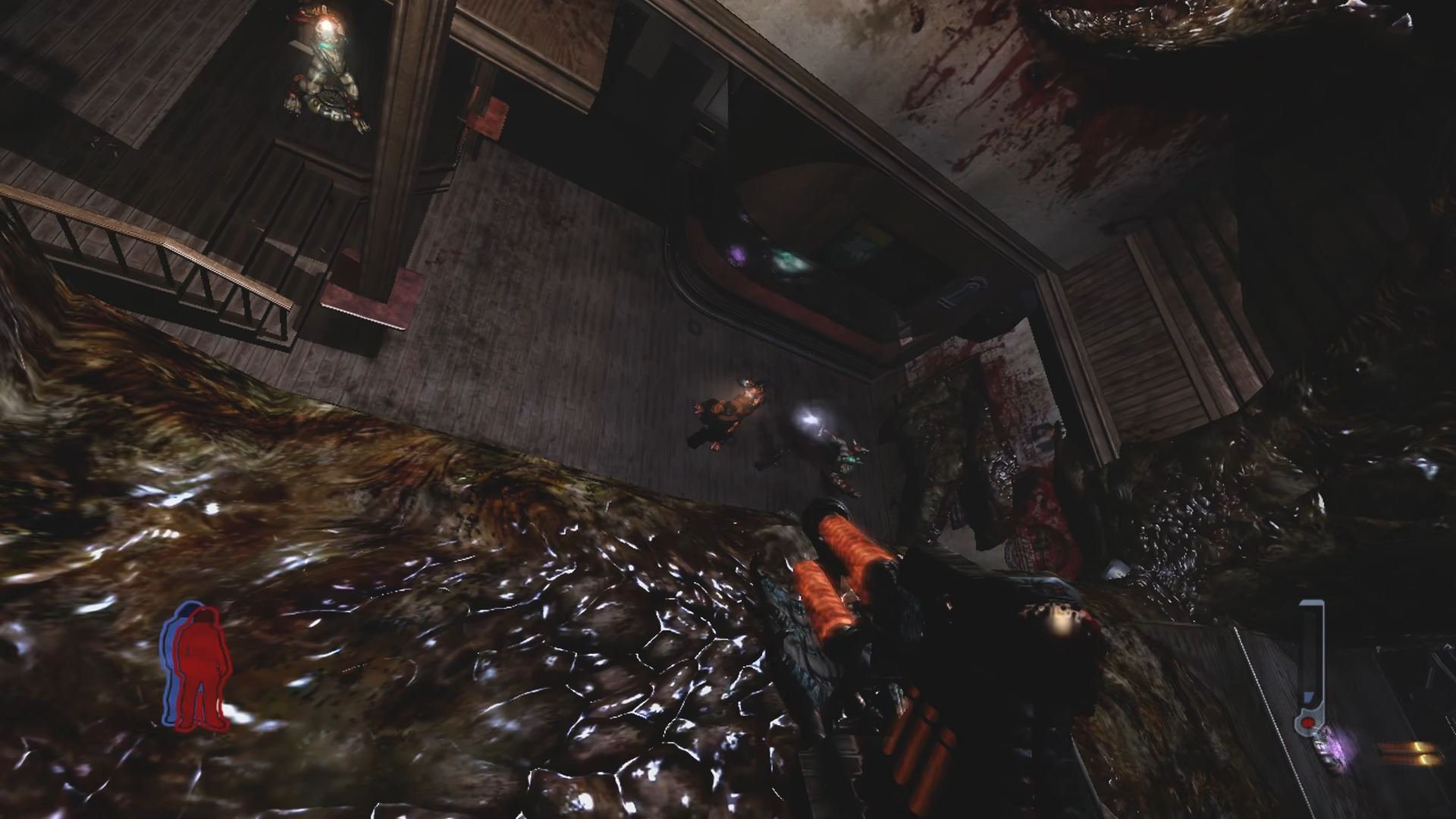
Prey is a rather unique shooter that fully utilizes every bit of space designed. This is by and large thanks to the gravity shifting mechanics. The game lets you manipulate the orientation of gravity by shooting switches, or using anti-gravity walkways to traverse ceilings and walls as if you’re on the floor. No space, or surface, will be unused, as enemies also have the ability to use these means to flip themselves upside down. Where in most shooters you’ll have to check your corners, in Prey you have to check every pixel of every surface for threats from all directions. This design makes Prey stand out as a unique entry with the id Tech-based shooters. It looks the part, but feels wholly original.
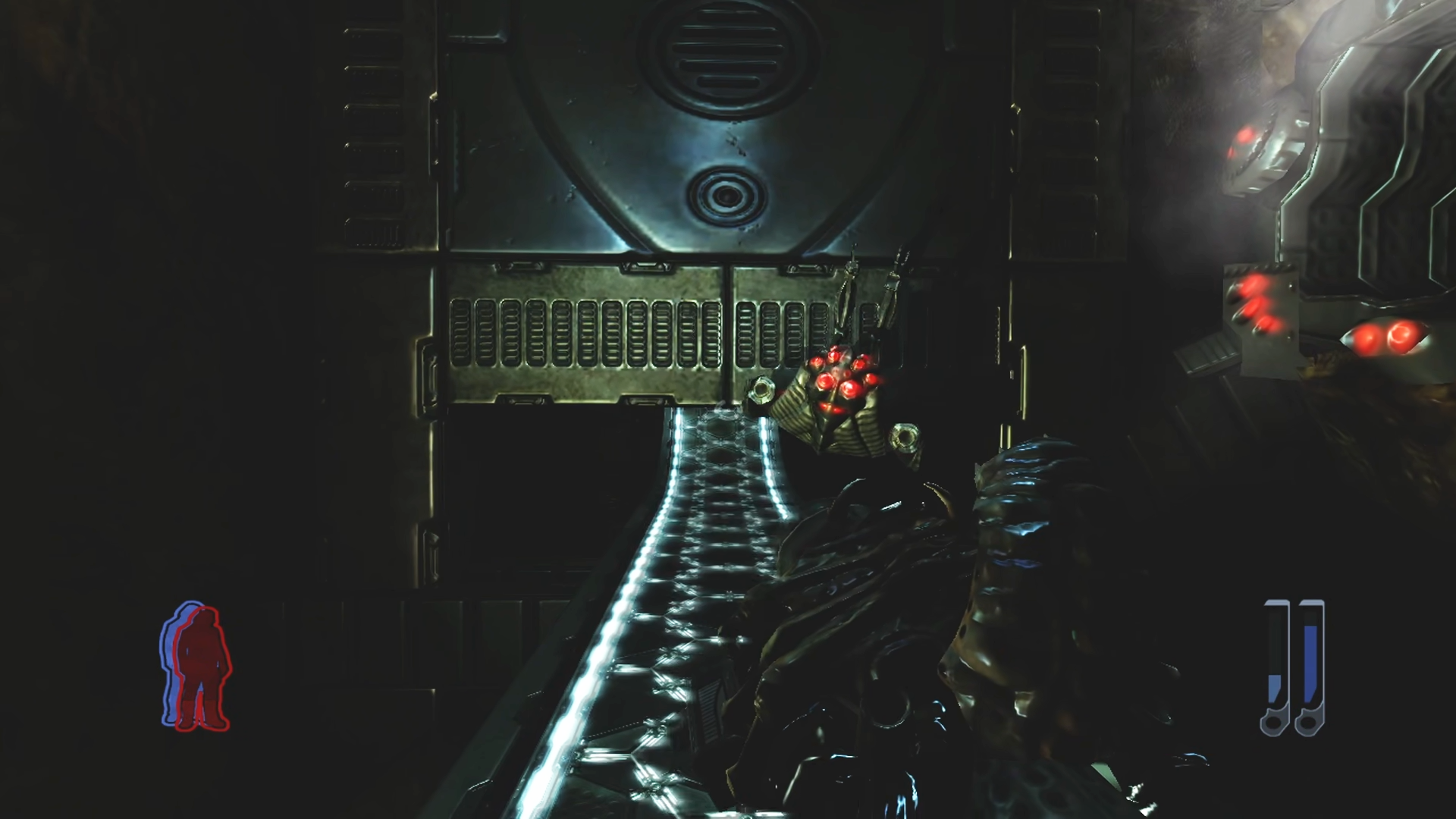
Alongside the delightfully disorienting level design comes an arsenal of bio-mechanical weaponry that will help you fight off the alien invasion. Your basic automatic rifle is comprised of a barrel that is being face hugged by a crustacean, firing energy rounds with reckless abandon. To supplement grenades, we have three legged spiders that explode when agitated. So, naturally, to pull the pin you tear off one of their legs to prime the grenade spider. Alongside these tools you have a modular heavy machine gun that can absorb different types of energy to do different things. You have the heat rounds to fire it as an automatic gun, frost to freeze enemies up-close, targeted lightning blasts to immediately disintegrate your enemies, and the literal power of the sun to atomize even the biggest threats. Prey offers a delightful smorgasbord of living weaponry for you to fight with, but also has a rather unique weapon to utilize against the less corporeal.
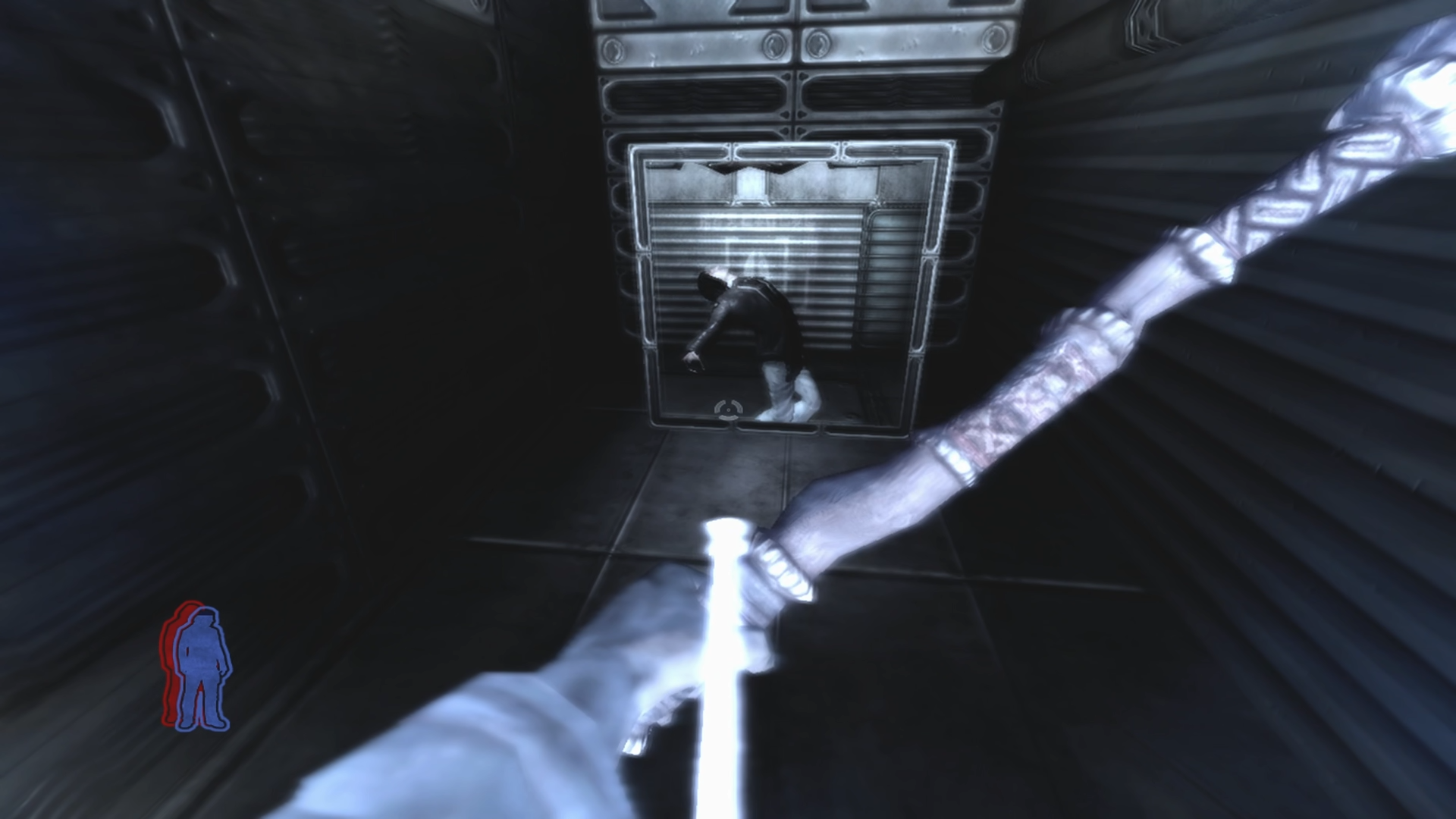
Prey heavily implements its elements of Native American spiritualism and translates this as a fascinating set of mechanics. After a near death experience early in the game, you unlock access to a spirit form. This form serves as an out of body experience on command and allows you to solve the games’ many puzzles. In this form you can bypass forcefields, interact with out of reach switch, and use a very powerful bow to sneak up on enemies to dispatch of them. When in this form, your body is left behind so it poses a risk to use this mechanic during firefights. Thanks to the spirit form, Tommy becomes a nigh indestructible force of nature. Every time you die, your spirit form gets pulled into the Land of Ancients, where you can use the bow to shoot evil spirits to regain spirit power and health. As far as I know, there’s no limit to how many times you can die before you hit a game over.
Accompanying Tommy is his spirit guide, the hawk Talon. The hawk’s name might ring a bell to those familiar with the early history of the game, Tommy’s former name; Talon Brave. Talon will help with fighting the aliens, as well as serving as a helpful companion to point out different paths you can traverse in spirit form. Combining all the tools at your disposal should make solving the puzzles that Prey throws at you a fun little challenge, that doesn’t really hinder the progress too much.
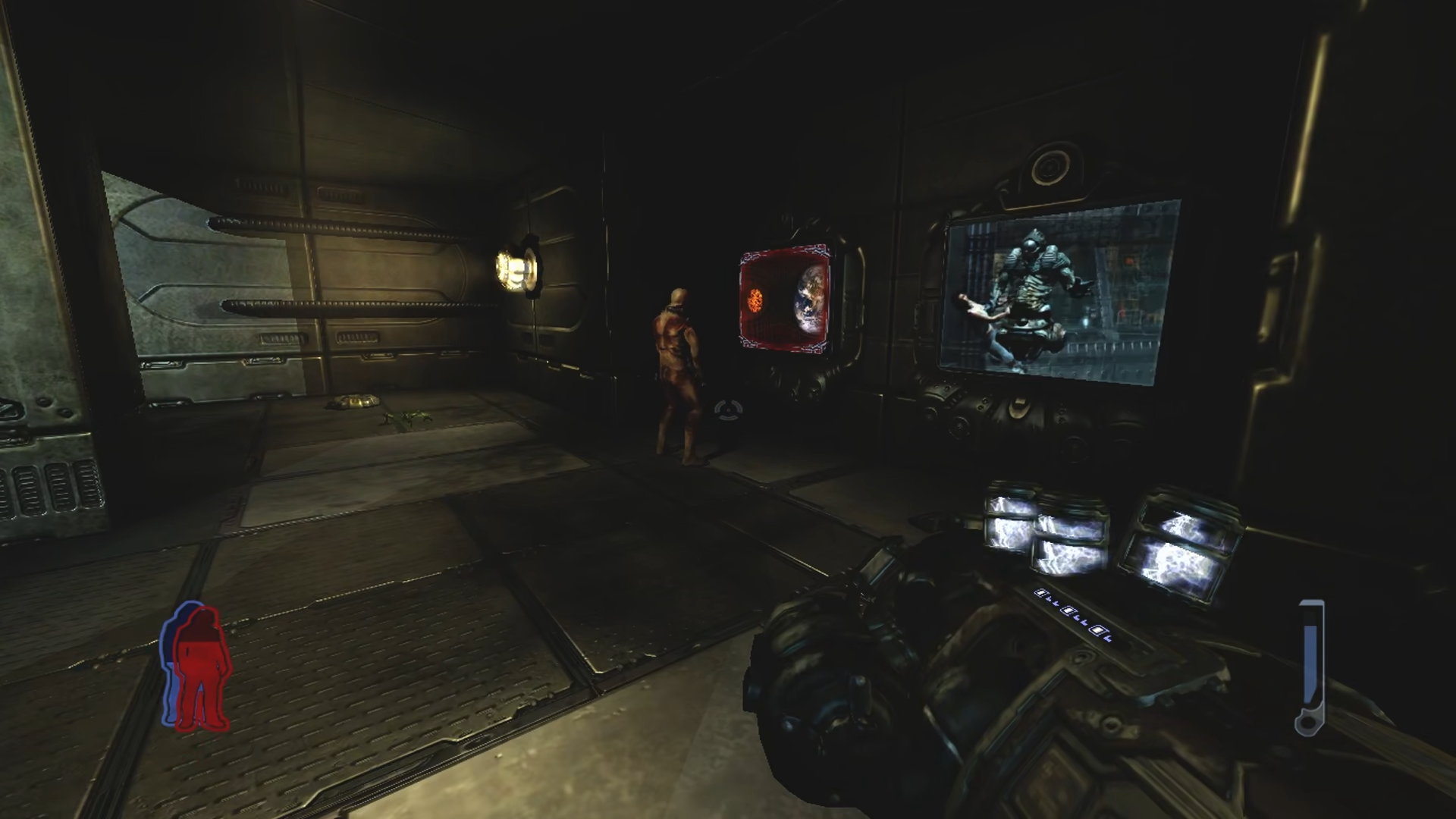
Prey’s gunplay is incredibly satisfying. It operates similarly to games like Doom, in which there is a weapon for each situation. Part of the fun of games like these is figuring out what weapon works best against what enemy, and Prey is beyond satisfying in this regard. The level design, along with the lack of care for gravitational orientation, is a treat to navigate. Every corner has the potential to become an intense confrontation from the most unexpected directions. The implementation of some of its earlier design concepts allows the game to operate in weird, non-euclidean ways, which gives Prey some really memorable puzzles and story beats. At one point you crawl through a portal in a crate to find yourself on a miniaturized planet in a container, as a gargantuan enemy looms over you. It’s a very satisfying game to play, and a delight to experience.
More than average
Prey is a strange game, even during the time of release. It manages to bring a shockingly well fleshed out world to life, after its near decade of development. The history of this franchise is as fascinating as playing the games within it. From its near decade long ascend to publication, to the cancelled sequel, to a revived IP shedding the cocoon of its past self. It’s an ambitious idea for a shooter to toy with space in the way that Prey does. The risk of severely disorienting your players is significant, but the game manages this with a lot of elegance. The pathways provide great points to ground yourself to as the world around you twists and turns to fit whatever mold it was poured in.
It’s definitely a game that, on the surface, blends into the environment of early 2000’s single player shooters. This by and large due to the choice of engine giving Prey a very distinct aesthetic. However, this aesthetic really makes the game shine. The Sphere is a beautifully designed spaceship with some massive environments, especially in the exterior areas. The whole presentation blends together like a beautifully, seamless tapestry, that’s filled with some really creative ideas. There are, however, a few puzzle elements that can feel a bit tedious. Some of the areas that require you to use the crate portals can feel out of place, and as a result; tedious. These moments are few and far between, though, with most of the game flying by.
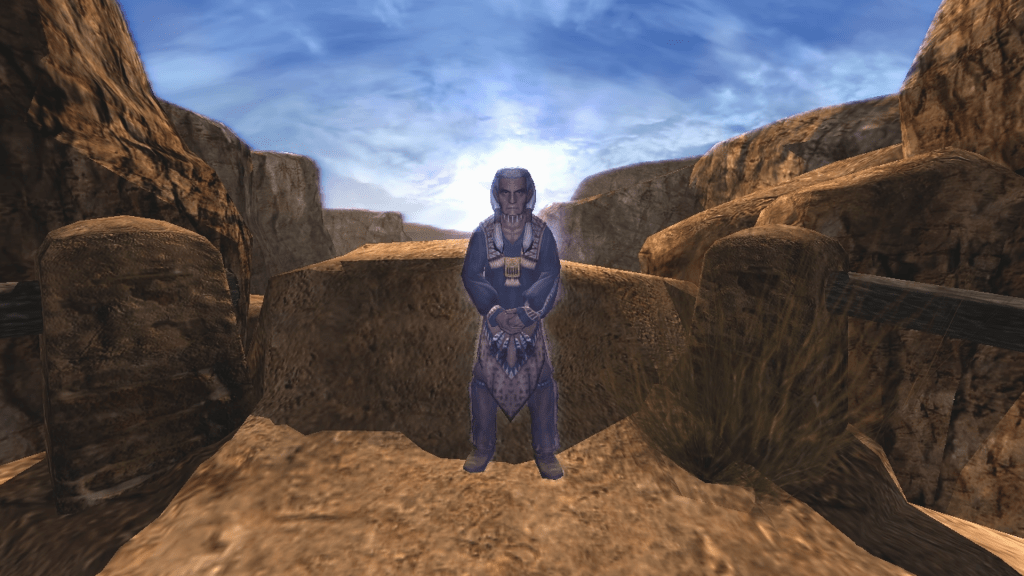
The most surprising thing about Prey is that it manages to create a very likable protagonist in Tommy, and this caused me to be a lot more invested in the story than expected. If you’re diligent enough you can also engross yourself in the world of Prey and the many interesting aliens. The Native American twist on the story weaves itself elegantly into the gameplay, with the spirit form being an absolute stand-out. It makes the game infinitely more dynamic, and makes way for some interesting ways to interact with the environment. The only downside is that there isn’t a strong follow-up to the ghost children you encounter mid-way through the game. It is implied through the gameplay and in-game story (not counting data entries), that these are spirits from the Land of the Ancients, but this remains implied within the confines of strictly sticking to the gameplay.
Overall, Prey is a phenomenal shooter that feels smooth to play. The game runs extremely well on the Playstation 3, as does its Xbox 360 counterpart. The id Tech engine does a great job at giving the game a unique, yet familiar aesthetic, especially to those who enjoyed games like Quake, Doom 3, and F.E.A.R. A part of me will always be stuck in the melancholy of the cancelled sequel, but both 2006’s, and 2017’s, Prey are highly recommended.
Don’t fear the reaper/10
TanookiChickenAttack is made possible by supporters on Ko-fi. If you enjoyed the review, consider becoming a supporter through https://ko-fi.com/tanookichickenattack


